










 Motortopia Staff
.
July 24, 2025
.
Press Release
Motortopia Staff
.
July 24, 2025
.
Press Release
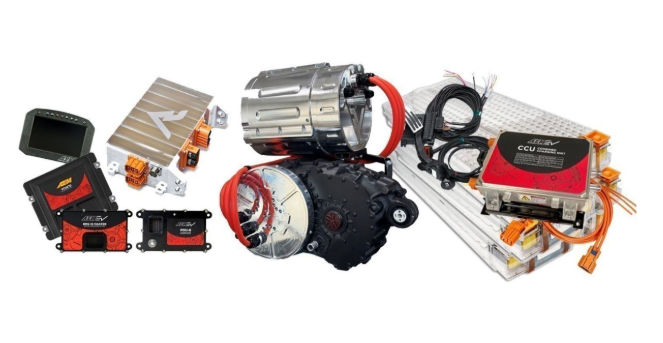
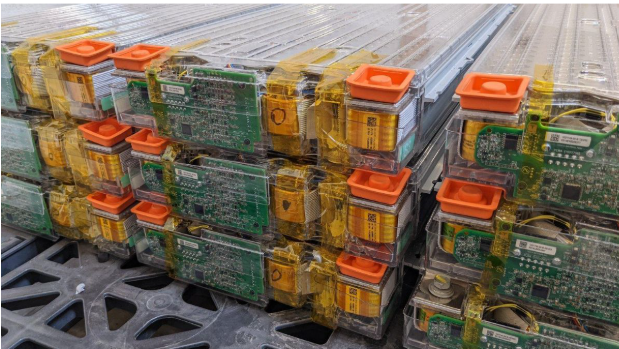
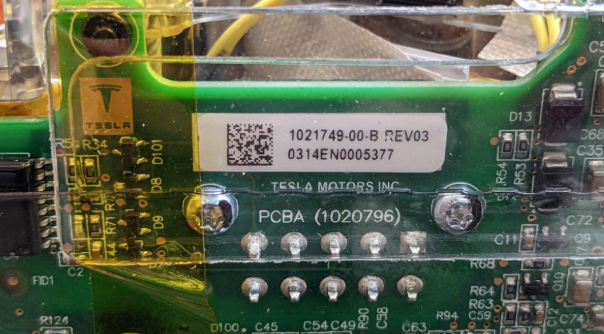
Second-life Tesla modules are exactly what they sound like—battery packs harvested from used or salvaged Teslas, most commonly the Model S and Model X. These aren’t junkyard scraps. They’re lithium-ion modules that still carry anywhere from 85% to 99% of their original capacity. When Tesla decommissions a vehicle, the battery is often still very usable. Companies scoop up these packs, test them and sometimes replace a default cell, and resell them to EV builders at a serious discount and with a month warranty.
And they’re not some fringe option. According to Recurrent Auto, Tesla batteries can retain 80–90% of their original range even after 150,000+ miles. That makes them one of the most reliable lithium battery sources for second-life use on the market today.
Let’s cut to it: you’re here because you want the most bang for your volt. Second-life Tesla modules offer a killer combo:
1. Energy Density That Actually Moves You
Each Tesla Model S/X module (from 2012–2016) packs about 5.3 kWh. Stack 5–6 of them together and you’ve got a 26–32 kWh pack—enough for ~100–140 miles of range depending on your motor and weight setup. That’s plenty for most classic conversions, weekend cruisers, or daily drivers with moderate commutes.
2. High Discharge = Performance Potential
Tesla modules can push out serious amps. They were designed for 4,600 lb performance sedans—so giving your 3,000 lb VW Beetle or Mazda RX-7 a jolt is child’s play. You’ll get up to 1,000A peak discharge depending on your BMS and configuration. That translates to real acceleration and highway-ready behavior.
3. Smart Engineering, Already Done
Each module comes with an integrated liquid cooling system, using cleverly designed coolant tubes that run between the cells themselves—not separate plates. The coolant flows directly through the module via clearly marked IN and OUT ports, making it easy to hook up your preferred loop. This design eliminates the need for external cooling plates or complex add-ons. It’s all built-in, smartly engineered, and thermally efficient, thanks to Tesla’s scale-tested architecture—used in hundreds of thousands of vehicles.
Instead of designing a custom cooling system or guessing at thermal distribution, you’re working with a setup that’s already proven to handle high loads, fast charging, and long road cycles without breaking a sweat.
If you’re building a lightweight electric motorcycle, a solar-powered camper van, or a marine/off-grid application, Tesla modules might be overkill. In those cases, safer, simpler packs like LiFePO4 are often a better fit due to lower energy density and more forgiving charge/discharge profiles.
But for traditional EV conversions (especially cars and light trucks), Tesla modules are a sweet spot of power, price, and scalability.
Still on the fence? Here are a few real-world examples:
Take the Karmann Elektra by Flashdrive Motors, a fully electric 1969 Volkswagen Karmann Ghia that blends vintage character with second-life Tesla performance. Powered by reclaimed Model S modules, the build delivers real-world range, seamless throttle response, and a power curve that feels nothing like a typical retro ride. Shops like Flashdrive are setting the new bar—combining proven Tesla hardware with clean design and practical integration. This isn’t just about going electric; it’s about making something smarter, faster, and still true to the original soul.
DIYers on forums like DIY Electric Car and the EV Conversion Facebook group have documented hundreds of builds using Tesla modules, from VW Buses to muscle cars to quirky urban commuters.
This isn’t theoretical—it’s already the go-to move for a reason.
In the chaotic, trial-and-error world of EV conversions, second-life Tesla modules offer something rare: a shortcut that still delivers performance and reliability.
They’re not perfect—but they are proven, affordable, and powerful. And unlike building a custom pack from raw cells, they don’t require a chemistry degree or a month of spot welding. You’ll spend less time obsessing over spreadsheets and more time actually getting your build on the road.
So if you’re staring down your battery options and want to balance performance, budget, and peace of mind—second-life Tesla modules might just be your best bet.

Press Release
Attention all Chevy truck enthusiasts! If you’re looking to give your ’88-’98 Chevy truck a fresh and stylish makeover, look no further than LG Billet… Continue reading
Chris Hamilton . July 19, 2023

Press Release
Riffraff Diesel’s Patent Pending Valve Spring Compressor Tool redefines the market by making spring removal and installation a breeze. No need to remove your injectors for… Continue reading
Motortopia Staff . November 05, 2024

Press Release
Now available from FLEXTREAD™, floor mats for the 2019-2024 RAM 1500, 2500 & 3500 models! These floor mats are designed to fit the entire floor… Continue reading
Motortopia Staff . September 19, 2024
Press Release
Fuel2Electric and Silent Classics Announce Exclusive North American Partnership for Fiat 500 Electric Conversion Kits Fuel2Electric is proud to announce a new exclusivity partnership with Silent… Continue reading
Motortopia Staff . February 06, 2026

Press Release
BOWLING GREEN, Ky. – May 29, 2025– Arizona Desert Shocks (ADS), part of the Holley Performance Brands (NYSE: HLLY) portfolio, today announced additional platform expansion… Continue reading
Motortopia Staff . June 16, 2025

Press Release
When- Saturday August 12th, 2023 From- 8am – 12 noon Where- at TMI Headquarters 1493 E. Bentley Drive, Corona, CA 92879 Not only… Continue reading
Rhea Sharma . August 01, 2023



Super Run 2026 Classic Car Show
Super Run 2026 Classic Car Show Casablanca Resort 950 West Mesquite Blvd Mesquite, NV 89027
Concours D'Elegance
Cobble Beach Resort 221 McLeese Dr, Kemble, ON N0H 1S0
Charity Car Show
Mesa Marketplace 10550 E. Baseline Rd, Mesa , Az 85209
CHICO CONCOURS Car Show
Silver Dollar Fairgrounds 2357 Fair Street, Chico, CA 95928
Goodguys 33rd Summit Racing Lone Star Nationals
Texas Motor Speedway 3545 Lone Star Circle
We use cookies to enhance your browsing experience, serve personalized ads or content, and analyze our traffic. By clicking "Accept All", you consent to our use of cookies. Visit our Cookie Policy for more info.



 Please wait...
Share Link