










 Rod Short Rod
.
November 20, 2026
.
Drag Racer
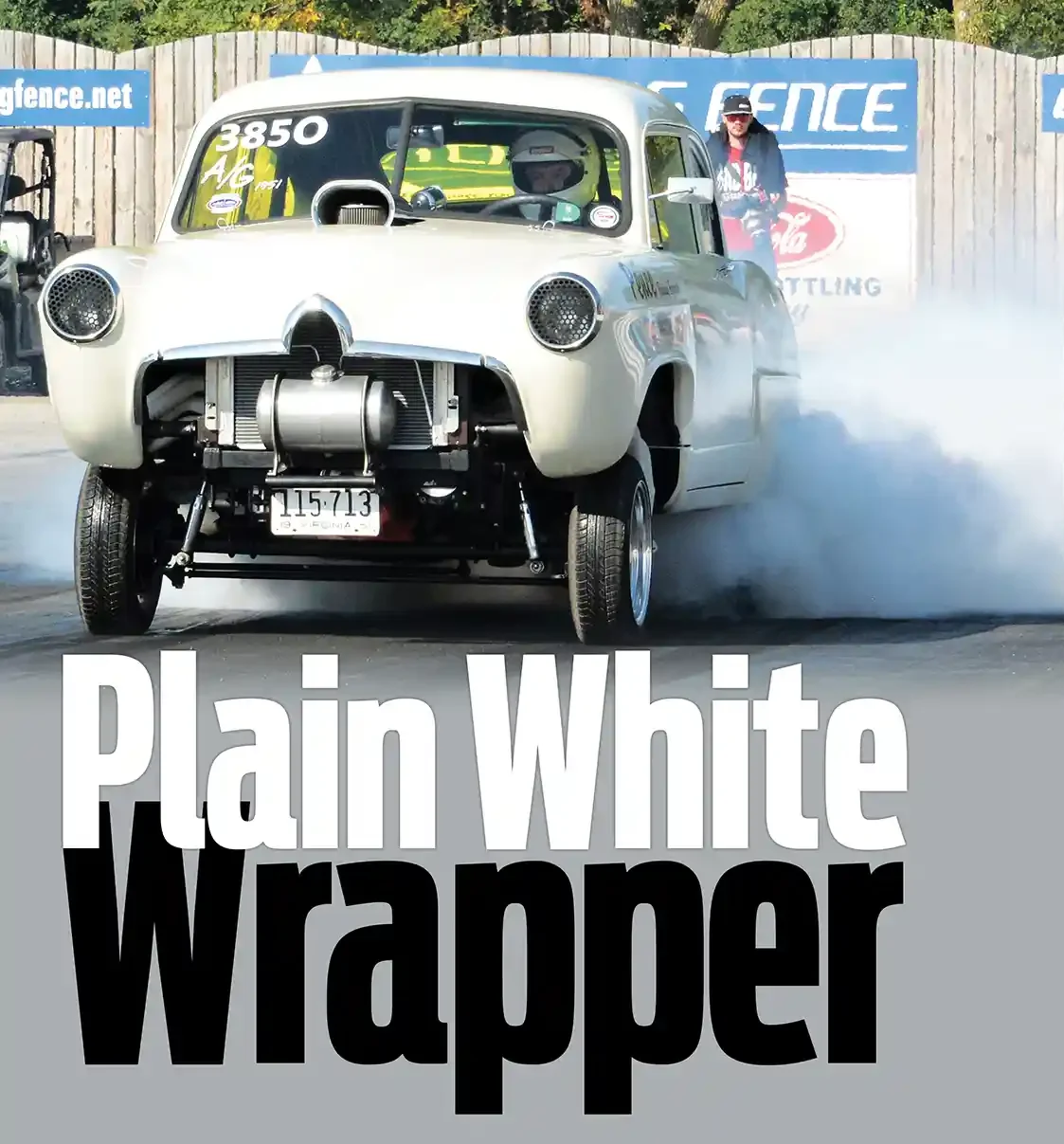
If you’ve ever been to Gear Vendors’ annual Drag Week, you can appreciate how racers compete not only to be the quickest, but also just to survive the weeklong drag race odyssey. They must prove themselves by driving their entries and all needed equipment to the next event for five days in a row. Competitors such as Heath Pence of Covington, Virginia, and his sweet ’51 Henry J are typical of what you’ll find participating.
Heath’s Henry J shows us what Gassers used to be. Listed in the NHRA rulebook as a street category, these racers captured the imagination of many and are still appreciated today. Gassers led to offshoots including Factory Experimental, Funny Car and Pro Mod.
“My father always wanted to build a straight-axle Henry J,” Heath explained, “but he was killed in an automobile crash, so it never happened. That rubbed off on me when I was a kid. I built models of that car all the time, and it’s still one of my favorites. Forty years later I managed to end up with one.”
Built and marketed as a low-priced economy car in the early ’50s by Kaiser Motors, these little cars became known as “Henry Js” after industrialist entrepreneur Henry J. Kaiser. Even though they featured an attractive design, stout chassis and appealing price, sales stalled within a few years. A knock-off called the Allstate was sold through Sears stores.
Short wheelbase cars with a high center of gravity were the hot ticket in those days due to their weight transfer characteristics, and the inexpensive Henry J showed promise in NHRA’s Gas Coupes and Sedans category. In the 1965 rulebook, these racers were intended to be capable of everyday driving with fully upholstered interiors and street equipment including lights, horns and wipers. They were required to have a stock automobile-type frame, wheelbase and fenders with no more than a 4-inch chop in height. Fiberglass bodies and race slicks were not permitted. What made this class so wildly popular was that engine rules were essentially wide open.
Originally there were four classes in the Gasser category. The number doubled by 1965 with classes based on weight divided by engine displacement. Another three classes were designated for supercharged entries. The lightest and quickest machines were known as A/GS (A/Gas Supercharged), which weighed in anywhere from 6.00 to 8.99 pounds per cubic inch.
For his project, Heath chose a World Products III high-density block with a 4.500-inch bore and a 4.250 stroke. Its thicker decks, beefy bulkheads, expanded water jackets and broad compatibility with Chevy components made it the perfect choice for a strong street/strip machine. The bottom end is comprised of an Eagle crank/rod combo with J&E domed pistons. Pro-Filer Sniper X heads with 355cc intake ports house the valve train consisting of a Sig Erson custom roller cam with Manley intake/exhaust valves, PBM lifters, Trend pushrods and Erson springs.
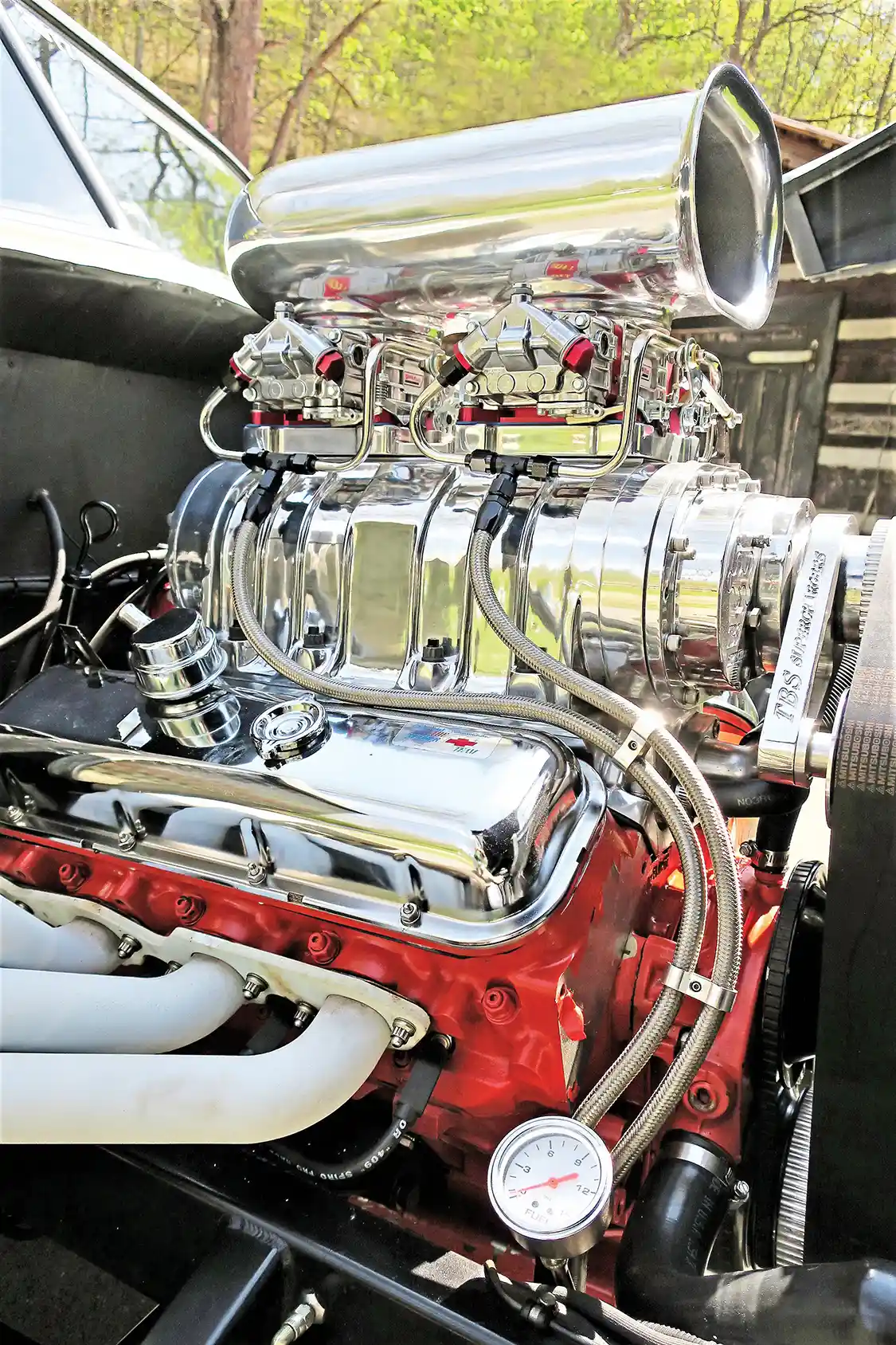
Topping the block is a Quick Fuel Q series 750 forced induction carb with a Blower Shop 8-71 pushing 20 pounds of boost down into the combustion chambers. A MSD 7AL2 lights the fuel, a Be Cool radiator keeps things cool while coated Hooker headers direct the exhaust gases. This combination produces 1,174 peak horsepower at 7,200 rpm with 820 ft-lbs of peak torque at 5,800 rpm. Denny’s Automotive in Covington put together the Turbo 400 trans featuring a TCI 2,800 stall converter.
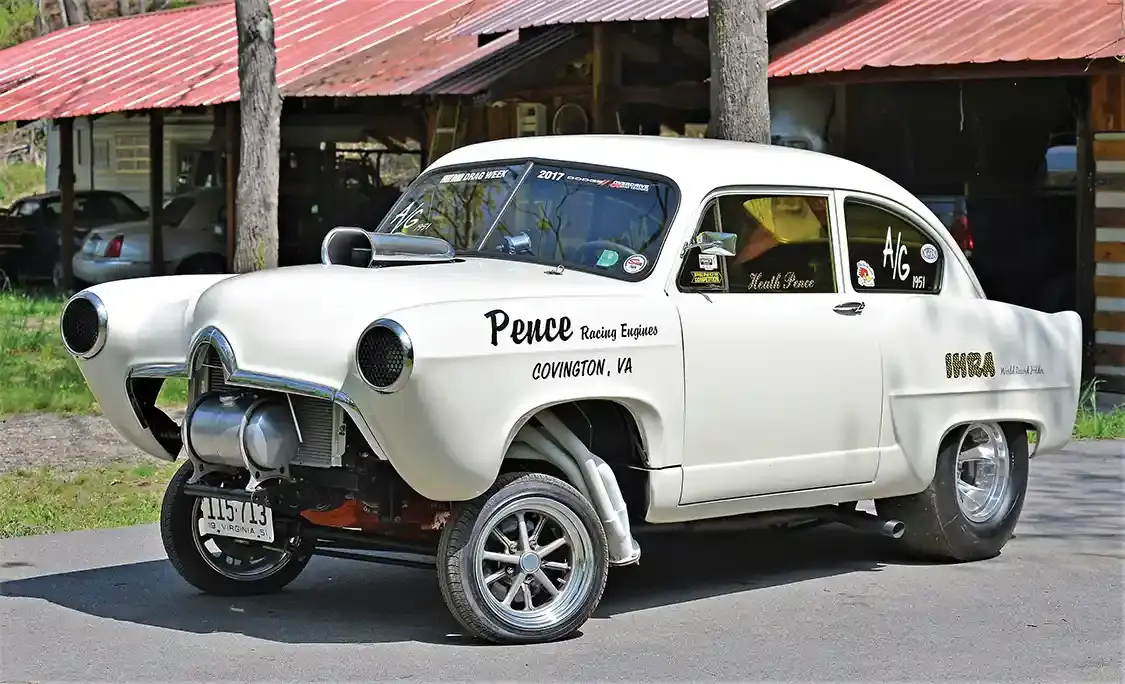
With the engine nestled between the 2×3-inch custom frame rails, Heath chose a Speedway Engineering straight-axle kit featuring GM calipers with Wilwood disc brakes. A 1957 Oldsmobile rear with 3.50:1 gears and Strange 9-inch components anchors the back end. E-T Gasser rims by Team III wheels wrapped in Continental tires are on the front with Halibrand rims mounting pie crust cheater slicks on the rear.
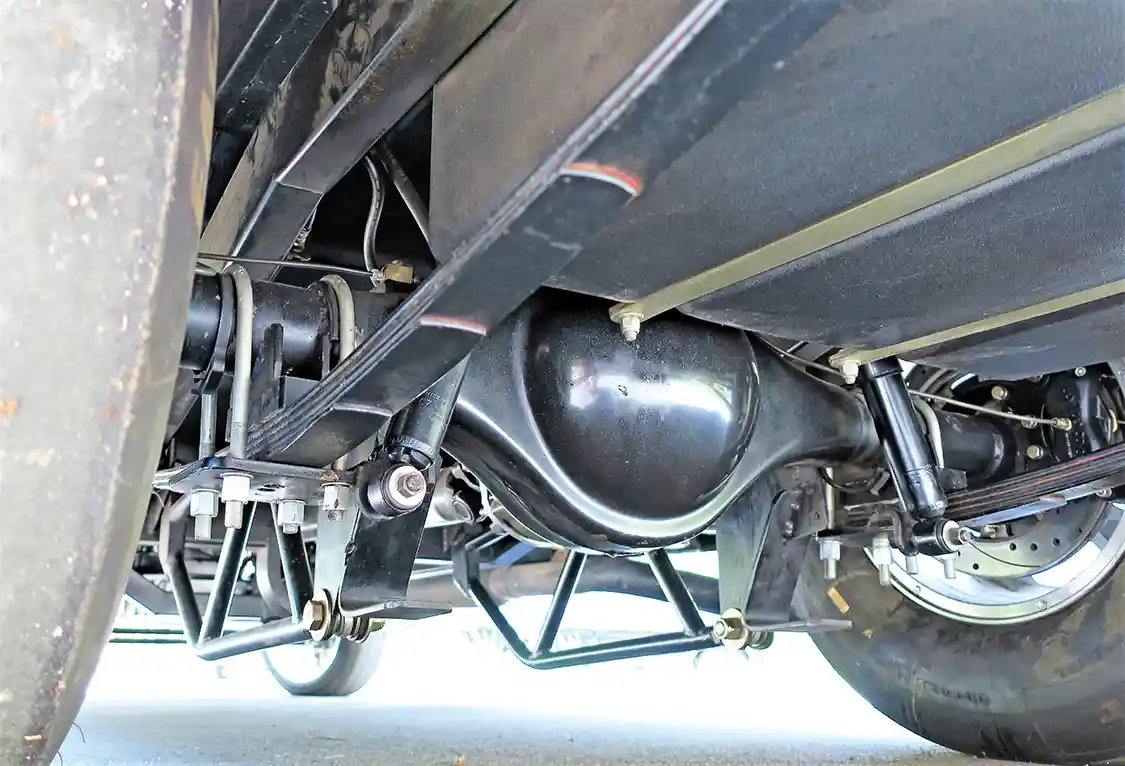
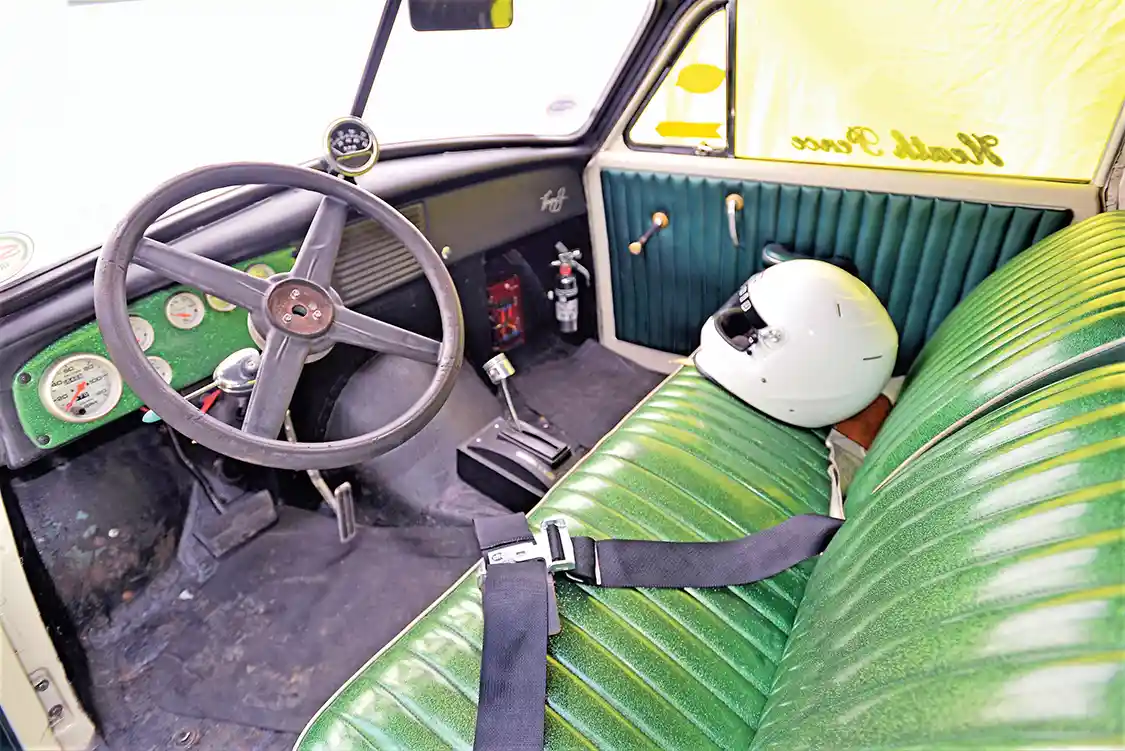
In keeping with the 1965 NHRA rules, the body is fiberglass free. The Henry J features a one-piece tilt front end for easy access to the engine, while the rear quarters were stretched to accommodate the larger tires. PPG two-stage Pepper White paint gives the car a sanitary look, while the inside features a vintage Kaiser green plaid vinyl upholstery with a 1962-era Mr. Gasket shifter.
Heath’s Henry J doesn’t claim to be the quickest or fastest on the strip or street, but it definitely fits within what the original concept of a Gasser was in 1965. Other cars may flaunt themselves with extraneous eye candy, but this little car is a subtle yet potent nod to the past. That’s what makes it fun!

Goodguys 29th Speedway Motors Southwest Nationals
WestWorld of Scottsdale 16601 North Pima Road, Scottsdale, AZ 85260
We use cookies to enhance your browsing experience, serve personalized ads or content, and analyze our traffic. By clicking "Accept All", you consent to our use of cookies. Visit our Cookie Policy for more info.


 Please wait...
Share Link