










 Motortopia Staff
.
November 04, 2026
.
News
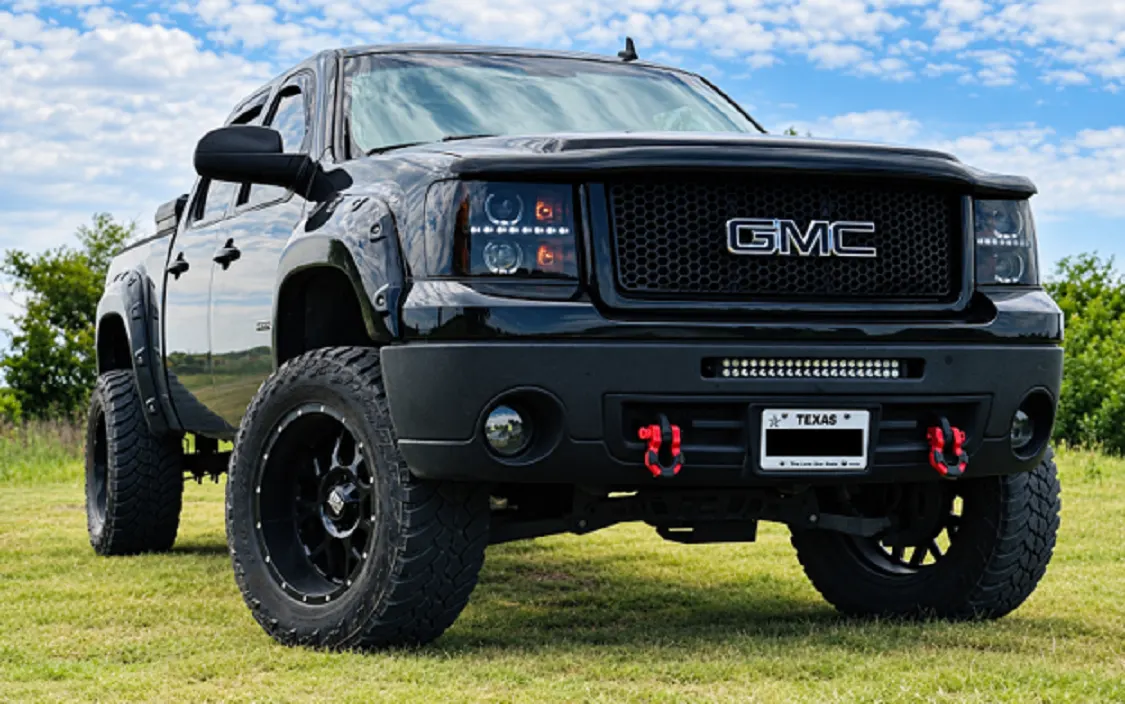
Few things are more annoying than finding out your wheels don’t fit after the tires are already mounted. You turn the steering wheel in the shop, hear that scrape, and a fun weekend project turns into an expensive return.
The frustrating part is that almost every fitment problem comes down to a handful of numbers you could have checked before spending a dime. Wheel shopping is half style and half homework, and the homework is easier than it sounds. Here’s how I’d approach it for just about any pickup.
Start with bolt pattern. It’s the number of lug holes and the size of the circle they sit on, written something like 6×135 or 6×139.7. Those two look close on paper, but a 6×135 wheel (common on F-150s) won’t go on a 6×139.7 hub (common on Silverado 1500s), and forcing it is a bad idea. Check the pattern for your exact year and model before you fall for any set of wheels.
Next up is the hub bore, the hole in the center of the wheel. It needs to match your truck’s hub or be a bit larger. If it’s larger, hub-centric rings fill the gap and keep the wheel centered. Skip them and you’ll probably get a highway vibration that’s maddening to chase down.
If you’ve got a heavy-duty truck, add load rating to the list. A dually or a daily tow rig puts real weight on those wheels, and the rating has to cover it. Shopping by your specific truck, like these Silverado 3500 wheels, helps weed out anything that won’t work.
Width gets all the attention, but offset decides where the wheel actually sits. It’s the distance, in millimeters, from the wheel’s mounting face to its centerline. Positive offset pulls the wheel in toward the truck, and negative offset pushes it out toward the fender. Factory wheels usually run positive, while lifted-truck wheels often go well into the negatives.
Backspacing is the close cousin. It’s the space between the mounting face and the inner edge of the wheel, measured in inches, and it tells you how much room you have behind the wheel for brakes and suspension parts. For a rough number, take half the wheel’s width and add the offset in inches (millimeters divided by 25.4). Rim lips throw that off a little, so use the manufacturer’s spec when you can get it.
Say you go three inches wider and keep the same offset. The wheel now grows an inch and a half in both directions, toward the suspension and toward the fender. If it already fit snugly, it won’t anymore. That’s why width and offset have to be chosen together.
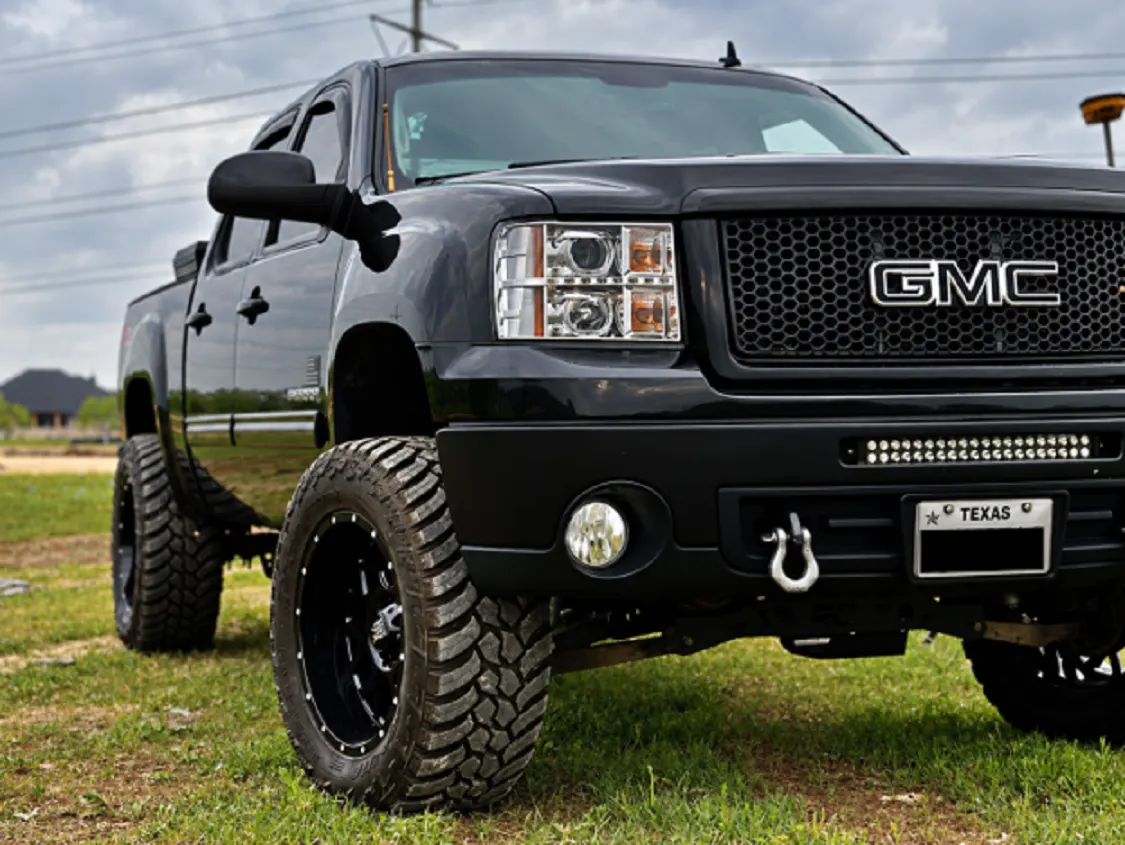
Tire sizes come in two formats. Metric sizes look like 275/65R20. Flotation sizes look like 35×12.50R20, which reads as 35 inches tall and 12.5 inches wide on a 20-inch wheel. Flotation is what most people mean when they say “35s.”
Every tire has a range of wheel widths it’s approved for, and the tire maker publishes it. Stay inside that range. Stretch a tire over a wheel that’s too narrow or squeeze it onto one that’s too wide, and the sidewall sits wrong, the handling changes, and it wears unevenly.
Moving up in wheel diameter? Cut the sidewall height so the overall tire stays close to stock, unless you want it taller on purpose. A taller tire will throw off your speedometer and make the truck feel like it has different gearing, so plan for that.
Stock height gives you the most wiggle room. Stay near factory width and offset and it’s hard to go wrong.
A leveled truck can often take a bit more tire, but test at full steering lock in both directions. That’s where tires like to grab a fender liner or control arm.
Lifted trucks open the door to bigger tires and wider wheels, but pushing the tire out past the fender can cause trouble in some states, so look up the coverage rules where you live. If you’re on a Ford and don’t want to piece it all together, a matched F-150 wheel and tire package takes a lot of the guesswork out, since everything is sized to work together.
Lowered trucks are the tight ones. With less vertical room, offset and width matter even more. Check clearance with the suspension fully compressed, and make sure the wheel clears the calipers. If you’re running a staggered setup, the wider wheels go in the back.
Buying on looks and checking specs later is the big one. Close behind are obsessing over width while ignoring offset, only checking clearance with the wheels pointed straight ahead, and assuming your old lug nuts will work on the new wheels. They often won’t.
New wheels usually mean some new hardware. Lug nuts have to match the wheel’s seat style (conical, ball, or flat) as well as your stud thread size. Your TPMS sensors can usually move over from the factory wheels, but they’ll need to be reinstalled when the tires are mounted. Wheel locks and the right center caps finish the job.
If you can, test fit the bare wheel before the tire goes on and make sure it clears the brakes and suspension. After the tire is mounted, turn the wheel lock to lock and cycle the suspension. It takes about ten minutes in the driveway and can save you a trip back to the tire shop.
Get the numbers right, and the truck will look like it left the factory that way.

News
Picture Source- Bazoom AI Rideshare services have changed urban transportation, offering convenient travel options. However, as their popularity grows, so do concerns about safety and… Continue reading
Motortopia Staff . November 05, 2025
Events
AS SEEN IN OUR Tread Sept/Oct 2026 ISSUE – Buy Now! Season 4 The time has come again for another epic Terra Crew Speed Metal… Continue reading
Evan Walsh . October 09, 2026

News
Sooner or later, most gearheads end up needing a transport truck. You find the right F-250 three states away. A job moves you coast to… Continue reading
Motortopia Staff . July 22, 2026

Drag Racer
Venolia Recognizes the Crew Chiefs Behind Those Flying Funny Cars The memory of Joe Pisano, owner of Venolia Pistons still burns bright in the annals… Continue reading
Pete Ward . August 12, 2026
News
Track Your Ride: The Ultimate Guide to Installing GPS Trackers on Custom Car Builds Key Takeaways Always plan carefully before installing GPS trackers on custom… Continue reading
Motortopia Staff . July 23, 2025

Chevrolet
QA1 Suspension did the thing we have ALL been waiting for! Full front and rear coilover conversion for 2003-2006 2WD Chevrolet Silverado 1500. Here’s a… Continue reading
Chris Hamilton . June 19, 2025

Dino's Git-Down
State Farm Stadium, Glendale, AZ
Dino's Git-Down
State Farm Stadium
Goodguys 36th Autumn Get-Together
Alameda County Fairgrounds 4501 Pleasanton Avenue, Pleasanton, CA 94566
Goodguys 29th Speedway Motors Southwest Nationals
WestWorld of Scottsdale 16601 North Pima Road, Scottsdale, AZ 85260
We use cookies to enhance your browsing experience, serve personalized ads or content, and analyze our traffic. By clicking "Accept All", you consent to our use of cookies. Visit our Cookie Policy for more info.


 Please wait...
Share Link