








 Motortopia Staff
.
November 12, 2025
.
News
Motortopia Staff
.
November 12, 2025
.
News
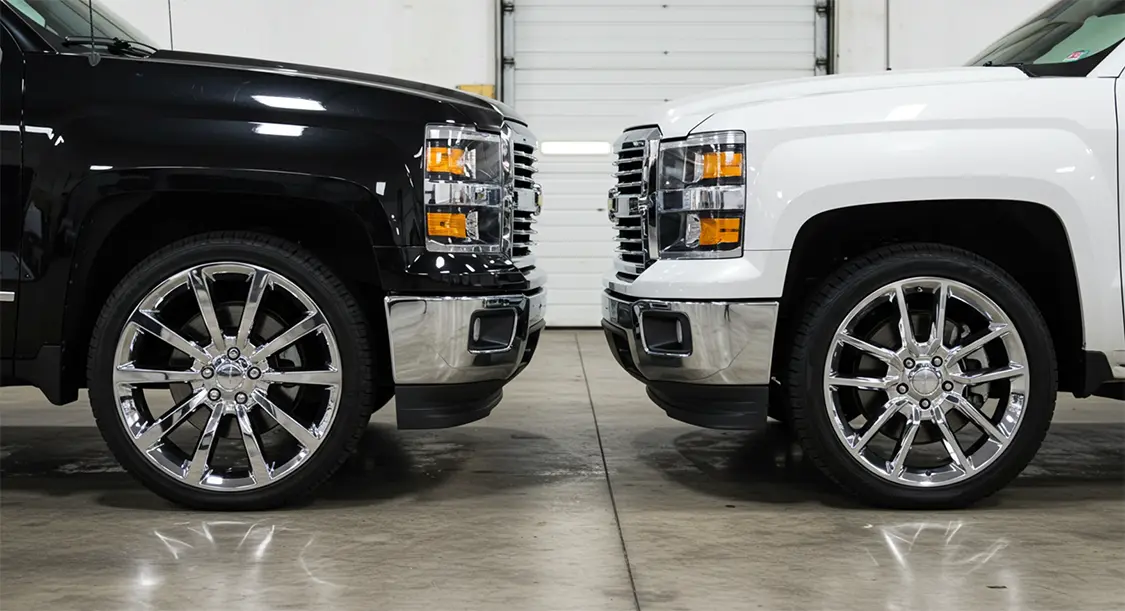
Staring at wheel catalogs, trying to decide between chrome and polished aluminum? Several hundred have been through the same stress. This decision stumps a lot of car owners because both finishes look amazing in photos, but they’re entirely different in the real world.
Here’s what most people don’t realize until after they buy: the difference between chrome and polished wheels goes way beyond just appearance. One finish might look flashier in the showroom, but it becomes a maintenance nightmare six months later. The other might seem subtle at first, but actually ages better and costs less to maintain over time.
The choice between chrome and polished aluminum affects everything from your weekly cleaning routine to your long-term ownership costs. Some finishes work great for show cars, but are terrible for daily drivers. While some finishes last longer, they lack the initial “wow” factor that attracts attention at car shows.
This article breaks down the real-world differences between chrome and polished wheels based on actual ownership experience, not marketing promises. You’ll learn which finish fits your lifestyle, budget, and vehicle goals.
Show Cars/Classics: Chrome wins for maximum visual impact, especially if the vehicle sees limited road use and receives regular detailed cleaning.
Daily Drivers: Polished aluminum makes more sense for vehicles driven regularly in varied conditions. The lower maintenance requirements and better aging characteristics outweigh chrome’s visual advantages.
Custom Builds: Consider your priorities. Chrome for maximum attention, polished for long-term satisfaction, and easier ownership.
Initial wheel costs are just the beginning. Factor in long-term maintenance, potential refinishing costs, and replacement needs. For those spreading costs over time, finance wheel options can make either choice more accessible while allowing you to budget for ongoing maintenance.
Chrome wheels often cost more upfront but may require expensive re-chroming after 3-5 years of regular use. Polished aluminum wheels cost less initially and maintain their value better over time.
Chrome wheels get their mirror-like finish through an electroplating process where a thin layer of chromium is applied over the base metal. This creates that distinctive bright, reflective surface that either loves or hates; there’s rarely an in-between. The plating process involves multiple steps, including copper plating, nickel plating, and finally the chrome layer.
Chrome’s biggest advantage is pure visual impact. Nothing reflects light quite like a perfectly chromed wheel; it’s that mirror finish that stops people in parking lots. For show cars, custom builds, or vehicles where maximum visual impact matters, chrome delivers results that polished aluminum can’t match.
The chromium layer acts as a barrier between the base metal and the environment, preventing rust and oxidation as long as the finish isn’t damaged.
You’ll see chrome wheels on show cars, lowriders, classic muscle cars, and custom trucks, where the goal is to achieve maximum visual impact. They’re popular on vehicles that spend more time being admired than driven hard. Chrome works best when appearance trumps practicality considerations.
Polished aluminum wheels achieve their shine through mechanical buffing and polishing of the aluminum surface itself. Instead of adding a coating, the polishing process brings out the natural luster of the aluminum metal.
Some polished wheels have a clear coat applied for protection, while others are left as raw polished aluminum. The clear-coated versions require less maintenance but can’t be re-polished easily if damaged. Raw polished aluminum needs more care, but can be restored to like-new condition.
Polished aluminum’s biggest advantage is repairability. Scratches and imperfections can usually be polished out, returning the wheel to its original condition. You can’t do that with chrome; once the plating is damaged, you need professional re-chroming.
Polished aluminum also ages more gracefully. While chrome can develop pitting, peeling, or corrosion spots that look terrible, polished aluminum develops a patina that many people actually prefer to the original bright finish.
Polished wheels work great on daily drivers, hot rods, muscle cars, and vehicles where you want a premium look without high-maintenance requirements. They’re popular with people who appreciate quality but don’t want to spend every weekend detailing their wheels.
| Factor | Chrome Wheels | Polished Aluminum |
| Initial Impact | Maximum shine, mirror finish | Deep luster, subtle elegance |
| Maintenance Frequency | Weekly cleaning required | Bi-weekly to monthly |
| Scratch Repair | Requires professional re-plating | Can often polish yourself out |
| Durability | Prone to pitting and peeling | Ages gracefully, long-lasting |
| Weather Resistance | Good when intact, terrible when damaged | Consistent performance |
| Cost Range | $200-800+ per wheel | $150-500+ per wheel |
| Resale Impact | High when perfect, poor when damaged | Steady value retention |
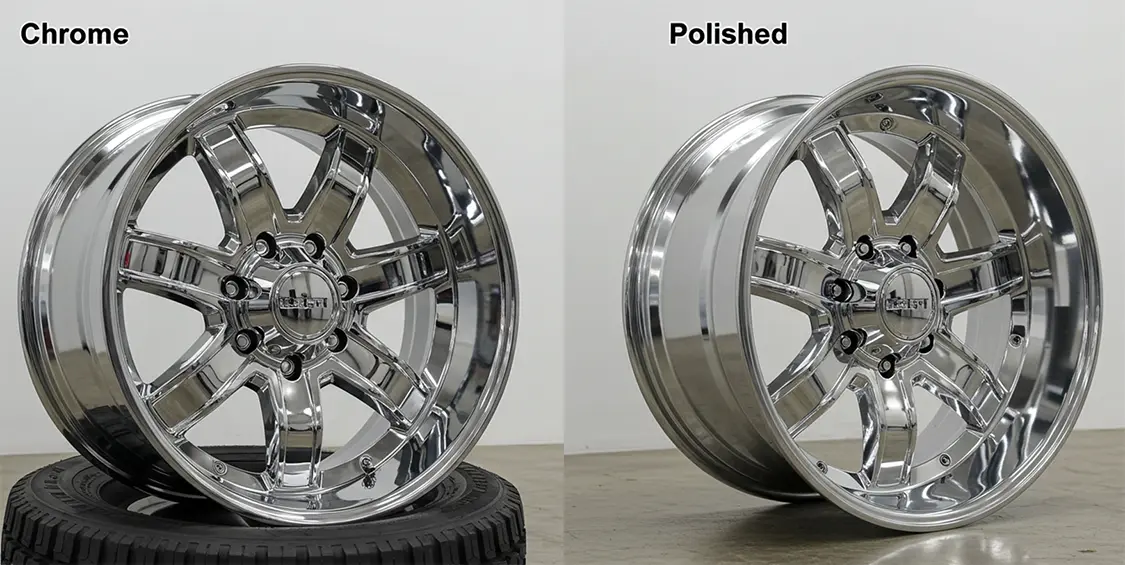
Chrome delivers that unmistakable mirror finish that reflects like glass. It’s dramatic, flashy, and impossible to ignore. Polished aluminum offers a deep, warm glow that’s more sophisticated but less attention-grabbing.
The difference becomes obvious in different lighting conditions. Chrome looks spectacular in bright sunlight but can appear cold and harsh in overcast conditions. Polished aluminum maintains its appeal across various lighting situations.
Chrome’s durability depends entirely on the plating staying intact. Small chips or scratches expose the base metal to corrosion, and once that starts, it spreads quickly. The thin chrome layer offers no protection once compromised.
Polished aluminum is the base metal itself, so there’s no coating to fail. Scratches and wear affect appearance but don’t compromise the wheel’s structural integrity or lead to rapid deterioration.
Chrome wheels demand weekly cleaning to maintain their appearance. Water spots, brake dust, and road grime show up immediately on the mirror finish. You’ll need specialized chrome cleaners and microfiber cloths to avoid scratching.
Polished aluminum is more forgiving. Brake dust and road grime are visible but not as dramatic. Most polished wheels can go 2-3 weeks between serious cleanings without looking neglected.
Chrome wheels need specialized care to maintain their appearance:
Avoid automatic car washes, which can scratch chrome. Hand washing with proper techniques is essential for preserving the mirror finish.
Polished aluminum maintenance is more straightforward:
Raw polished aluminum requires more frequent polishing than clear-coated versions, but offers better long-term repairability.
Using harsh chemicals destroys both finishes quickly. Acidic wheel cleaners can etch chrome and cause pitting. Abrasive polishes scratch chrome plating permanently.
Neglecting regular cleaning allows brake dust and road grime to bond to the surface, making removal more difficult and potentially damaging the finish.
Chrome maintenance is mostly DIY until the plating fails. Re-chroming requires professional equipment and expertise, with costs ranging from $200-500 per wheel.
Polished aluminum offers more DIY repair options. Minor scratches and oxidation can usually be addressed at home with proper polishing compounds and techniques. Professional restoration is less expensive than chrome re-plating.
For most people, polished aluminum offers better long-term value. The appearance is sophisticated, maintenance is manageable, and aging is graceful. Chrome makes sense for specific applications where maximum visual impact justifies the higher maintenance requirements and costs.
Quality matters more than finish type. A well-made, polished aluminum wheel will outlast and outperform a cheap chrome wheel every time. When shopping for either finish, Discounted Wheel Warehouse offers quality options in both finishes with detailed specifications and customer support to help ensure you choose wheels that match your needs and expectations.
Polished aluminum typically lasts longer and ages better. Chrome can look perfect for years, but it degrades rapidly once the plating is compromised.
Yes, but it requires professional refinishing. Chrome can be stripped, and the wheel polished, or polished wheels can be chromed. Both processes are expensive.
Polished aluminum tends to hold value better because it ages more gracefully. Chrome wheels in poor condition can actually hurt resale value.



Terminal Takeover 2026
21 airport rd Ext, Greenville, SC
Altered Metal 2026
Rayne, LA
Orange Beach Invasion 2026
The Wharf Orange Beach, Alabama
Southern Tradition Car/Truck Show 2026
Etowah River Park Canton, GA
Local Studebaker Drivers Club Chapter Private Tour Of John Muir House
John Muir House 4202 Alhambra Ave., Martinez, CA



 Please wait...
Share Link