










 Wayne Scraba
.
October 23, 2026
.
Drag Racer
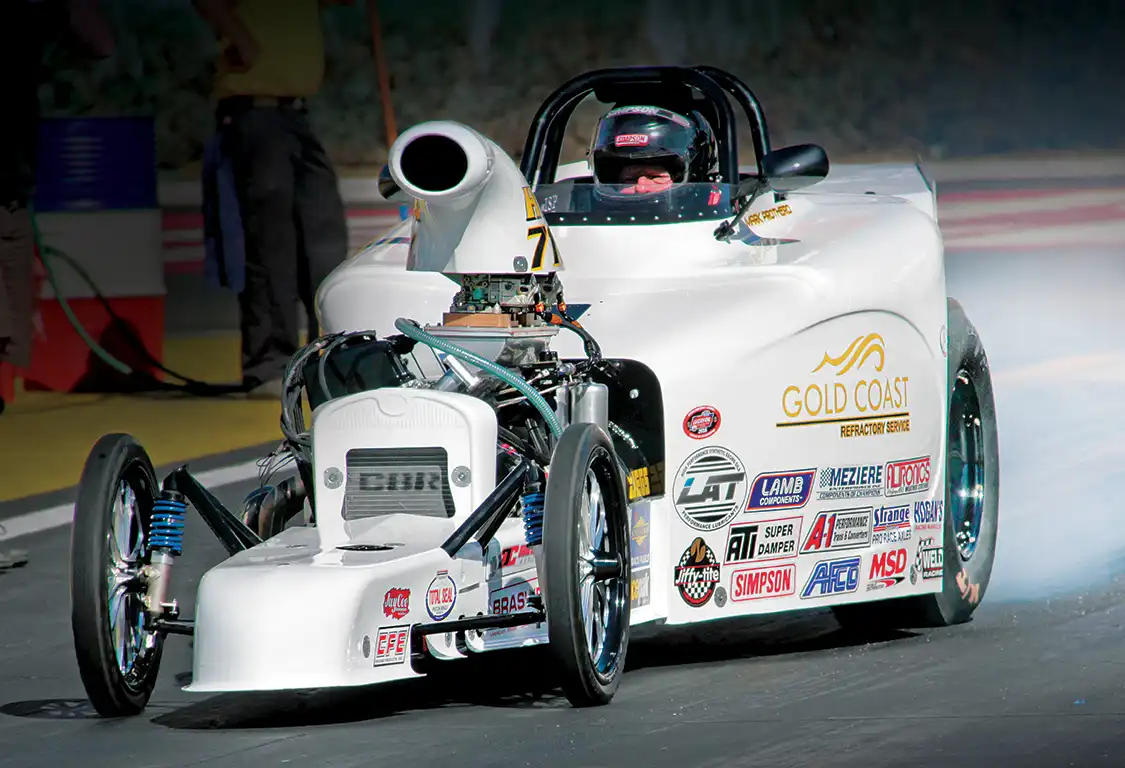
Mark Prothero coulda had a V-8. After all, it’s in his genes. Mark’s dad, Mert, was a long-time member of the LA Roadsters, and his cars were V-8 powered. His Uncle Van’s ’67 Camaro was the terror of both the drag strip and Bonneville. That car probably had more V-8s (big- and small-blocks) run through it than any other. As Mark is quick to note, when he was growing up, there was always something going on in the garage. As far back as he can remember he was regularly tasked with holding a wrench while his dad or uncle tightened the other end.
So that brings us to the question of the Honda-powered altered featured here. With all of that V-8 experience, why build a four-banger car? Simple: Mark wanted to do something different, but it didn’t begin with the altered. With the help of his pals, Mark built and campaigned a quick VW bug in NHRA Super Stock for years. The beetle even won class at Indy (among other event wins, Prothero owns five Wallys at last count). It was at Indy in 2015 that Mark made the decision to move to Comp Eliminator, but not in a Bug. He decided to build and campaign this Honda-powered H/EA Bantam.
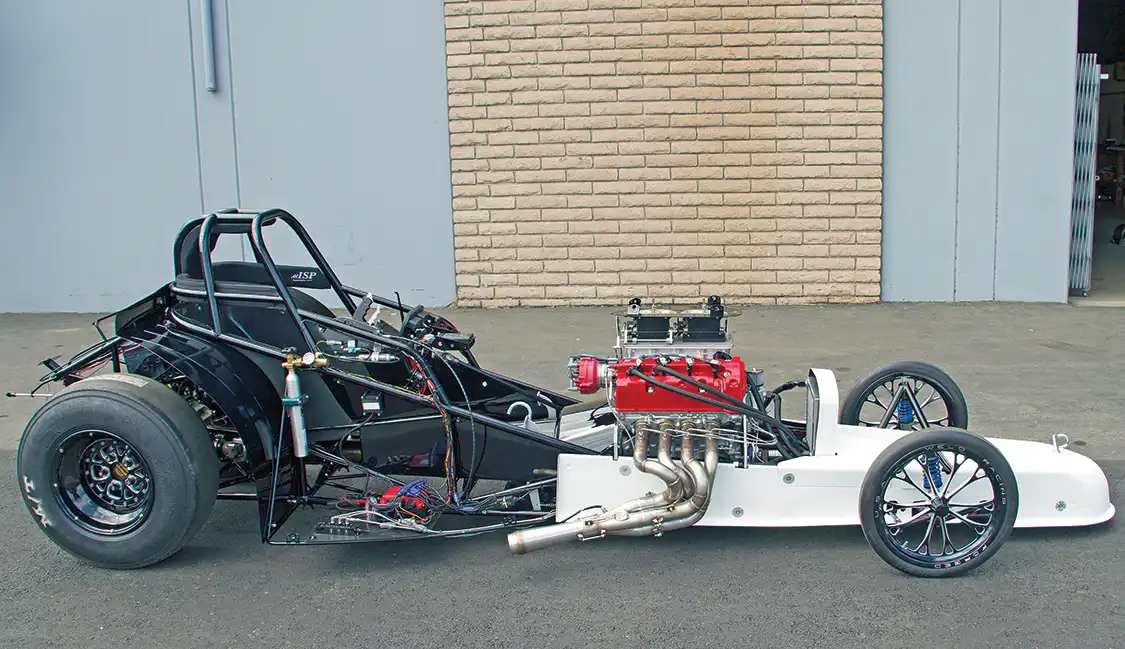
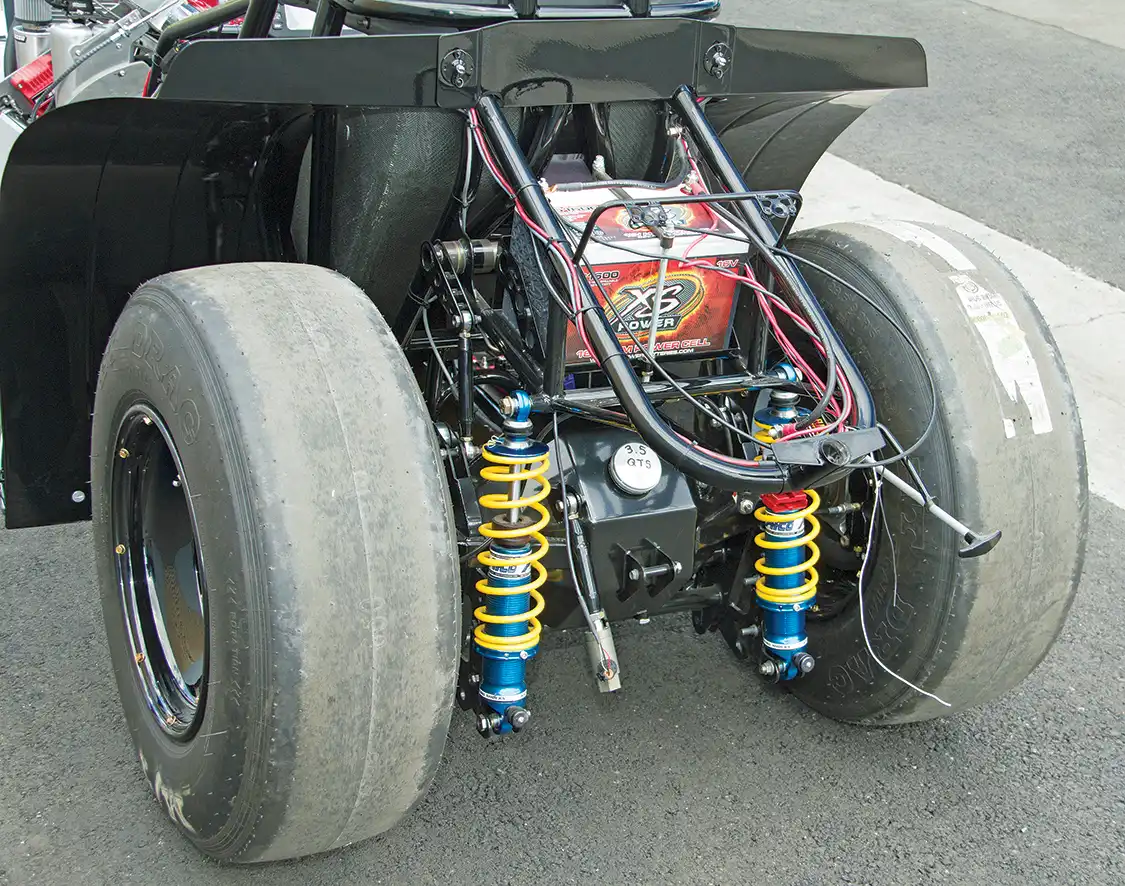
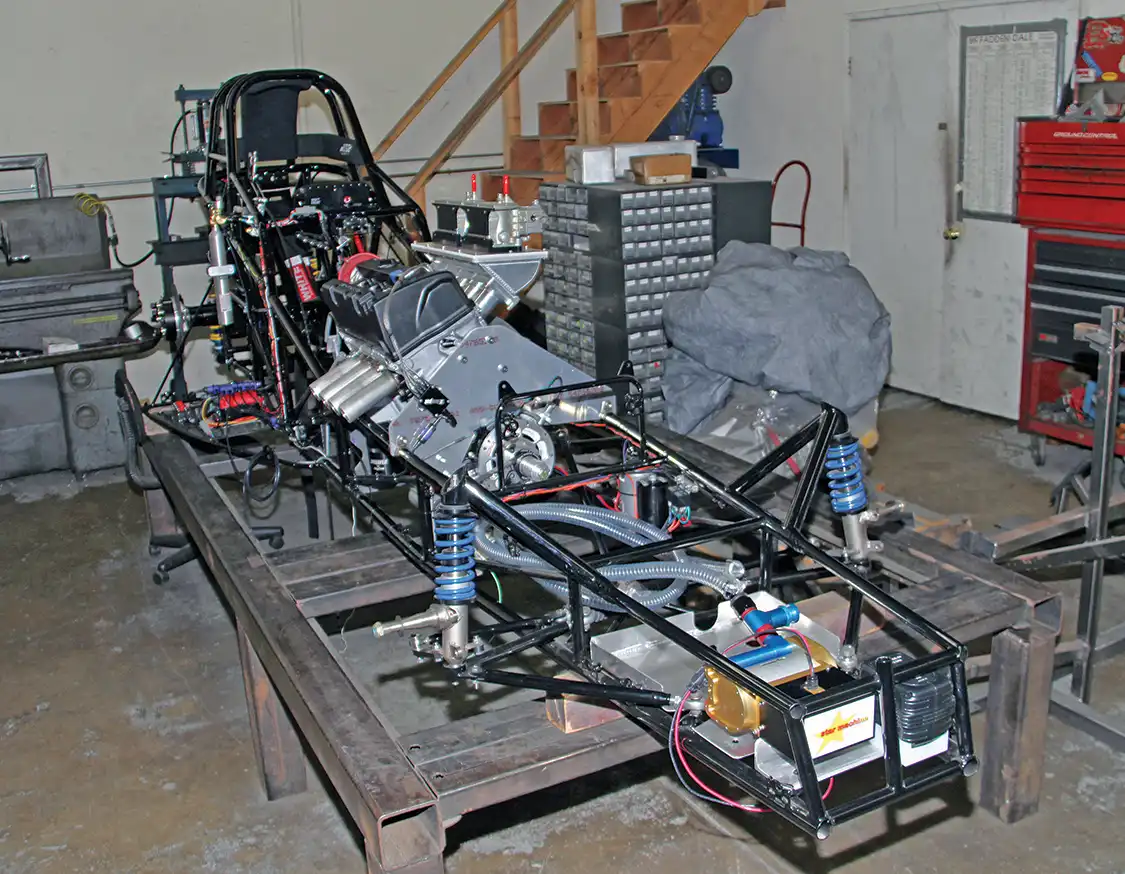
The foundation for the car began at Mike Spitzer’s race car emporium. While Mike could have simply used his standard Bantam as the basis, he knew every ounce would count in order to get the completed car down to minimum weight. Where NHRA-legal, smaller diameter and/or thinner wall 4130 chrome-moly tubing was used. Instead of a standard tripod front end, the car was fitted with a Strange strut arrangement. Out back, the car is fitted with a lightweight sheet metal 9-inch housing along with an equal-length 4-link. A beefy anti-rollbar is positioned directly above the housing, while the suspension action is handled by AFCO coil-over shocks. Up front, steering is by way of a Stiletto rack. A complete Funny Car cage surrounds Mark. Spitzer’s team fabbed the special motor plates for the Honda/727 transmission combination. The partial tubs and the firewall are aluminum, but the balance of the bodywork is flyweight carbon fiber.
Rolling stock consists of 17×2.25-inch Weld V series spindle mount wheels on the nose and matching 15×8.00-inch Weld Wheels out back. The front wheels are wrapped with 22×2.5-17-inch skins, while the backs are currently M/T9.00×29.5-inch bias-ply slicks. Mark has tried radials, but he figures the car works better with bias-ply rubber. Brakes are on the rear only, and they’re from Strange Engineering.
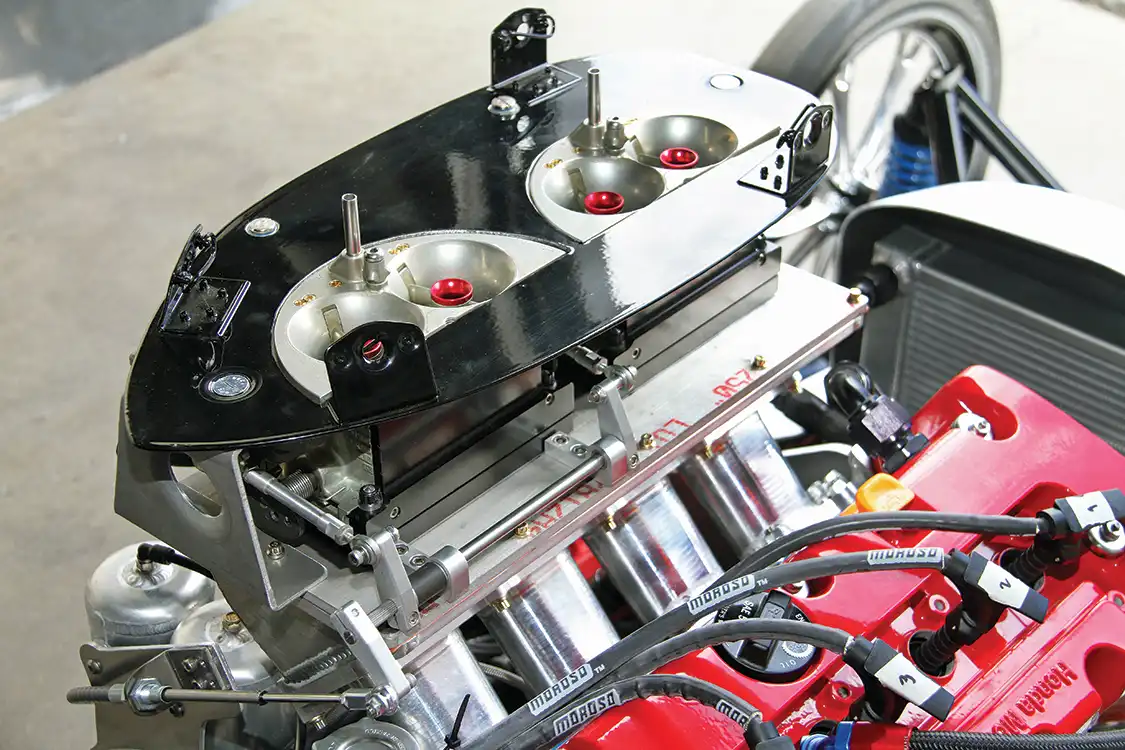
Power comes from Drag Cartel. Company owner Jeremy Lookofsky was a star in the NHRA Import series (he too has a collection of Wallys) and applied those years of experience to Mark’s engine build. The basis for the power plant is a 165-ci Honda/Acura K24/K20A block. The crank is a custom Sonny Bryant piece, while the rods are Drag Cartel-specific 300M Saenz pieces. Pistons are 16.2:1 compression ratio asymmetrical FSR forgings from JE. The four-cylinder Honda is a DOHC layout, the cams are custom 8620 billet steel models built and ground by Drag Cartel. Cam specs are, ahem, proprietary. The cylinder head is CNC ported in-house by Drag Cartel, and it’s complete with titanium intake and exhaust valves. Springs, retainers, locks and lash caps are from PSI, while the rockers are Ferrea’s latest generation rollers. The intake manifold is a custom sheet metal piece from Hogans. Mark has run through a wide selection of Braswell carbs, ranging from a split Dominators to 500-cfm two-barrels. The oil pump is from Daily Engineering, and the pan is a custom-fabrication by Ron Lummus.
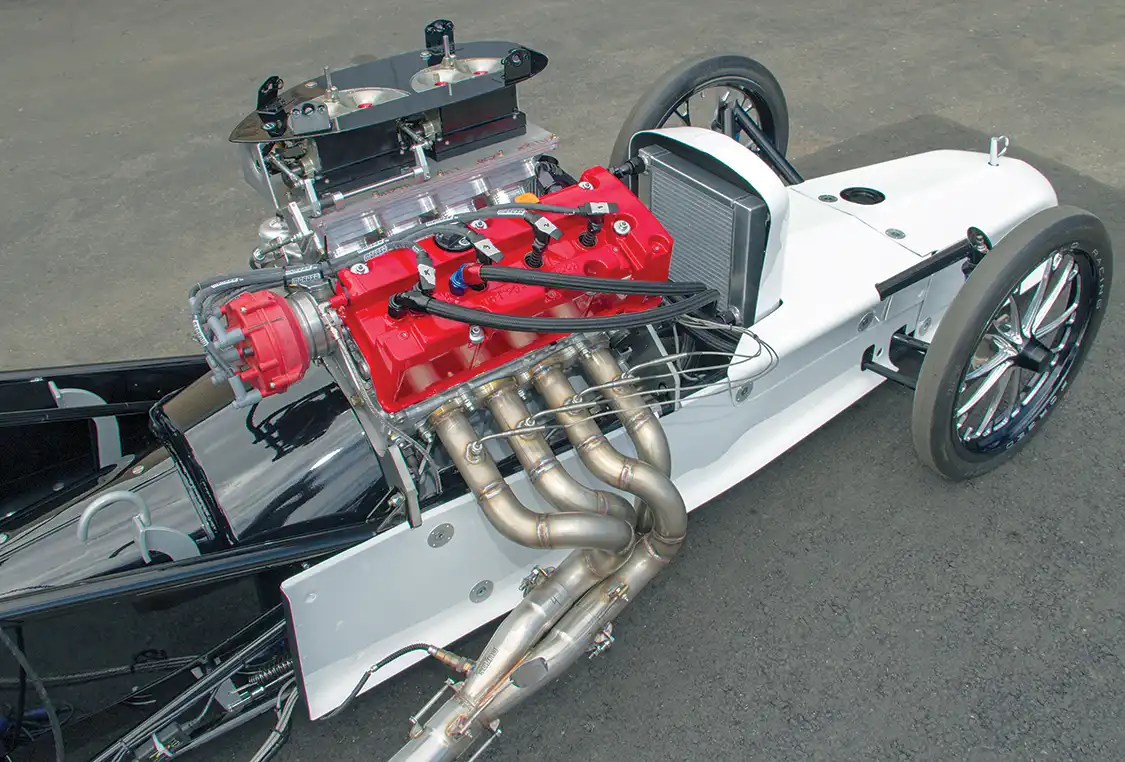
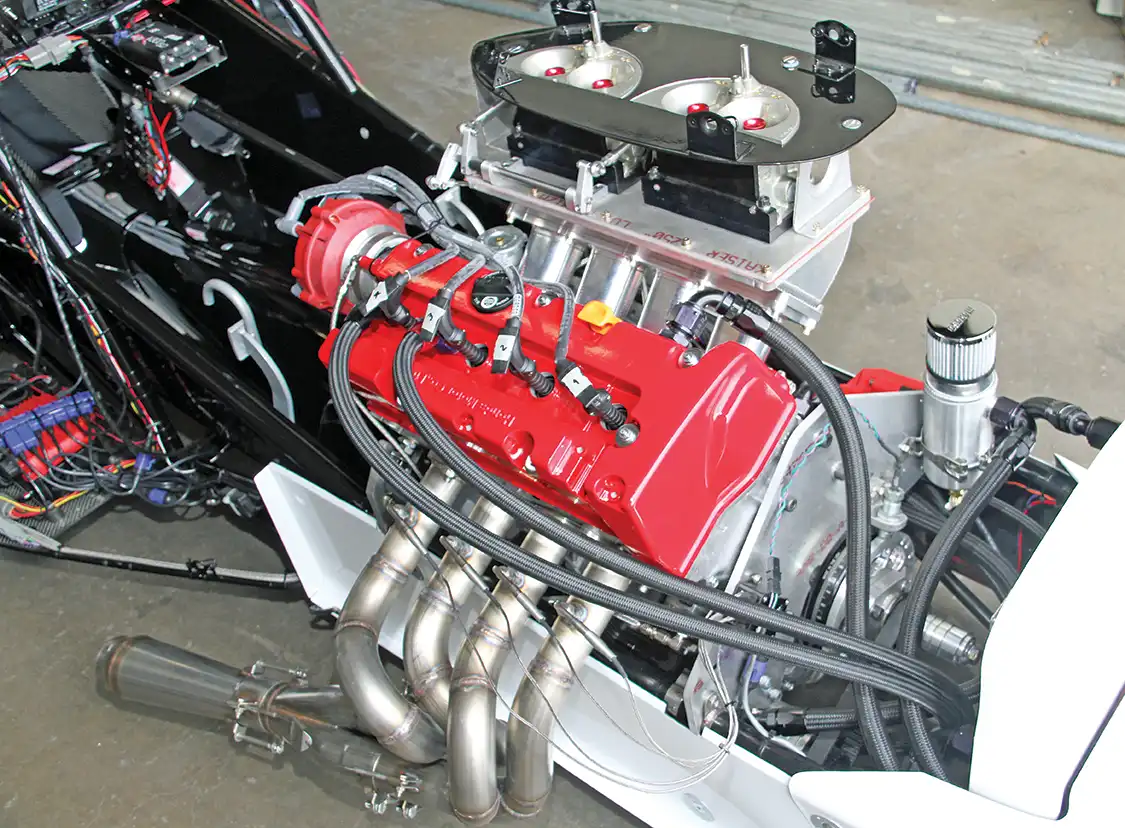
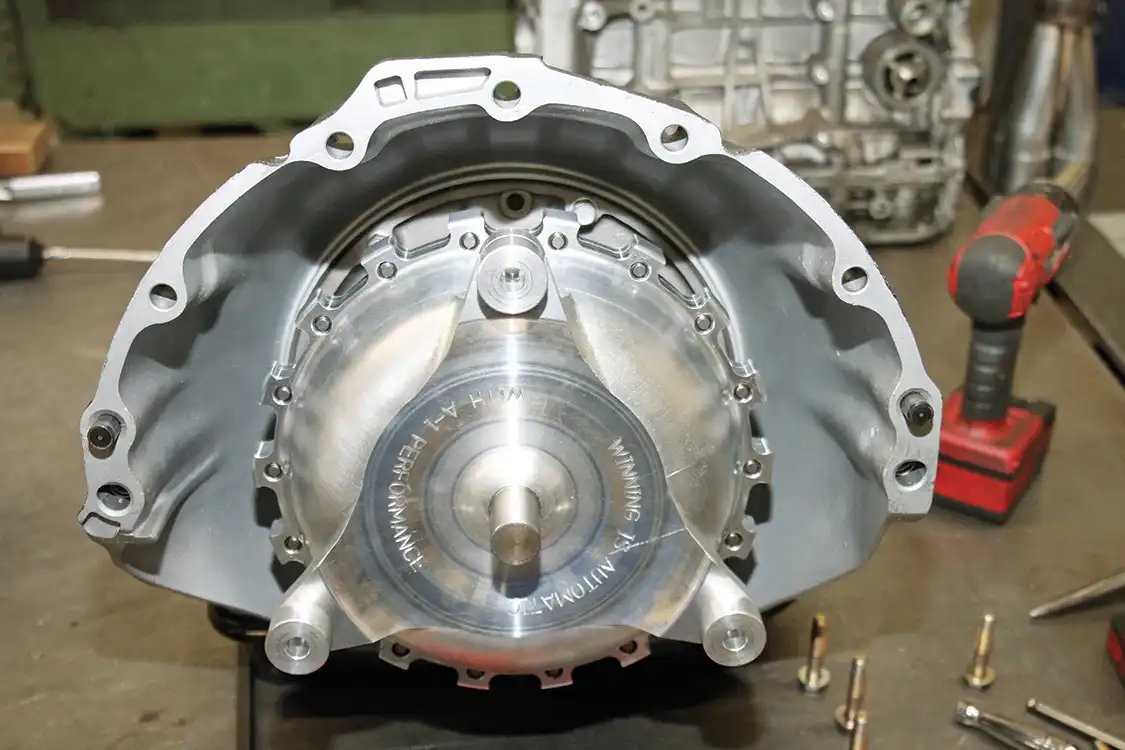
Transmission is a Mopar-based ProFlite trans from Alan and Adam Bowdish at A-1 Performance Trans and Converters. Essentially, the three-speed automatic transmission is based upon a 727-style case with 904 internals. The torque converter is a bolt-together aluminum model with a specially designed stator combination. Getting the car to leave consistently with a low-torque, high-rpm engine is a challenge. (Mark leaves at approximately 8,000 rpm and shifts it at approximately 10,500 rpm.) As a result, there’s been a lot of R&D with the package and it’s essentially a work in progress.
We mentioned the rear housing, it’s a Spitzer-fabricated sheet metal 9-inch Ford. Mark has a number of complete center sections on hand. They’re all Mark Williams/Lamb components, the difference being the gear ratios. The car tends to be very ratio specific for conditions, and as a result, there’s quite a bit of testing involved. As this is being written, the car is about to receive a 5.67:1 ring-and-pinion package.
Mark figures he now has a good handle on the carbs, gearing and tires. The transmission and converter are next. Once he nails those down, look out! We expect this thing to fly. Sure, he coulda had a V-8, but what fun would that have been?
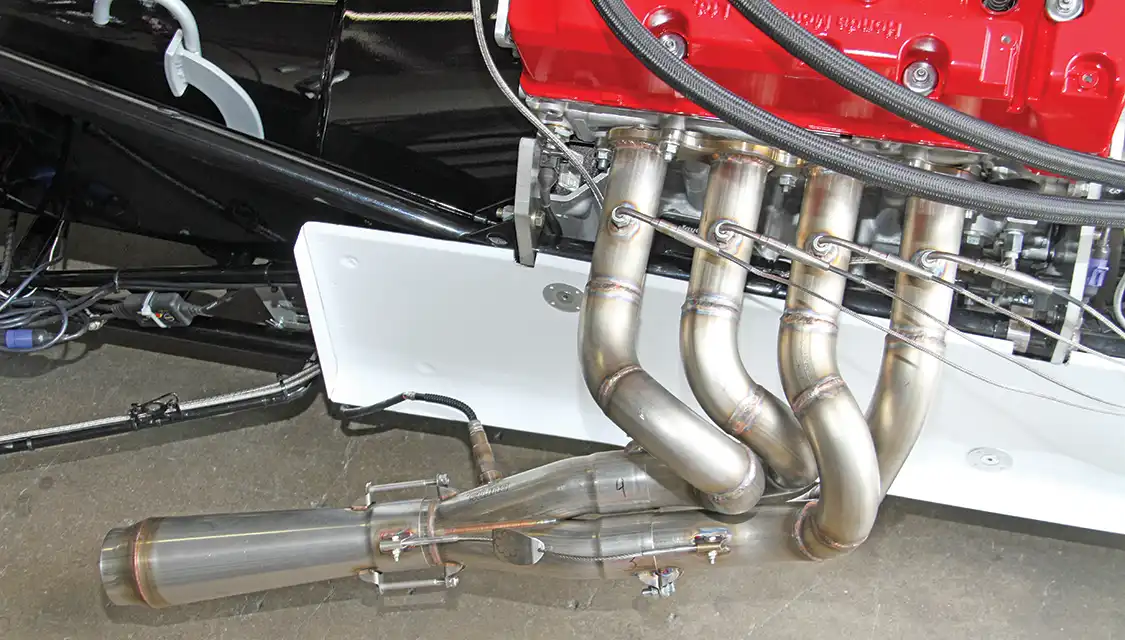
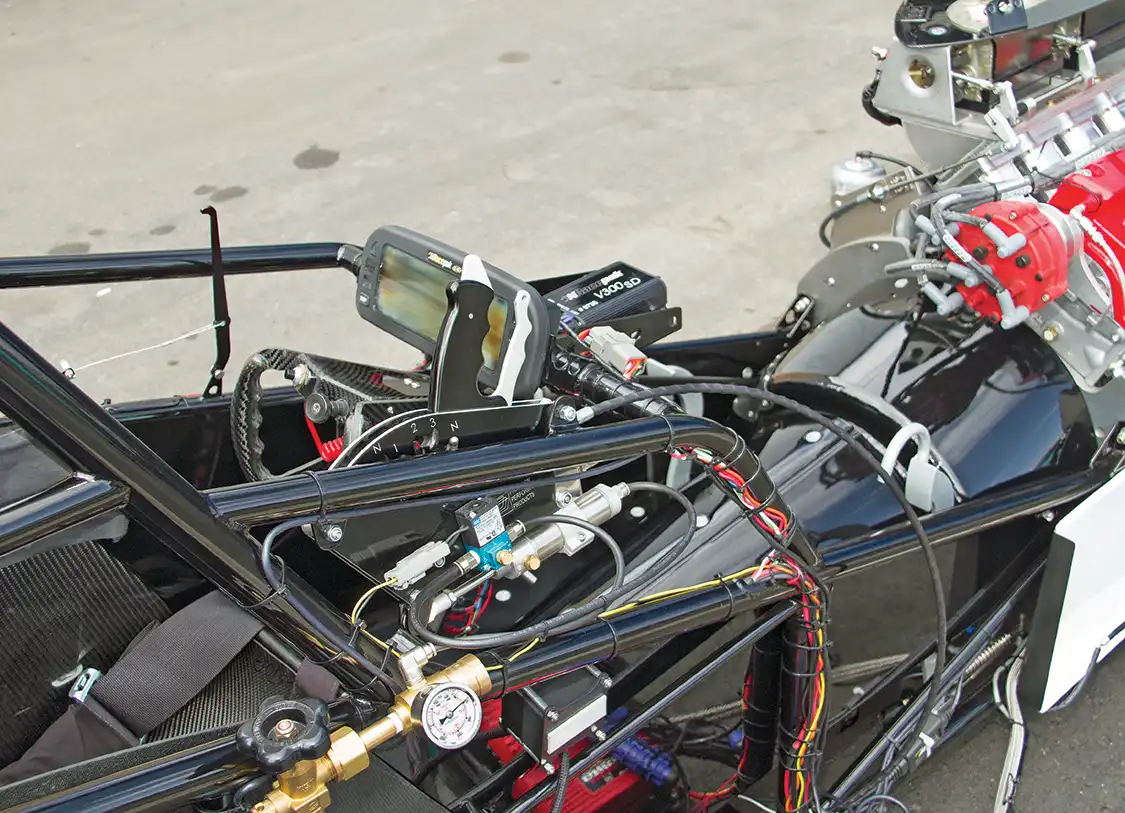
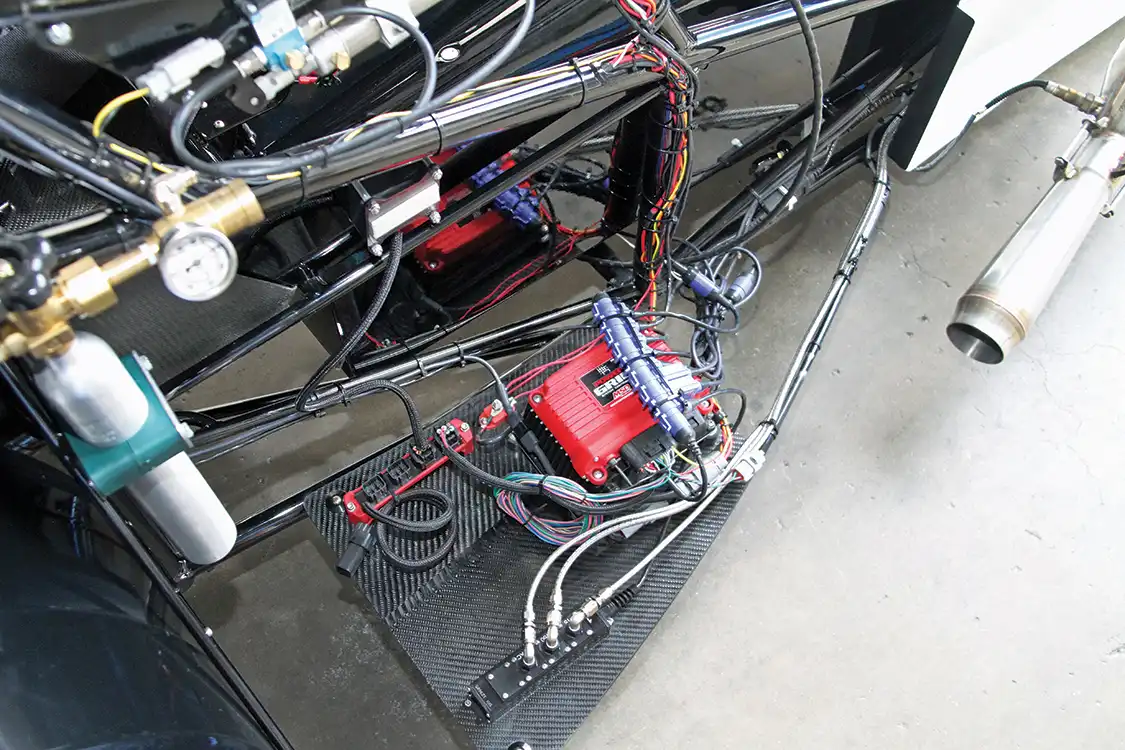
The guy who assembled all of the pieces is Ron Lummus, proprietor of Ron Lummus Racing. Ron has been building hot VWs for more than three decades and was involved from the beginning with Mark’s winning V-Dub efforts. Essentially, Ron assembled, plumbed and wired everything in the car (plus building big parts like the oil pan and stainless headers) and then blew it all apart for paint and detail work. Ron preps the car for each event, and he’s also responsible for handling much of the fabrication necessary to create such a unique project. Ron assists with updates on the car, and as you can well imagine at this stage (early in the development cycle), they’re almost constant.
Technology has played a big role in the development of the altered. Mark uses a Racepack computer system to acquire data, and he collects a lot of it. One issue Mark and his crew want to address in the near future is to determine transmission line pressure. They’re hoping it will help with transmission and converter development.
So how quick is the machine? At the 2016 World Finals, Mark ran .49 under the 9.56 index. Perhaps not killer numbers, but you have to remember he has perhaps fewer than a dozen laps on the car in total. Mark is just at the very tip of the iceberg. Testing is part of the big picture. Thus far the variables have been the carburetion (he has three sets of carburetors), gearing, tires, transmission and torque converter. Mark figures he now has a good handle on the carbs, gearing and tires. The transmission and converter are next. Once he nails those down, look out! We expect this thing to fly. Sure, he coulda had a V-8, but what fun would that have been?

Chevrolet
Bringing a whole new meaning to being in the doghouse We all love our dogs – and keeping them safe when they come along with… Continue reading
Anya Murphy . November 13, 2023

Chevrolet
Flaming on to Victory Mr. Top 10” is the name Brian McLane gave his truck after the same nickname was given to him by Darrell… Continue reading
Adam Johnson . January 21, 2026

Events
AS SEEN IN OUR TREAD JULY/AUGUST 2026 ISSUE – Buy Now! King of the Hammers King of the Hammers—it’s not just a race in the… Continue reading
Chad Dougla S . July 30, 2026

Drag Racer
Mike Bowman’s Odyssey to a $100k Pro Mod Payday Ask someone about their best day ever and you might hear stories about when they met… Continue reading
Rod Short Rod . July 13, 2026

Diesel World
Two Years and Counting! A CHILLY December day at the end of show season brings us to Inverness Florida for the second year of Small… Continue reading
JON DANIELS . March 06, 2025

Feature Stories
An Inside Look at This Family Friendly Off-Road Rig Like its namesake, this first-gen Toyota Sequoia Ian Lugtu meticulously customized isn’t just big—it’s bold. But… Continue reading
RICH CALBAY . January 17, 2025

Dino's Git-Down
State Farm Stadium, Glendale, AZ
Dino's Git-Down
State Farm Stadium
Goodguys 36th Autumn Get-Together
Alameda County Fairgrounds 4501 Pleasanton Avenue, Pleasanton, CA 94566
Goodguys 29th Speedway Motors Southwest Nationals
WestWorld of Scottsdale 16601 North Pima Road, Scottsdale, AZ 85260
We use cookies to enhance your browsing experience, serve personalized ads or content, and analyze our traffic. By clicking "Accept All", you consent to our use of cookies. Visit our Cookie Policy for more info.


 Please wait...
Share Link