








 Motortopia Staff
.
December 12, 2025
.
Press Release
Motortopia Staff
.
December 12, 2025
.
Press Release
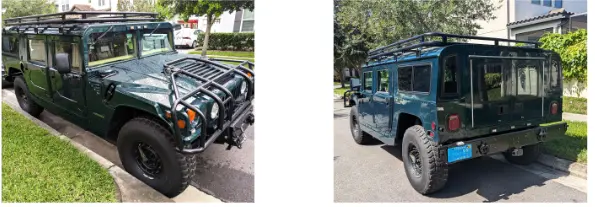
Ever feel like that initial spark of curiosity — “Could I convert my classic car to electric?” — has already been answered?
Good news: you’re not alone. What started as a niche conversation is now a movement. More and more classic car owners, hobbyists, and builders have already made the mental leap. They’ve driven an EV or already own one. They’ve felt the instant torque, the smooth regenerative braking, the quiet cruise, the reliability, and the real-life home charging habits. Once you get that experience, the question stops being “should I convert?” and becomes “how soon can I get started?”
That shift — from curiosity to conviction — is the real milestone for the EV-conversion community.
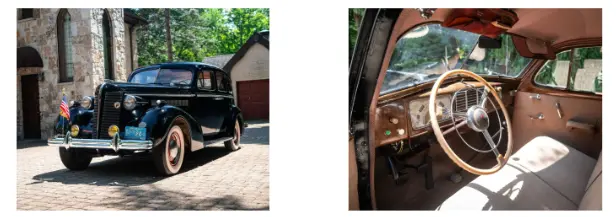
In 2023, most of the dialogue around EV conversion was educational. Forums, blogs, social media posts and early builds had to walk people through the fundamentals:
People who reach out to us now almost always have firsthand EV experience. Many own an electric daily driver or have driven one enough to understand the fundamentals: smooth acceleration, quiet operation, regenerative braking, dependable drivetrains, predictable range, real-world charging habits.
Once someone lives with those benefits, imagining them inside a beloved vintage car becomes natural — even irresistible.
That shift in mindset is one of the most important transformations in our community.
As enthusiasm rose, so did supply and expertise. What once felt like a scattered collection of one-off experimental builds has matured into a full-blown ecosystem.
The result: EV conversion is no longer for the brave few. It’s repeatable, and — most importantly — driven by real demand.
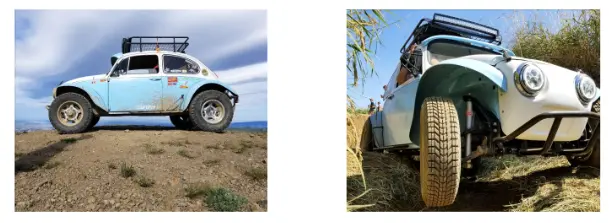
Because many people reaching out have already embraced EV principles, the conversation evolves quickly. Instead of debating feasibility, the focus turns to details and vision:
And with new tools such as our quick, easy range-and-cost calculator, owners can explore their options in seconds. It takes the guesswork out of planning and helps clarify what an EV-converted version of their classic could look like in the real world.
The EV conversion community thrives on a few core values:
When you join — whether as owner, builder, or admirer — you’re part of something bigger than a project. You’re contributing to a legacy of transformation, creativity, and sustainable passion.
Every classic-car owner eventually reaches a crossroads: Do I keep on fixing my car? Do I sell it? And now, do I take the leap and electrify it? It’s a deeply personal decision.
Some owners swear they’ll “never” change a thing — and yet, life has a way of reshaping our thinking. People who once insisted on keeping everything original now find themselves re-evaluating what “original” really means.
Maybe it’s the desire for reliability, or the frustration of chasing rare parts, or simply the realization that their car spends more time parked than enjoyed. We’ve watched enthusiasts who were firmly against EV conversions slowly open up to the idea before a test drive, then embrace it fully once they experience the comfort, silence, and simplicity of an electric drivetrain. Minds change. Priorities shift. And in the end, the decision is never about betraying a classic — it’s about choosing the version of the car, and the lifestyle, that makes sense for them and their family.
The question isn’t “Why go electric?” anymore.
The real question is: “When do we start?

Press Release
Wilwood Racing Releases New Front Left DPS Sprint Car Brake Kit Wilwood is proud to announce the release of its new high-performance scalloped rotor kit,… Continue reading
Motortopia Staff . December 22, 2025

Electric Vehicle Features
Stop dreaming and start driving — summer is almost here, and there’s nothing like that first silent, sun-filled drive to truly experience the magic of… Continue reading
Motortopia Staff . September 09, 2025
Press Release
SANTA ANA, CA. – (Feb. 12, 2025) –Yokohama Tire announced today it’s been named the Official Tire of Mustang Cup, a new six-round race series sanctioned… Continue reading
Motortopia Staff . February 19, 2025

Press Release
Wilwood Disc Brakes Releases Big Brake Kits for Porsche 911, Generations 996 & 997 Camarillo, CA • June 2024 Wilwood engineered big brake upgrade kits… Continue reading
Motortopia Staff . June 10, 2024
Press Release
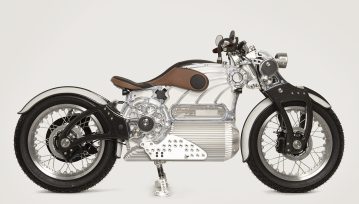
(Leeds, AL) – April 19, 2023 – Curtiss Motorcycle Co., a luxury electric motoring brand focused on building the best and finest hand-crafted motorcycles in… Continue reading
Nicole Hamilton . May 19, 2023
Press Release
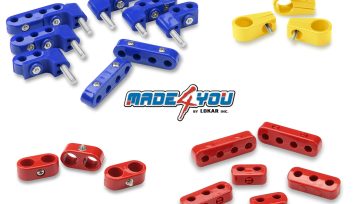
Need to step up your wire and tube management game? Made-4-You Products (M4YP), a leader in the automotive aftermarket industry since 1985 with worldwide sales… Continue reading
Chris Hamilton . May 22, 2023

Terminal Takeover 2026
21 airport rd Ext, Greenville, SC
Altered Metal 2026
Rayne, LA
Orange Beach Invasion 2026
The Wharf Orange Beach, Alabama
Southern Tradition Car/Truck Show 2026
Etowah River Park Canton, GA
Local Studebaker Drivers Club Chapter Private Tour Of John Muir House
John Muir House 4202 Alhambra Ave., Martinez, CA



 Please wait...
Share Link