








 Bob McClurg
.
May 01, 2026
.
Drag Racer
Bob McClurg
.
May 01, 2026
.
Drag Racer
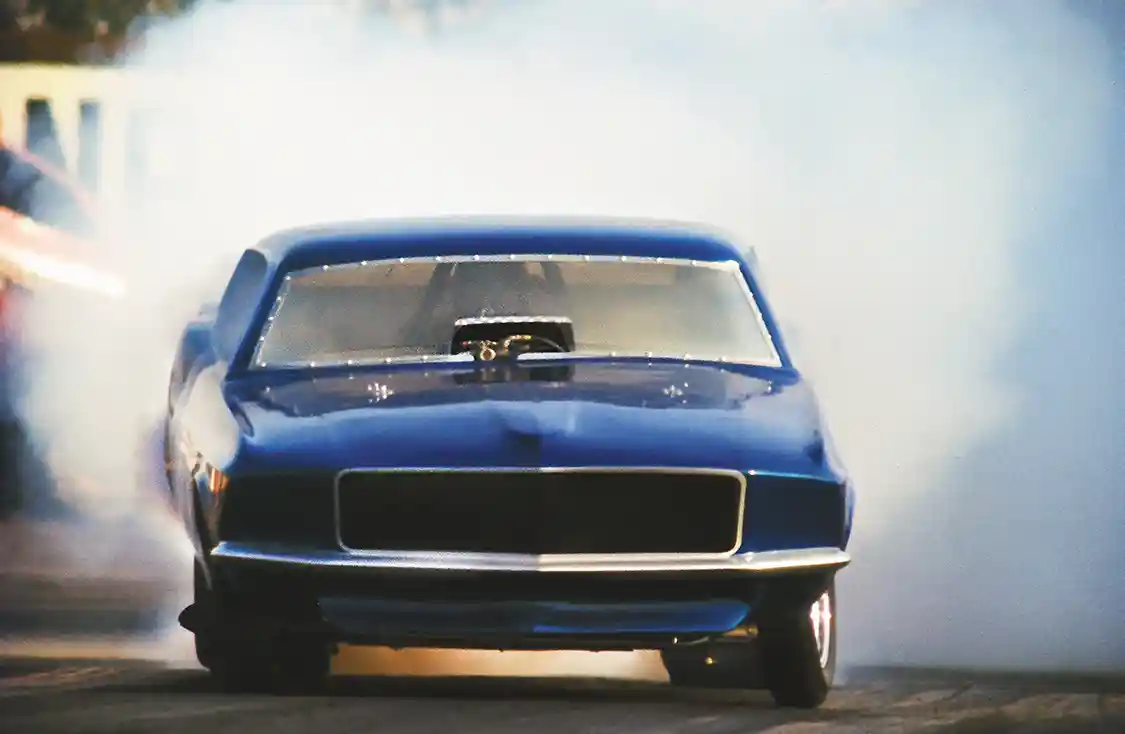
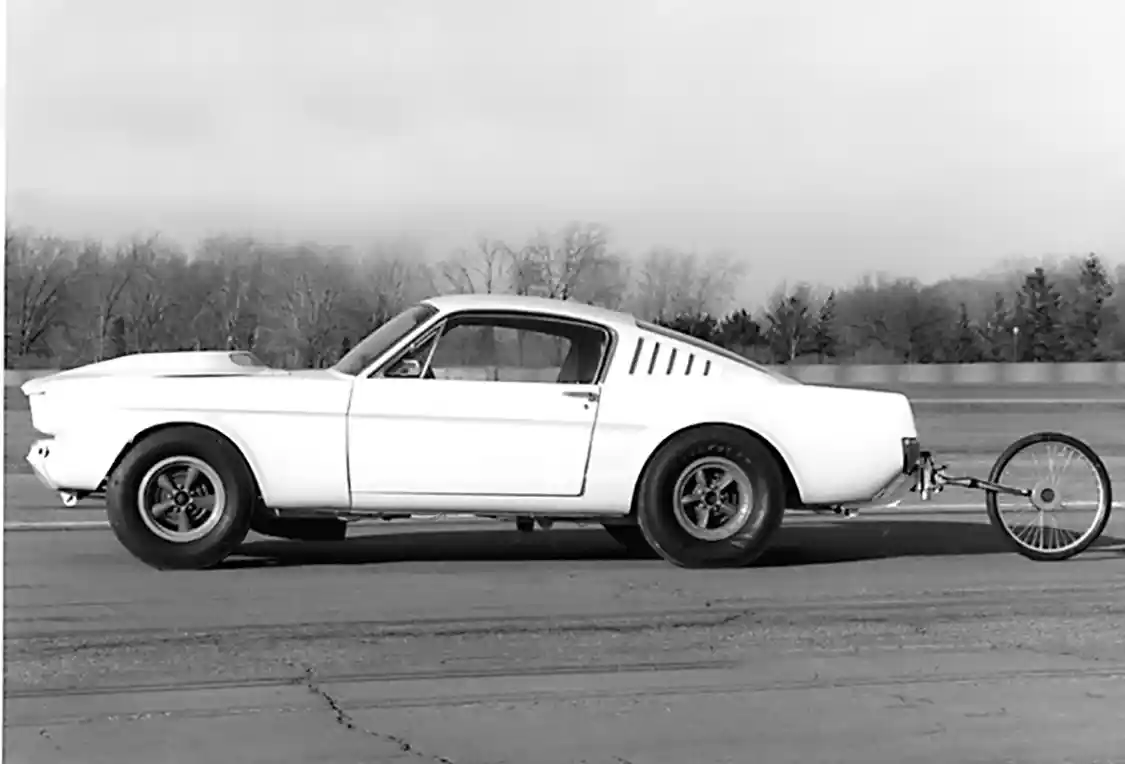
Fifty years of Mustang drag racing history and it all began with the humble Ford Falcon. In anticipation of the April 1964 release of the revolutionary new Mustang, Ford’s Stock Vehicles Department under the guidance of Charles E. Gray Jr., Vern Tinsler and Drag Racing Program Manager Richard H.“Dick” Brannan, commissioned Dearborn Steel & Tubing (DS&T) to build a fleet of 50 427 Hi Rise-engine ’65 Mustang fastbacks for homologation as NHRA-legal Super Stockers. Because Mustang and Falcon shared the same uni-body platform, DS&T initially built a 427 Hi Rise ’64 Ford Falcon early in the year as a development mule. This Falcon was built along the same lines as Ford’s phenomenally successful 427 Thunderbolt, 9-inch rearend, torque arm rear suspension, highly modified engine compartment, leapfrog front suspension, H-M 2×4 Ram Air 427 Hi Rise power, Ford top-loader four-speed, American mags, but at roughly 8/10ths the scale. Driven by Dick Brannan, and sponsored by South Bend, Indiana’s Romy-Hammes Ford, the Falcon ran as good as 11.28-128.79 in competition. “With the Hi Rise 427 Falcon program we had a basic platform designed and tested, and could go ahead and build a fleet of fifty 427 Hi Riser-powered Mustang 2 plusers for the upcoming season,” Brannan told Drag Racer.
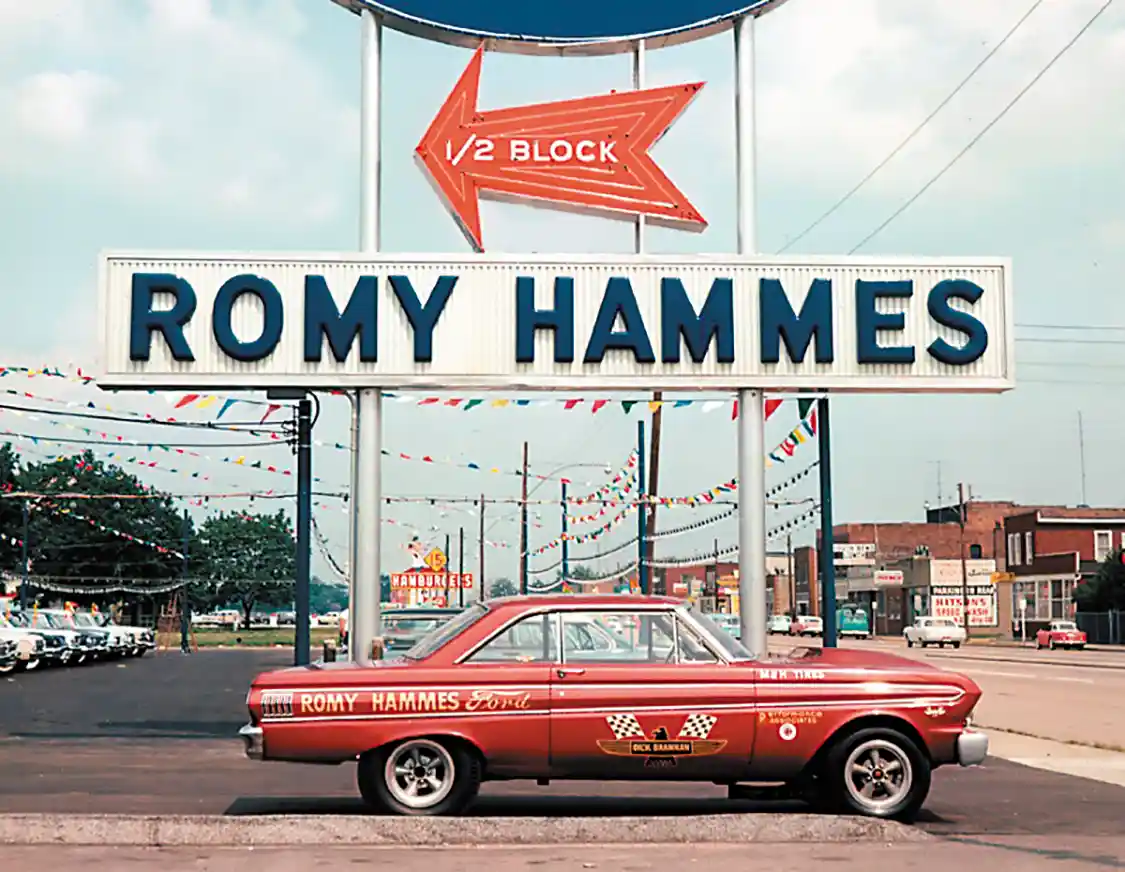
Now the second part of the equation comes into play: That same year Ford also released its 427 single overhead cam (SOHC) V-8 engine for NASCAR Super Speedway competition. Called the 90 Day Wonder By Hot Rod Magazine writer Eric Dahlquist, it would be Ford’s first computer-designed high-performance V-8 engine. Mechanically, the SOHC motor featured a slightly revised version of the 427 Hi Riser block as its foundation using a forged steel crank, specially developed Ford I-Beam connecting rods and 12:1 compression forged-aluminum pistons. Massive cammer cylinder heads weighing in at 75 pounds more than the 427 High Riser versions featured sodium-filled hollow stainless-steel intake and exhaust valves and NASCAR-grind camshafts riding on split shell bearing inserts. A huge timing chain similar to the one used on the 289 DOHC Indy engine kept everything in sync. A single Holley 4v intake was used. Factory rated at 425 hp, the 427 SOHC would have really given Chrysler’s equally new 426 Hemi a run for its money, but NASCAR wasn’t having any of it.
“When NASCAR outlawed the 427 single over head cam engine in the fall of 1964, Chrysler’s 426 Hemi fared no better, it freed up all of the 427 SOHCs that Ford Engine & Foundry had on hand, so we decided not to build the 50 427 Hi Rise Mustang Super Stock cars. We revised that number down to 12 427 SOHC A/FX Mustangs instead,” Brannan recalls.
Ford Special Vehicles chose T-Bolt program builder Andy Hotten at DS&T to build two 427 SOHC Mustang 2+2 development mules, one red and one white. The red 427 SOHC Mustang was actively track tested by Dick gather performance data.
“We [Brannan and Gray] shipped the red car to Pomona the day after Christmas 1964 and started testing. Then we learned there might not be enough 427 SOHC engines after all because Connie Kalitta had become involved with our department, driving a 427 Ford SOHC AA/FD, and needed spare engines for this completely new program,” Brannan said.
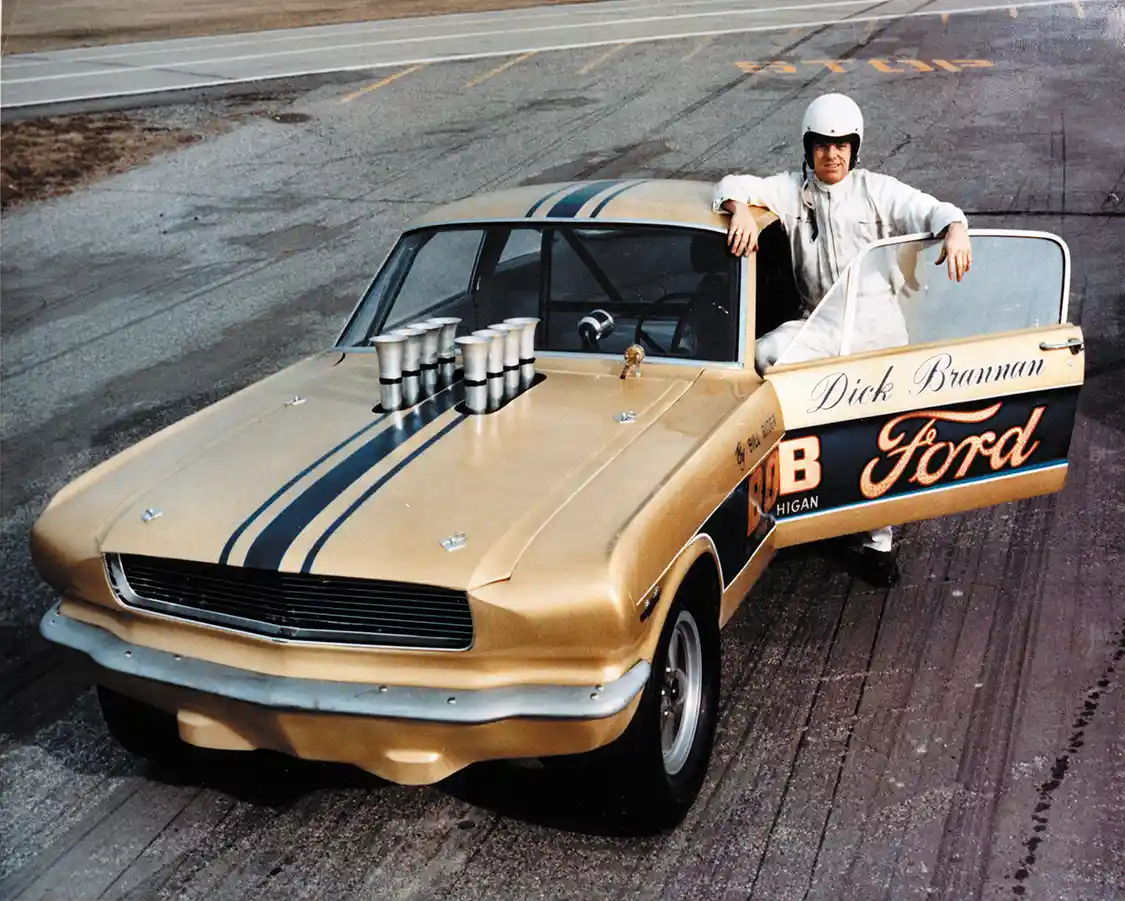
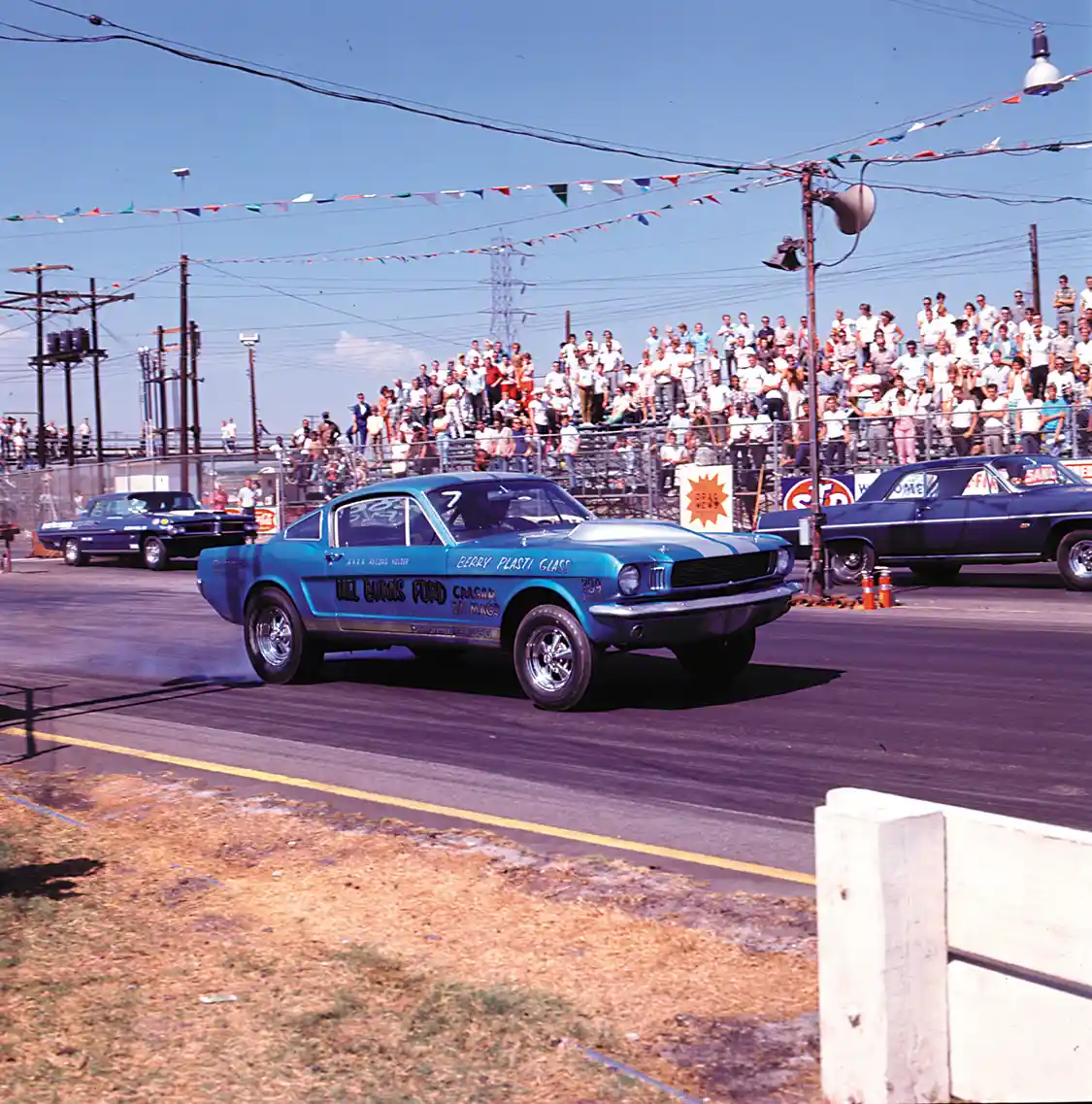
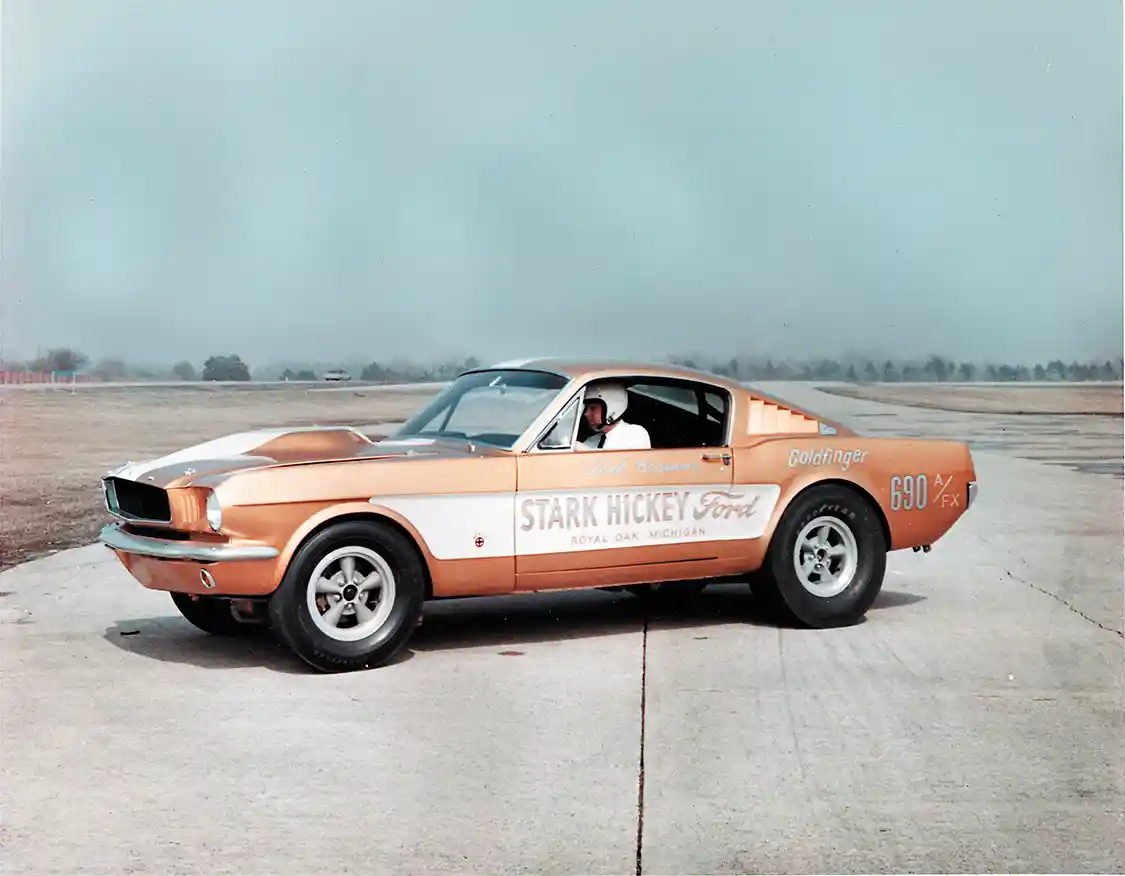
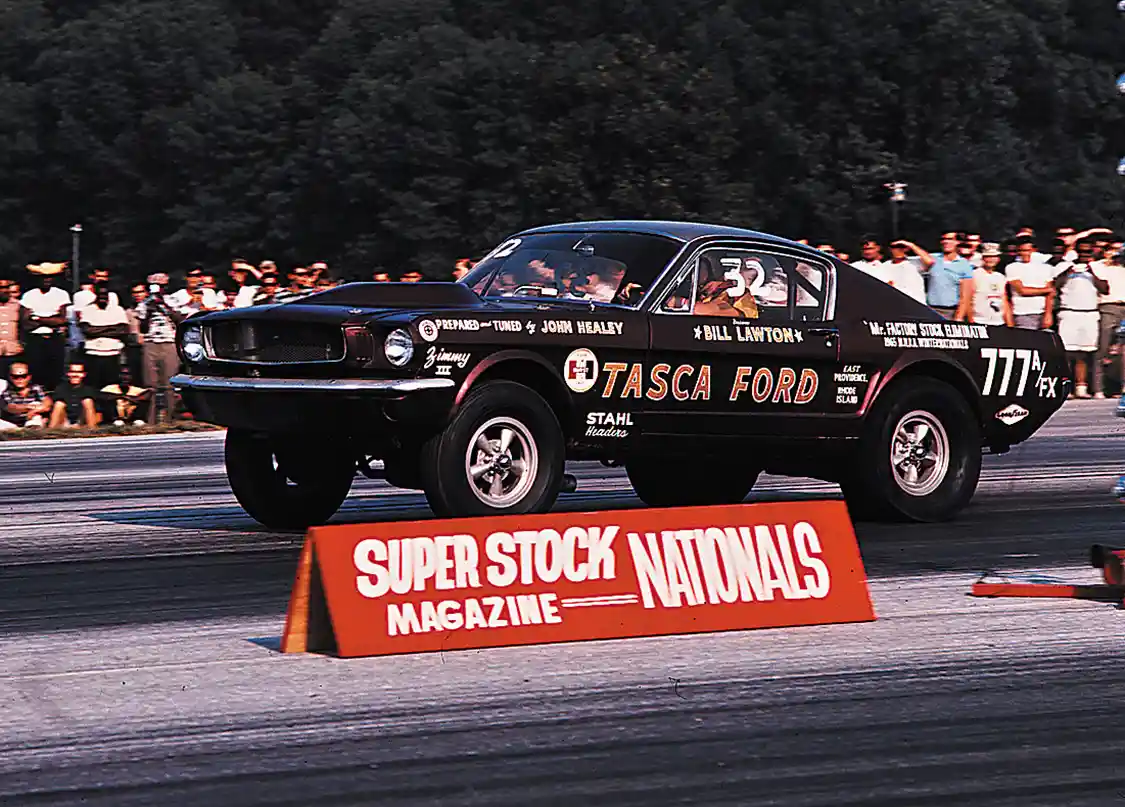
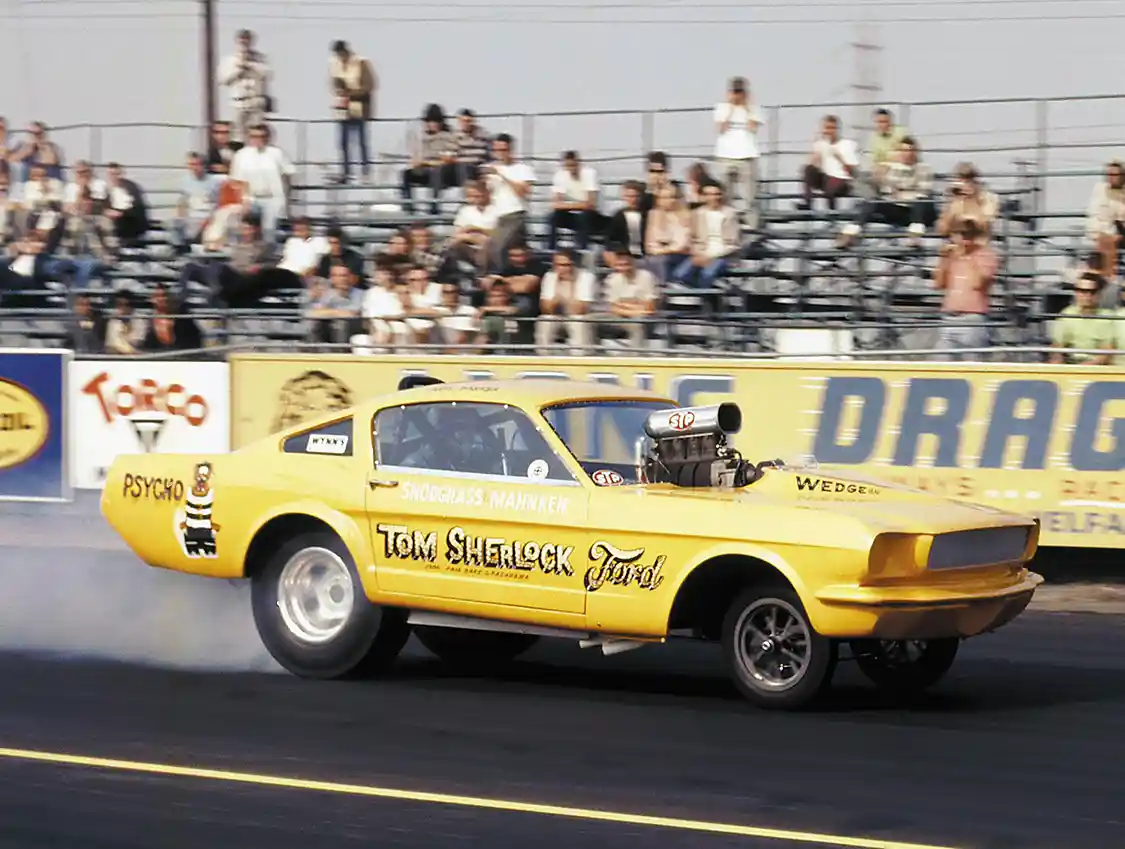
To further complicate matters, DS&T couldn’t guarantee ontime delivery of the remaining cars for the NHRA Winternationals. Charlie Gray contacted NASCAR constructors Holman-Moody (H-M) to see if they could commit to Ford’s timetable and they said yes. With H-M onboard, Ford shipped the white R&D mule to Charlotte, North Carolina where H-M would copy it and build the remaining cars. “Tasca Ford received the first H-M-built 427 A/FX Mustang,” John Healey recalls.
“We picked that car up at H-M and drove from Charlotte straight to Pomona. I remember Dick Brannan asking, ‘You didn’t set that car up yet, did you?’ I said no because all these motors were originally NASCAR motors. We changed the cams and did a bunch of other things and went testing at Pomona and Irwindale, and you know the rest of the story,” Healey said. Bill Lawton beat “Dyno Don” Nicholson in the first round, then Roger Lindamood, Tommy Grove and the Melrose Missile. In the finals, he beat Jim Thornton in the Ramchargers Dodge, running a 10.50-128.20. National Dragster wrote, “The mighty grip of the Mopars was broken. Ford picked the Mustang to lead their 1965 racing efforts, and Bill Lawton and Tasca Ford’s performance indicates that they are ready for many more trips to the winner’s circle!”
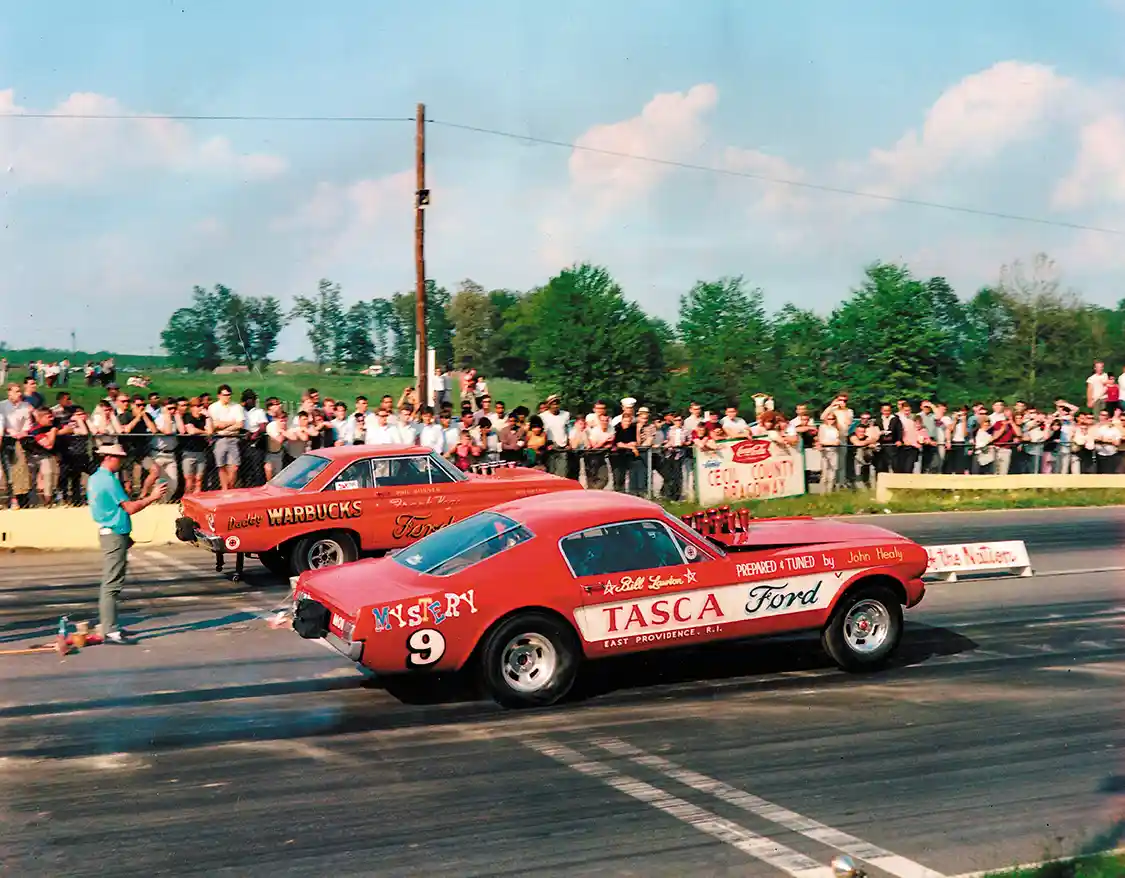
“That was truly one of the greatest races I’ve ever witnessed,” the late Bob Tasca Sr. commented at one point, “at the time, Lawton was probably the sharpest guy around out of the gate. Of course he had a good set of wheels underneath him. I never gave him anything to drive that he was ever ashamed of.”
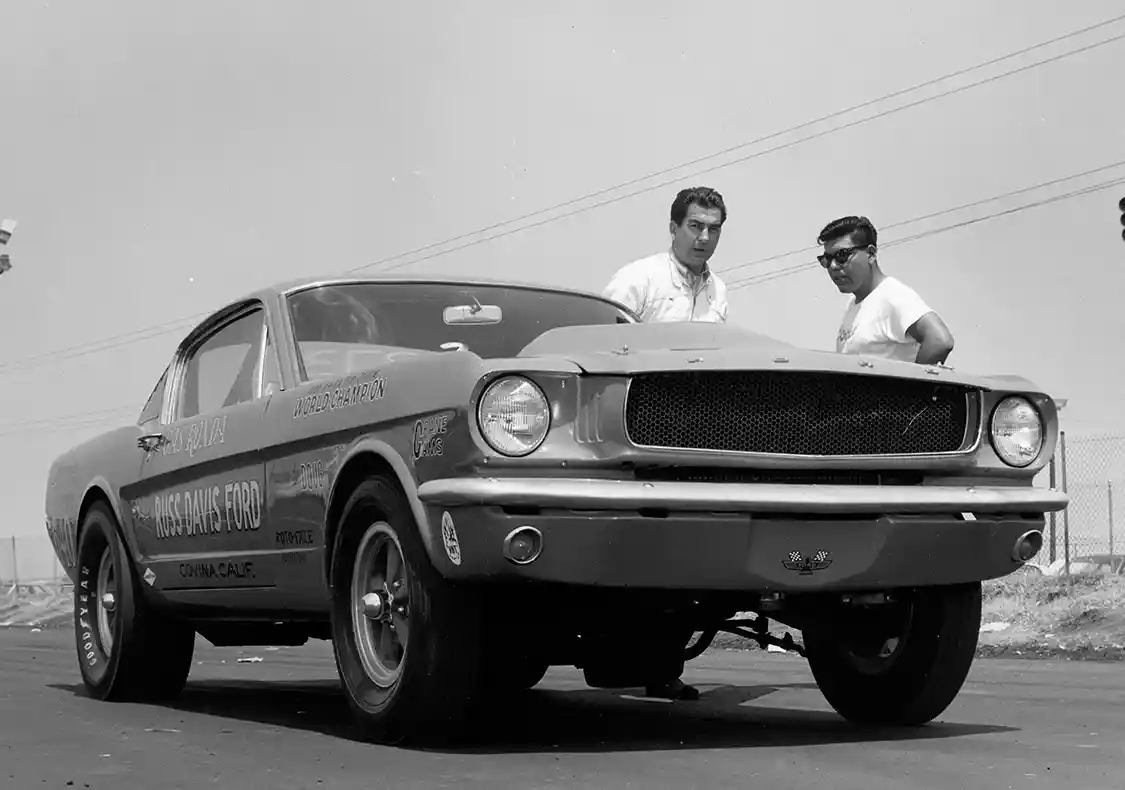
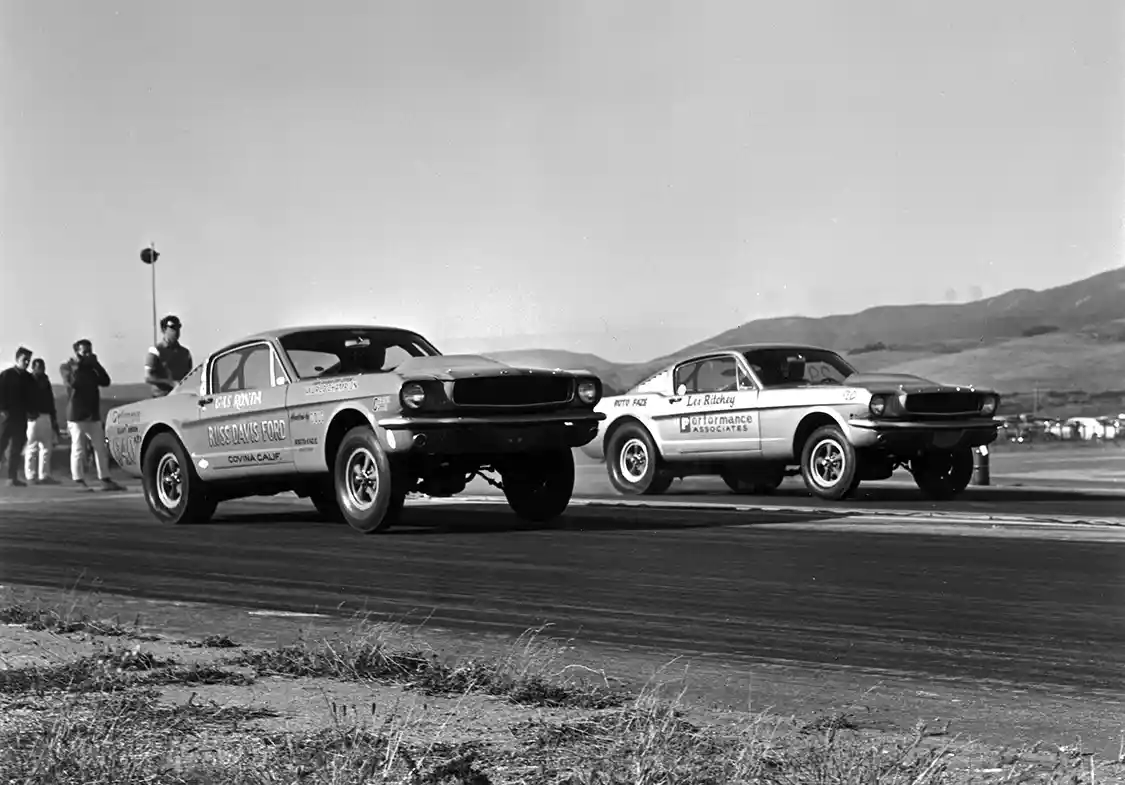
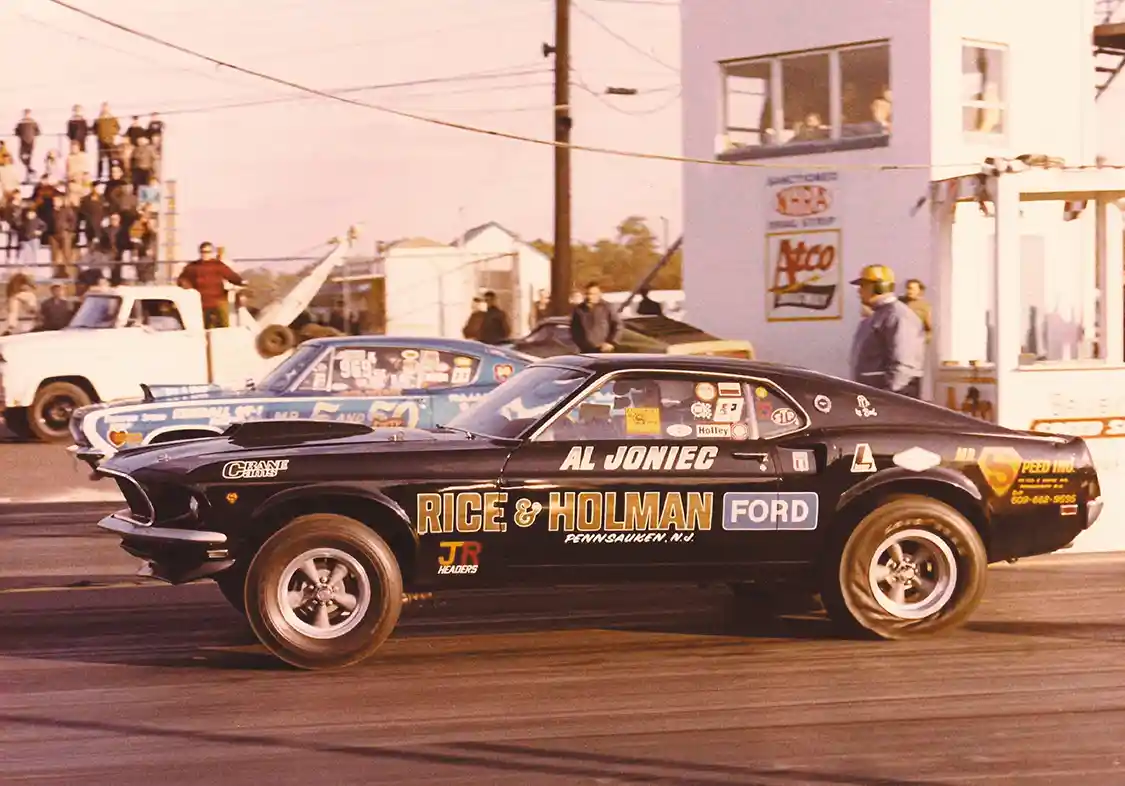
The 427 Mustang fastback of Tasca, Lawton & Healey continued to dominate A/FX, scoring a runner-up spot to Ronnie Sox on a redlight during the Top Stock final at the NHRA Spring Nationals, and winning the Super Stock & Drag Illustrated Nationals at York, Pennsylvania. Things were no different with the rest of the Ford Drag Team. Gas Ronda, Phil Bonner, Al Joniec, Les Ritchey, Tommy Grove, Len Richter and Dick Brannan also experienced good fortune with their A/FX Mustangs. Phil Bonner set Low E.T. of the Meet for A/FX at the 1965 AHRA Winternationals at 10.83. Ronda set an A/FX record at Carlsbad Raceway at 10.87, but unfortunately broke an axle a couple of weeks later at Lions and totaled his first Mustang. Ford quickly replaced it with a car originally intended for Oregon Ford star Bill Ireland. Gas rallied winning Top Stock at the AHRA Nationals and was runner-up to Les Ritchey’s Mustang in A/FX at the U.S. Nationals.
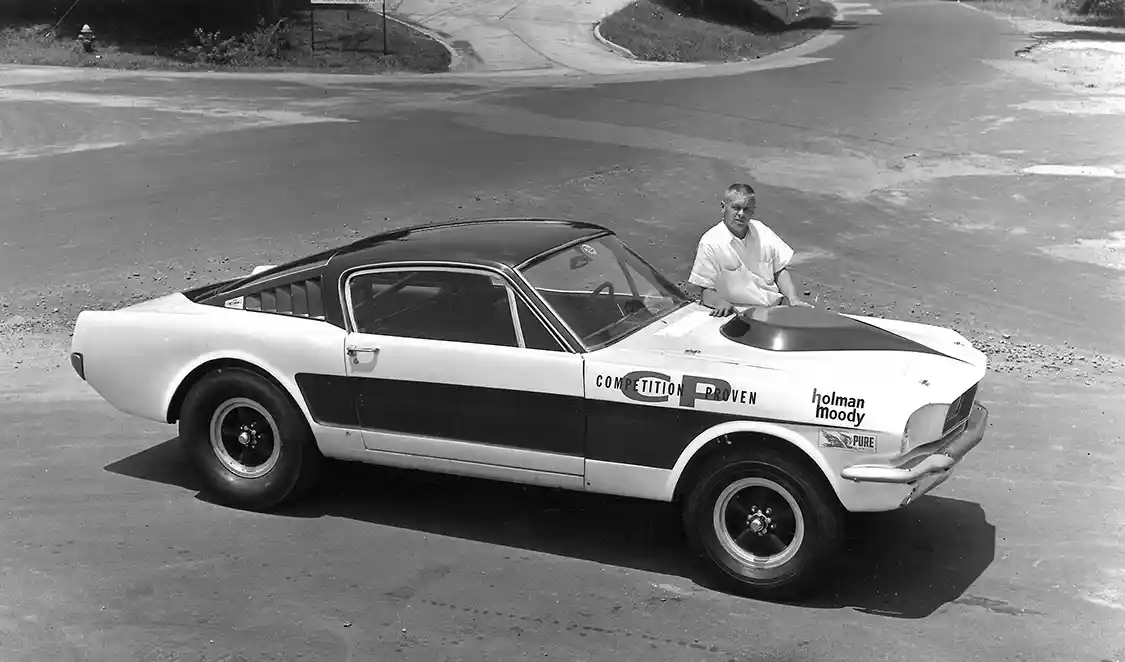
However, things were changing rather quickly in the class. The legitimate A/FX cars were suddenly sprouting fuel injectors, thanks to Chrysler, and burning small doses of nitromethane. Privateer entries from the GM camp, including Pete Seaton, Tom Sturm, Malcolm Durham, Doug Thorley and Arnie Beswick, blended into the mix with Ford, Mercury and Chrysler. Before you knew it, it was all-out warfare.
By late 1965, Ford had built a number of altered wheelbase 427 SOHC Mustangs tested by Brannan. A couple of these cars were equipped with C-6 automatic transmissions and fuel injection instead of carburetors and four-speeds for testing the effects of nitromethane in anticipation of what would be coming the following season. Various wheelbases were tested along with front and rear spoilers and the like. Ultimately the 112-inch wheelbase design proved ideal. Since Tasca was the second largest Ford Dealer in the U.S., and played a key advisory role in almost every Total Performance drag racing program being developed at Ford, it was only natural that he was privy to what was going on with the Ford Drag Council cars. As such, Tasca received the first H-M built 112-inch wheelbase Mustang match racer, aka the Mystery 9; however, he participated with some degree of reluctance. “I had no reason to build a Funny Car,” said Tasca. “As far as I was concerned, the Ford Motor Company should only have been involved in racing if racing sells cars and parts. My motto was win on Sunday, and sell on Monday. Now really, how many Mystery 9s am I going to sell off my showroom floor?”
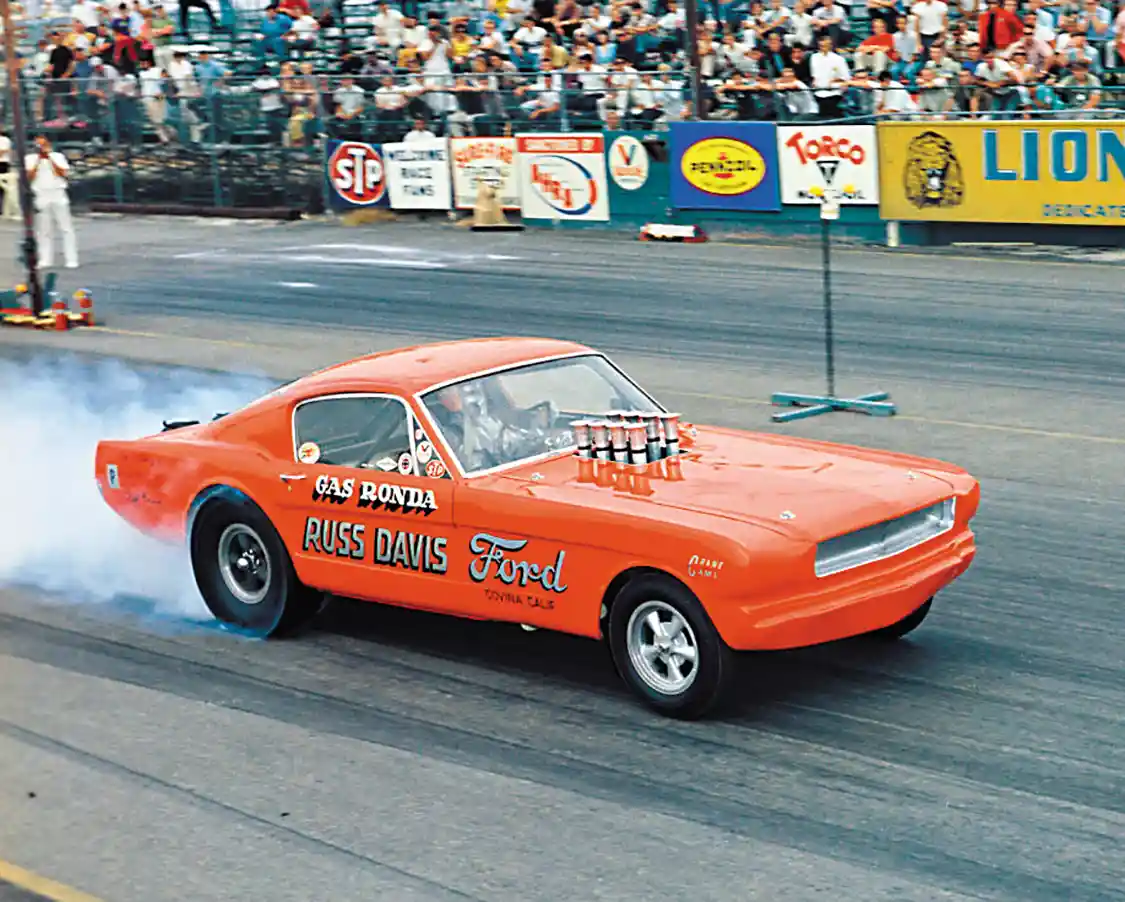
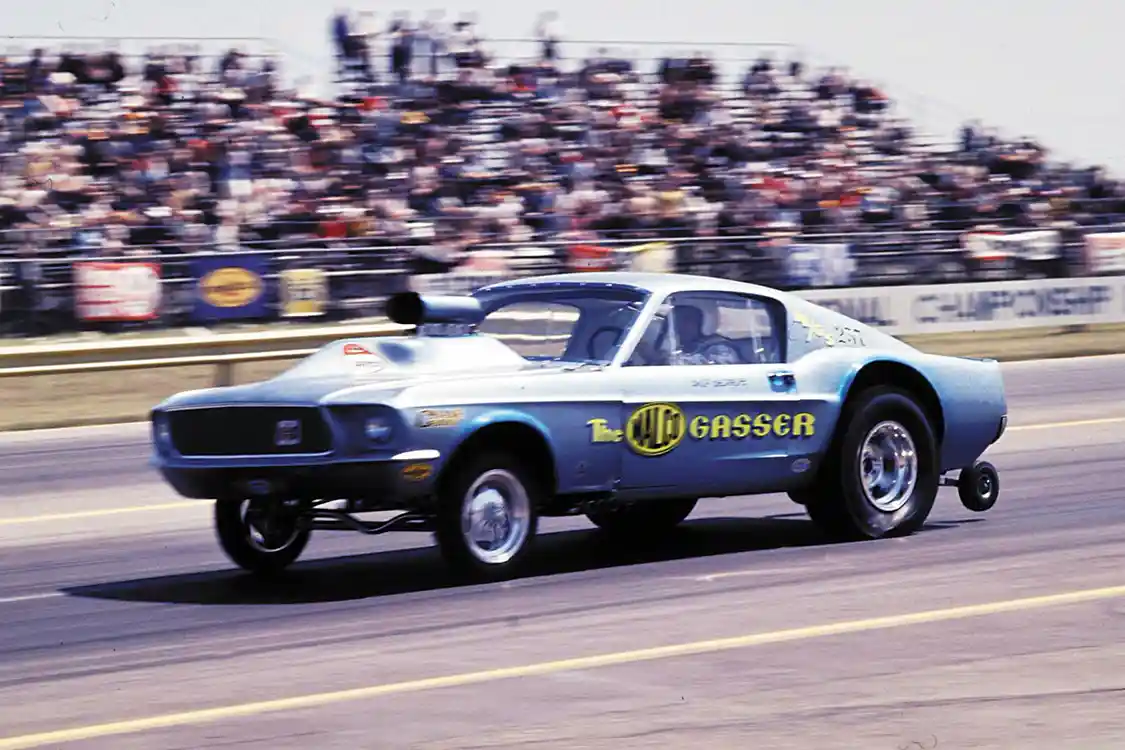
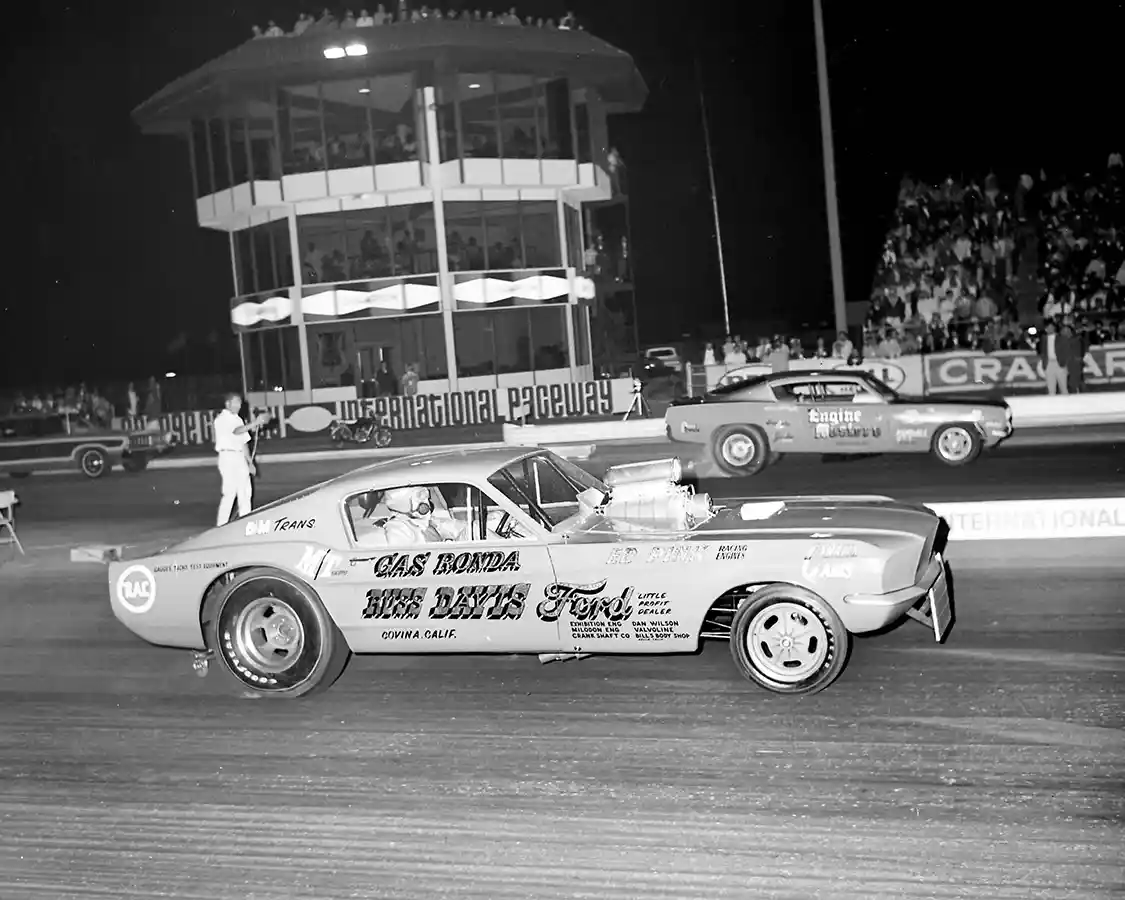
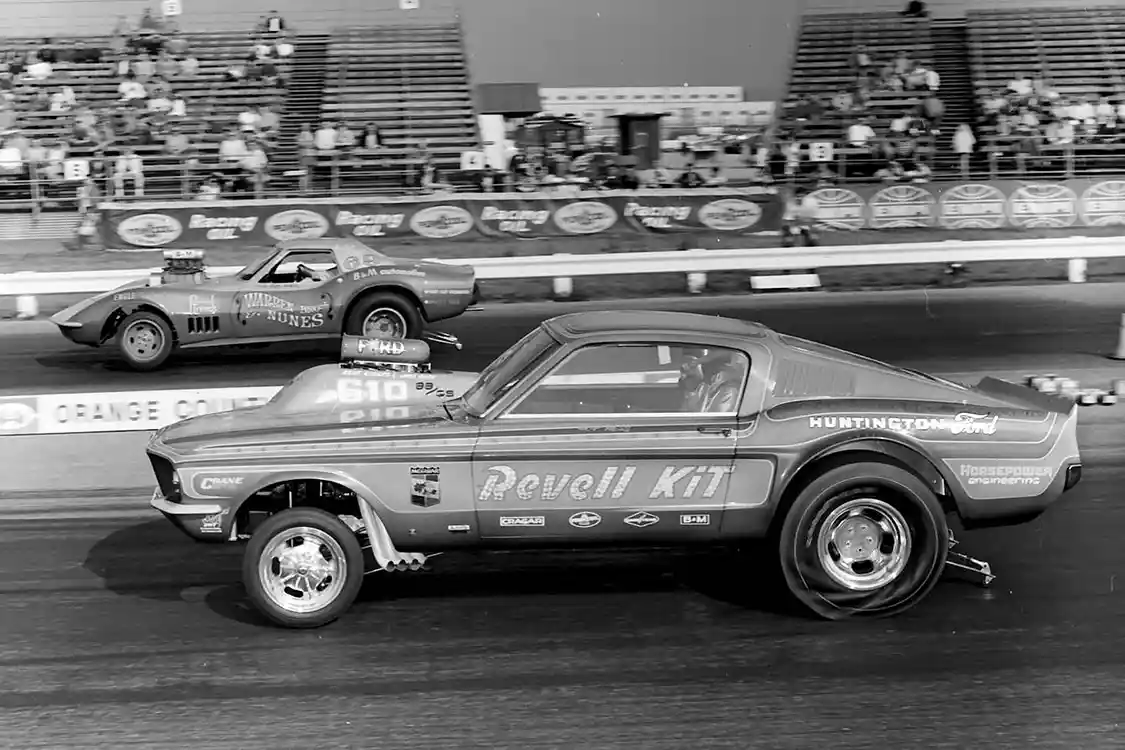
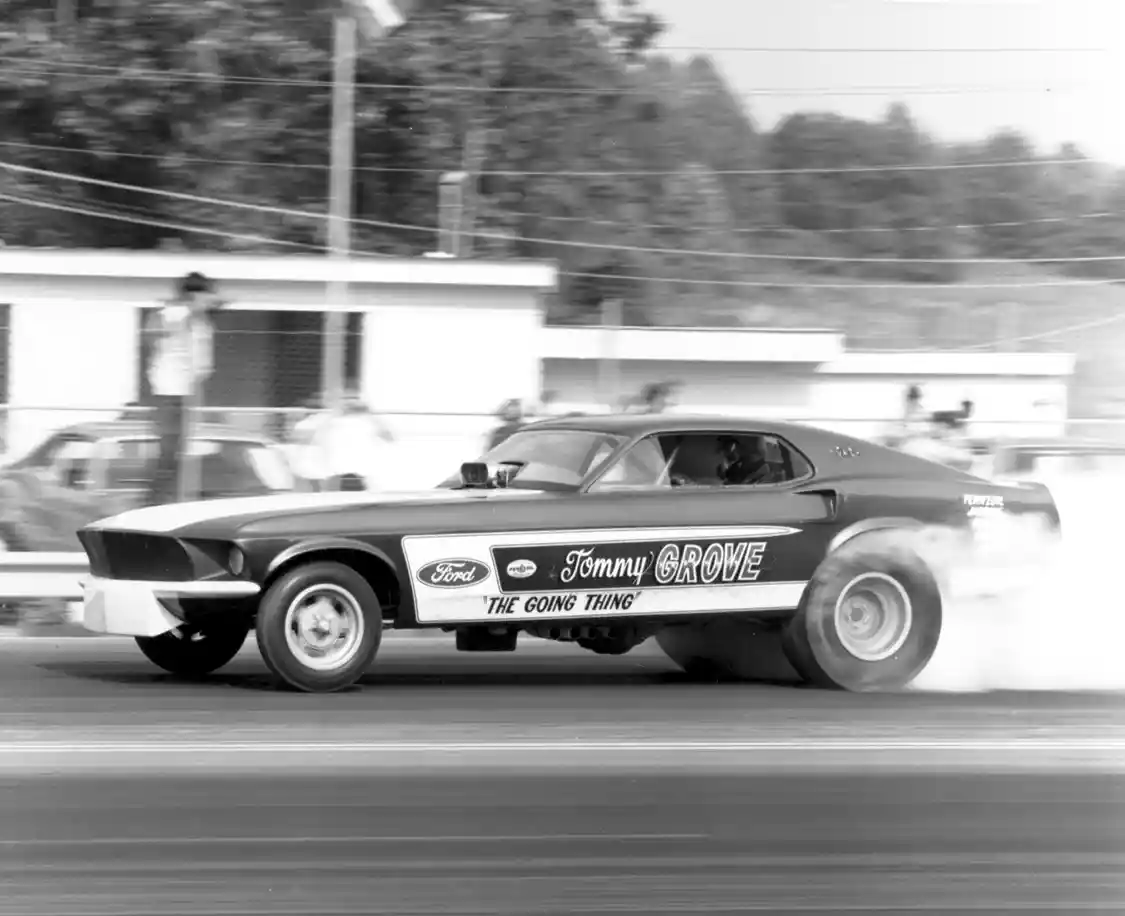
The Mystery 9 match race Mustang program proved an instant hit with drag racing fans. In fact, the car that debuted in late 1965 was so successful that Ford used Mystery 9 as the basic blueprint for the 1966 Ford Drag Council program. H-M continued to build/convert the record-setting cars for Brannan, Gas Ronda, Phil Bonner, Darrel Droke, Tommy Grove, Al Joniec and others. The 1966 AHRA Winternationals marked their debut, with Tasca and Gas Ronda facing off in the final, which Tasca won.
“Of all the cars I’ve driven, that ’66 was my favorite car,” Gas Ronda said. By mid-1966, Ford, like Chrysler, realized what Tasca had been saying from the beginning, “Ford doesn’t sell Funny Cars so why be involved with them?” In March of ’66, Ford chose to shift its corporate focus to its new 427 R-Code Fairlane program. Huge cutbacks to the Funny Car program came in early 1967. Those Ford FC racers who remained on the deal were instructed to choose a car builder. Gas Ronda chose Exhibition Engineering, while Grove and Bonner selected Logghe. Other racers like Joniec elected to stick with what they had.
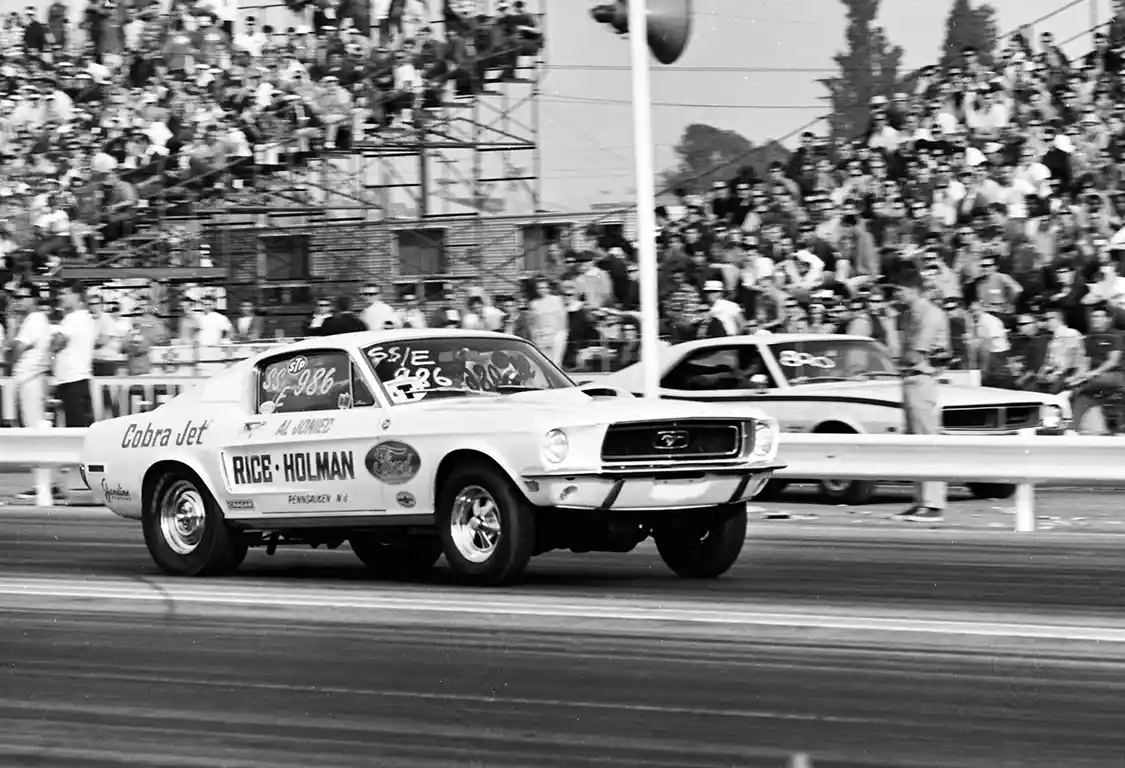
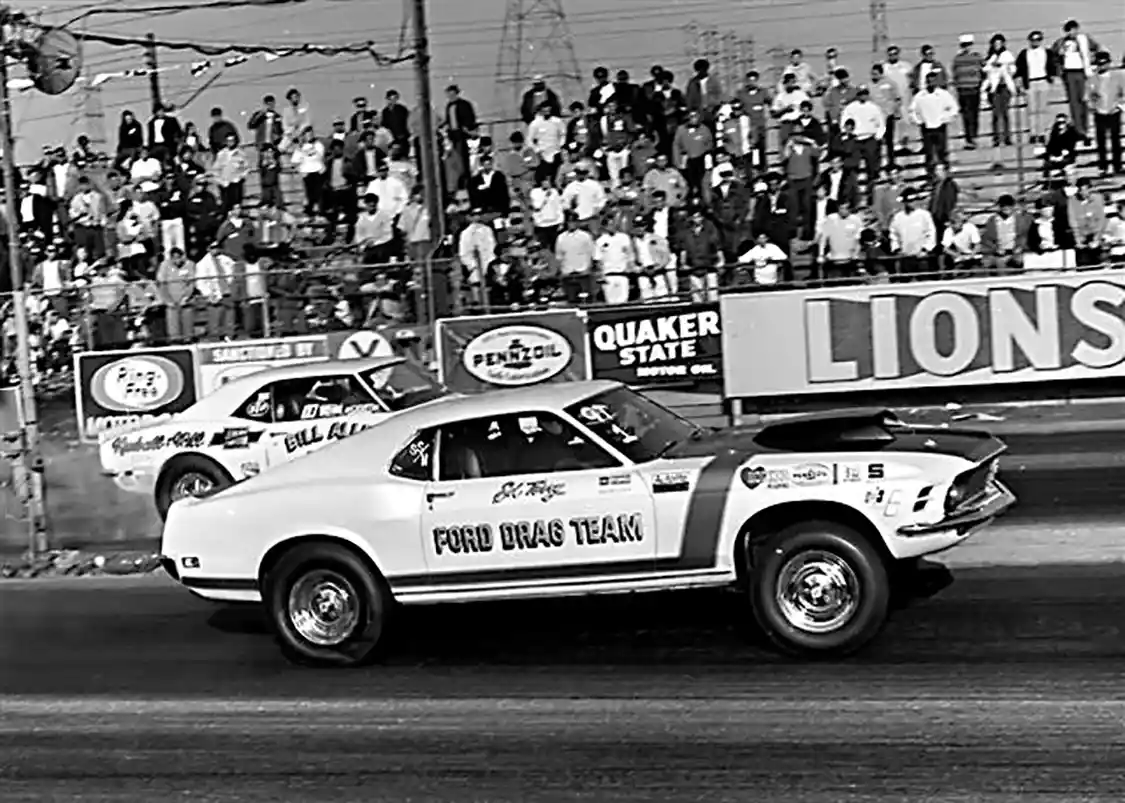
The year of the Cobra Jet was 1968. In the early days of the project, Ford engineer Bill Holbrook worked as senior mechanic on what was then called the 428GT program. One day Jacques Passano approached Holbrook and said, “I bet Tasca lunch that our car, a candy apple red 1967 Mustang GTA fastback, could beat his car.”
Tasca Ford had constructed a ’67 Mustang 390 GTA two-door hardtop. Not satisfied with the car’s performance, Tasca acquired a 428 Police Interceptor short-block, swapped in a special grind FoMoCo cam, and mated it up to a set of 1964 date code, 427 Medium Rise cylinder heads and a 2×4 aluminum intake sporting a pair of 735-cfm Holleys with snorkel-type dual ram air. Chief Mechanic Bill Gilbert also tweaked the Ford C-6 and installed a Detroit Locker 9- inch Ford rearend. The newly christened KR8 proved wicked fast. Holbrook notes, “I said to Jacques, ‘Well, how far am I allowed to go with this project?’ Passano says, ‘You can go as far as you want, but no cheating. It has to be all Genuine Ford Parts.’ Bob Hide and I built this 450-inch package. We installed a 428 crank into a 427 side oiler block at 454-cid. I had Harvey Crane grind up a number of cams and found the one that worked the best. We backed it up with a Ford C6 and set the transmission governors to shift at 7400 rpm. I also wound up putting a Hurst Line Loc on the car. Basically, I wanted to get the car to where anyone could put it in drive and run the same numbers without going up in smoke.”
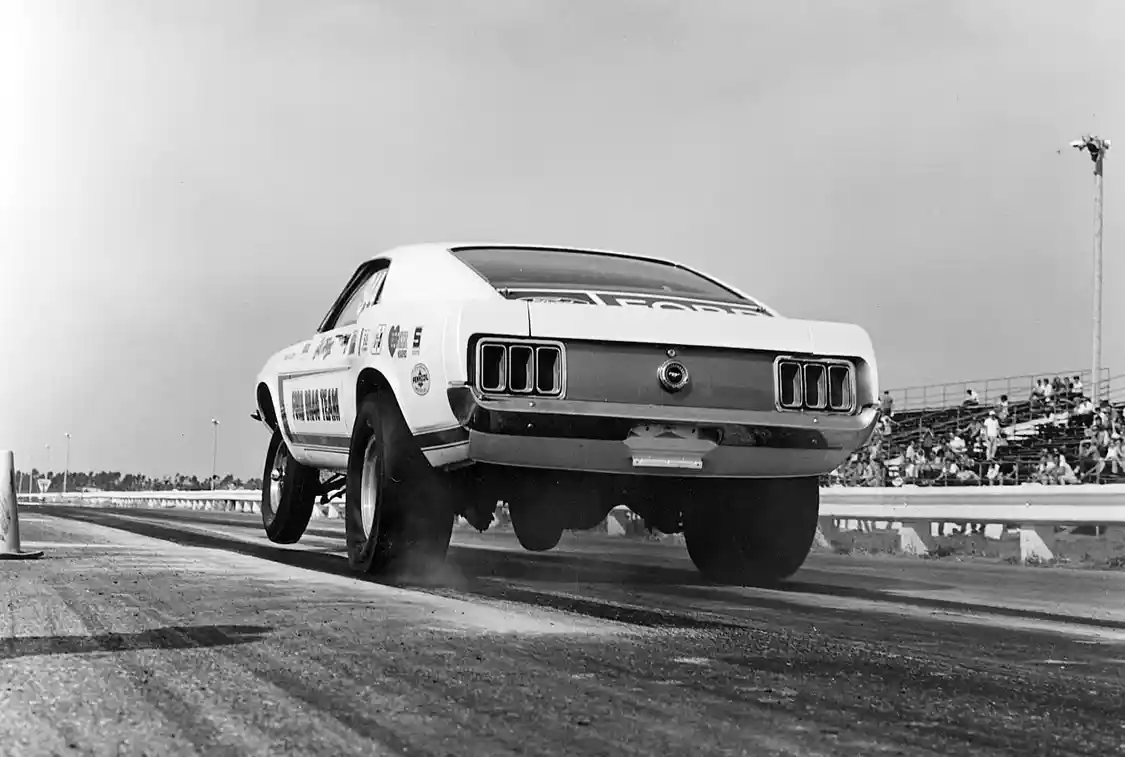
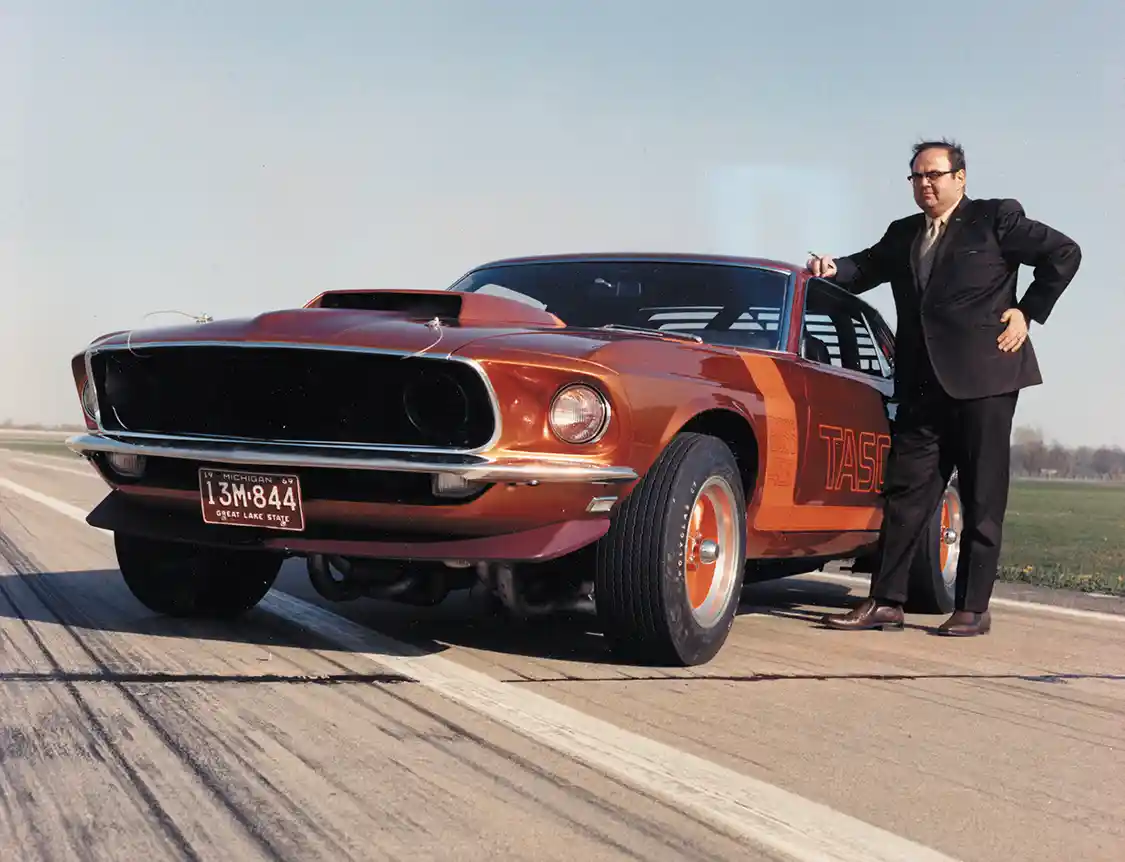
When the big day came, Ford X-Garage employee Bob “Jumpy” Snyder drove the 428GT, while Tasca wheeled the KR8. Tasca’s KR8 got trounced three straight, but Ford chose Tasca’s more conservatively constructed and less expensive 428 as the more practical of the two power plants. Tasca may have lost the race but they won the war.
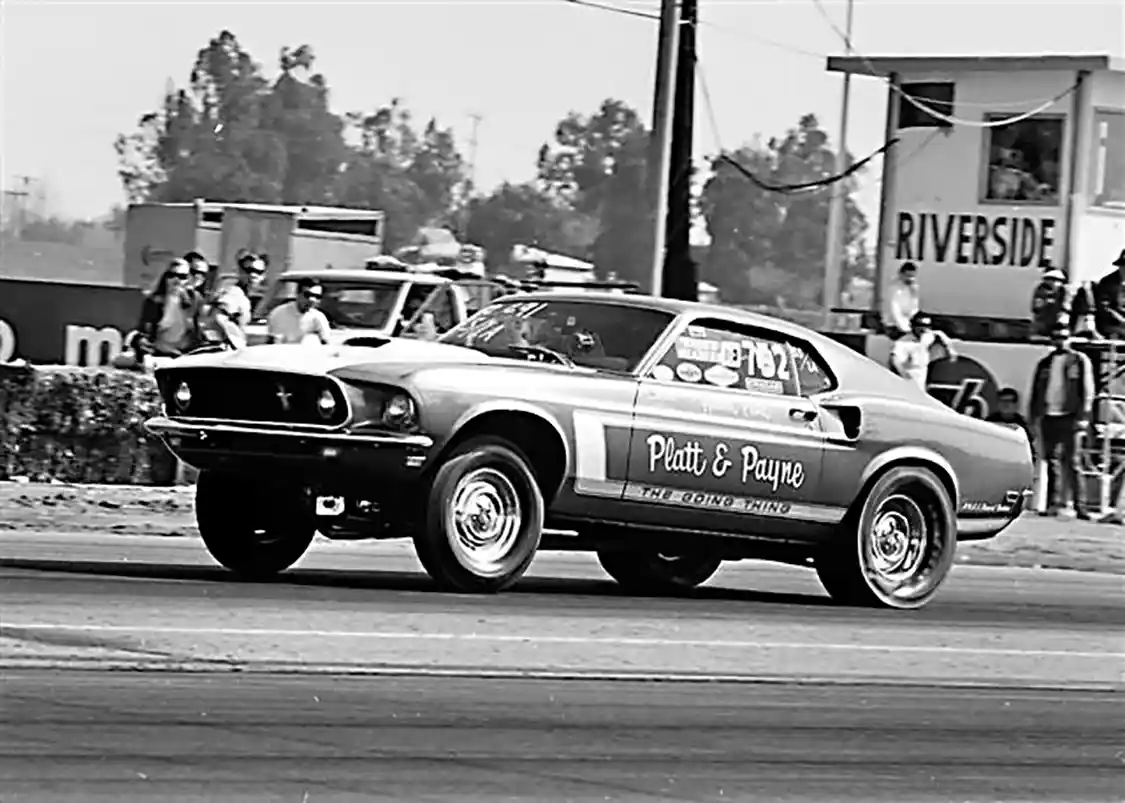
On Dec. 26, 1967, Ford Stock Vehicles Department’s newly appointed manager C.R. “Chuck” Foulger sent a memo to all regional and district sales managers titled “ANNOUNCEMENT OF 428 COBRA JET MUSTANG.” The memo broke down the list of special equipment indicative to the car as well as warranty and suggested retail price. Would you believe $3,612.69? In February 1968 members of Ford’s Drag Council received a total of eight H-M/Stroppe prepared R-Code 428 CJ Mustang drag cars and totally dominated the NHRA Winternationals. Al Joniec defeated fellow Ford racer Hubert Platt for class and defeated Dave Wren’s Mopar on the final, presenting Ford with its first ever Super Stock Eliminator win in NHRA national event history.
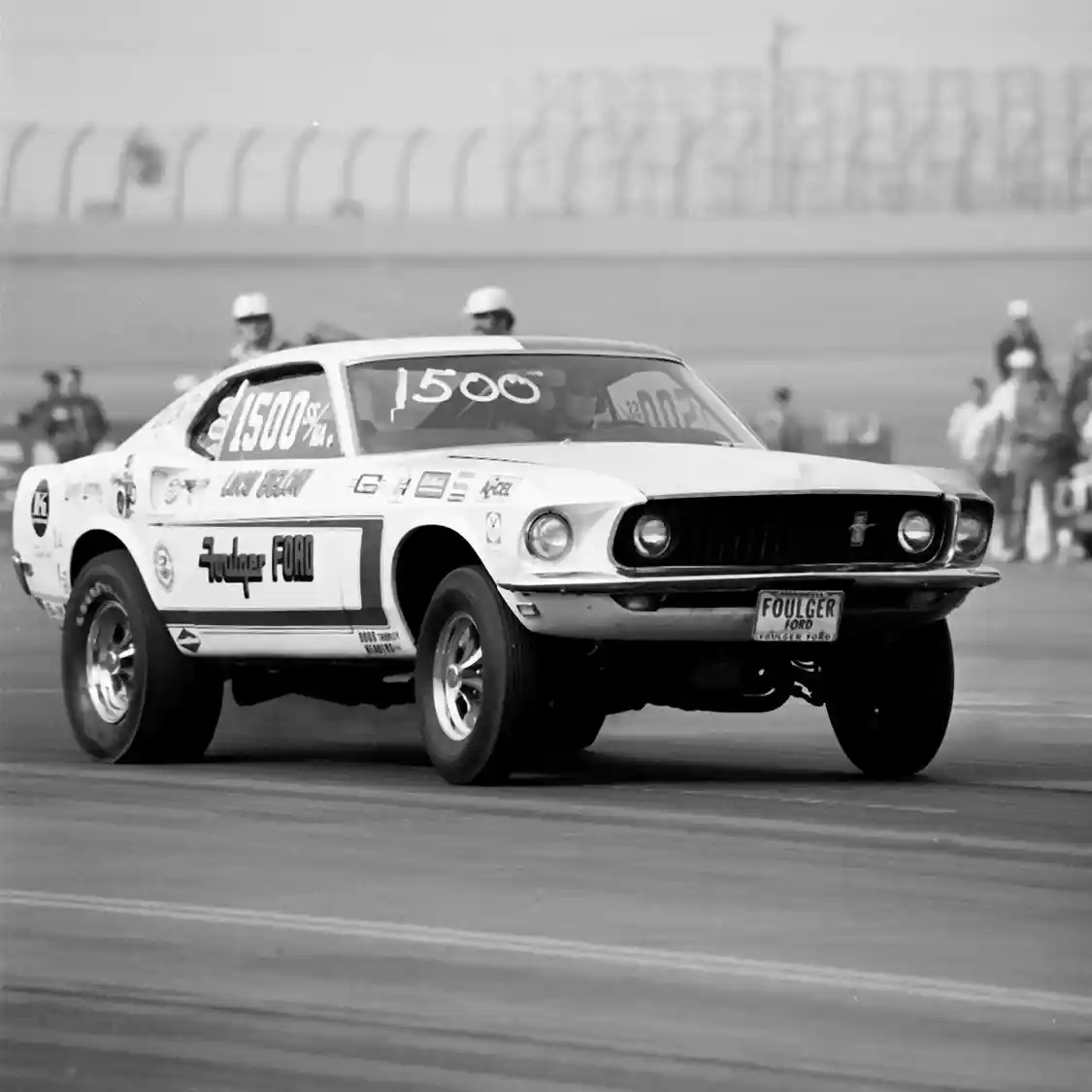
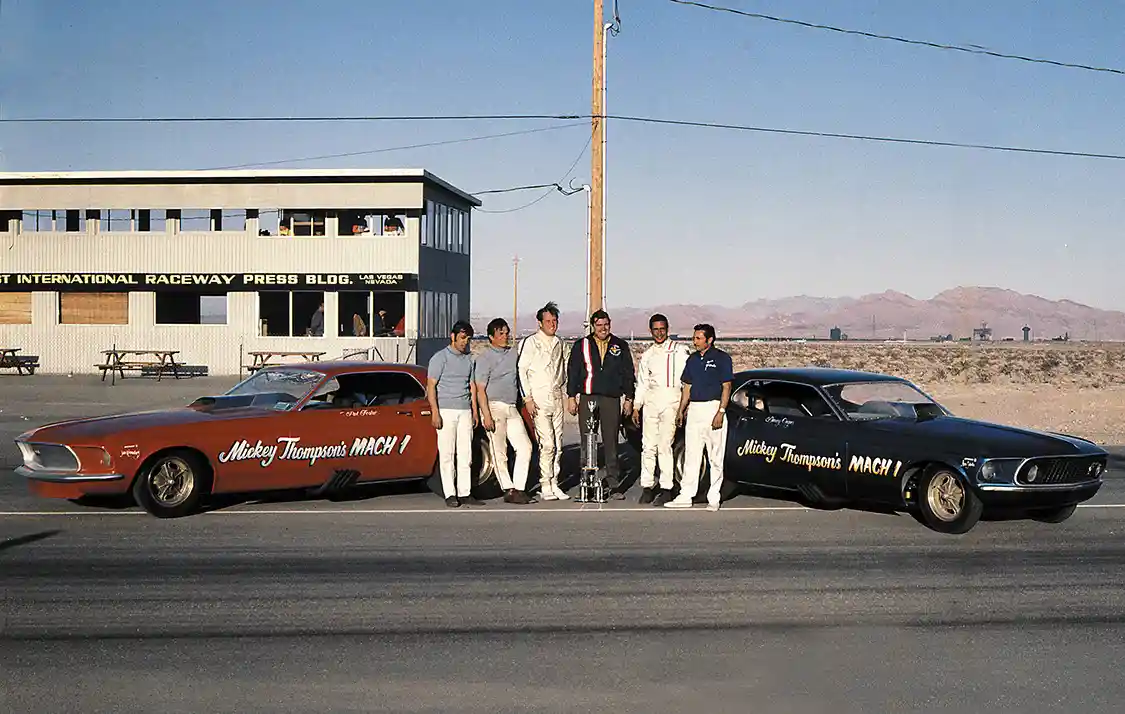
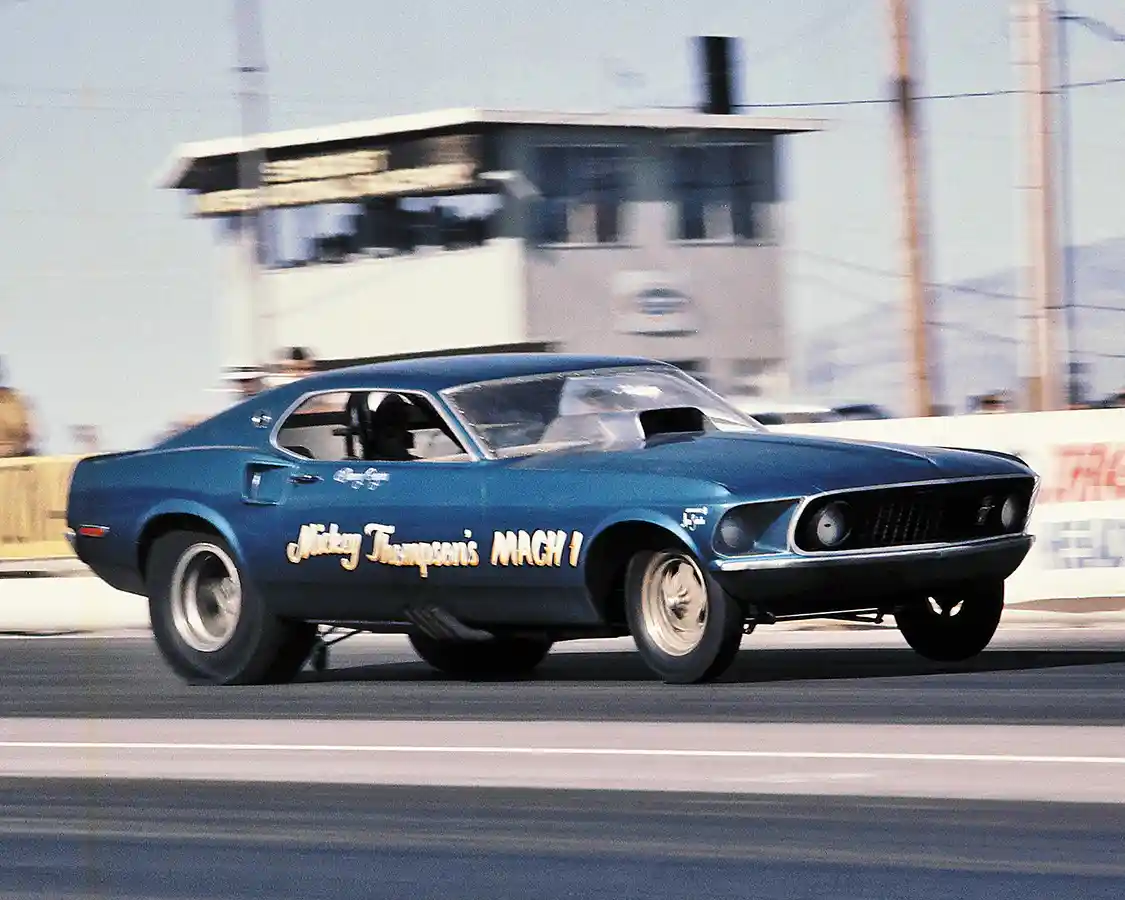
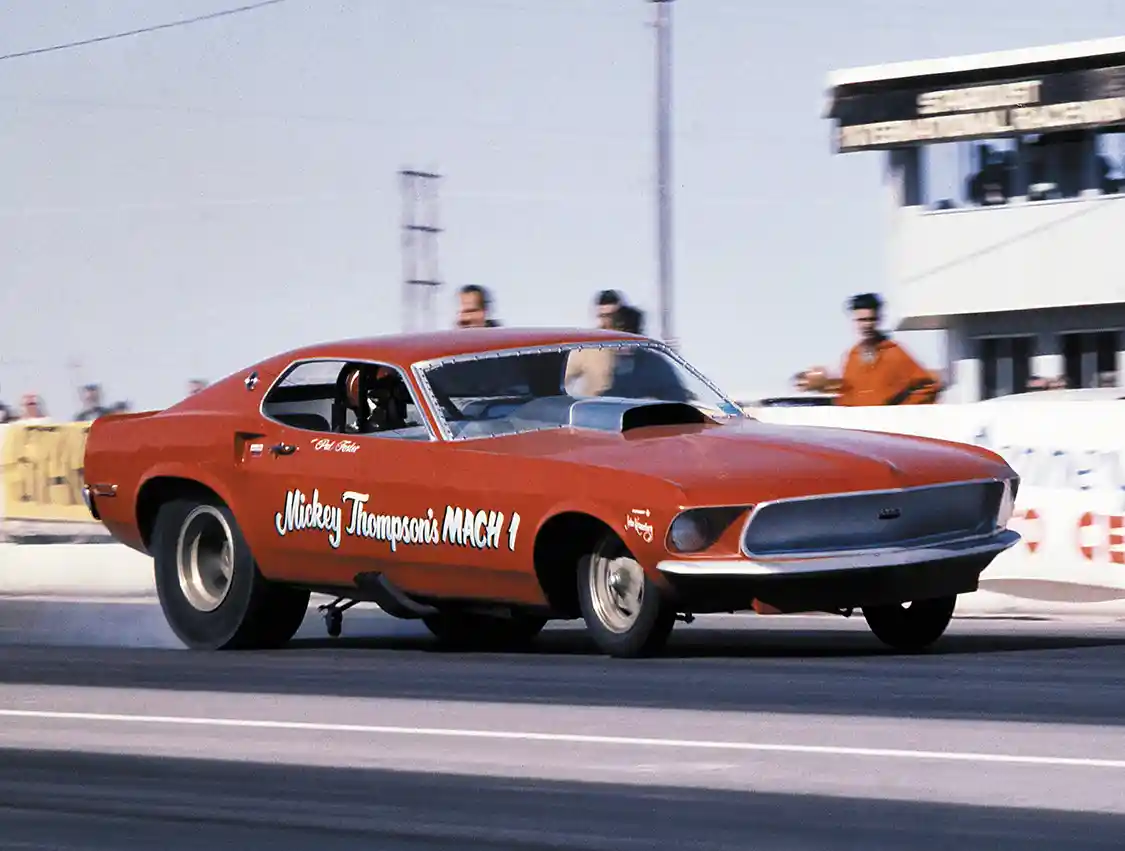
Most experts agree that 1969 was the high water mark for Ford’s Total Performance Era. Not only did they have their hugely successful Ford Drag Team clinic programs, they also sponsored Mickey Thompson who fielded two 427 SOHC Mach-1 Mustangs: The blue version driven by Danny Ongais, and the red by Pat Foster. Ongais’ blue Mustang proved the bane of Funny Car Eliminator, setting records and winning prestigious events all over the country. Thompson also fielded a ’69 Boss 429 Mustang match racer that year driven by Butch Leal. That same year also witnessed Mustang Funny Car pilot Tommy Grove, relying upon Ford power, join Gene Snow in breaking the 200-mph barrier.
The Mustangs of Canada’s Barrie Poole and John Elliott garnered two national event runner-ups in 1969. The following year saw Poole and his Sandy Elliott Ltd.-sponsored ’69 428 CJ Mustang coupe give Canada its first national event win, defeating Geno Redd’s ’68 SS/FA Mustang at the NHRA Winternationals.
The beginning of the ’70s also marked the debut of NHRA/AHRA Pro Stock, specifically “Dyno Don” Nicholson’s Paul Harvey Ford-sponsored ’65 427 SOHC Mustang. He’d been particularly strong during the previous year’s competition, but was woefully outclassed by Bill Jenkins’ Chevrolet and Sox & Martin’s Plymouth and was finally legislated out by NHRA. It would not be until 1972 when the NHRA refactored Pro Stock, allowing the 96-inch wheelbase, small-block Pintos and Vegas at 6.75 pounds per cubic inch that Nicholson’s fortunes began to change.
Another of Pro Stock’s more interesting developments also involving Dyno Don took place in 1974 when Nicholson, Gapp & Roush and Glidden took advantage of a loophole in the NHRA rules stating 1969 or later factory-produced coupes, sedans or station wagons were legal for Pro Stock, meaning that a 100-inch wheelbase car like a ’70 Mustang or ’70 Maverick four-door when equipped with a 366-cid Boss engine could run at 6.45 pounds per cubic inch. That year Dyno Don and Bob Glidden campaigned their infamous ’70 Mustang fastbacks. Dyno Don went on to win the 1977 NHRA Pro Stock Championship driving a Mustang II.
With Ford officially out of racing from 1972 through 1983, there wasn’t much to cheer about. Then in 1984, the creation of Ford Special Vehicle Operations (SVO) and its accompanying retail hot parts division, Ford Motorsport, marked Ford’s official reentry into organized motorsports. Glidden dominated NHRA Pro Stock with his big-block Ford Thunderbirds, but in IHRA racing where big-inch Mountain Motors ruled, Ronnie Sox won the IHRA Pro Stock championship in a Mustang for owner Dean Thompson. The Mustangs of Rickie Smith and Roy Hill were the other big IHRA attractions.
No one knows exactly why, but with the release of the 5.0L EFI Mustangs, racers who previously campaigned Tri-Five Chevys, Camaros and other popular brands of door cars were suddenly showing up at race tracks driving 5L Mustangs and a new movement was born. One of the earliest proponents of Pro 5.0 was Steve Collison, editor of Super Stock and Drag Illustrated (SSDI) and later Muscle Mustangs and Fast Fords magazines. Collison and contributing editor Francis Butler used SSDI as a forum for the class and even raced their own project car known as Mean Mr. Mustang. Pro 5.0L became an officially recognized class once Bill Alexander from the Fun Ford Weekend Series added it to his national event schedule, and then things really started getting serious. Early standouts in Pro 5L included Norman Gray, Gene Deputy, Jason Betwarda, John Gullet (the first Pro 5.0L over 200 mph), Billy Glidden and Joe de Silva. Today, Pro 5.0L is more popular than ever and has evolved into a six-second Mustang free for all.
From 1993 to 2000, Ford Special Vehicles Team (SVT) funded three R-Model Mustang programs based on the ’93 Gen II Fox Mustang and the ’95 and ’00 Gen III Mustangs. However, between road racers and collectors, few of these cars ever made it to the dragstrip. That changed when Ford released its ’08 Cobra Jet Mustang to commemorate the 40th anniversary of the original Cobra Jet Mustangs storming Pomona. Just as if it were 1968 all over again, the Hajek Motorsports 2008 Cobra Jet Mustang, driven by John Calvert, stormed to victory at the 2009 NHRA Winternationals, paving the way for a second Cobra Jet invasion of our nation’s drag strips. Ford upped the ante in 2010 with the release of its Cobra Jet Mustang race car, followed by Ford Racing’s 2012 through 2014 Cobra Jet competition models.
Although there are slight differences from year to year, these new-era Mustang CJs were all delivered with 8.50-second certified full roll cage, 3-link adjustable 9-inch rear suspension and Ford Racing adjustable coil strut front suspension. Powered by 5L Ti-VCT four-valve modular V-8 engines featuring a forged-steel crank, Manley H-beam connecting rods, Mahle forged-aluminum pistons, CNC ported four-valve cylinder heads, proprietary-grind Ford Racing camshafts, an optional Whipple 2.9L supercharger and a Cobra intake featuring an oval mono blade throttle body. Exhaust is made up of a set of 304 stainless steel headers. Transmission choices are either a race-prepared Ford C3 automatic or Liberty five-speed transmission. At this writing, Carl Tasca Sr. has the quickest and fastest manual transmission late-model CJ in the nation, recording a 7.72-177.00 with 4.7s at 140-plus mph in the eighth-mile. Roy Hill holds the quickest and fastest marks for automatic transmission CJs at 7.92-172.00. Suddenly it’s 1968 all over again—only faster.
If this seems to be a bit like a glossed over version of Mustang’s quarter-mile history, it is. So rather than continue to talk about these awesome machines, let’s use the editorial space to show some of those storming stallions from back in the day. Happy 50th birthday, Mustang.
Diesel World
Carlisle Events puts on another record-breaking show The Carlisle Truck Nationals, held annually at the Carlisle Fairgrounds in Carlisle, Pennsylvania, is one of the largest… Continue reading
JON DANIELS . November 21, 2024

Drive Online
Did you notice? General Motors has always been an innovator when it came to classic car styling starting way back from the 1940s all the… Continue reading
GREGG OVIST . July 22, 2024
C10 Builders Guide
A Modern Classic In the classic truck scene, there is a constant struggle between modern engineering and traditional styling. Every enthusiast has felt the pull… Continue reading
Mike Alexander . June 08, 2026
Events
2024 National Event Schedule MAY May 4 Atlanta Truck Invasion Atlanta www.atlantatruckinvasion.com @atlantatruckinvasion May 3-4 Chevrolet Performance Bowtie Nationals Bristol, TN www.bowtienationals.com @bowtienationals May 10-11… Continue reading
STREET TRUCKS STAFF . May 10, 2024
Diesel World
Maverick Kerns Does What He Does There are certain sayings that seem to perfectly describe certain scenarios. For instance, upon first laying eyes on Maverick… Continue reading
Mike Self . December 22, 2023

Feature Stories
Epic Moto Patagonia Adventure I’ve ridden an adventure motorcycle for tens of thousands of miles, with over a third of that off pavement, and a… Continue reading
Bryon Dorr . August 17, 2023



Super Run 2026 Classic Car Show
Super Run 2026 Classic Car Show Casablanca Resort 950 West Mesquite Blvd Mesquite, NV 89027
Concours D'Elegance
Cobble Beach Resort 221 McLeese Dr, Kemble, ON N0H 1S0
Charity Car Show
Mesa Marketplace 10550 E. Baseline Rd, Mesa , Az 85209
CHICO CONCOURS Car Show
Silver Dollar Fairgrounds 2357 Fair Street, Chico, CA 95928
Goodguys 33rd Summit Racing Lone Star Nationals
Texas Motor Speedway 3545 Lone Star Circle
We use cookies to enhance your browsing experience, serve personalized ads or content, and analyze our traffic. By clicking "Accept All", you consent to our use of cookies. Visit our Cookie Policy for more info.


 Please wait...
Share Link