








 Motortopia Staff
.
July 25, 2025
.
News
Motortopia Staff
.
July 25, 2025
.
News

In recent years, we’ve seen a big rise in big vehicles. Ask anybody over 30 to tell you how automobiles have changed in their lifetime, and they’ll almost certainly mention that they’ve become bigger. Pick-up trucks, minivans, and SUVs are far more popular than they’ve ever been.
There are numerous reasons for this, including more efficient aerodynamic designs that mean big vehicles get much better mileage than they used to and, of course, marketing. But one major reason people are buying bigger and bigger vehicles is that it makes them feel safer. So, how does vehicle size affect collision and collision repair?
There are certain types of collisions in which a large vehicle will protect the driver and any passengers better than a smaller one. However, this doesn’t mean a big truck or SUV is indestructible. On the contrary, there’s more of those vehicles to protect the people inside, but there’s also more of those vehicles to suffer damage and therefore need collision repair.
This is perhaps best exemplified by the crumple zone. These are structural safety features in vehicles designed to absorb the energy of a collision by controlled deformation. This increases the time that the force of an impact takes to reach the people inside, reducing their risk of injury.
Crumple zones are usually in the front and rear of a vehicle, and they’re not exclusive to pickups and SUVs. However, in bigger vehicles, there’s more space for the vehicle to deform, directing the force of the collision away from the people inside. This is great for the occupants, but it can make auto body repair more complex and expensive.
Let’s take a look at how collision repairs work for larger vehicles:
When crumple zones suffer damage, technicians can fix them … sometimes. Performing collision damage repair on crumple zones can be very tricky and requires careful reconstruction. Often, an auto body repair service on crumple zones consists of replacing them.
Proper Crumple zone replacement involves finding the right parts as per OEM guidelines to preserve crashworthiness. This is key because improper collision repair on these parts drastically reduces their ability to absorb impacts.
Unlike smaller cars, large vehicles may have reinforced crumple zones that are harder to access and require more disassembly to repair. Auto body repair technicians must ensure energy-absorbing structures are robust, particularly in especially heavy vehicles such as full-size SUVs or pickup trucks.
Larger vehicles have solid, durable frames, often with ladders or unibody constructions. These can suffer significant damage in a collision. Frame repair requires precise realignment. To do this, auto body repair technicians use frame machines and computerized measuring systems to restore structural integrity.
Because SUVs and pickups carry heavier loads, even slight misalignments can significantly affect handling and towing capabilities. Repairing frame damage also involves inspecting suspension mounting points and ensuring proper weight distribution, which is critical for both safety and long-term durability.
Larger vehicles often suffer from bigger and deeper dents. They have broad panels that can be more susceptible to denting, and drivers are likelier to use these vehicles in rugged environments. Traditional dent repair on such vehicles might involve removing interior panels, reshaping metal with specialized tools, and using body filler before repainting.
Because truck beds, tailgates, and large hoods are common impact points, collision repair technicians must take extra care to match the repaired area with the vehicle’s factory specifications. These can be time-consuming and costly repairs because of the sheer size of the vehicle panels and the labour required to access damaged areas.
Paintless dent repair can be the best option for minor dings and dents on large vehicles when the paint remains intact. Auto body repair technicians use specialized rods and tools to massage the dent from behind the panel, preserving the original finish. PDR is especially beneficial for trucks and SUVs with aluminum panels or factory paint jobs that are difficult to replicate. However, access to certain areas, such as high rooflines or reinforced bodywork, can be challenging, requiring more time. Occasionally, partial panel removal is necessary to achieve a seamless result.
Larger vehicles often have more complex and heavy-duty drivetrains, especially if they are four-wheel or all-wheel drive. Collisions that impact the undercarriage can damage components like the driveshaft, axles, or differentials. Repairs may require lifting the vehicle and removing bulky components for inspection and replacement.
If you use your truck or SUV to tow or carry heavy loads, you need a collision repair that ensures precise realignment and torque specifications. Additionally, drivetrain issues can affect traction and safety systems, so diagnostics and recalibration can be integral to collision damage repair.
No, it’s not fair to say that auto body repair is harder, more complex, or more expensive for larger vehicles across the board. But there are numerous situations that make collision repair a more involved process for pick-up trucks, SUVs, and vans. Technicians must navigate greater disassembly, more difficult part replacement, and the need for advanced equipment to restore both function and safety.
Ultimately, choosing a larger vehicle often means trading some peace of mind on the road for more involved and potentially expensive repair work in the aftermath of a crash. As vehicle design continues to evolve, both consumers and repair professionals must stay aware of how size impacts not just protection, but also the price of getting back on the road.

News
Whenever you see those flashing blue lights in your rearview, your heart jumps. You’re getting pulled over. Maybe you were speeding. Or perhaps your tail… Continue reading
Motortopia Staff . December 10, 2025
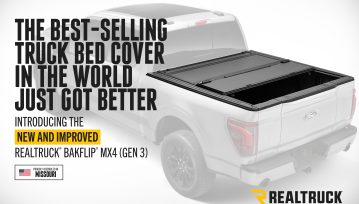
New Products
RealTruck just raised the bar again. Their best-selling truck bed cover, the BAKFlip MX4, has officially leveled up with the launch of the Gen 3… Continue reading
Chris Hamilton . August 01, 2025

News
Photo source: Unsplash Driving is a key part of life in Dubai, and window tinting is a large part of individuals’ experience on the road.… Continue reading
Motortopia Staff . June 23, 2025

News
A car isn’t just metal, glass, and gears. It’s memories, movement, and money. But when the engine coughs or the brakes screech, those dreams begin… Continue reading
Motortopia Staff . July 17, 2025
News
(Professional rider. Closed course. Do not attempt.) Today, a new generation of riders is entering the cycling world differently—and electric bikes are playing a central… Continue reading
Motortopia Staff . March 13, 2026
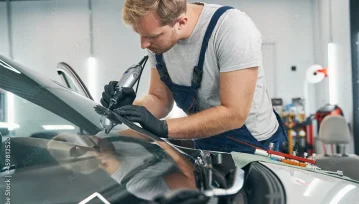
News
Image Source A cracked or chipped windshield should never be ignored. Once the glass is weakened, it cannot fully support the vehicle’s safety systems during… Continue reading
Motortopia Staff . November 06, 2025


Terminal Takeover 2026
21 airport rd Ext, Greenville, SC
Altered Metal 2026
Rayne, LA
Orange Beach Invasion 2026
The Wharf Orange Beach, Alabama
Southern Tradition Car/Truck Show 2026
Etowah River Park Canton, GA
Local Studebaker Drivers Club Chapter Private Tour Of John Muir House
John Muir House 4202 Alhambra Ave., Martinez, CA




 Please wait...
Share Link