








FAYETTEVILLE, AR – May 2026 – Fuel2Electric is proud to announce a new partnership with Super Powers Mobility Inc (SPM), alongside the official launch of pre-orders for the Electric UTV Powertrain Kit (EVK), now available for pre-order on Fuel2Electric. This launch marks a significant milestone for the EV conversion community, opening an entirely new frontier: the electrification of powersports and utility terrain vehicles.
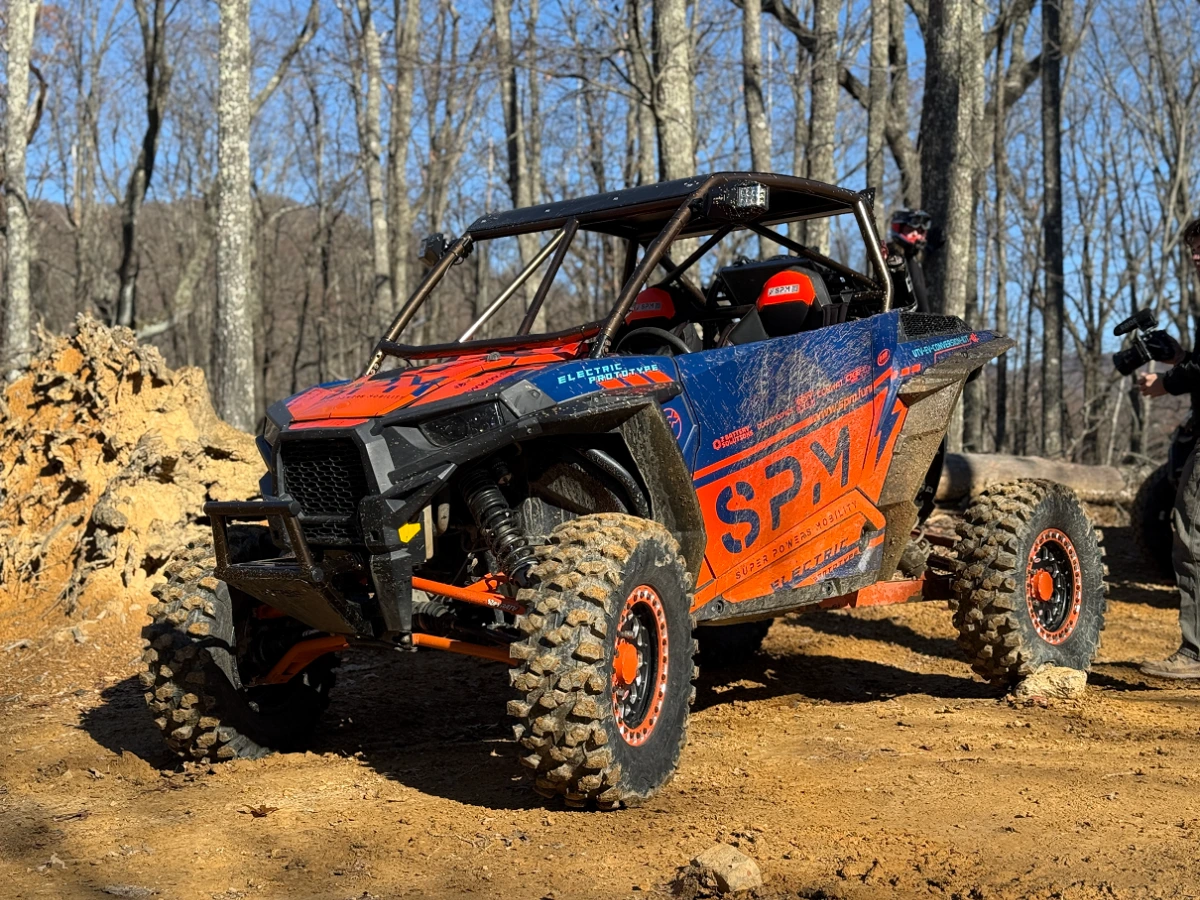
The EVK is the first drop-in, zero-fabrication electric powertrain conversion kit designed specifically for the UTV market. Currently optimized for the Polaris RZR family, with future compatibility confirmed for Can-Am, Yamaha, and Kawasaki CVT platforms, the EVK transforms any compatible UTV into a high-performance electric machine without requiring a single cut or weld. And all model-specific mounting brackets are provided by SPM.
The UTV market represents one of the most exciting untapped opportunities in the EV conversion space. With over five million UTVs currently in use across North America alone, and a U.S. electric UTV and ATV powertrain market projected to grow at a compound annual rate of over 10% through 2030, the demand for accessible, high-performance electrification solutions has never been greater. Until now, UTV owners looking to go electric had no purpose-built kit to turn to.
The SPM EVK changes that. Super Powers Mobility built the EVK from the ground up for UTV applications, including a proprietary, purpose-engineered powertrain delivering performance that simply didn’t exist in this category before.
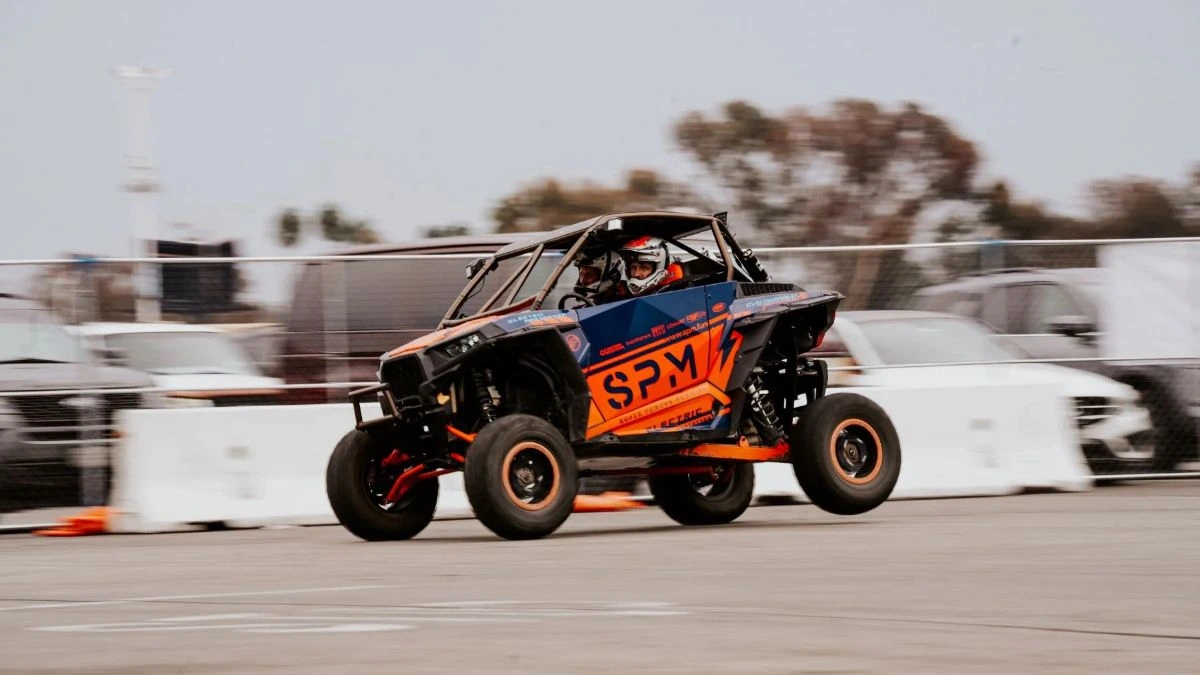
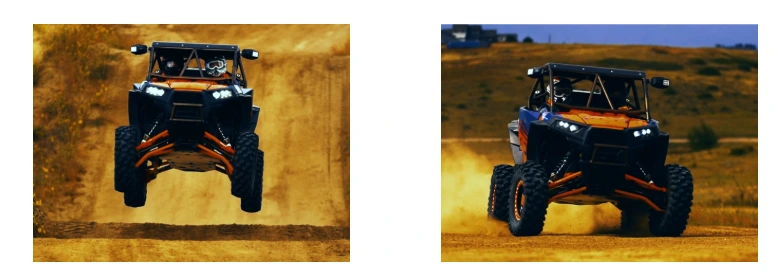
“UTVs are the most capable off-road vehicles in the world. You can go places no other vehicle can go. Technology advancement in this industry has been consistent, but there has never been a step change in performance since the Rzr XP1000 came out in 2014. Electric powertrains provide instant torque and silent performance that will advance off-road capability significantly, and we’re doing it in an incremental way with our conversion kit. We aren’t asking customers to trust a brand new vehicle from the ground-up, but rather to convert their trusted OEM vehicle platfrom with readily available spare parts to electric using our design and built-in-america electric powertrain. If you like the idea of electric UTVs but don’t want the hassle of a conversion kit, we’ll also custom build you an electric UTV of your choice, you provide the vehicle, or we can source one for you.”
— Jonathan Powers, Founder & CEO, Super Powers Mobility Inc
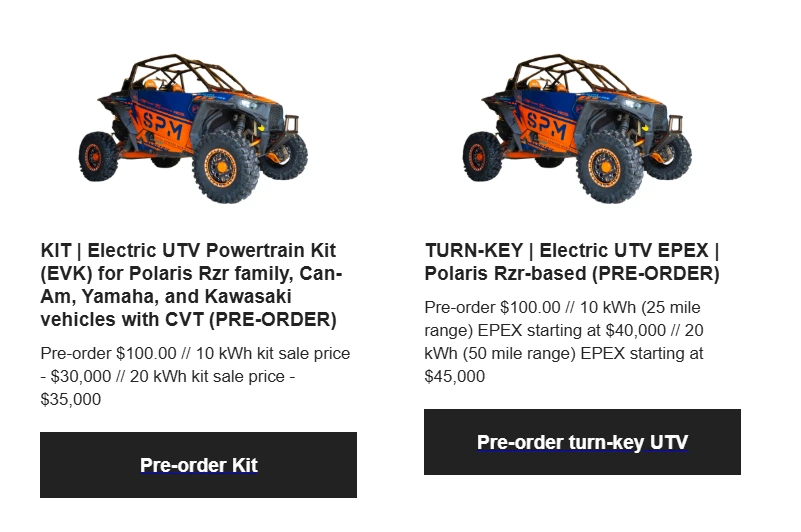
The EVK isn’t just another conversion kit. It represents a shift in what the powersports industry thought was possible:
SPM and Fuel2Electric are looking for a select group of Alpha customers to take delivery in Q3 2026, ahead of the general Q2 2027 release. Alpha customers will work directly with the SPM team, contributing real-world feedback that shapes the final product.
Pre-orders for both Q3 2026 and Q2 2027 are open now on Fuel2Electric with a fully refundable deposit (minus card processing fee). Limited to 20 preorders.
To inquire about becoming an Alpha customer: contact@fuel2electric.com
Pre-order now at: fuel2electric.com/store/systems/electric-utv-powertrain-kit-evk-for-polaris-rzr-family-can-am-yamaha-and-kawasaki-vehicles-with-cvt-pre-order-
Texas Motor Speedway – Fort Worth, TX — TMI Products proudly announces Jay Riggs of Riggs Fabrication (Texas) as the winner of the third stop of the 2026 TMI Road Tour, held during C10 Nationals at Texas Motor Speedway.
Riggs captured top honors with his breathtaking 1952 Chevrolet Truck, showcased in the Scoggin-Dickey Parts Center booth, where it immediately stood out among a highly competitive field of custom C10 builds.
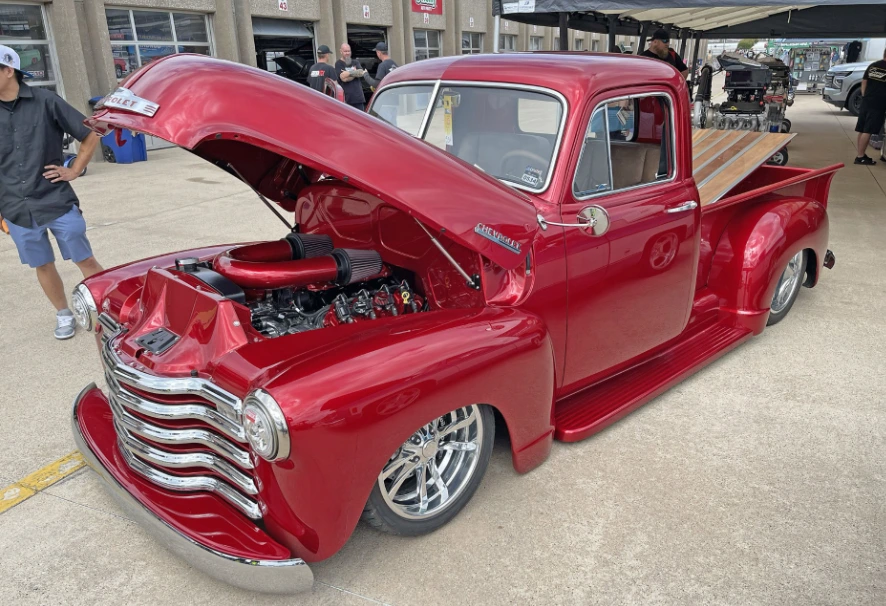
Built on a No Limit Engineering chassis and powered by an LS-based drivetrain, the slammed ’52 Chevy drew attention from across the speedway—most notably from TMI Road Tour judge Chris Baker. The truck’s striking Inferno Lexus Red paint, which appeared deep maroon under overcast skies, came alive under the Texas sun, delivering a bold and unforgettable presence.
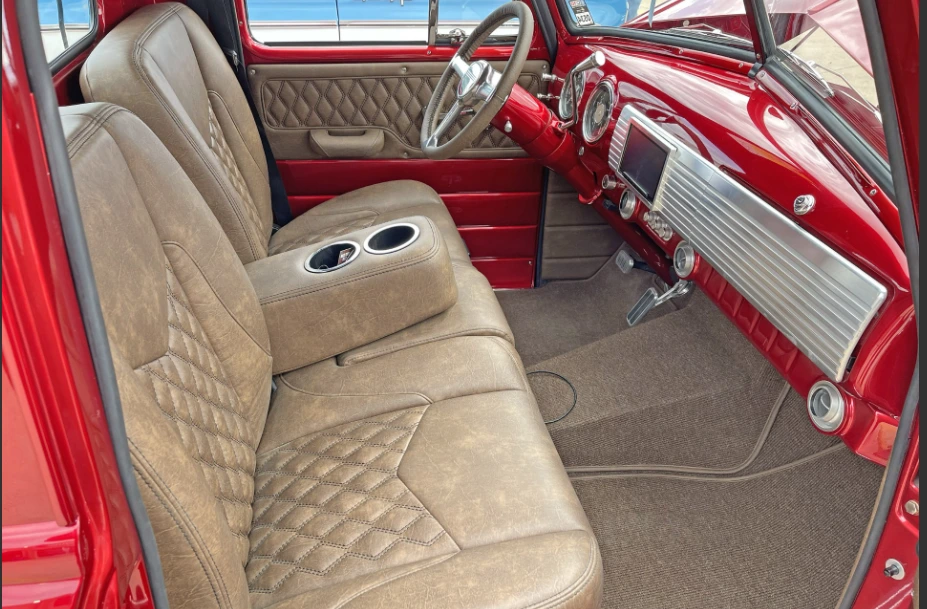
Award-Winning Interior Craftsmanship
What ultimately sealed the win was the truck’s meticulously crafted interior from Brandon Falls of Falls Craft Upholstery, featuring TMI Products’ Pro Deluxe 55” Bench Seat upholstered in Premium Distressed Brown Vinyl. The seat is highlighted by premium Double Diamond (DD) inserts with black contrast stitching, creating a rich visual texture that perfectly complements the truck’s exterior.
Matching TMI Double Diamond inserts are carried throughout the cabin, beginning with the custom door panels—the first detail to catch Baker’s attention. The DD inserts were special ordered, and Brandon Falls skillfully upholstered and fabricated the panels around the door handles, creating a seamless, factory-plus appearance. The custom kick panels flow effortlessly into the factory lower door panels, reinforcing the cohesive design.
Above, a custom headliner continues the Double Diamond theme, also special ordered from TMI and expertly integrated for a refined, tailored finish. Even the custom amplifier box was wrapped in matching Premium Distressed Brown Vinyl, ensuring every interior element worked together in perfect harmony.
The Double Diamond stitch pattern proved to be an ideal visual match to the truck’s Mad Max two-piece forged US Mags wheels, whose sharp, angular spokes mirror the precise lines of the diamond stitching—tying the entire build together with intentional design symmetry.
What’s Next on the TMI Road Tour
The TMI Road Tour continues with its fourth stop at TMI Products Headquarters in Corona, California, on Saturday, August 15, 2026, during the 5th Annual Cars & Clearance Show. Builders and enthusiasts alike are invited to attend and experience the craftsmanship, innovation, and passion that define the TMI Road Tour.
Stay tuned for more winners, standout builds, and unforgettable moments from the 2026 TMI Road Tour.
Upcoming Final Two stops of the 2026 TMI TRIM Road Tour:
· TMI Cars & Clearance — Corona, CA | August 15, 2026
· Triple Crown of Rodding — Nashville, TN | September 11–12, 2026
If you believe your TMI-equipped ride has what it takes, don’t wait—sign up today and become part of the 2026 TMI TRIM Road Tour.
The Internet is a weird place. With all the “entertainment” websites out there, a guy can get sucked into the computer screen for hours without even noticing what time it is. Well, same goes for avid classic vehicle hunters. Searching classified ads for that perfect project truck or hard-to-find parts can become an addiction that must be fed multiple times on a daily basis. Sometimes the hours of scrolling and trolling don’t amount to much, but then there are days when you strike pure gold.
These are the moments that keep guys like Jeff Baum (better known to his pals as Jeffro) clicking through endless pages of listings. Although it may seem like a waste of time, there are some of us who consider keyboard shopping the virtual equivalent of walking the rows at the local parts swap.
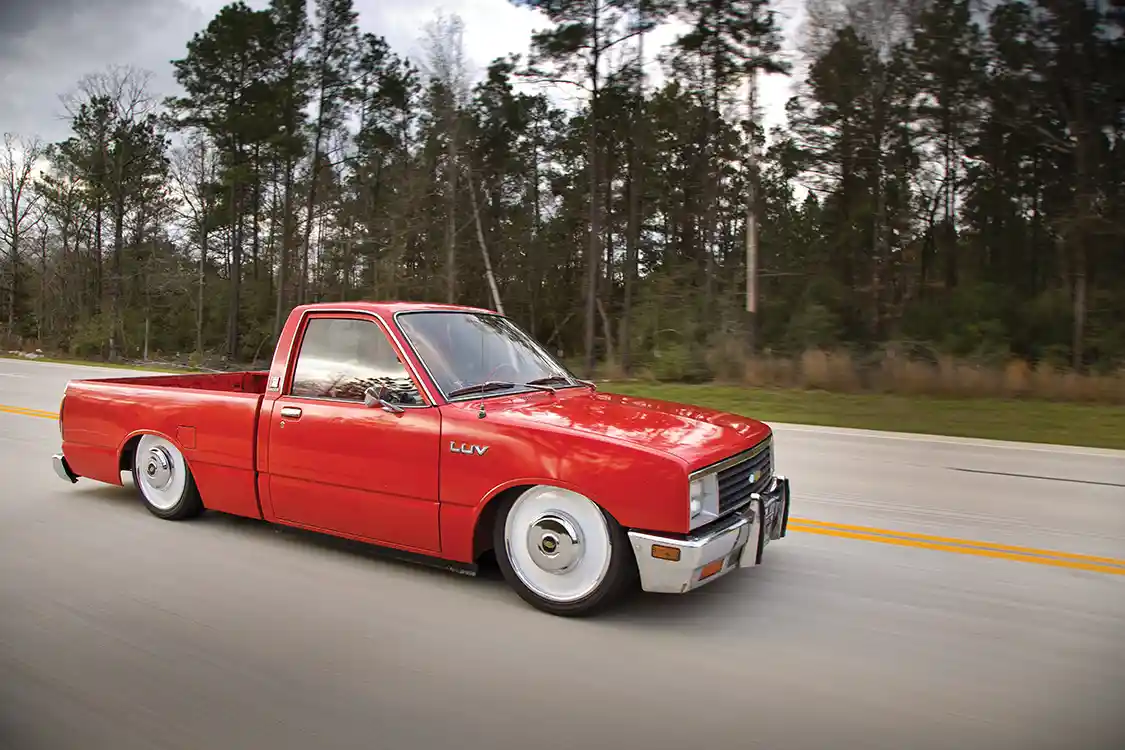
OK, maybe there should’ve been a clarification in the previous paragraph. Ol’ Jeffro keeps his nose clean while he’s online looking for truck stuff and doesn’t (usually) frequent any of those “other” types of websites (as far as we know). Dear Mrs. Baum, there is absolutely nothing to worry about (especially if you guys have some sort of agreement about such matters). In any event, Jeff likes to kid around about how he discovered his latest truck, even though the joke may have lost its charm to his wife. “I like to tell people that I was looking for LUV on the Internet. She might not think it’s all that funny anymore, but it’s true.” We all type in a handful of the same keywords when narrowing down a parts search. It helps filter out all the other nonsense we aren’t looking for. “I have always searched ‘LUV’ on Craigslist and eBay just to see what was out there, and I just happened to luck out with this truck that was only 10 miles away from my couch.”
Jeff doesn’t really have much of a story of why he had been in hot pursuit of a LUV other than the fact that he likes the look of them when they’re slammed to the ground. “I’ve liked the lines of the LUV and I just wanted something that was a little different from most of the other trucks out there.” The ’81 that he discovered is definitely different from most, and does hold its own against all the other Chevys in any given show field. This particular model just happens to be the last of the LUVs to be sold in the States before GM introduced the S-10 back in 1982. Isuzu picked up where Chevy left off with it and continued to produce the model as the P’up (short for “pickup”). Jeff’s truck is somewhat of a token that symbolizes the transitional period before the S series dynasty began its multi-decade reign over the American compact truck market.
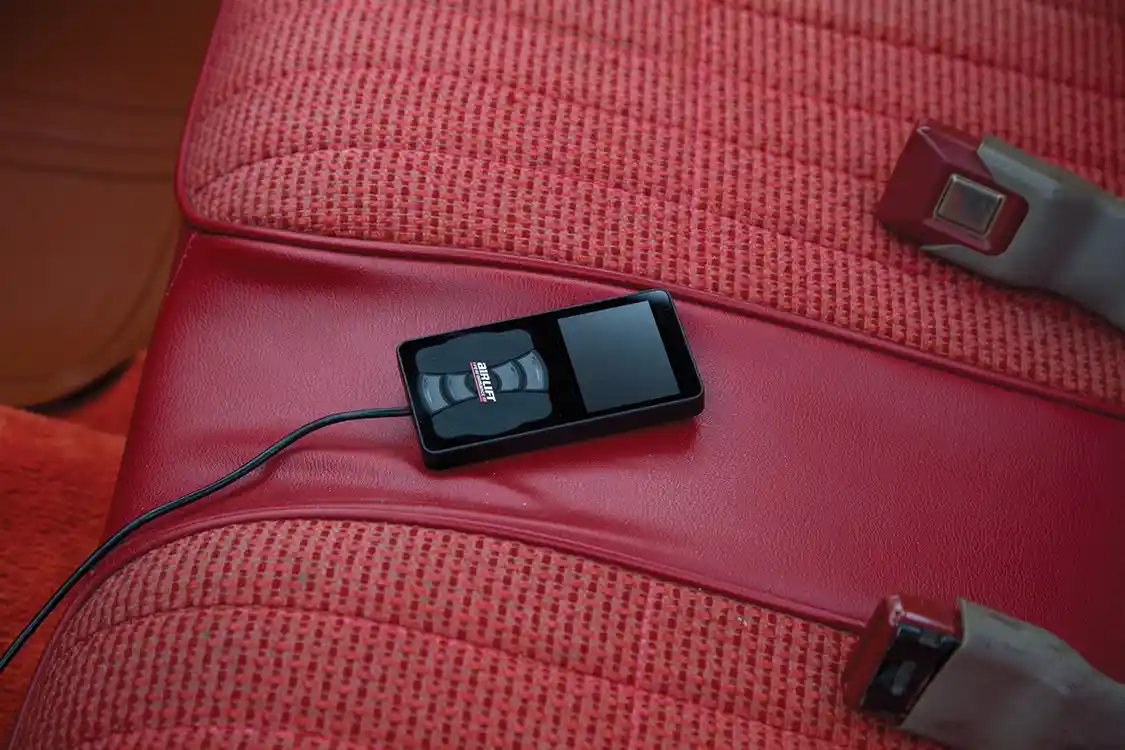
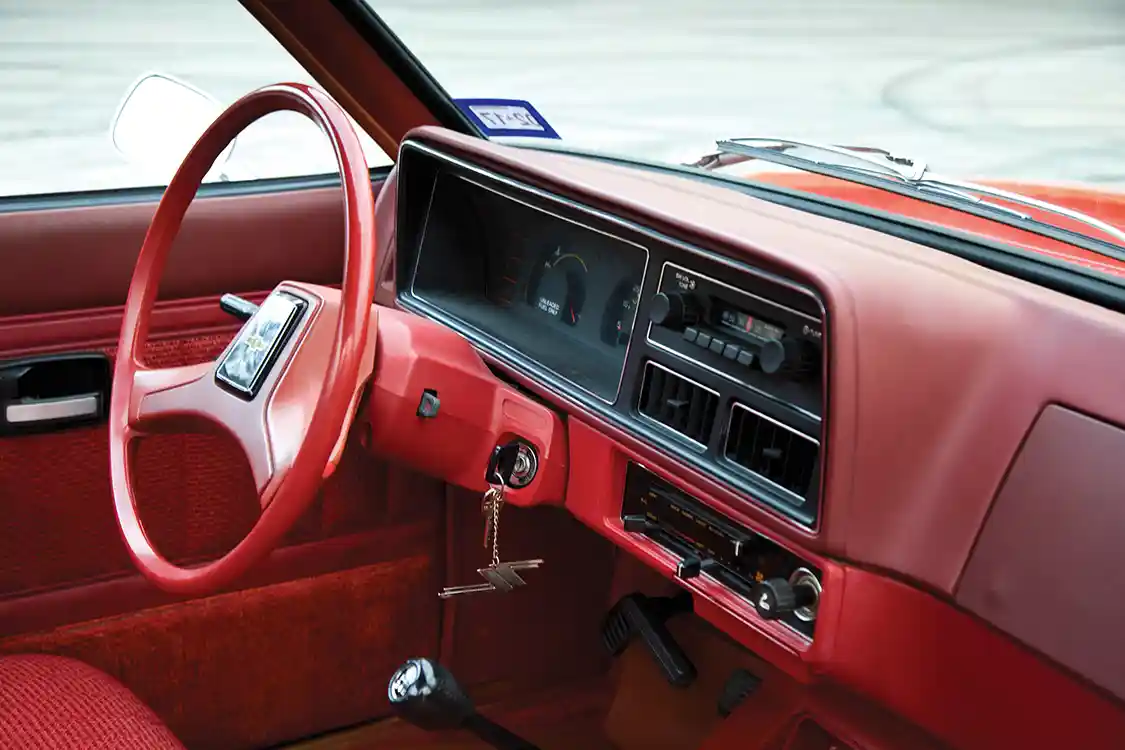
But all geeky truck facts aside, Jeff snagged the truck for $1,500 bucks—a very affordable figure for anyone looking to pull the trigger on a project vehicle. “I saw the truck listed on a Thursday while I was at work,” Jeff recalls. “The body and paint looked decent, and the interior was clean and all there. I called the owner and he said someone else was supposed to buy it that night. The potential buyer must’ve flaked or something, because I got a call back the following morning and went to take a look at the truck on Friday night—it was just what I had been looking for.”
The original owner had purchased the LUV from a dealership back in 1981 with plans to tow it behind his motor home when he retired. The original owner bought it in Kansas, brought to Oklahoma and now it sits in Jeff’s garage in Texas. “It was great to learn that the truck had stayed with the same family this whole time. It wasn’t kept up very well, though, and had been stored for a good amount of years. It looked and drove OK when I first went out to look at it. I knew it wasn’t going to be in perfect order, and after a quick carb adjustment and valve cover gasket replacement, the LUV was ready to take home. I gave it some more attention and got it running a little more smoothly.”
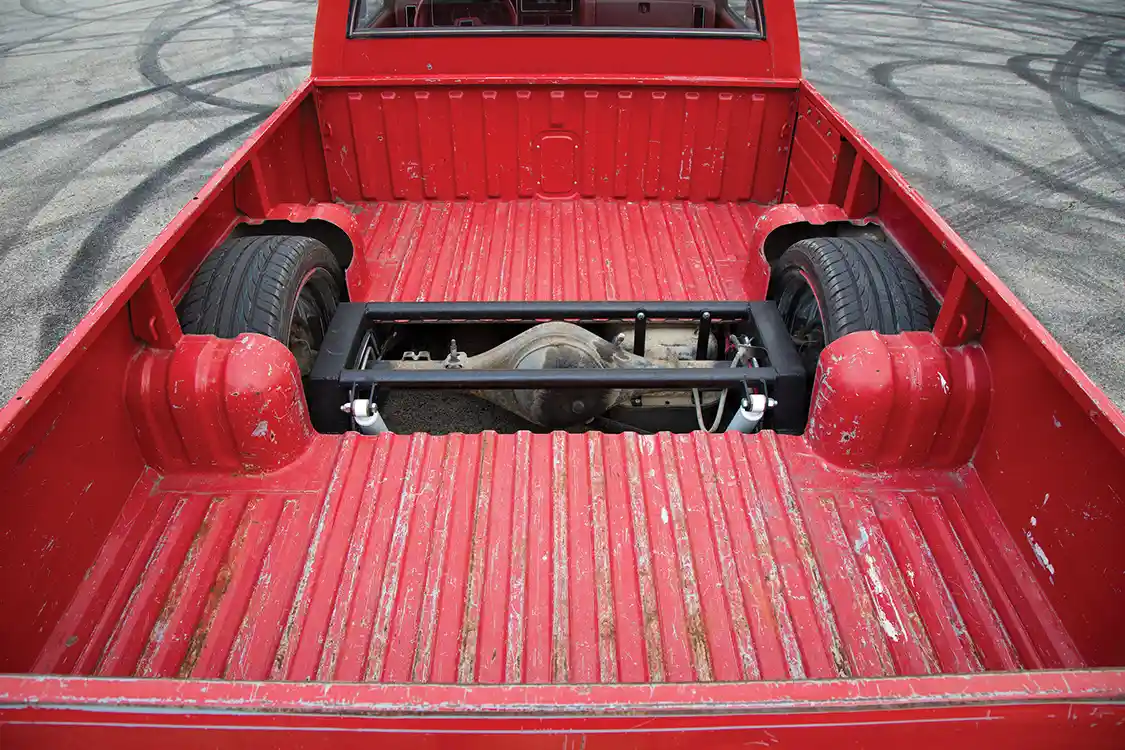
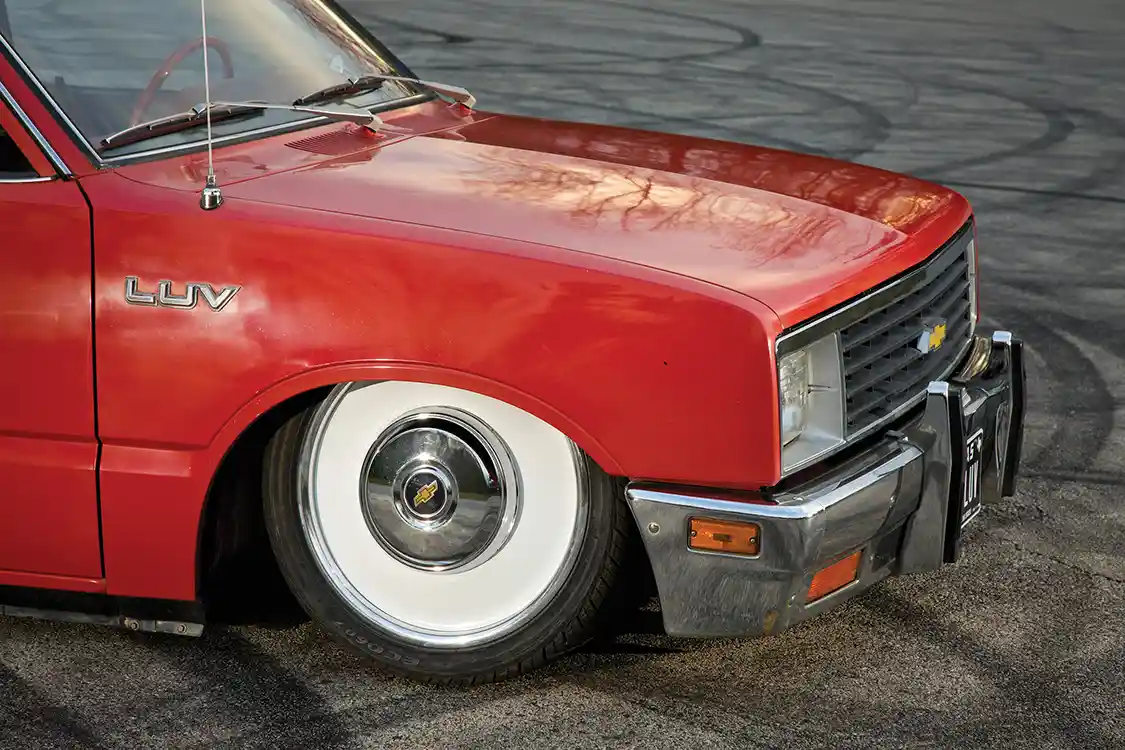
After Jeff’s search had come to a close, and with the LUV now more reliable on the road, he did what most self-respecting mini-truck owners would do: He lowered it. The drop wasn’t anything too extreme, but it did come down a solid few inches. The truck stayed like that as Jeff drove it around and figured out what the hell else he wanted to do with it. “I figured a new set of wheels would be the natural next step, which is usually a pretty simple process. Well, not for me. I found a set that I wanted and placed an order, only for them to arrive nearly a month late and the complete opposite of what I told them I wanted. The backspacing was wrong, the finish was incorrect, and the center caps were mounted in a way that would’ve damaged the wheels if removed.” After months of calling to get his order made right, Jeff ended up filing a dispute with his credit card company for a full refund. “I never had to do something like that, but it just got to that point, unfortunately. When the charges finally reversed I just bit the bullet and ordered a set of Intro wheels instead.”
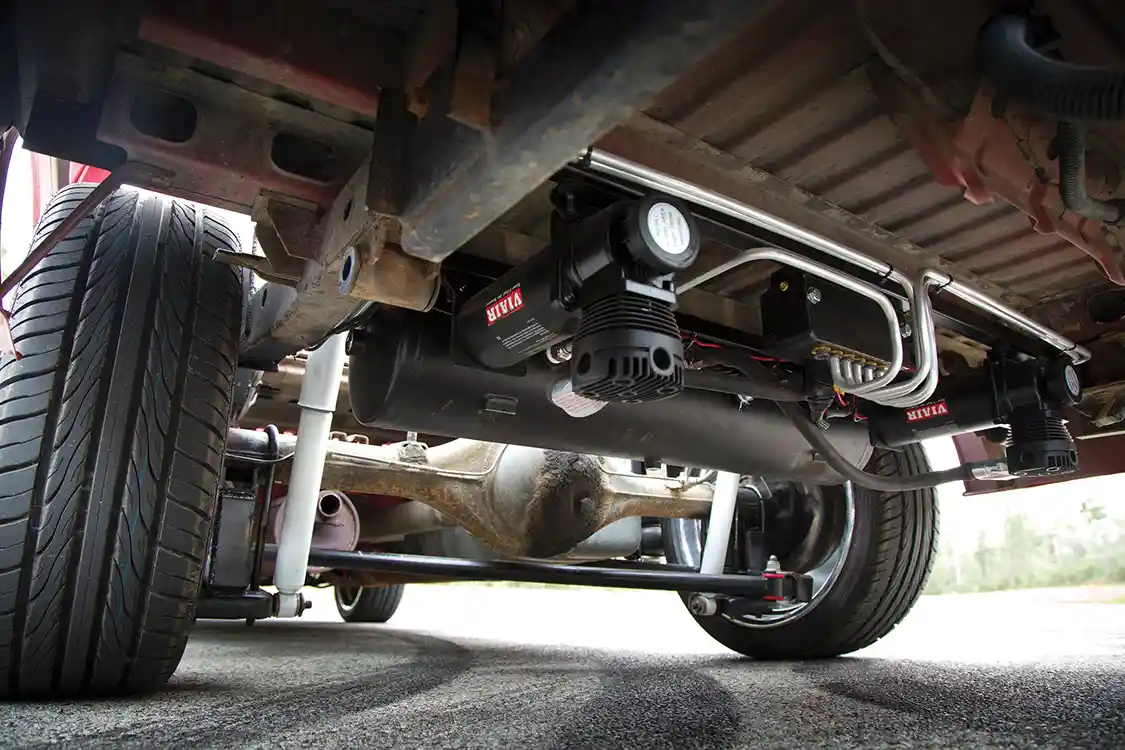
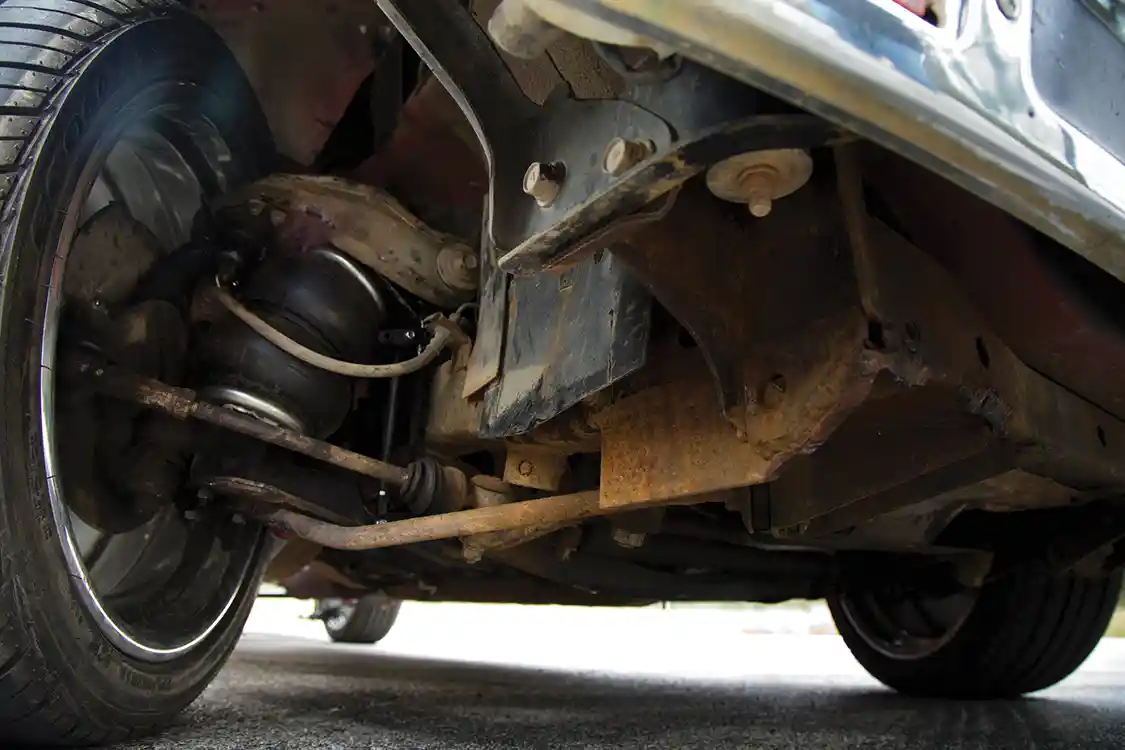
Jeff figured it was time to keep what little momentum he had rolling at this juncture by handing the keys to Rocky Fox of Chaotic Rods and Customs. Jeff ultimately wanted to see his LUV low, and the static drop kit was only meant to be a temporary fix until a full air system was devised and implemented. That’s the look that had kept him hunting for one of these trucks to begin with, and the time to turn his daydream into a driving, switch-hitting slice of reality finally presented itself. “I probably should’ve given Rocky a longer timeline to get the job done, but with Lone Star Throwdown coming up quick, I put the pressure on him and he was able to deliver.” In two week’s time, Rocky drew up a simple, yet effective setup to slam the LUV on the steamy Texas pavement. A bulletproof rear 2-link with pan hard bar and modified control arms are essentially what help adjust the little ol’ Chevy’s altitude. The execution was spot-on, and Jeff has yet to experience one hiccup with the system.
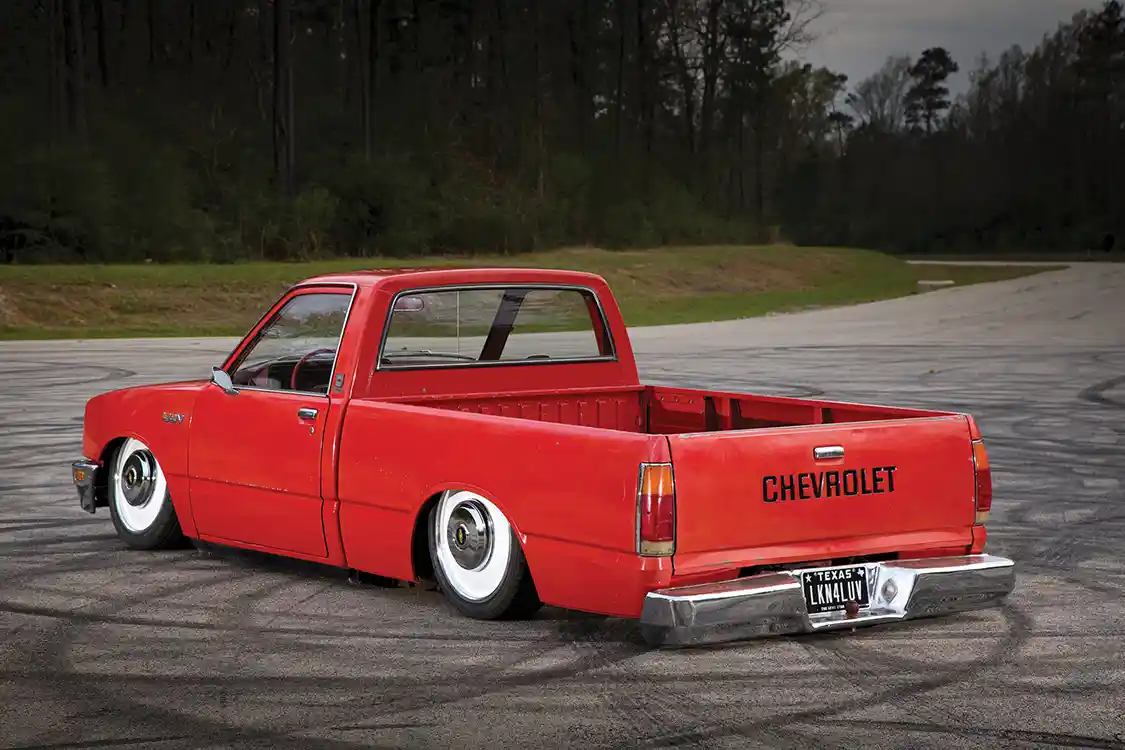
The LUV was buttoned up just in time for Jeff to sneak it into LST. “I got the truck from Rocky at 7 p.m. the Friday of the show, washed it and was able to arrange a VIP escort thanks to a sheriff friend of mine.” The LUV may not have made too huge of an impression on the guys rolling into the show with big baller builds, but that really wasn’t too much of a concern for Jeff. He knows there’s a small percentage of guys out there who get a kick out of old mini-truck projects, especially one as subdued as his. There’s nothing over the top about his LUV, but that’s just how he envisioned it. There are a few upgrades on the horizon, but nothing that would dramatically change the low-key aesthetic the truck has going for it now. “I’ll probably cover up the rear notch by raising the bed, and the engine bay will be cleaned up too. In fact, I may swap in a new engine at some point, but that’s later down the road. Right now I’m enjoying the truck by driving it any chance I get, and that works for me.” ST
Owner
Jeff “Jeffro” Baum
1981 Chevy LUV
Conroe, TX
Engine
Chassis & Suspension
Wheels & Tires
Body & Paint
Interior & Stereo
Special Thanks From the Owner: “Thank you to my beautiful wife, Kandace, Jonathan Rascoe, Roland Furstenfeld, Rocky Fox, Robert, Donnie, Cory, Ryan and Scott.”
It’s been hip to be square for decades now (thanks, Huey Lewis), but the square-body truck scene has really taken off of late. Why? Well, many truck builders tend to be guys in their late 20s and early 30s, and if you do some quick math, you’ll figure out that they were around when there were 1973-87 Chevy trucks all over the road. Heck, maybe even one of their family members owned one, and they’re nostalgic for the old Bow Ties. In the case of Dustin Adair of Mesa, Arizona, that was certainly the situation.
we’ll wish Brownstone a happy life with Dustin, and hope to catch it cruising down the streets as its owner takes his daughter to school or heads to the office. That’s what it’s supposed to do, after all. It’s a work truck.”
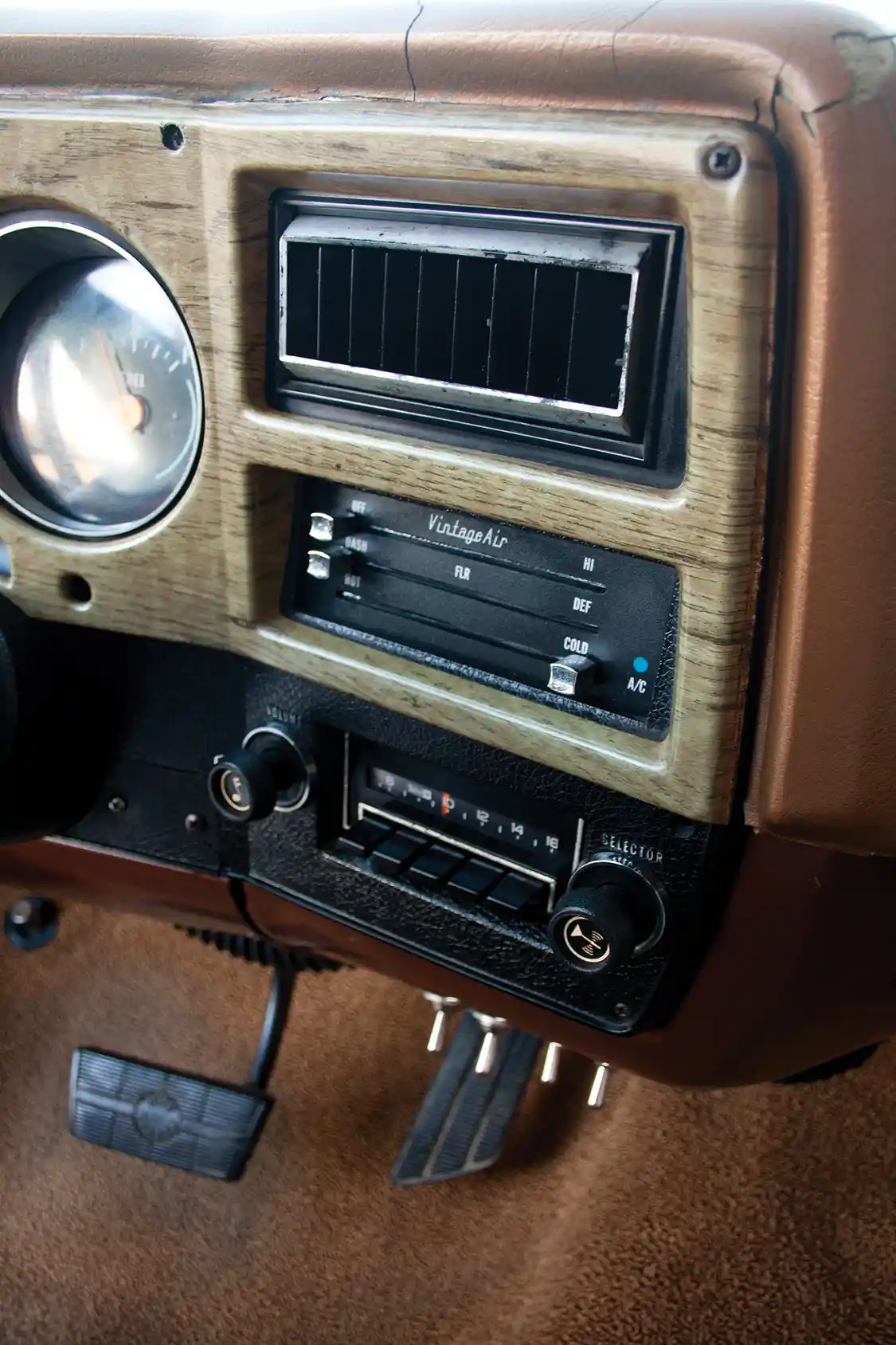
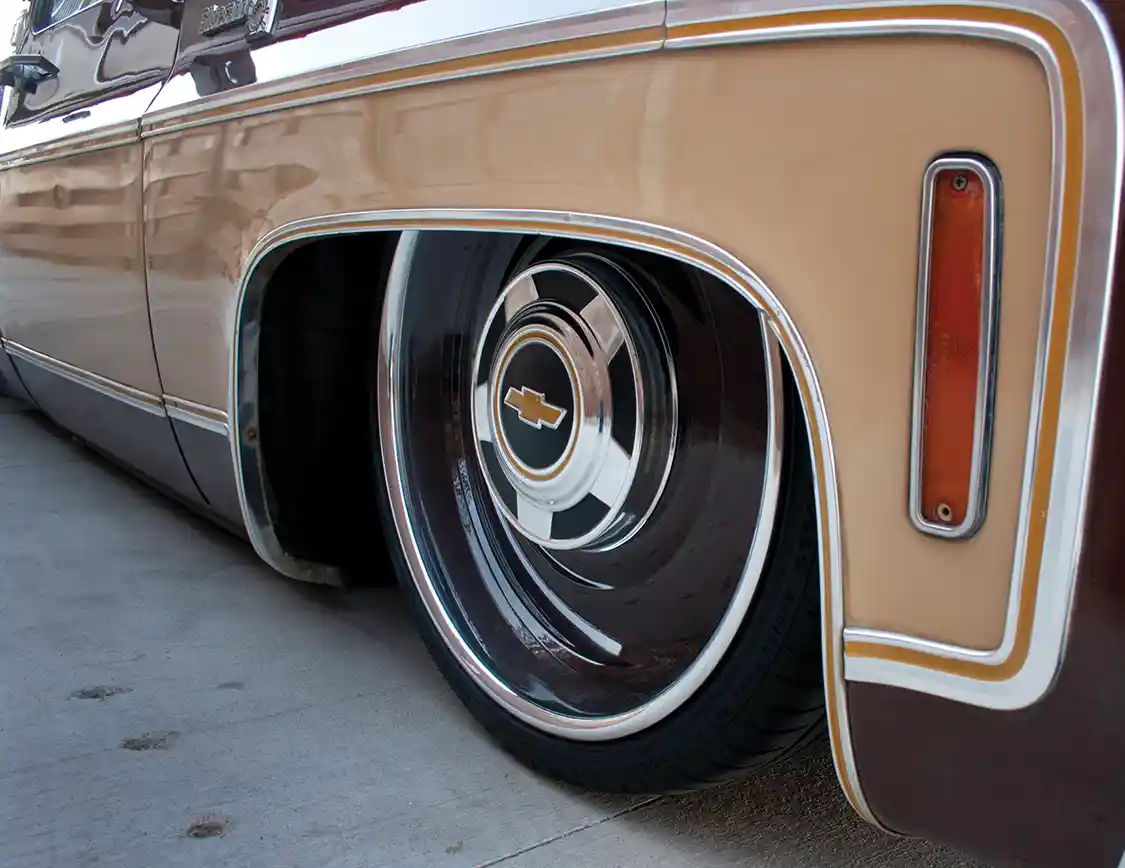
Dustin’s dad owned a square-body back in the day. It was an ’86 work truck that he used for his plumbing business, and after putting several thousand miles on the clock, he passed it down to Dustin, and it became his first truck. He sat behind the wheel of that thing all through high school and even a little bit beyond, forming a bond along the way, as one does with their first vehicle, particularly one with a deep family connection.
Let’s get something clear right off the bat: Brownstone is not that truck. No, his dad’s work truck went the way of the dinosaur years ago, and since then Dustin has been working on taking care of his daughter and building a plumbing business of his own, the appropriately named Plumbing 2.0. So even though having a square again was something he thought about a lot, it wasn’t anything that he could comfortably pursue until relatively recently.
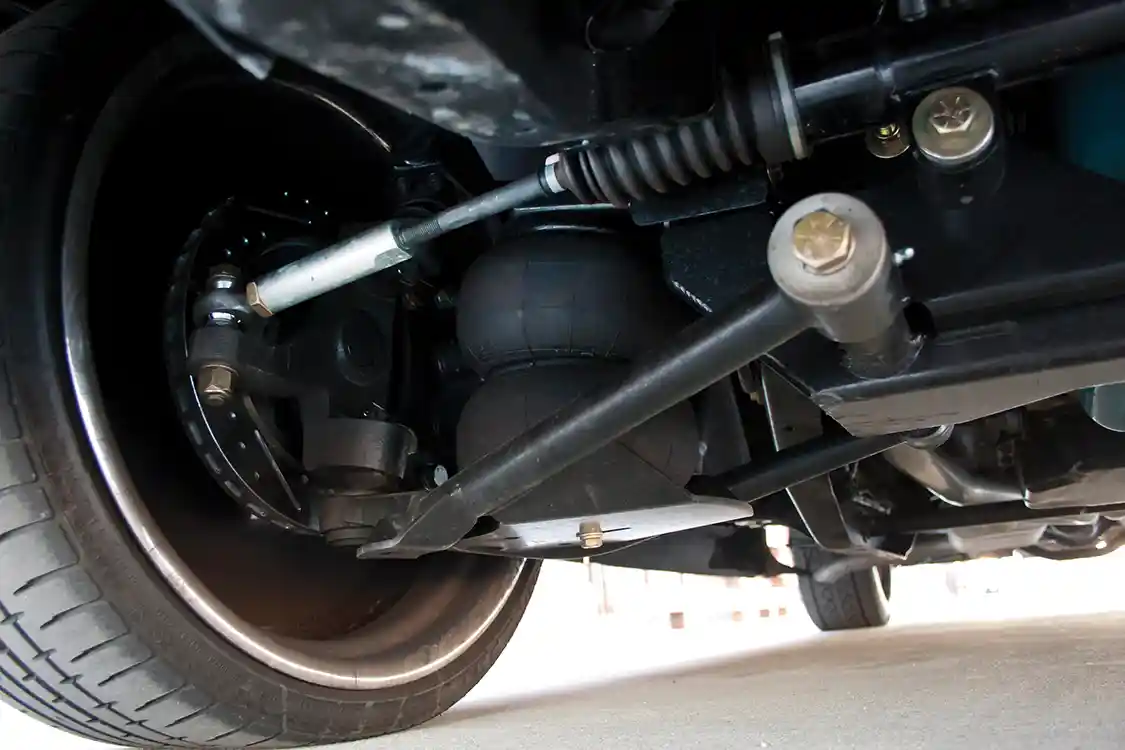
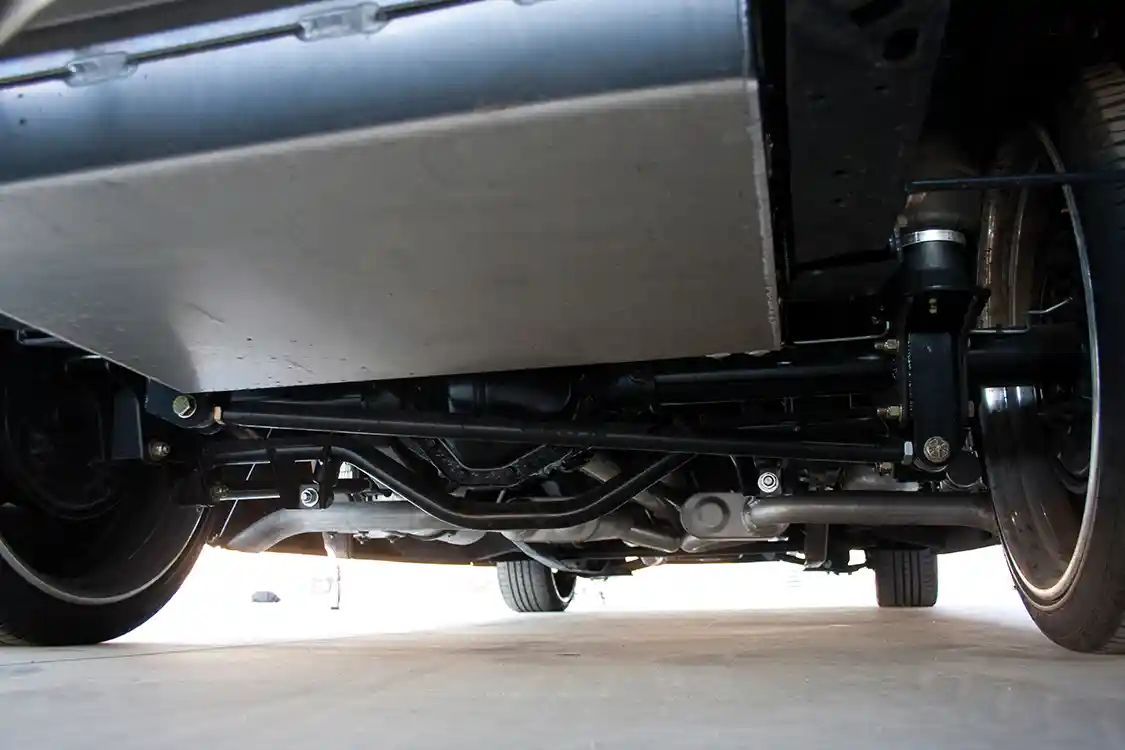
That was when a buddy of his, Mason Wright, the owner of Nacho, introduced him to Del Uschenko of Delmo’s Speed and Kustom. We don’t have to go into the specifics about Del if you’ve been reading this magazine for more than a minute, but suffice it to say, he’s a pretty big deal. Not only are trucks built by Delmo’s exceptional, they also turn heads like nothing else. Because he’s picky about what he works on, Del won’t take on just anybody’s truck. So, would he build a square for Dustin? It took some convincing, but he agreed, and things were good to go. They just had to find the right truck.
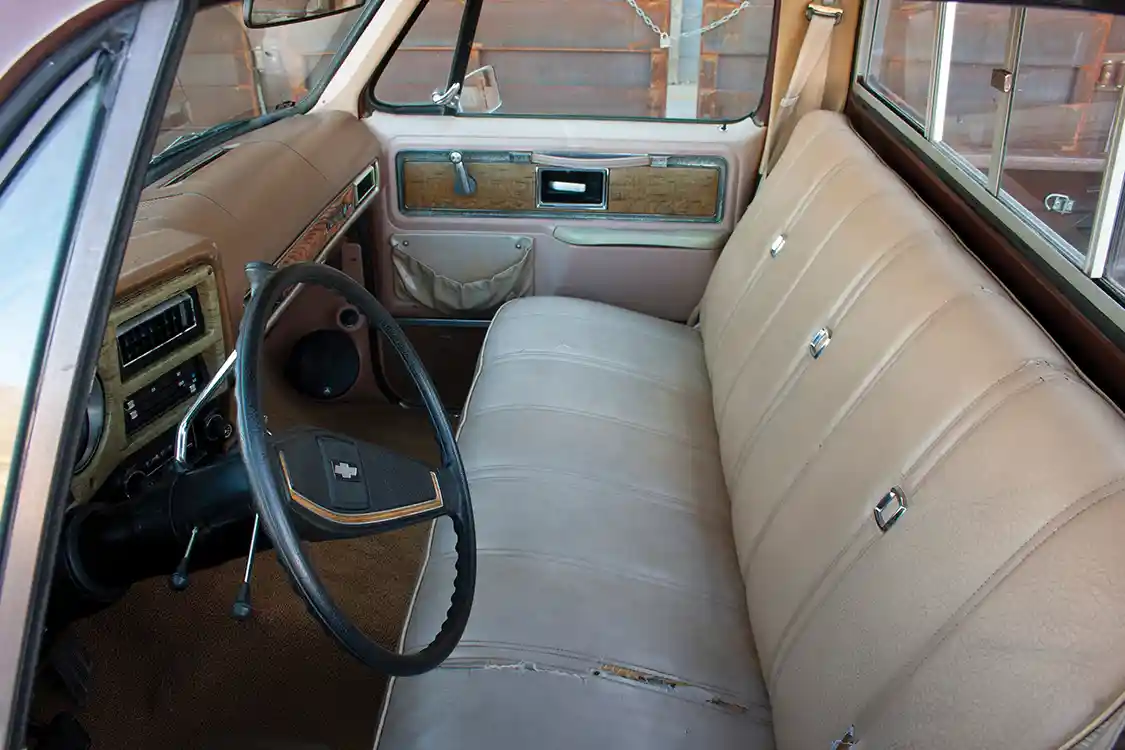
A good one turned up in central California around that time, and Dustin flew out from Arizona to check it out. The thing was a real oddball, a C-20 with a 454 big-block. But it’s also a standard cab short-bed without a ton of options other than the two-tone brown and cream paint. It ran and drove just fine, and the owner even discounted the price a bit to cover Dustin’s flight out. But what about the flight back? No need, because Dustin flew to California one-way, and knew he’d have to drive the truck six-plus hours back to Phoenix. The return trip, fortunately, went off without a hitch. After a brief stay in Arizona, back to Burbank, California, the truck went, and Del and his team at Delmo’s tore into it.
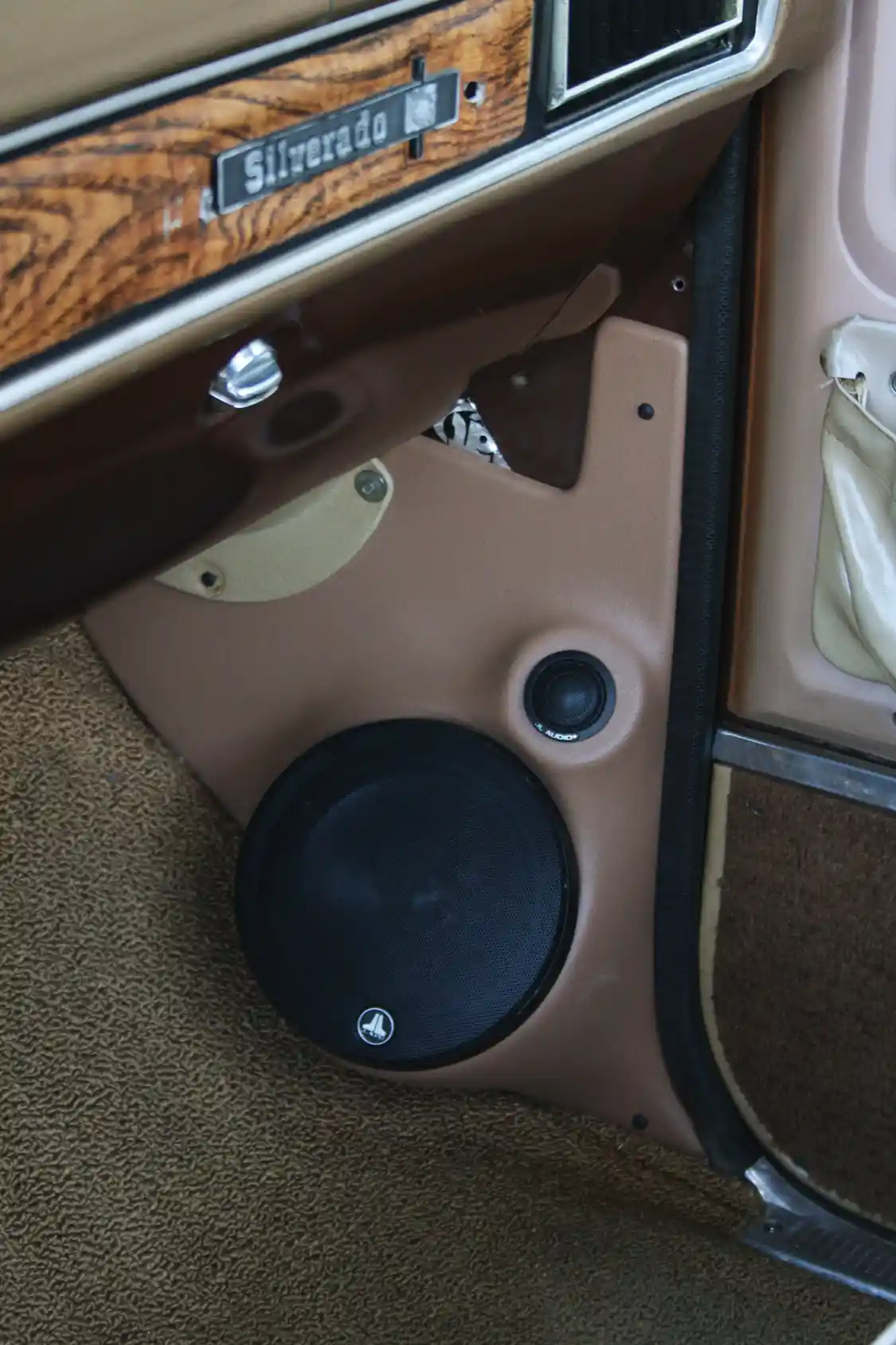
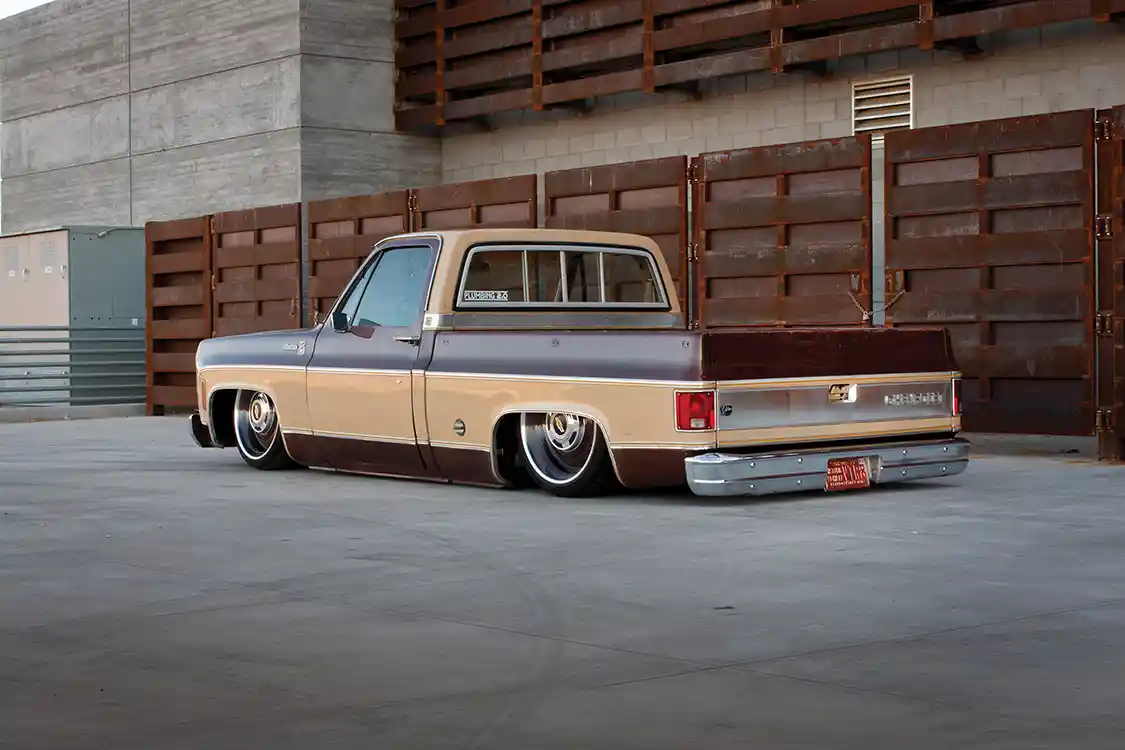
The thing that makes Brownstone so special is the truck itself. A standard cab short-bed truck with a 454 is pretty hard to find, much less in decent shape. The patina is just so perfect for a truck of that era, that, when combined with the two-tones, it creates a pristine package that wraps looks and style with one pretty bow. After Delmo’s team worked their magic, the truck was that much better. Sitting flat on 22-inch rollers, the Silverado gets plenty of attention on the road.
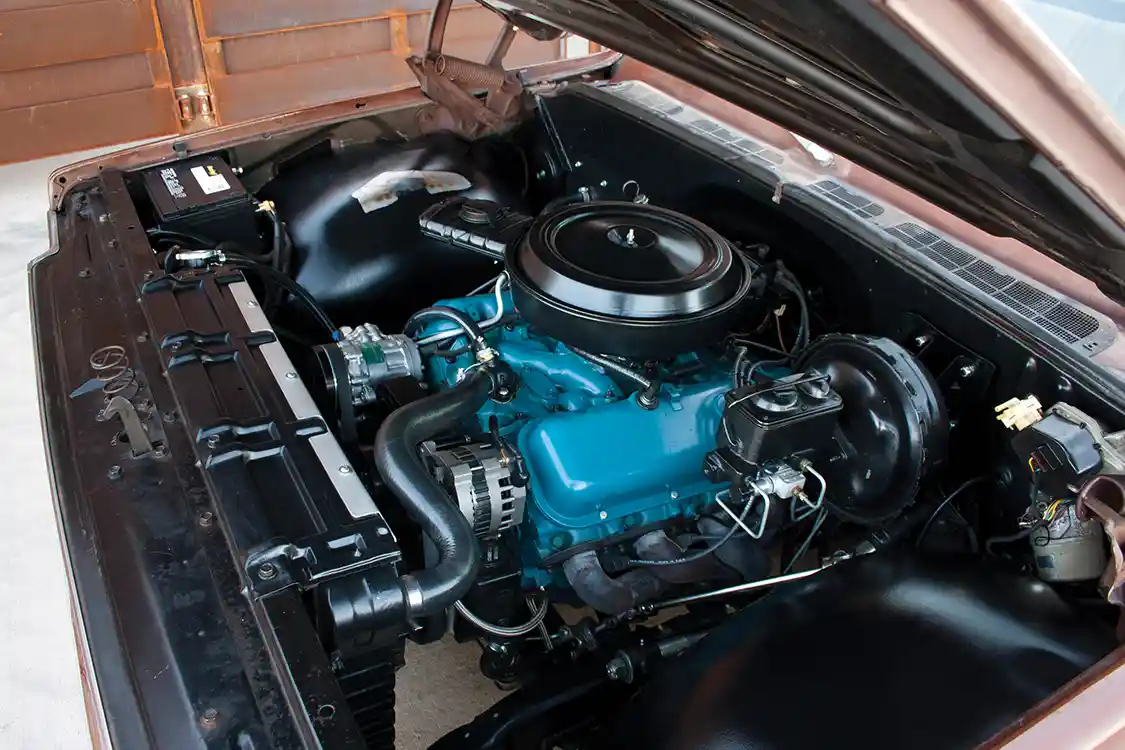
Ultimately what is so appealing about this truck compared to similar versions that you’ll find on Instagram is that it’s simple and clean. It could’ve been repainted to perfection, and the bed tie-down holes could’ve been welded up. But instead, it’s just perfect the way it is with its still-usable body-dropped bed floor and faded door panels that are complete, even though dry rot should’ve claimed them in the ’90s. There are a million things that Del and Dustin could’ve done to this truck, but it was their sense of restraint that makes it a shining example to square-bodies everywhere. And that’s perfect.
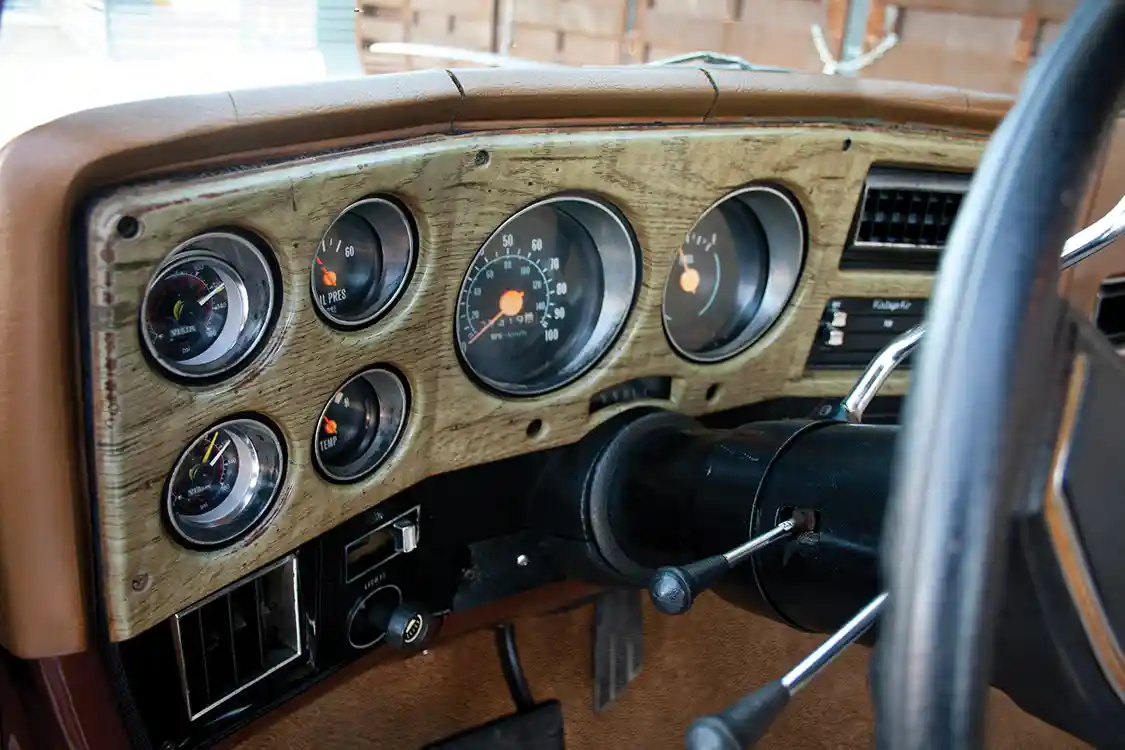
As for Dustin’s future with the truck, well, that remains to be seen. He loves it and still drives it all of the time. In fact, he seems completely satisfied with its current state, and has no plans to change a single thing or move on to another truck. That’s probably a sign that he’s done something right, and it’s hard to disagree with that idea, so we won’t. Instead, we’ll wish Brownstone a happy life with Dustin, and hope to catch it cruising down the streets as its owner takes his daughter to school or heads to the office. That’s what it’s supposed to do, after all. It’s a work truck. ST
Owner
Dustin Adair
1977 Chevrolet Silverado C-20
Mesa, AZ
Engine
Chassis & Suspension
Wheels & Tires
Body & Paint
Interior & Stereo
Special Thanks From the Owner: “First, to Delmo and his crew for all of their help. Thanks to Plumbing 2.0 and my daughter, Paije; my brother, Brett, and Mason Wright.”
Wilwood announces the release of new front Aero6-DM “Direct-Mount” bolt-on brake kits for the popular 2007-2015 Toyota Tundra 2WD and 4WD trucks, developed specifically for ease of installation, reduced cost, and upgrading the stock rotors and heavy cast-iron calipers. These kits are designed to work with most 17” and larger wheels and be fully compatible with factory master cylinders, ABS, and all electronic controls.
The Aero6-DM kits deliver improved performance and repeatability, with a more confident pedal feel for braking in all driving conditions. Both larger brake pads and rotors have more thermal capacity, allowing better heat dissipation for high-demand highway, off-road, towing, hauling, and commercial workload applications that many of these Tundras endure.
Forged aluminum six piston Aerolite calipers are engineered to bolt directly to the Tundra’s spindles/hubs, simplifying installation. Premium vented and e-coated rotors,13.39″ x 1.26″, are available in either GTB slotted, or SRP drilled and slotted, featuring 66 vanes for improved thermal management and braking performance. The kit includes new Wilwood BP-22 ceramic-based compound brake pads formulated for street, off-road, or towing applications. Calipers are available in gloss red or black powder coat with many other color options (additional charges apply). Stainless steel Flexlines and premium-grade hardware included.
Visit www.wilwood.com for more information
In the U.S., approximately one in six drivers receives a speeding ticket each year. That’s around 41 million individuals. According to a 2025 driving habits report, 88% of drivers admit to intentional speeding, and 55% admit to speeding in general.
There are legal and financial challenges that follow after receiving a speeding ticket in the US. They depend on two factors, including the seriousness of the violation and the driver’s record.
What happens after you receive a speeding ticket? Find out to help protect your driving record and minimize long-term costs.
Getting a speeding ticket creates an unexpected disruption to your entire day. Your body will experience both adrenaline and frustration during the process of pulling over. The initial results of the situation create overwhelming challenges. You will need to pay a fine that will create financial difficulties for you.
Your financial obligations will increase when your insurance rates go up. Your driving record will receive additional points, which can lead to license suspension after you reach the maximum limit.
Speeding by itself is generally not a serious enough traffic violation to constitute a charge of reckless driving; however, if you were speeding at an unusually high rate of speed, it could land you a reckless driving charge, according to https://www.ericgjohnsonlaw.com/.
Your appearance in court will create interruptions to your scheduled activities. The ticket you received will damage your driving reputation, which will make others perceive you as a less responsible driver.
The penalties that drivers face for exceeding speed limits will differ based on multiple factors that determine their exact amount. Your location plays a significant role; different states and municipalities have different base fines. Your costs depend on your actual speed because higher speeds result in higher penalties. Some areas impose extra fees for specific situations, like construction zones or school zones.
Absolute speed limits are clearly defined for the entire state under North Carolina speeding laws and penalties. You can get a traffic ticket if you go over the speed limit.
The court system applies stronger penalties against defendants who have already received previous tickets. The court system provides defendants with traffic school as a means to lower their fines.
You must examine the ticket together with local regulations to determine your total financial obligations. The financial impacts caused by speeding tickets will become clearer to you after you learn about these specific components.
Your driving records and insurance rates will incur permanent damage once caught driving recklessly.
Most states assign points to your record based on the severity of the offense. Your driving privileges will get restricted through license suspension, which results from accumulating excess points.
Insurers view a single speeding ticket as proof of risky behavior. As such, this will lead to higher insurance premiums. Accumulating more points on your record will significantly increase your insurance rates.
The points from a speeding ticket will remain on your record for years. This means their effect persists for an extended period. Once you understand the outcomes of these situations, you can determine the next course of action.
Insurance companies react negatively to speeding tickets. Your insurance premiums will increase after the discovery of your violation because the insurer now considers you a greater risk. The increase depends on your driving record and the extent of your driving violation.
Some insurers might even label you as a “high-risk driver,” leading to further premium hikes or difficulty in finding coverage. The rates of your insurance will be affected by a single ticket, which will remain in effect for multiple years.
It’s important to keep a clean driving record if you want to stop your premiums from increasing. You may consider completing safe driving training programs, in this case. This will reduce insurance costs while keeping your driving record clean.
If you want to contest your speeding ticket, there are multiple choices presented to you. The first option involves entering a “not guilty” plea to request a court hearing. Radar speed calibration records can be used as evidence. Witness statements can also be proof.
You might also consider negotiating with the prosecutor for a plea deal. This could reduce the charge or fines.
For the second option, you may complete traffic school. This will help you achieve ticket dismissal and prevent points from being added to your driving record.
Some jurisdictions permit ticket contests through online platforms and mail services. This provides a time-saving advantage. You might have to think about this option carefully, as contesting requires work. Still, it may prove beneficial if you believe you received an unfair ticket.
Paying your speeding ticket involves three main steps that create a simple payment procedure. First, check the ticket for payment options; it usually lists how and where to pay. The majority of jurisdictions permit online payment methods and mail services and designated location payments.
For online payment to be completed, the citation number must be entered on the court’s website. You have to be mindful of the fact that payment must be completed by the deadline, as late payments incur an additional fee. If you want to mail your payment, you should send a check or money order together with your ticket copy.
You need to maintain a record of your payment confirmation or receipt because you will need this documentation for any future problems that may occur. The rules of each location require verification because they differ from one another.
There are several consequences to receiving a speeding ticket. For one, you can serve jail time, be on probation, pay fines, or have your driver’s license revoked. Your car may also be impounded. For some, you may even serve excessive community service.
You can challenge an unfair ticket through different methods. In such cases, you must learn to handle the situation that benefits you. Keep a clean record by maintaining safe driving practices.
The National Highway Traffic Safety Administration reports that driving while drunk causes thousands of deaths on the road yearly. Drunk driving is one of the most common criminal traffic violations. In a year, here are millions of DUI arrests in the country.
In terms of damage, around 37 people die in alcohol-related car accidents daily, resulting in over 10,000 fatalities a year.
Being charged with driving under the influence in the United States may result in multiple repercussions such as fines, suspension of your license, mandatory presence in court, an increase in rates of insurance, and imprisonment. If you’re charged while vacationing in another state for a DUI, then your license and driving privileges will most likely be subject to suspension or revocation in your home state too. Keep in mind that the driving records of states are interconnected by interstate agreements.
Let’s talk about what to do if you get a DUI while on vacation so you can protect yourself.
You must learn about the DUI laws that exist in your vacation destination since these laws differ between jurisdictions. The blood alcohol concentration (BAC) limits and the penalties together with the enforcement methods show different patterns across various states and countries.
Some jurisdictions take additional steps toward zero alcohol tolerance, while others implement various BAC limits. The legal levels of alcohol in the blood correlate with the concrete facts that lead to a DUI arrest. Different communities, each under different local jurisdictions, enforce increasingly strict methods for dealing with DUIs.
Local people or an online search are good sources for answers to your questions. Your legal knowledge protects you from the unwarranted issues that come with a DUI charge.
A DUI arrest necessitates having clear knowledge of one’s rights. Always ask for legal representation. If officers confront you with any question, the best decision is to remain silent until you are with a lawyer. Opening up or arguing will only make your situation worse.
You should document all details from your arrest. The information you gather will prove important in upcoming legal proceedings. You need to create an arrangement for safe vehicle retrieval. The rental car company requires you to contact them for information about their DUI policies.
In some cases, if your actions lead to fatality, the consequences are severe. According to Edwardsville aggravated DUI lawyer Jessica J. Koester, if you are arrested and charged with aggravated DUI, you could face complications for the rest of your life if your defense is not handled properly. Beyond the severe criminal consequences, your driver’s license is placed at risk, and you can be subjected to high auto insurance premiums.
You must maintain a record of key documents, which include your arrest report and all citations. Your organized approach at this point will assist you with the upcoming obstacles you need to face.
To find a DUI attorney, an individual must browse several online resources. People in need of assistance can discover the same by searching “DUI lawyer near me” and providing their current location along with it.
Your hotel and local tourism office maintain resources that they can use to recommend legal contacts. State bar association websites provide directories of licensed attorneys, which users can access.
Legal referral services provide access to legal directories. They can represent people needing quick legal help. You should request consultations to evaluate their professional background and their service costs.
Understanding DUI legal consequences needs to begin after you obtain legal assistance. Your situation will result in both upcoming fines and potential jail time plus suspension of your driving privileges. The regulations that apply to your situation require you to study the specific laws that each state establishes.
Your criminal defense attorney will explain the charges and relevant penalties so that you can be prepared to present your case in court. The defendant will face new sanctions for being absent during the established court dates. Your lawyer will brief you on the possible scenario and potential outcome of your case.
As part of your sentence, alcohol education classes will be expected of you. You will also be required to do some community service work. Your lawyer will let you know about what is happening regarding your case and help you obey the court orders.
You should always have a transport plan ready in times when you’re going to drink. Determine whether you will use public transport, ride back through a lift-sharing service such as Lyft or Uber, or just select a designated driver to get yourself home. People should learn alcohol laws and transportation laws whenever they make a trip to a new tourist destination.
The drinking limit should be established through personal control. Alcohol consumption must be monitored until the personal limit is reached. One should opt to choose non-alcoholic beverages at all points, but especially when one is a part of daytime events.
Getting a DUI charge while on vacation creates major problems for an individual. If you are arrested for DUI, try to stay calm but take note of the details of the situation. Instead, try to ascertain your legal rights and to get anything you and your attorney can write. The local laws at your travel site will help you deal with the situation better.
If you are faced with tough experiences involving DUI charges, they could well become part of your learning experiences. It is on this basis that you begin implementing precautionary measures to guarantee that such events do not occur again.
To get away from the hustle, bustle and stress of life, people have different kinds of escapes. It can be working on your car in your garage, hanging out with friends or even just going out for a drive by yourself. Ed Leabough combines all of those things with this pristine ’65 Chevy II Nova race car.
“I used to own one back in nineteen-ninety, but with kids and all, it was just bad timing,” Ed recalled. “So, when I saw this car back on Racing Junk back in two-thousand seven, I fell in love with it,” he recalled. “It was just a bare shell. But it had already been tubbed and back halved, and it came with a lot of parts. We had just built a new house, but I had to have it. I promised her [Ed’s wife] that I would just let it sit until we got things situated.”
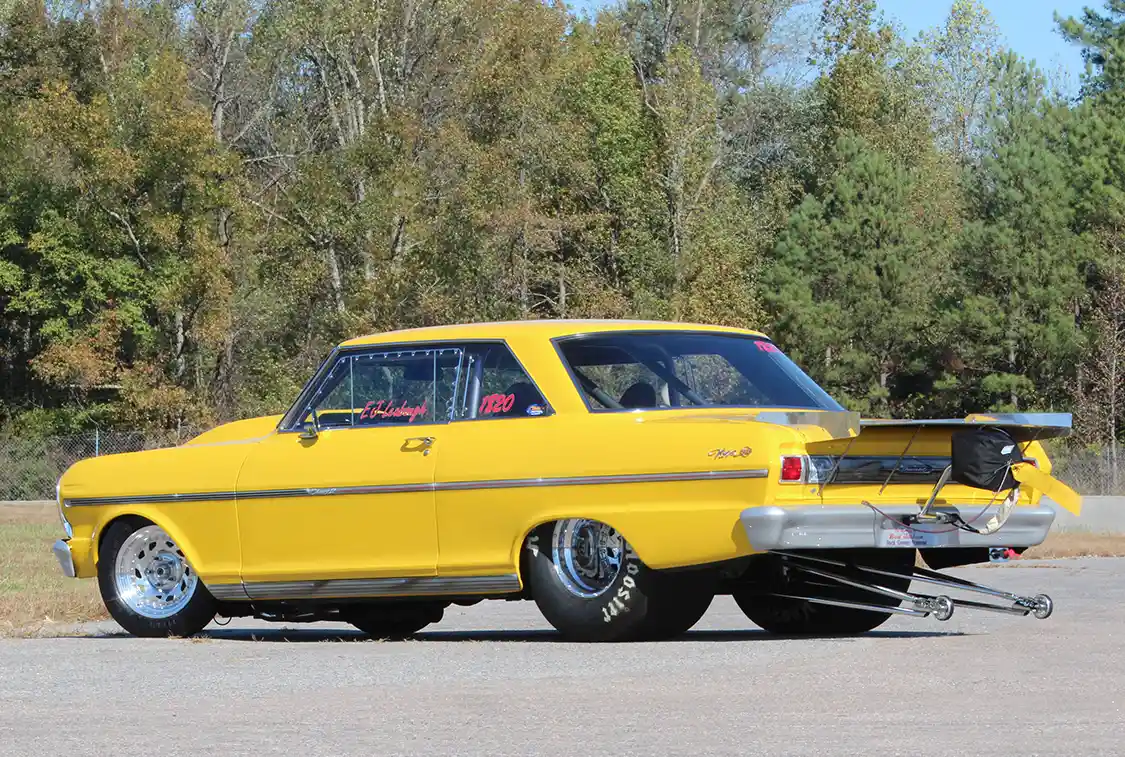
The deal was consummated and the car sat, but it still got a lot of attention in Leabough’s mind. That proved to be a welcome distraction from his job as a Henrico County, Virginia, police officer. It also proved to be a frequent topic of conversation among his racing buddies as he used this downtime to plan what he wanted his new Chevy II to be.
When it came to choosing an engine, Leabough found he got some good advice about going with a big-block combination from the late Bert Jackson, who lost his life in a racing accident at ADRL in Rockingham. Scott Duggins from PAR Racing Engines in Spartanburg, South Carolina, got the call to put together a 565-cid bracket bullet based off of a Merlin III block. With a 4.600 bore and 4.250 stroke, the bottom end features a Callies crank, Manley steel rods and Ross domed 15.0:1 pistons wrapped in Total Seal moly rings.
A friend of mine who hadn’t seen the car run told me that I shouldn’t be bringing a street car to a race track. He’s still eating crow!
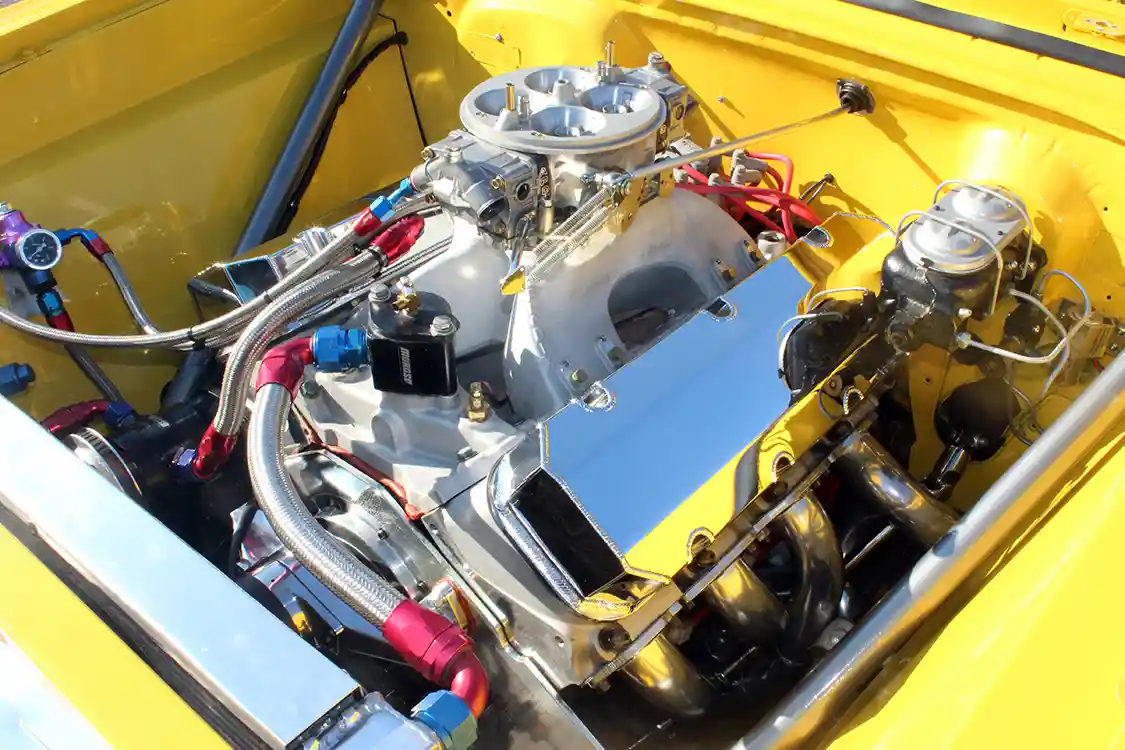
CNC-machined Brodix BB3 Xtra aluminum heads with the 119cc combustion chambers, 2.300/1.880 valves and 366cc intake runners were used along with a Brodix HV-1 intake. Fuel is pushed through the single APD 1,250-cfm carb by a Magnafuel QuickStar 300 electric pump, which can support up to 900 hp. Other bolt-ons include a Moroso 8-quart pan, Be Cool four-row aluminum radiator and a MSD 7AL-2 ignition box.
When the engine arrived, everything appeared to be going smoothly until Leabough discovered the pan was resting squarely atop the rack-and-pinion steering. Lincoln Campbell fixed that quickly by sectioning and then rewelding the oil pan to provide the needed clearance. Transmission Specialties in Aston, Pennsylvania, provided the Powerglide that uses a 5,700-stall converter. Tony’s High-Performance in Providence Forge, Virginia, finished the car by fabricating the headers, installing the wiring and plumbing, setting up the chassis and tending to all of the little details necessary to make this a turnkey bracket car.
A Heidt’s front 2-inch drop kit with new spindles and A-arms provides just the right stance for this pocket rocket, while QA-1 shocks on the front and Strange dampers on the rear control the suspension travel. A 12-bolt rear with 4.56 gears and Moser 35-spline axles work with the Chris Alston backhalf kit and an anti-roll bar with 62-inch long wheelie bars to plant the car when launching. Centerline Warrior wheels shod with Moroso rubber on the front and Hoosier W-15 drag slicks on the rear make up the rolling stock.
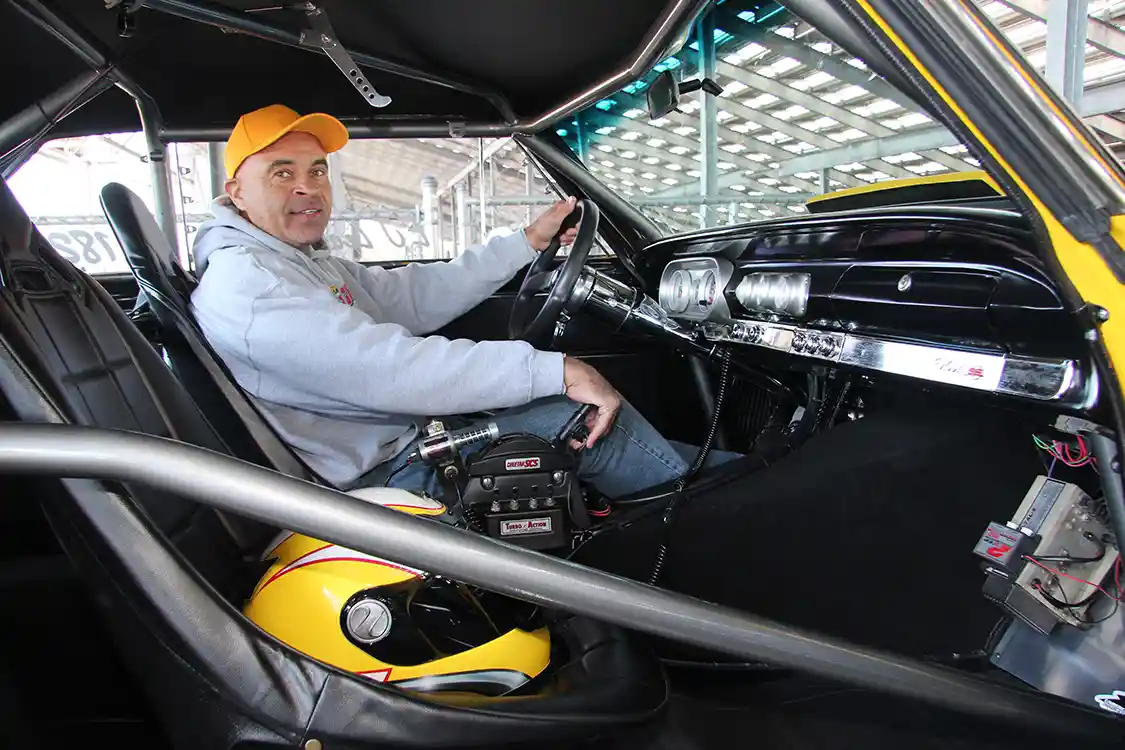
Anthony Barber of All Kolorz Paint & Body in Richmond, Virginia, did a masterful job of applying the Velocity Yellow paint, which is further accented by graphics by Michael Hall and Virginia Leabough. The car continues to have a full interior that even includes a factory ashtray and working dome light. Leabough installed most of the interior work himself with J&W Nova door panels, JEG’s seats and Auto Meter gauges. East End Glass in Richmond finished the job with carpeting, headliner and Lexan side glass.
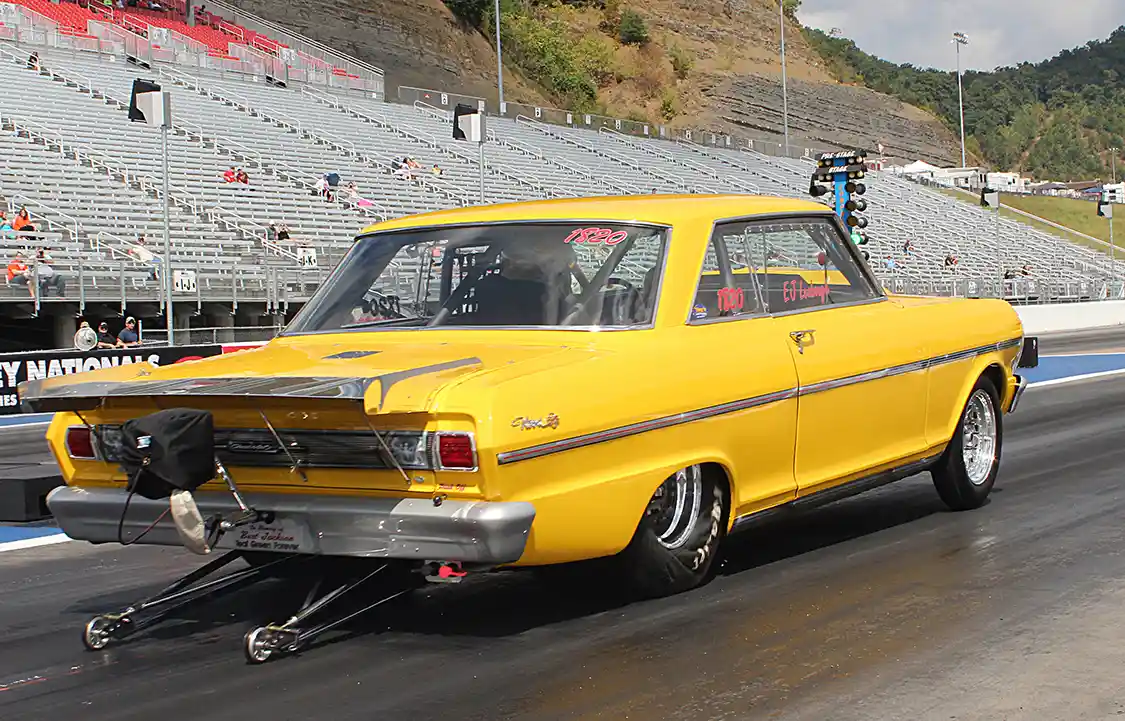
When it was all said and done, the car exceeded Leabough’s expectations by dipping into the nines on the quarter-mile right off the bat. At just over 2,900 pounds with driver, an 8.60 at nearly 156 mph is his best at this writing. Besides those already mentioned, Leabough is quick to acknowledge Joe Hall, Donnie Hargrave, Tony Mangrum, Taylor Lewis, Don Rudd, Brent Leabough Realty and Henry P. for their efforts that lead to the finished product.
“A friend of mine who hadn’t seen the car run told me that I shouldn’t be bringing a street car to a race track,” Leabough recounted with a laugh. “He’s still eating crow!”
Leabough’s wily little Nova gets a lot of nods for its craftsmanship. It’s a solid eight-second performer that provides a worry-free, low-maintenance ride at the track for a welcome escape from what goes on in real life, and that’s what a perfect distraction should be! DR
The idea of “different” gets thrown around a lot in this industry. Different wheels. Different color. Different stance. But every once in a while, something shows up that forces you to recalibrate what that word actually means.
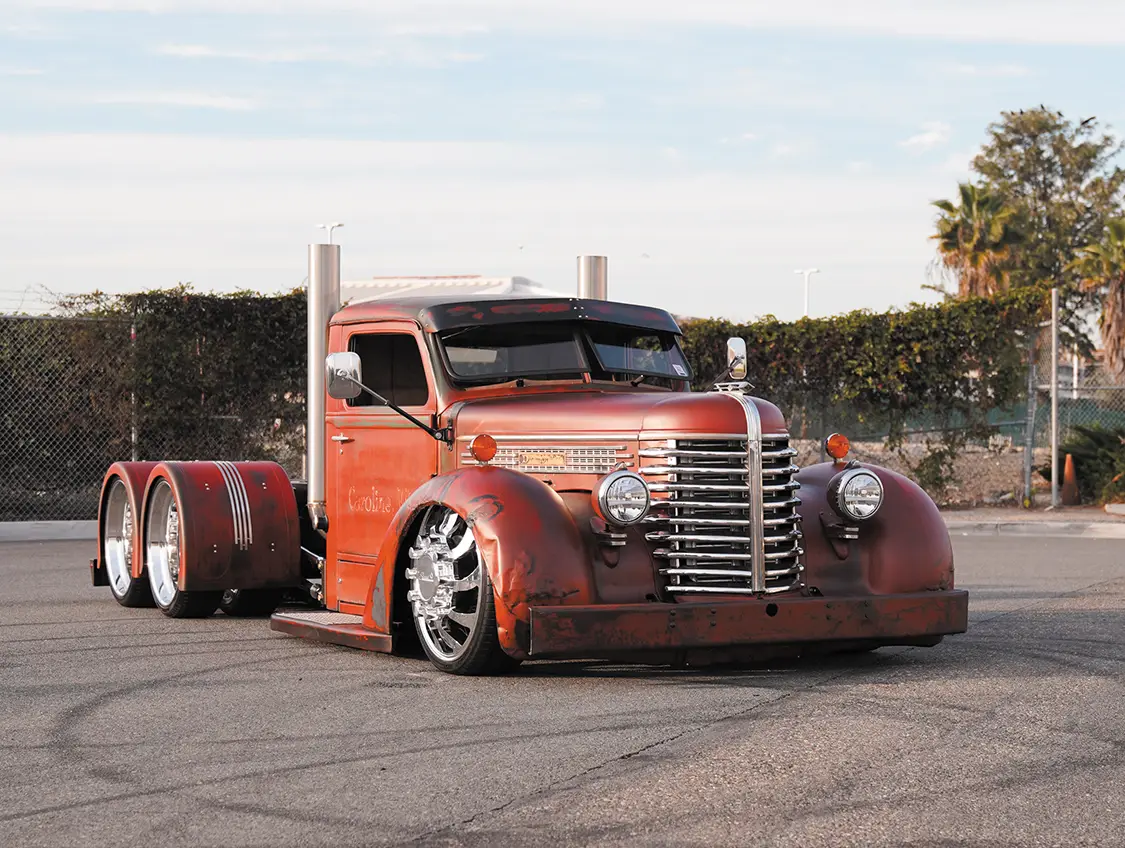
When we first saw Tony Leal’s 1948 Diamond T 404 at SEMA 2025, we knew it had to be featured. This build isn’t just different; it’s the kind of build that makes you stop mid-sentence, stare at it, and ask yourself how in the hell someone even thought to do this. Tony calls it the Slammed Hauler, but honestly we’re not even sure that scratches the surface of this insane build.
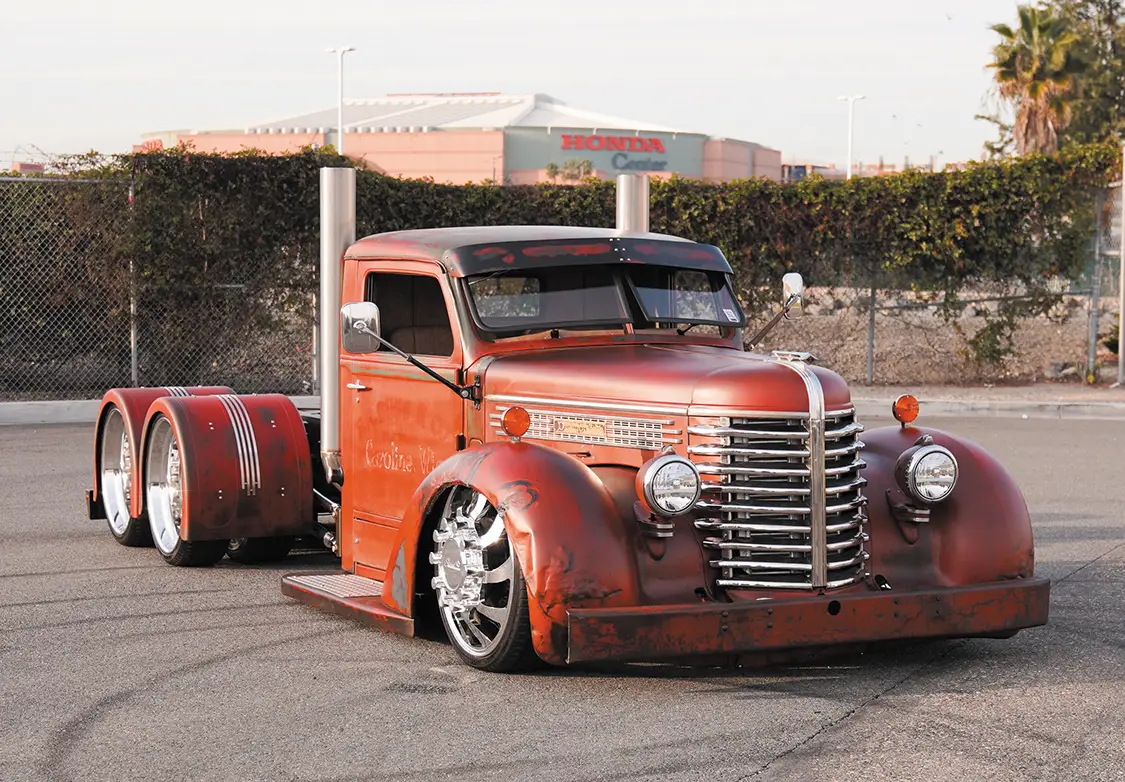
When it came to building a one-of-a-kind truck, Tony didn’t start with a pristine classic tucked away in some collection. Instead, he bought the truck out of Northern California from an older gentleman who had been restoring Diamond Ts. At the time, it was an old dairy delivery truck with a tank on the back. It had lived a working life, and the sins and scars of its past showed through at every angle. It wasn’t flashy, glamorous, or even worth saving to some. It was just old iron, but under all of the patina and broken parts, this truck had something that a new truck doesn’t: history. Most people who acquire a vintage Model T would have restored it or perhaps given it the once-over to make it drivable or even take it to parades on the weekends. But those who know Tony Leal know that he has a style unlike anyone else, and the Diamond T was about to get what we can only sum up as the “Tony treatment.”
The turning point for the build came in 2019 at Lone Star Throwdown, where Tony saw a 1948 International KB6 sitting on an air-ride chassis. It was at that very moment that something clicked, and Tony was off to the races. He didn’t want to restore the truck; he wanted something so over the top and so unexpected that it would steal the show wherever it rolled in.
Not blend in. Not compete for trophies or attention. Tony wanted a build that would turn heads, break necks, and create conversation no matter where he drove it. And when you look at this truck now, that mission feels accomplished.
Underneath the original 1948 sheetmetal sits a 2022 Porterbuilt full-custom air bag chassis. And when we say custom, we mean designed from scratch! The frame alone took nearly two years to complete, which is longer than most folks will dedicate to an entire build. That equates to two years of engineering, refining, and obsessing over how this massive piece of history would sit, ride, and function.
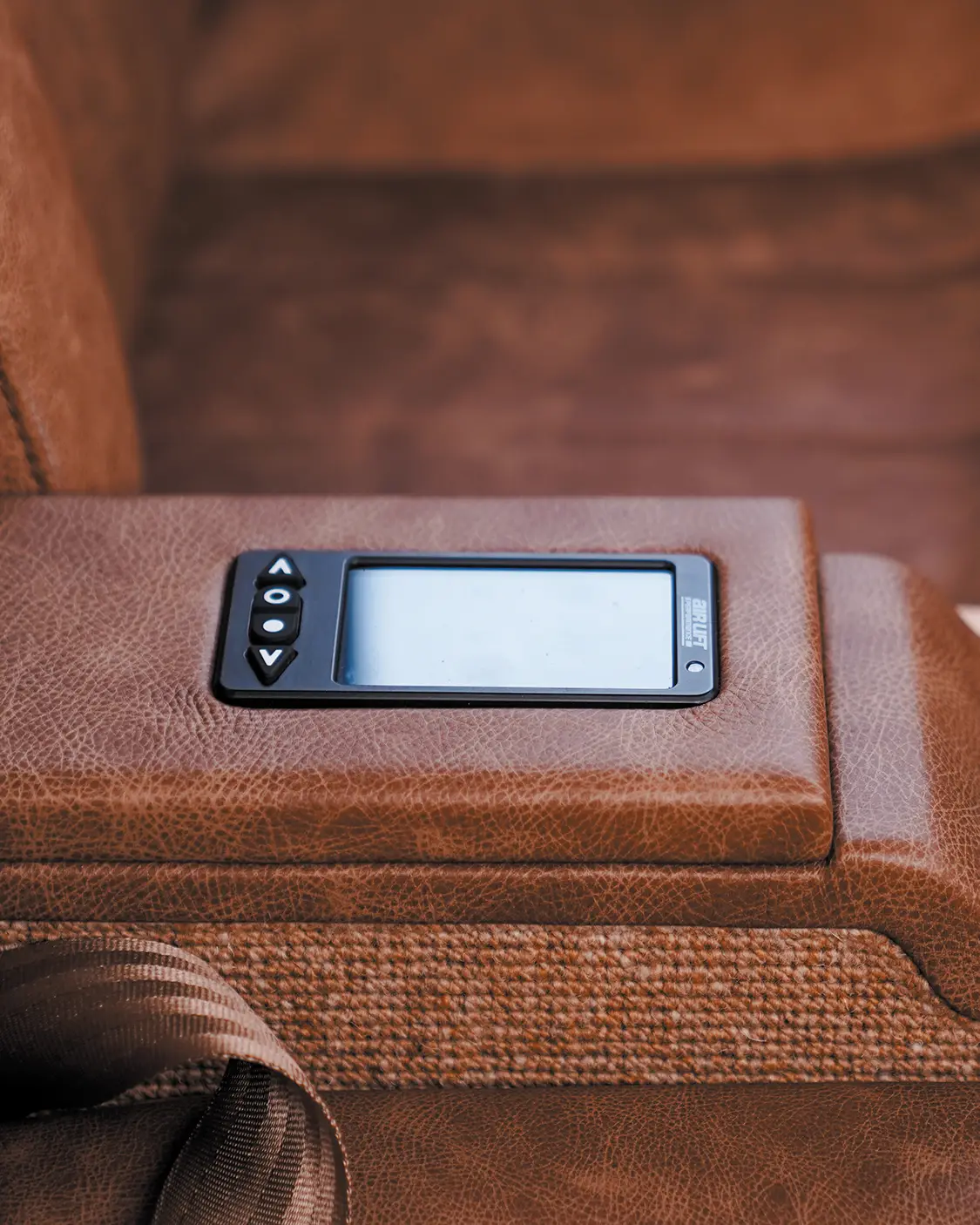
With Air Lift 2600 bags up front, Firestone bags in the rear, Aldan shocks all around, and an Air Lift ALP4 management system feeding three 28-inch Flo tanks, this truck rides like a Sunday driver on the Anaheim roads. A Flaming River XL steering rack handles steering duties, and a custom fuel tank by Arizona High Test keeps the engine fed.
Everything about this build is intentional, thought out, and executed to a level that makes you truly appreciate the amount of effort that it took. From the shaved and tucked wiring harnesses to the hard line air management, the longer you look at this Diamond T, the more you find.
Despite all of the attention and custom fabrication this Diamond T has, one of the smartest decisions during this build was what Tony didn’t want to change.
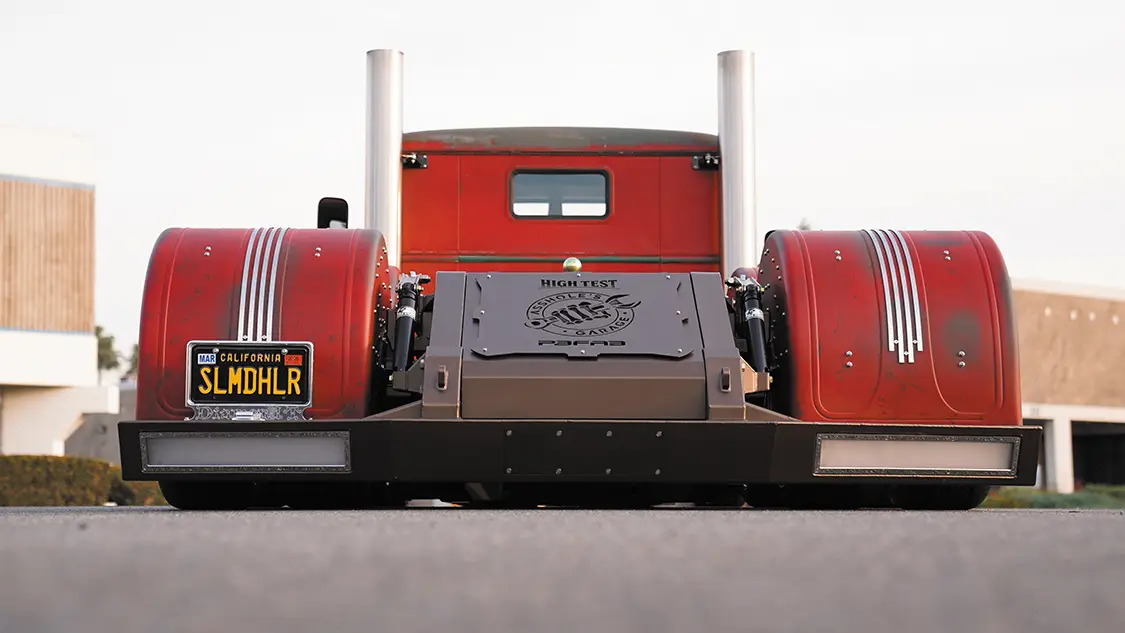
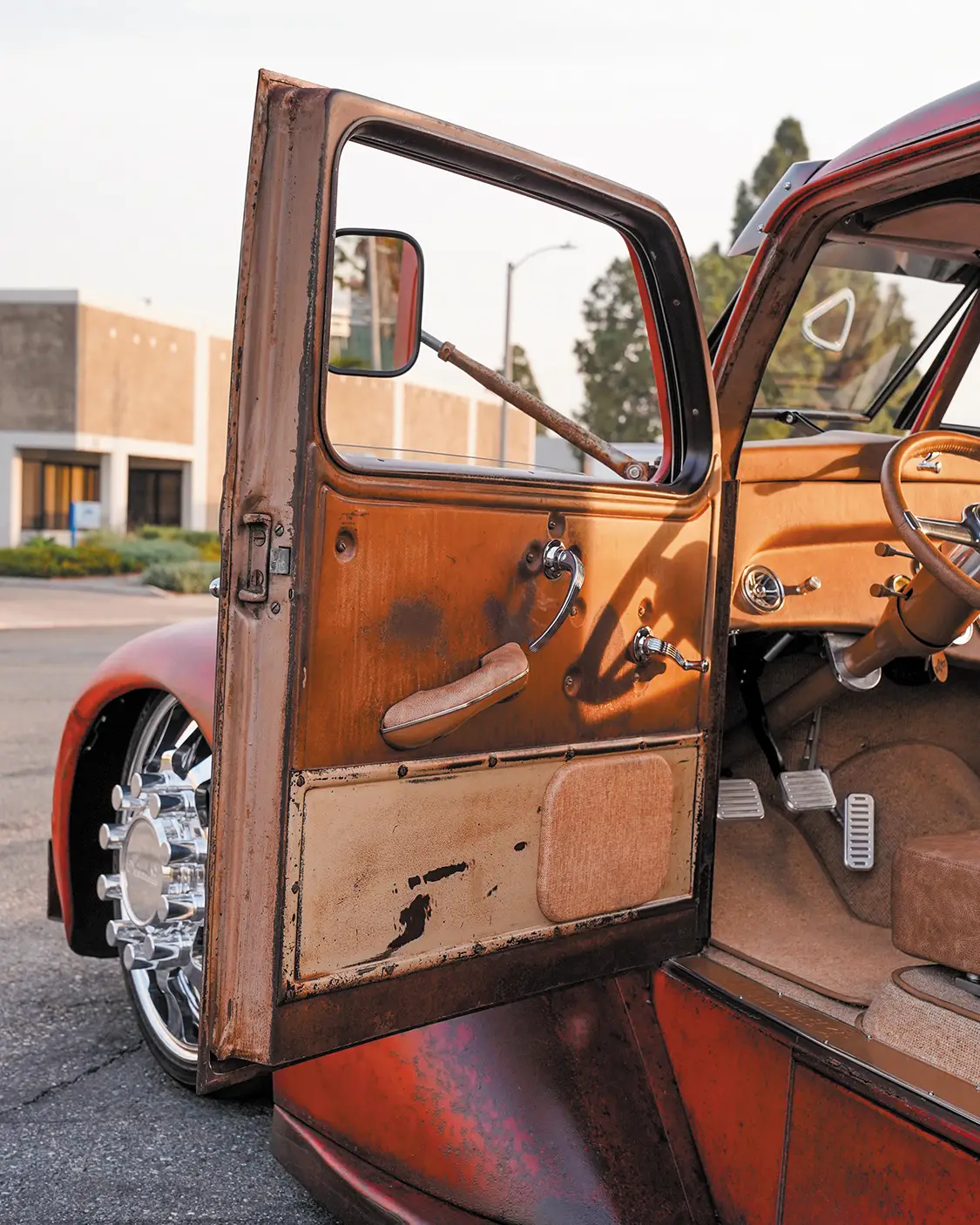
Instead of burying the truck in layers of glossy modern paint, Tony opted to preserve the original patina and locked it in with satin clear. The deep crimson red paint has varying degrees of fade, but instead of being a takeaway, these imperfections sum the truck up perfectly. It gives the build history, and the moment you see the truck, you wish it could talk. The names on the doors from its former life as a farm truck remain, and it only creates further conversation.
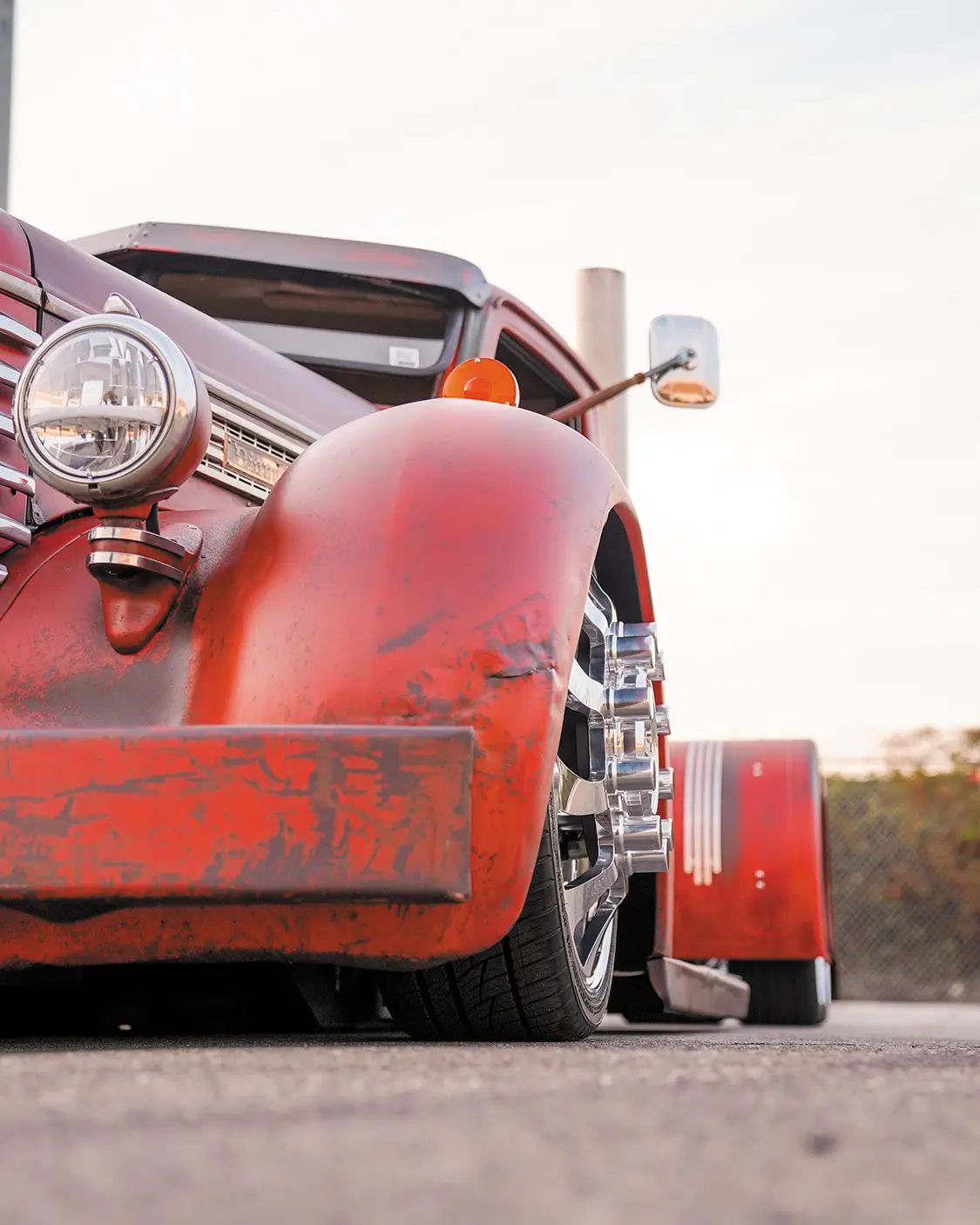
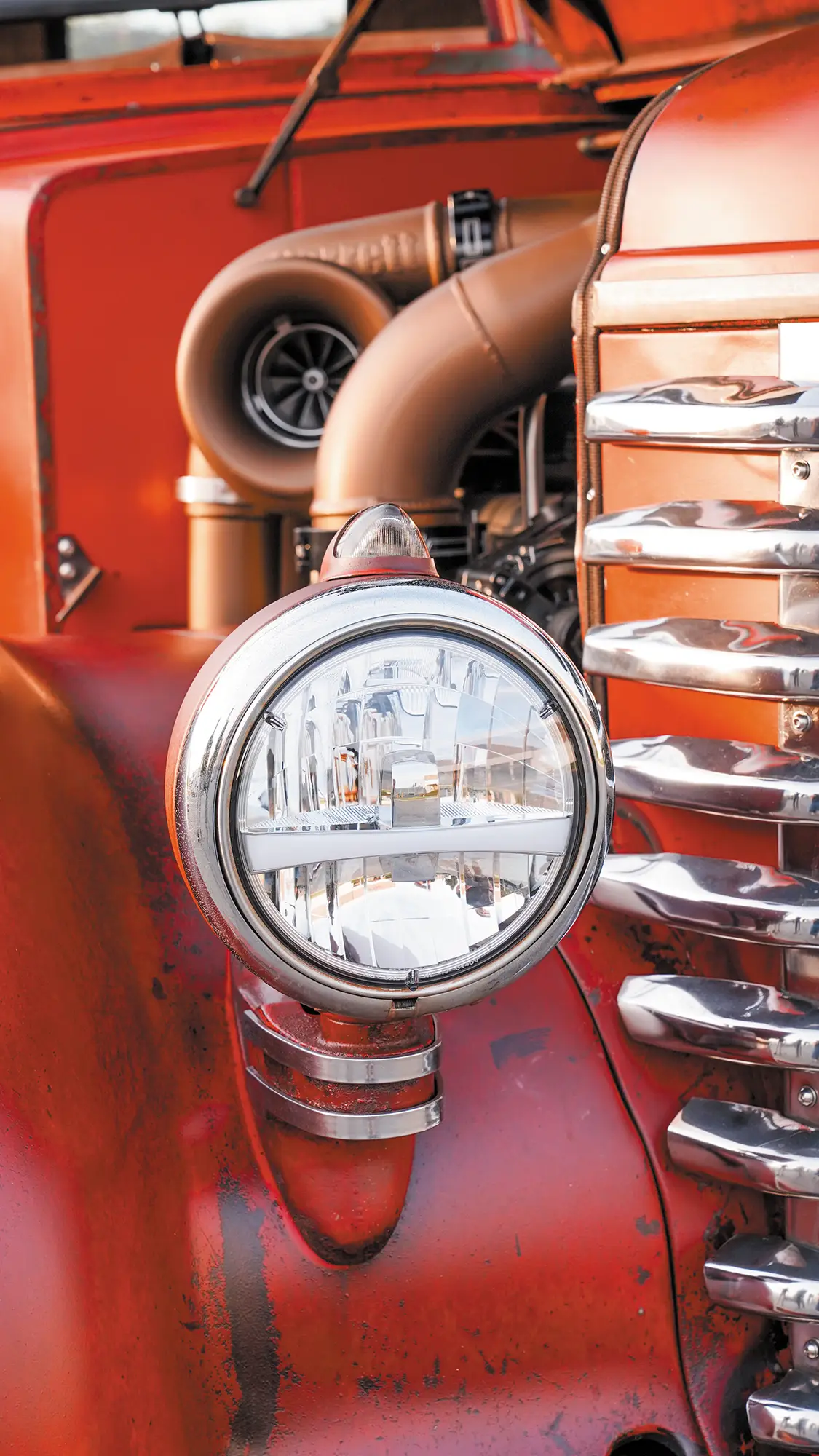
The grille and bumpers stayed stock, anchoring the truck to its roots. Summit Racing headlights bring modern visibility without distracting from the vintage face. Custom rear fenders make room for the modern chassis underneath. The rear tubs were custom fabricated, and the firewall was rebuilt. The list of body modifications is long enough that even Tony shrugs and says, “It’s too much to list.” ”.
But despite all of the custom work that Tony and his team put into this insane build, it still looks like a Diamond T. But instead of the rusted, dusted, and otherwise forgotten Diamond Ts that exist all over the country, this one came back from the grave. And it did so with a vengeance.
As far as we’re concerned, Tony could have finished up the exterior, interior, and suspension of the truck, and it would still break our necks. But those that know Tony know that he doesn’t do anything half-cocked, and this build is no exception. Popping the hood on this truck takes your breath away in more ways than one.
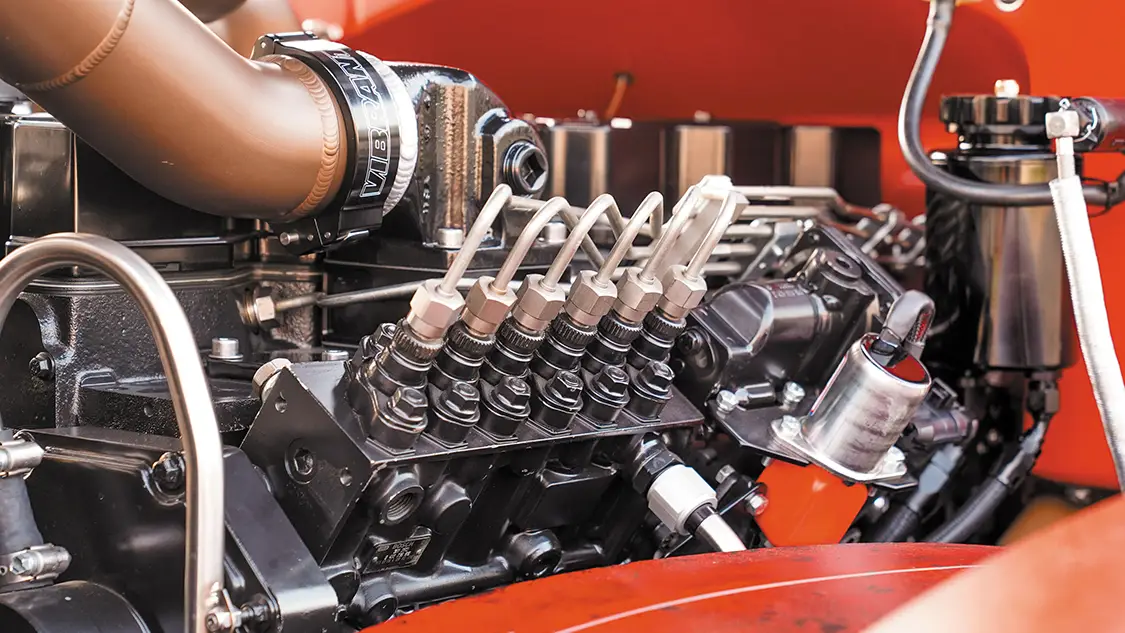
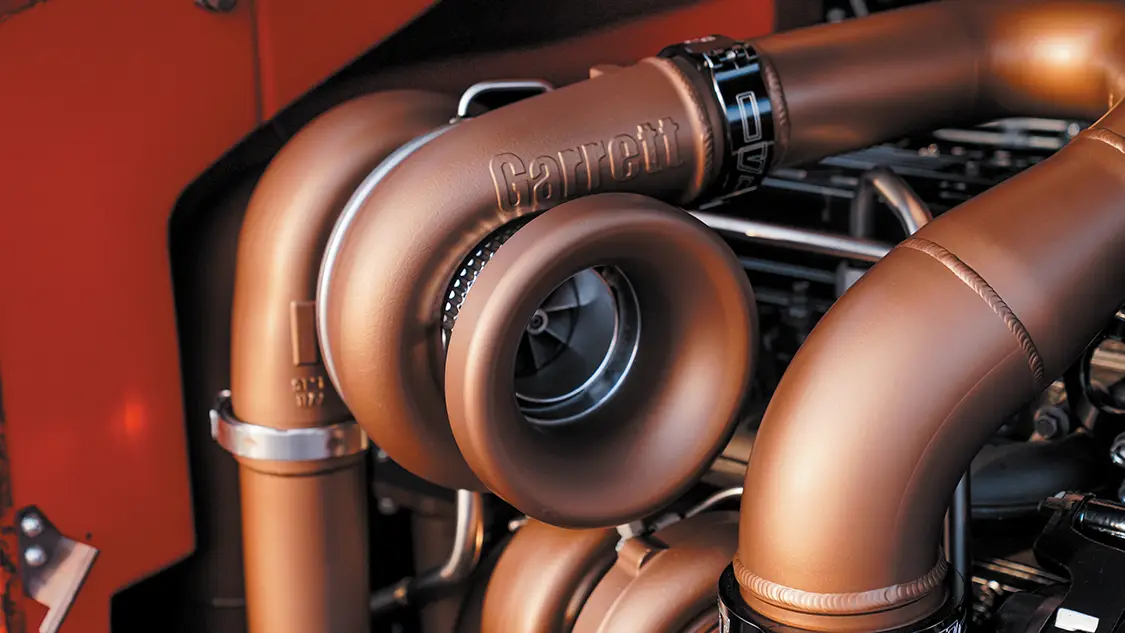
Underneath sits a 1998 5.9L Cummins inline six, balanced and blueprinted, built by Arizona High Test and R&M Enterprise. It’s been gone through and updated top to bottom, left to right, and the attention to detail continues in the engine bay. Keeping the Cummins breathing well is a compound Garrett turbo setup paired with a custom intercooler system that had to be carefully packaged to both function and look right.
Tony admits fitting the compounds under the hood and making everything look intentional was one of the biggest challenges, and rightfully so. We’re talking about putting a two turbo-fed inline six Cummins into a truck that was originally outfitted with a 205 cubic inch Hercules L-head engine. It wasn’t meant to have a Cummins in it, but Tony and his team didn’t care about that. He wanted something that was unique, which it truly is.
Backing the Cummins is a 2004 New Venture transmission, rebuilt and paired with a South Bend dual ceramic clutch. Braking is handled by an ABS Power Brake electric master cylinder. Every component was chosen to support the vision, not just the spec sheet.
Despite its age, the experience of riding in it is as good or better than some of the brand-new builds we’ve been in. The Cummins makes all the right noises, the manual transmission keeps you connected to the truck, and the air-ride means the truck rides incredibly well despite the large wheel and tire setup.
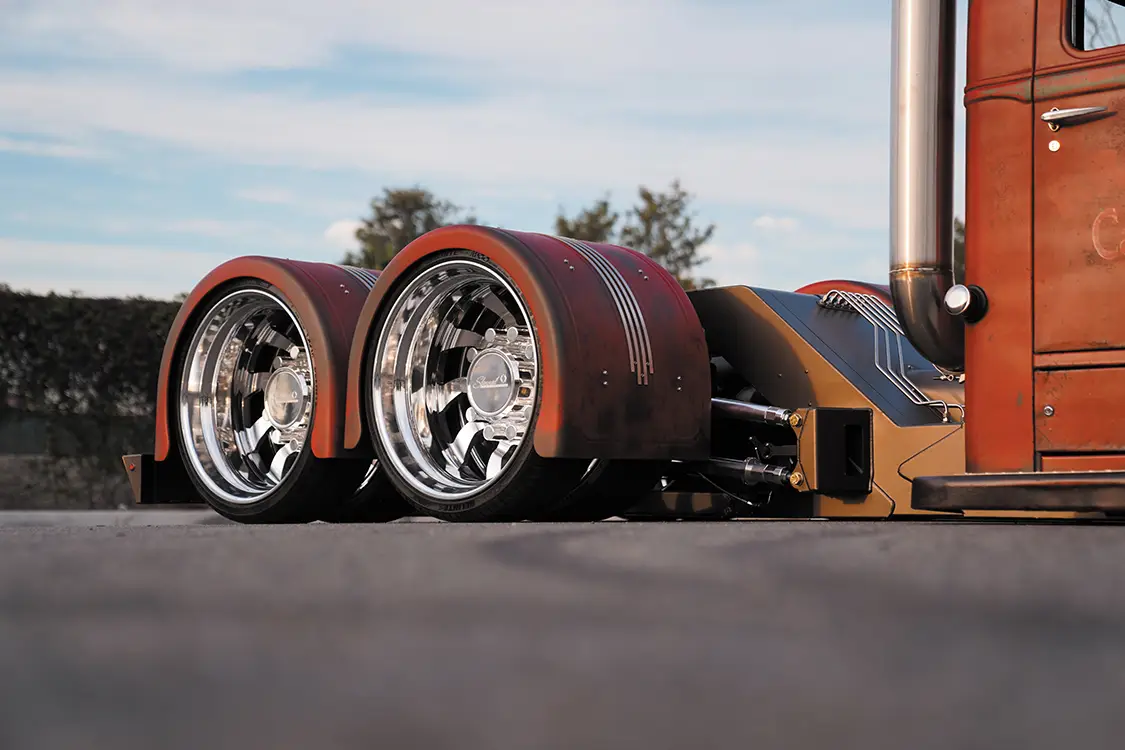
If the outside makes you stare, the interior makes you stay.
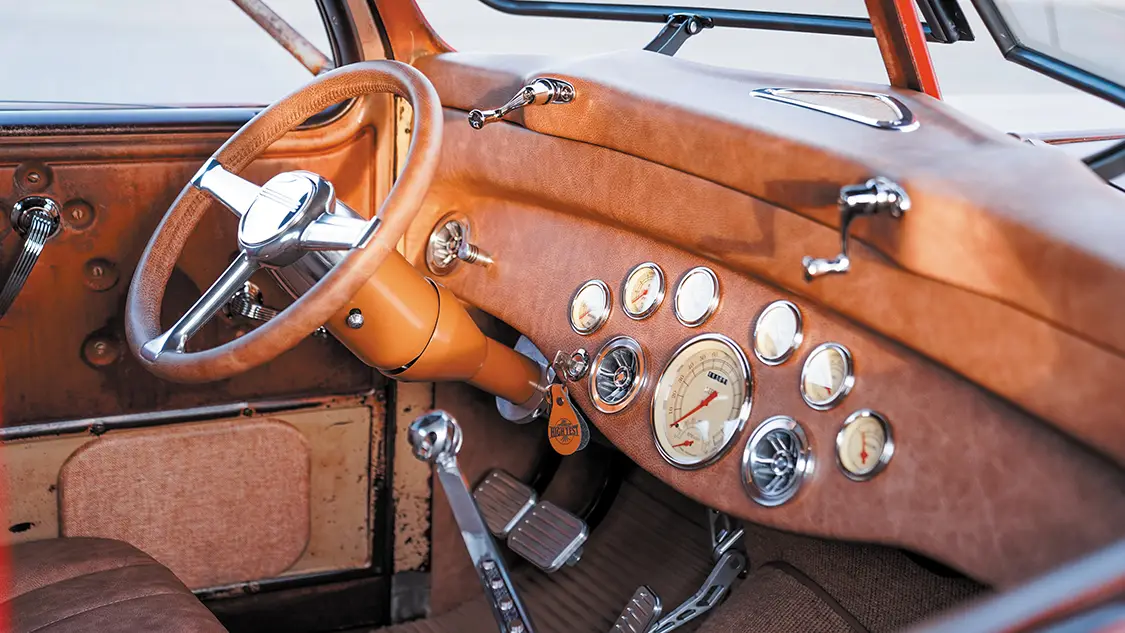
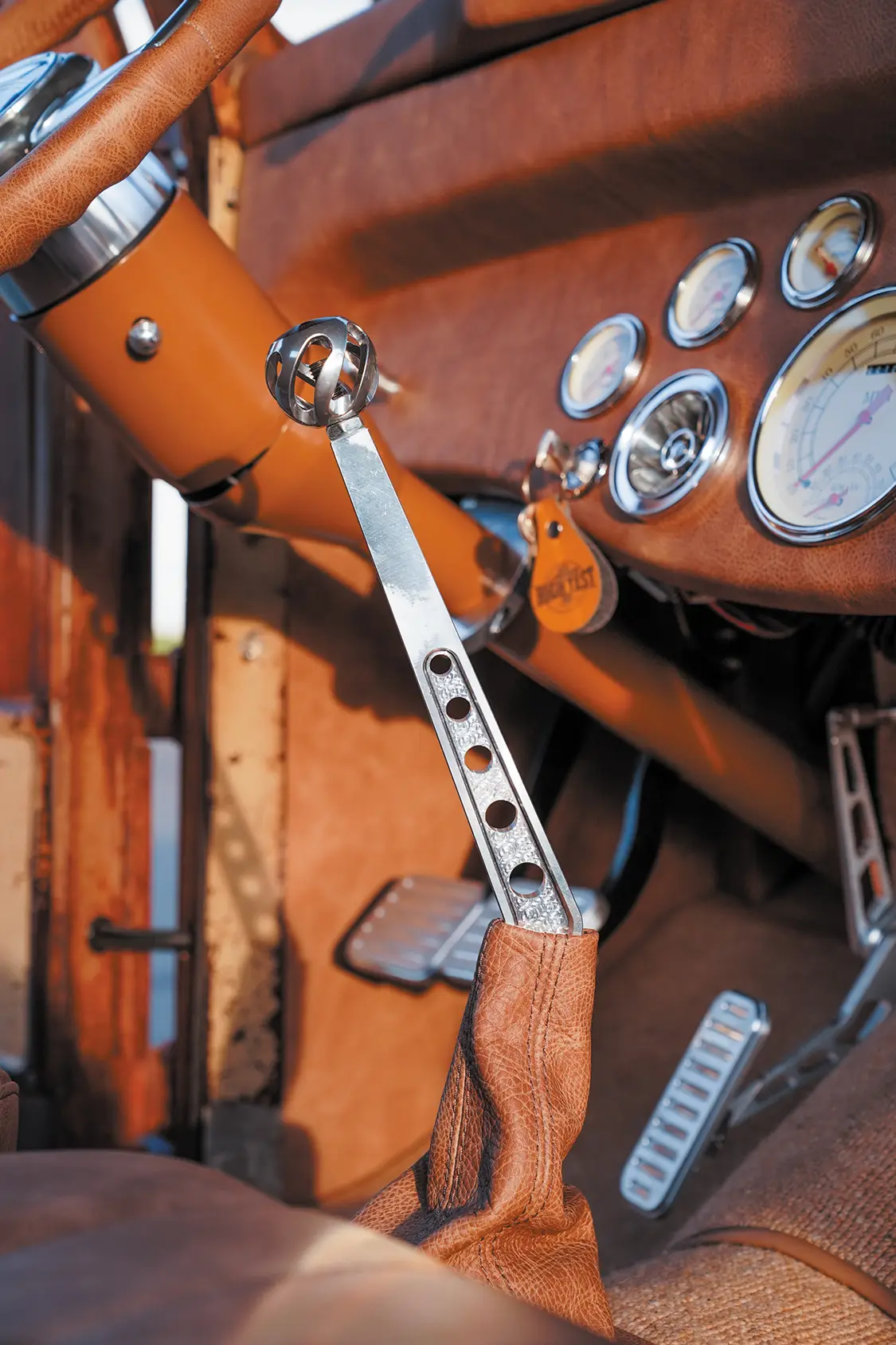
Ceballos Customs took the cab and elevated it to 11. Saddle brown leather wraps bucket seats, and a custom dash panel makes the truck feel vintage, but in an updated and comfortable way. The richness of the leather against the preserved patina exterior creates a contrast that shouldn’t work but absolutely does. It doesn’t feel like a restored antique. It feels like a handcrafted piece of rolling art that just happens to be capable of lighting the compounds and shaking the ground.
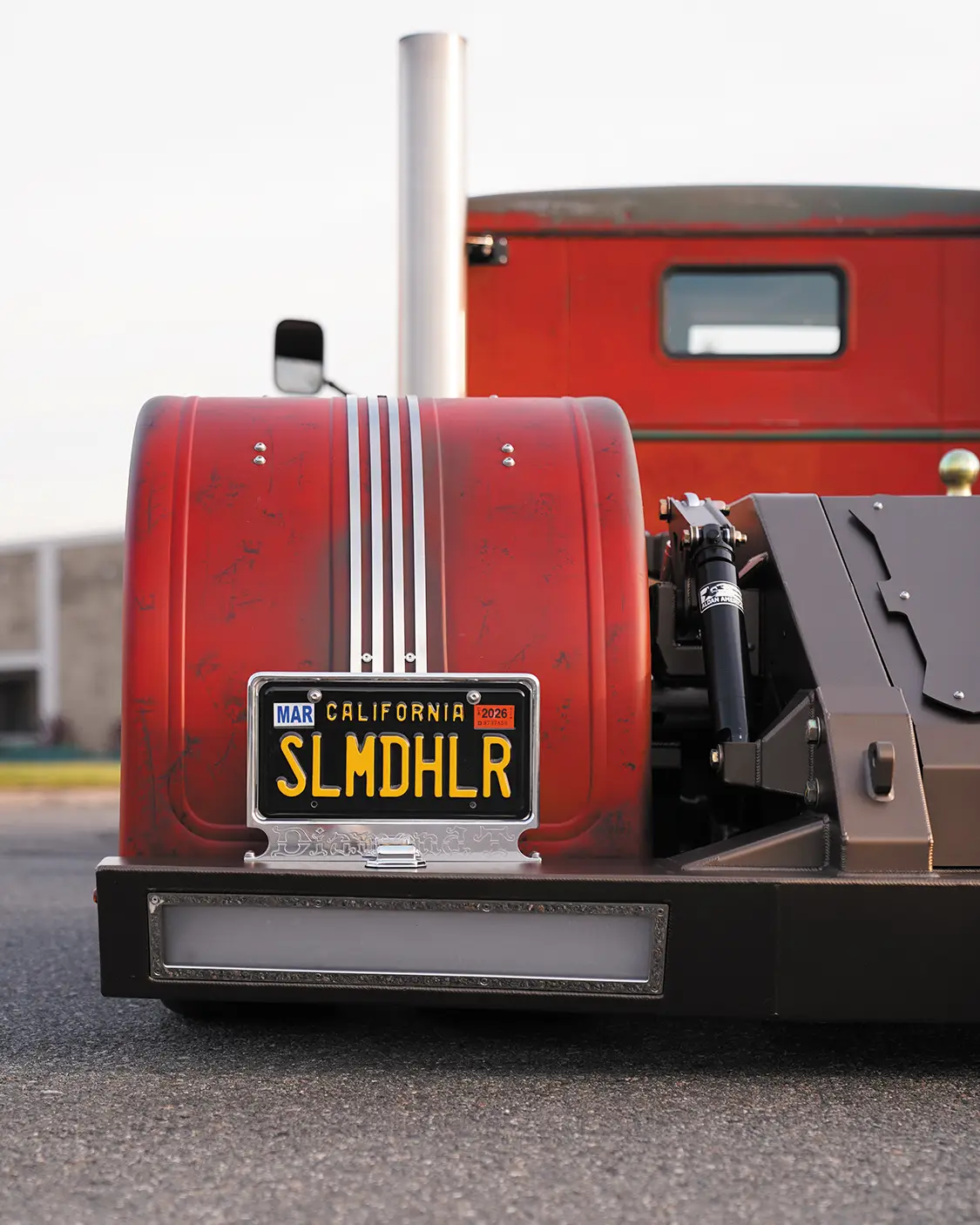
Five years of time, enough money to fund a startup business, and if you ask Tony about budgeting, he’ll laugh and tell you they tripled what they originally thought.
Custom fabrication and interior work quickly climbed; the frame alone demanded patience, and like any good build, there were plenty of major hiccups and setbacks along the way. From air line routing to rear cover details that evolved during the process, there were plenty of times that Tony could have cut corners or thrown in the towel, but nothing derailed the vision that he had for this build.
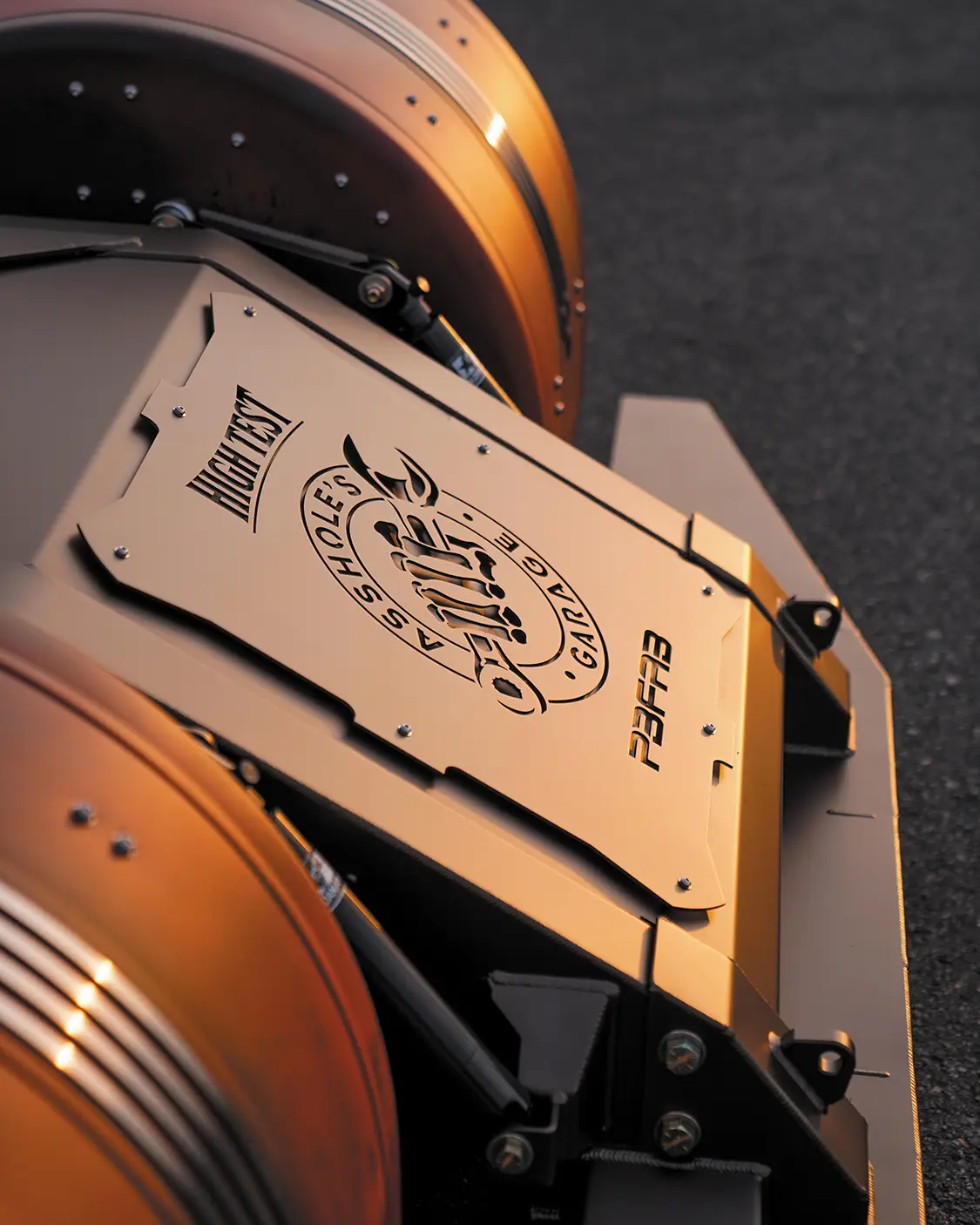
If you ask him, Tony will tell you he always knew the truck would get finished, despite all of the potential pitfalls that stand in the way. Life happens, and builds get pushed to the back burner, but eventually you circle back to where you started. Progress starts again, excitement returns, and it’s back to the races.
When we asked Tony what he was most proud of, his answer was simple—that it’s done. And while we think it’s easy to write this off as a half-baked answer, you begin to understand that it’s not a shortcut after talking with Tony. It’s the celebration of 5 years of hard work, dollars invested, and collaboration with some of the most incredible builders and fabricators in the industry.
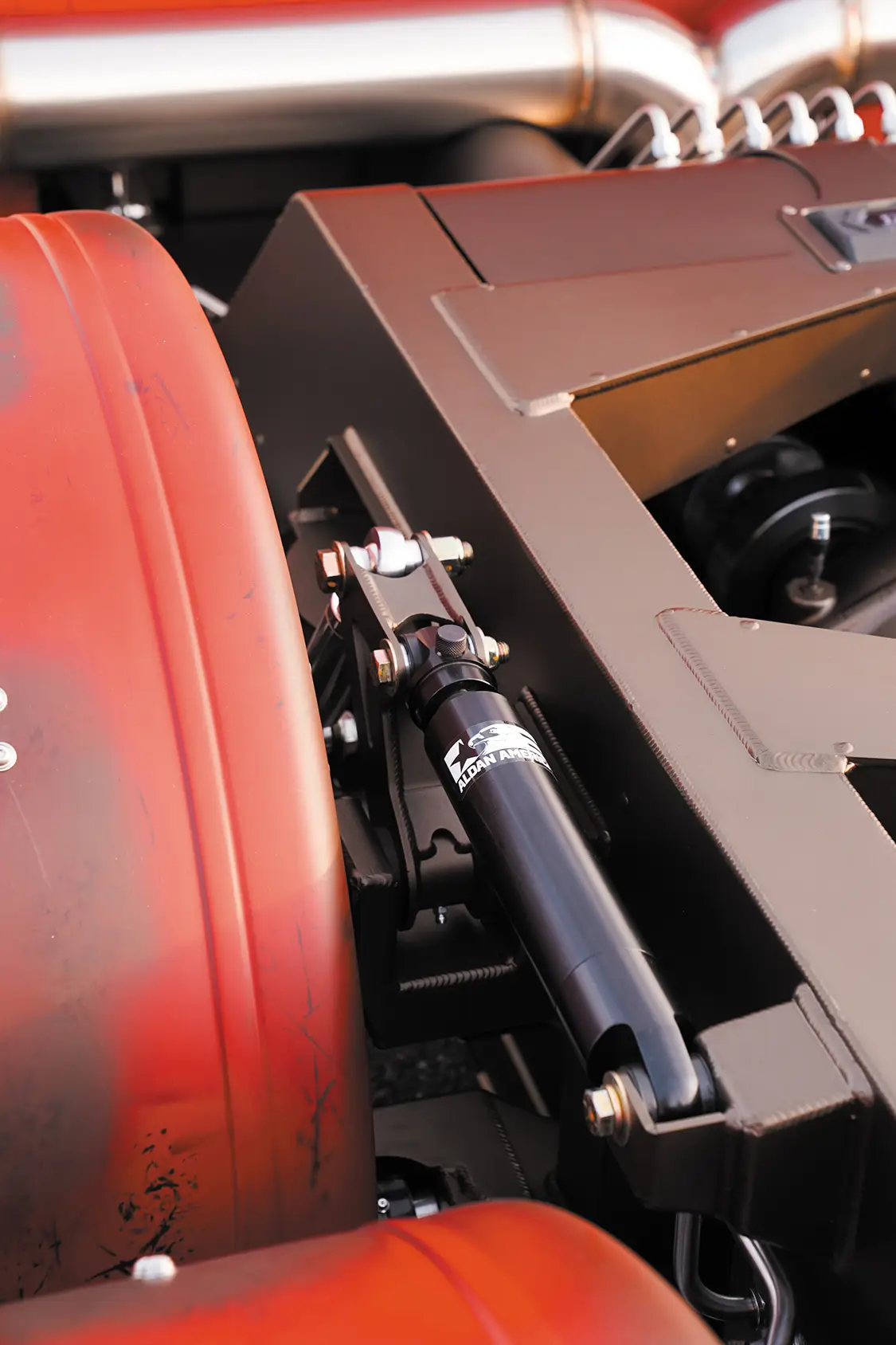
Tony will tell you if you’re thinking about building something like this, go buy a house instead. In the same breath, though, he’ll also tell you if you put your mind to it and enough money behind it, you can build pretty much anything.
When it comes to the future of this build, the truck is about 99 percent finished. The boost still needs a little bit of dialing in. After that, it’s ready to stretch its legs at more shows and finally get the attention it deserves.
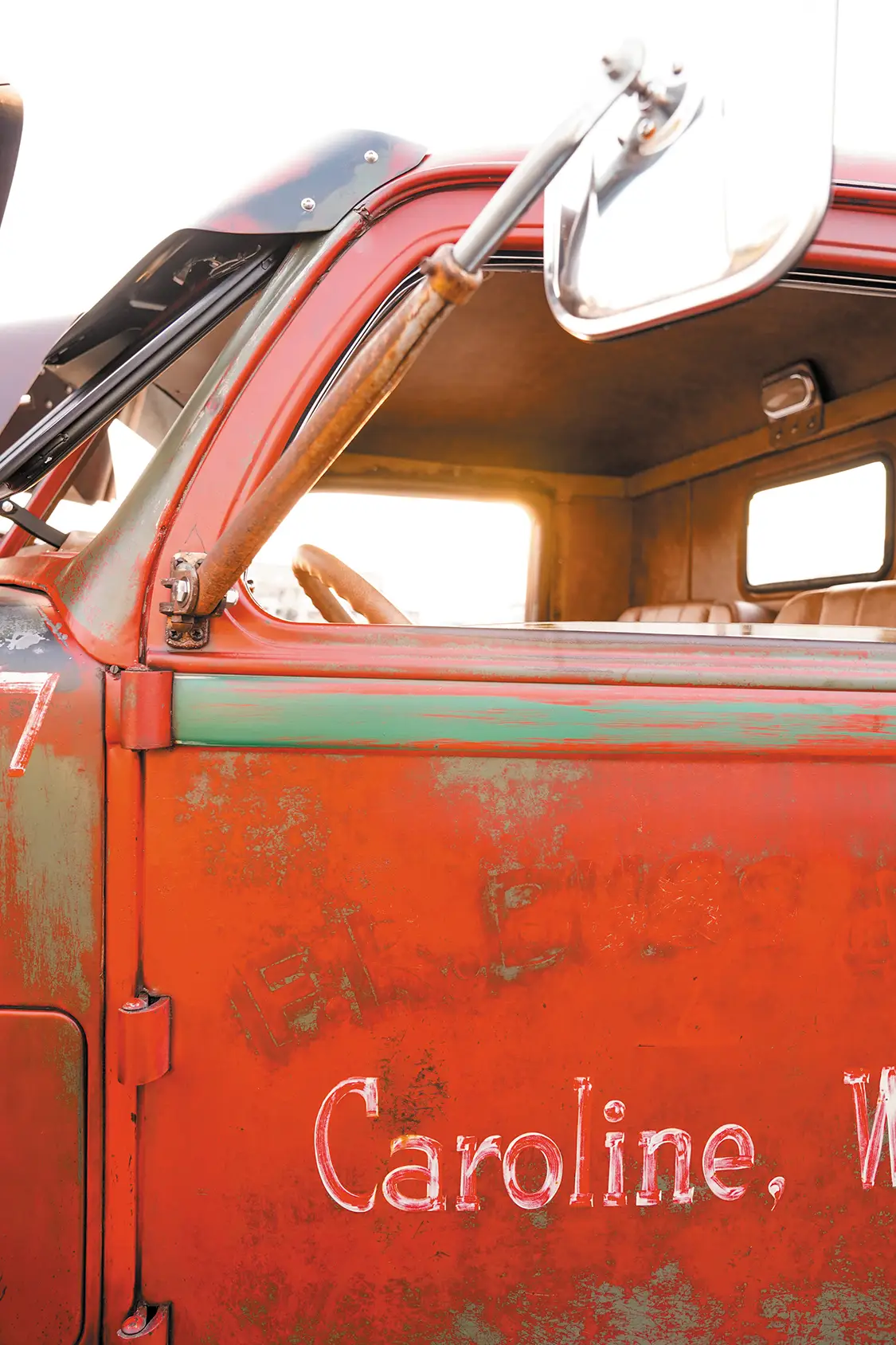
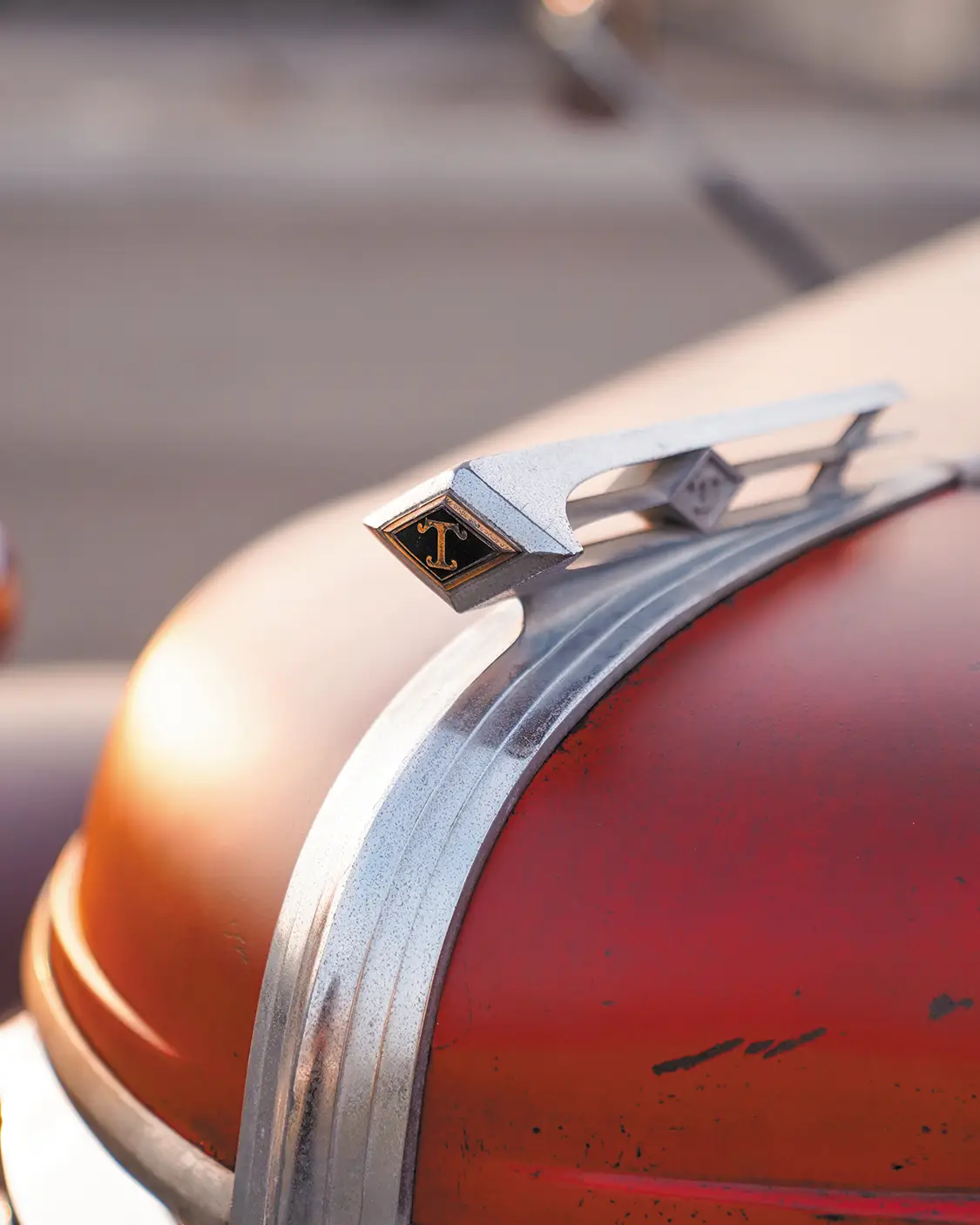
When people see it in person, they don’t always believe it’s real. They think it looks like a Hot Wheels truck—something too exaggerated to exist outside of a toy aisle. But it’s real, it’s detailed, and if you’re lucky enough to get a ride in it, it’s a surreal experience unlike anything else.
At one point, this Diamond T was an old farm truck parked in the weeds, probably thinking its life was over. Now it sits slammed over a custom Porterbuilt chassis, breathing through compound turbos and six-inch stacks, and wearing its history proudly under satin clear.
If this truck could tell its story, Tony says it would say it died and came back bigger, badder, and bolder than ever. And honestly, we think that’s pretty accurate. 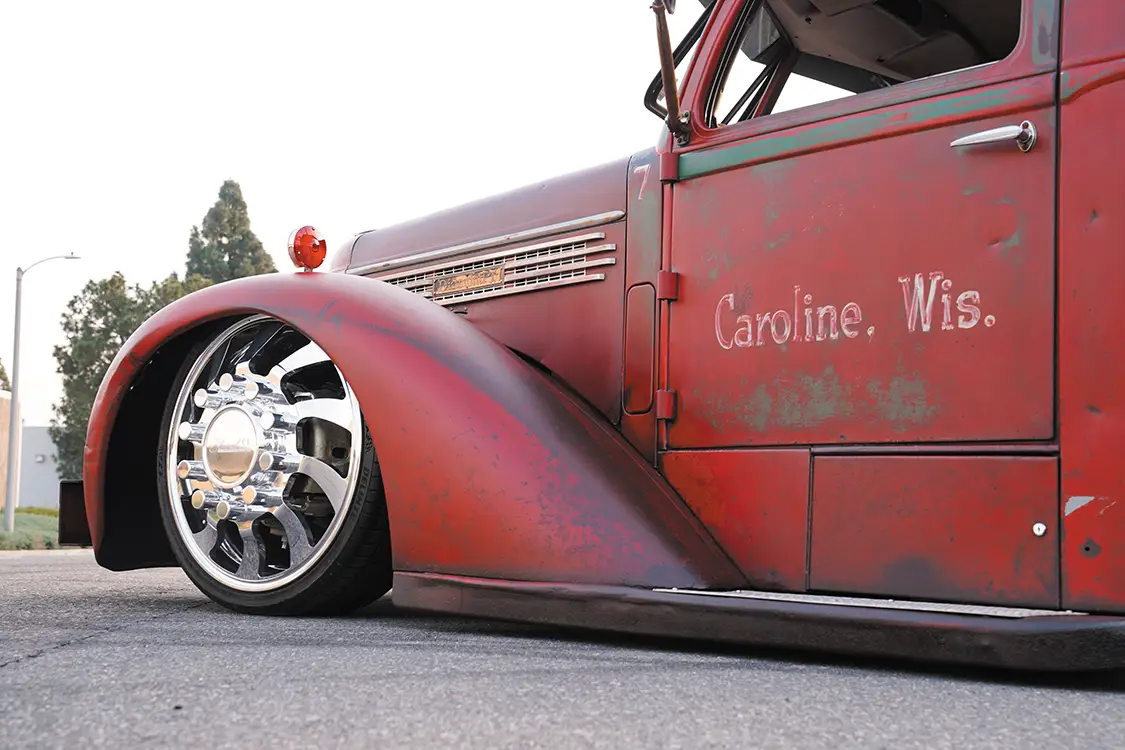
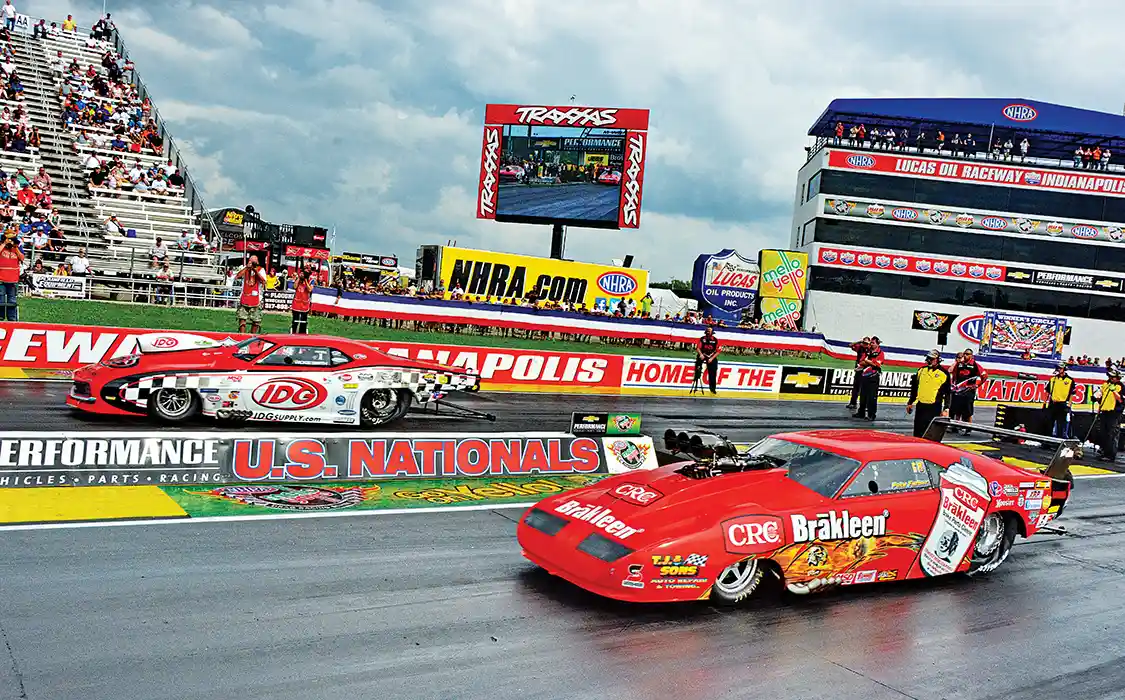
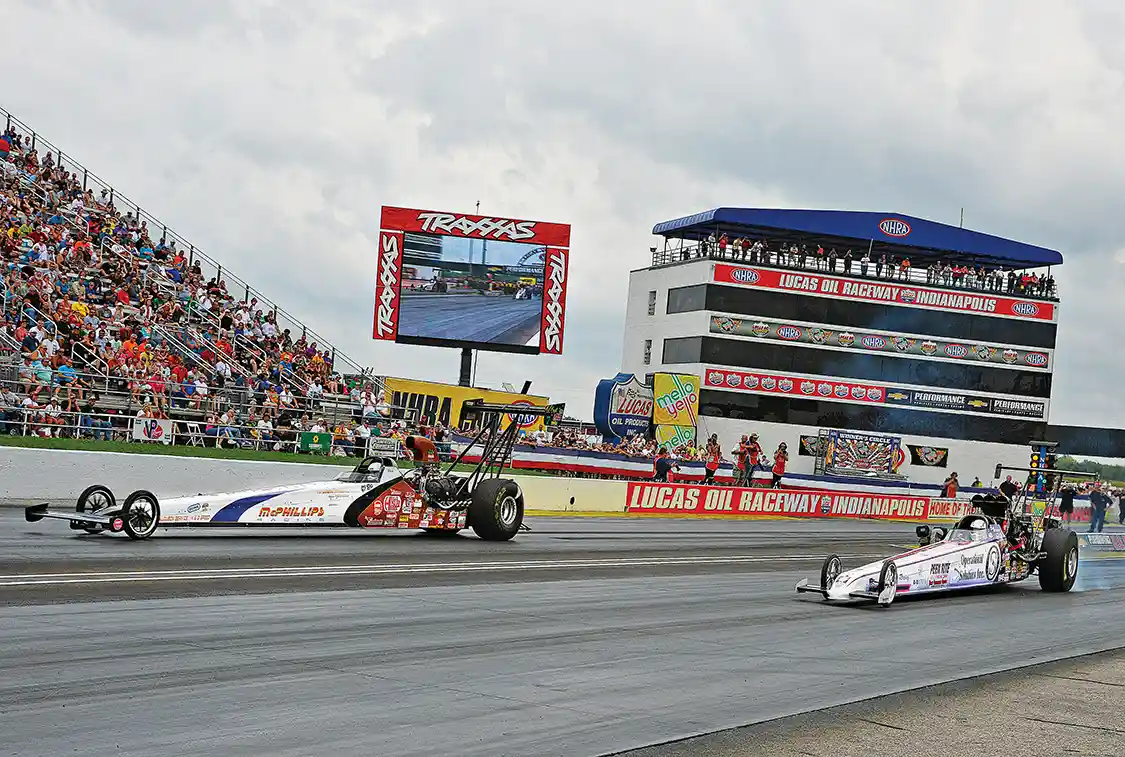
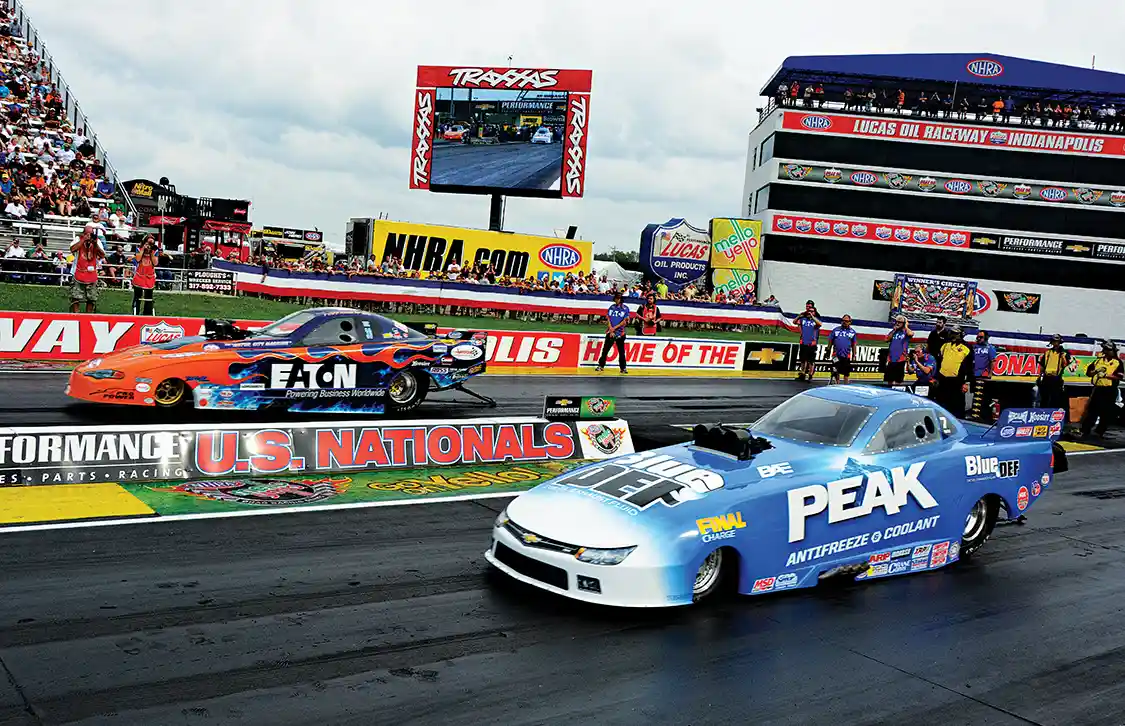
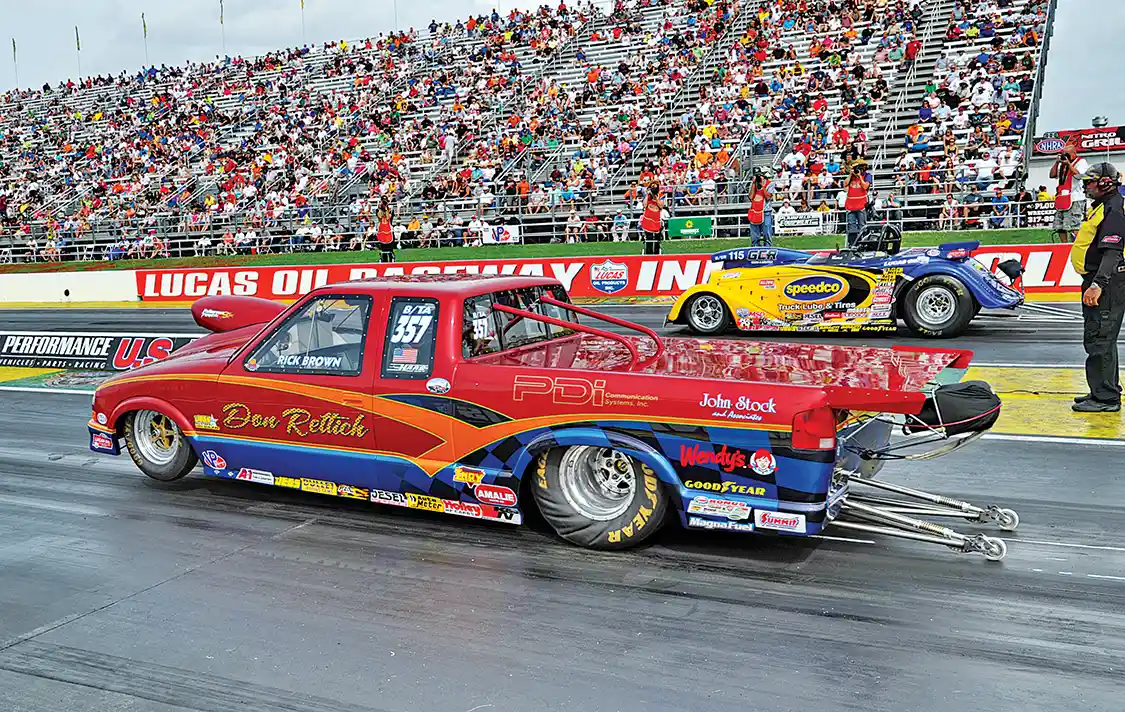
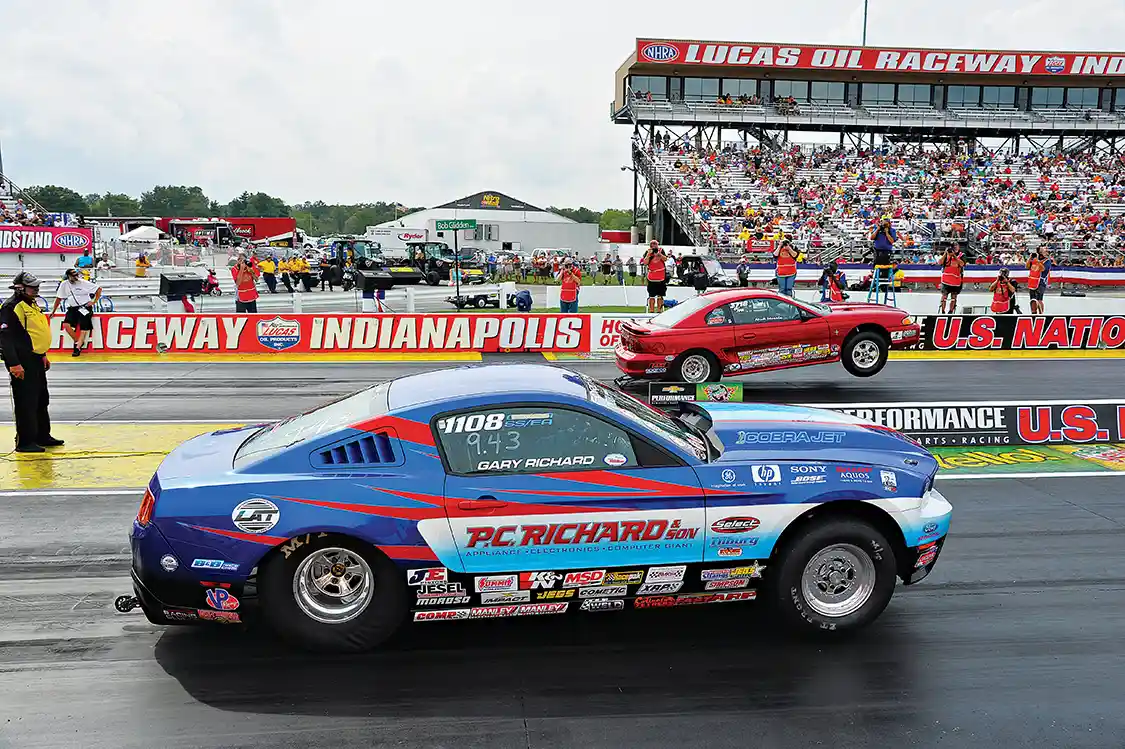
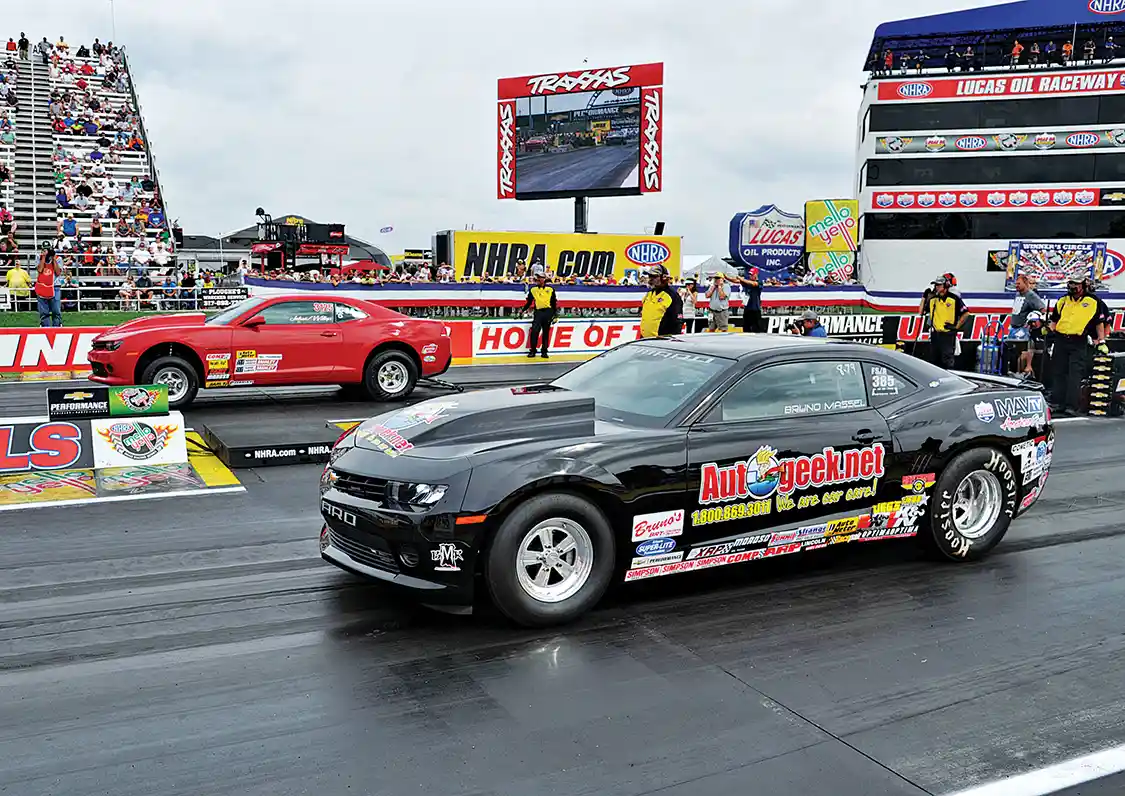
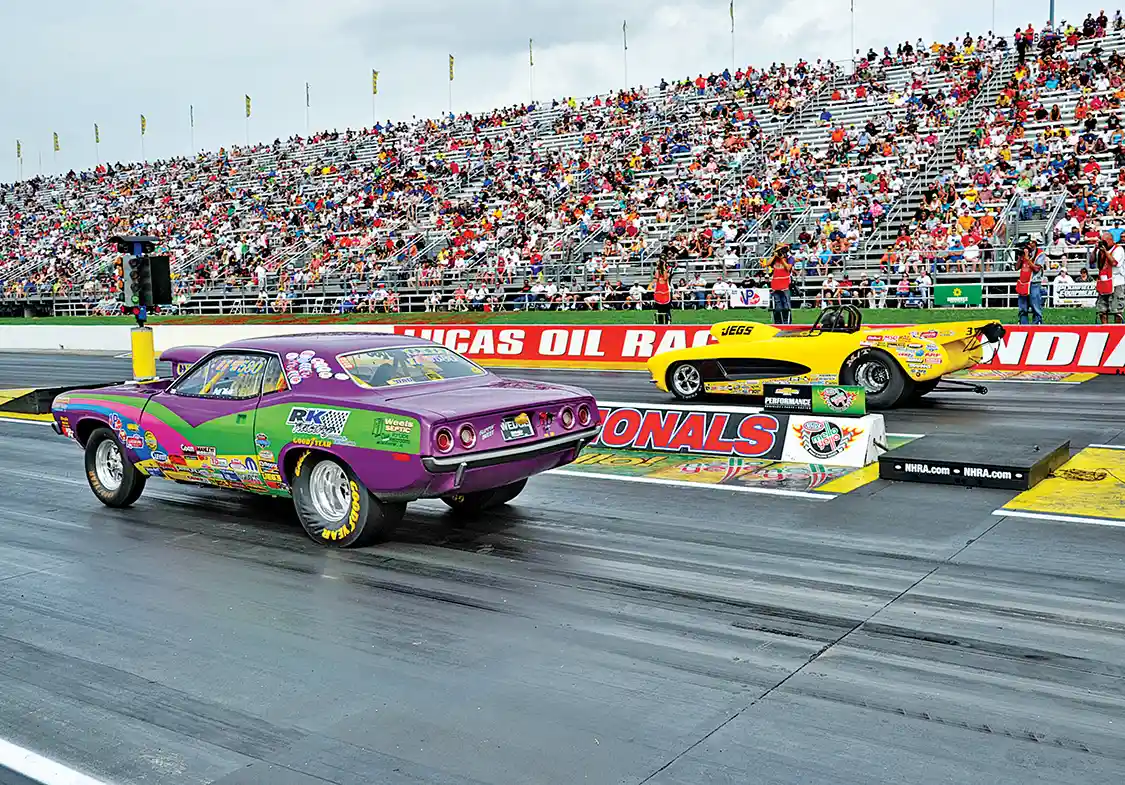
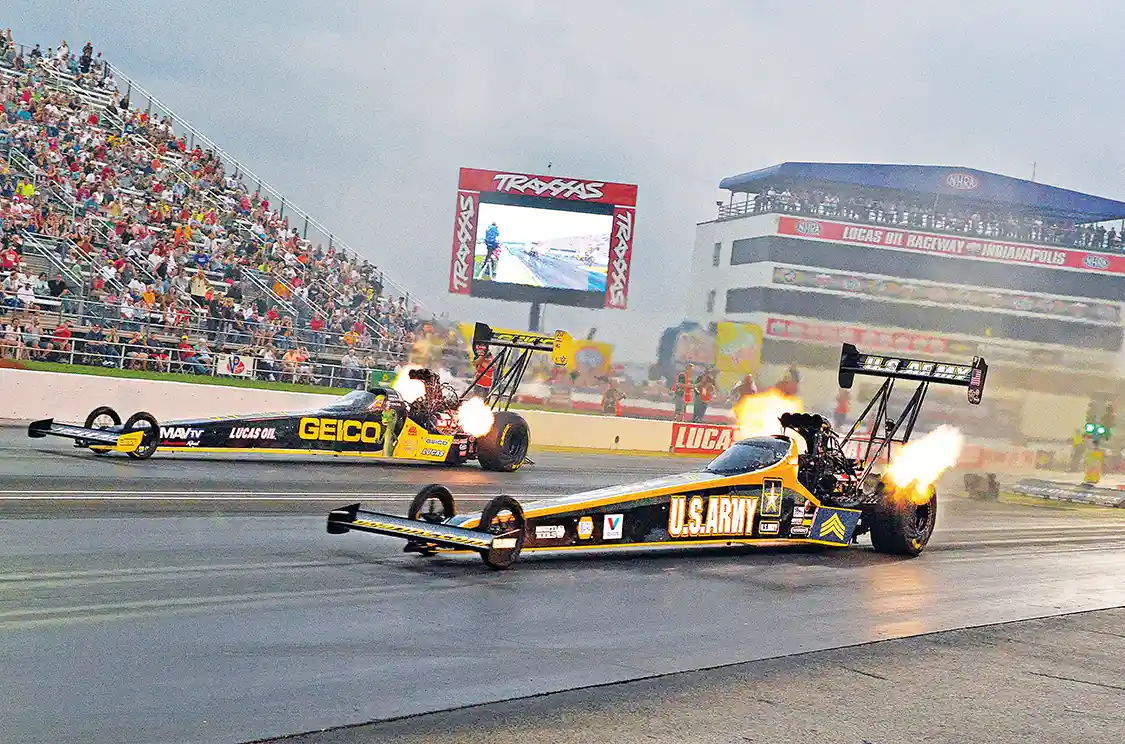
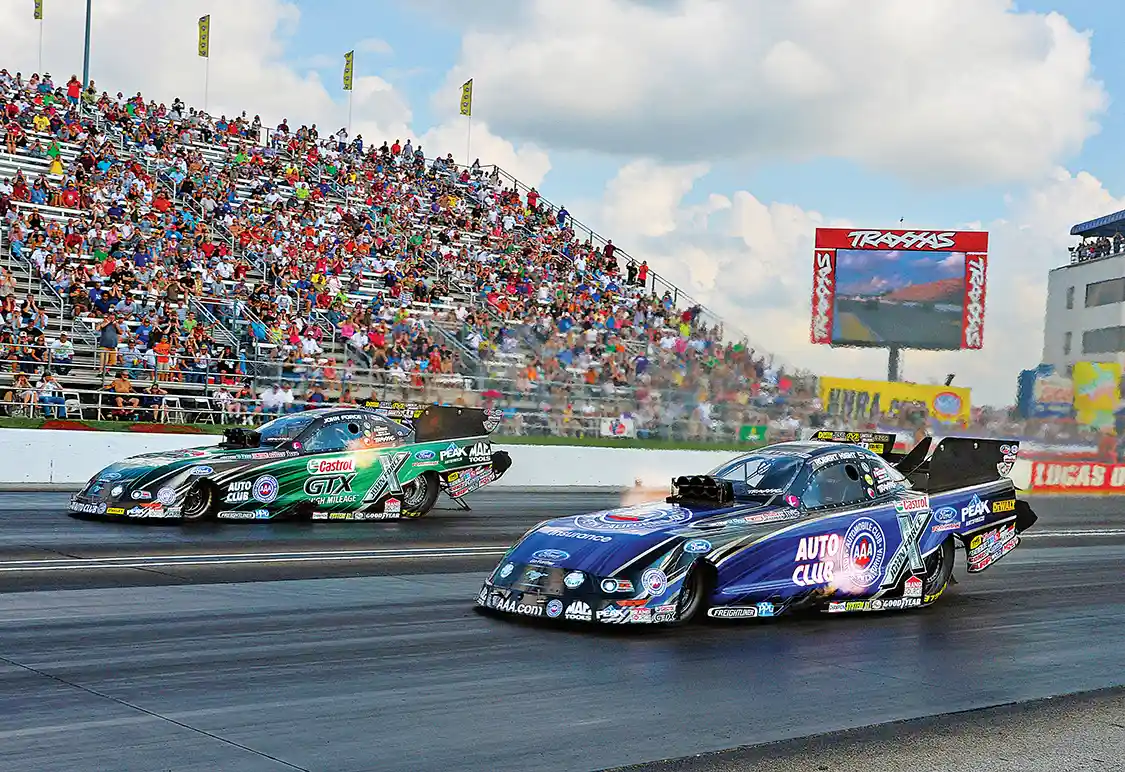
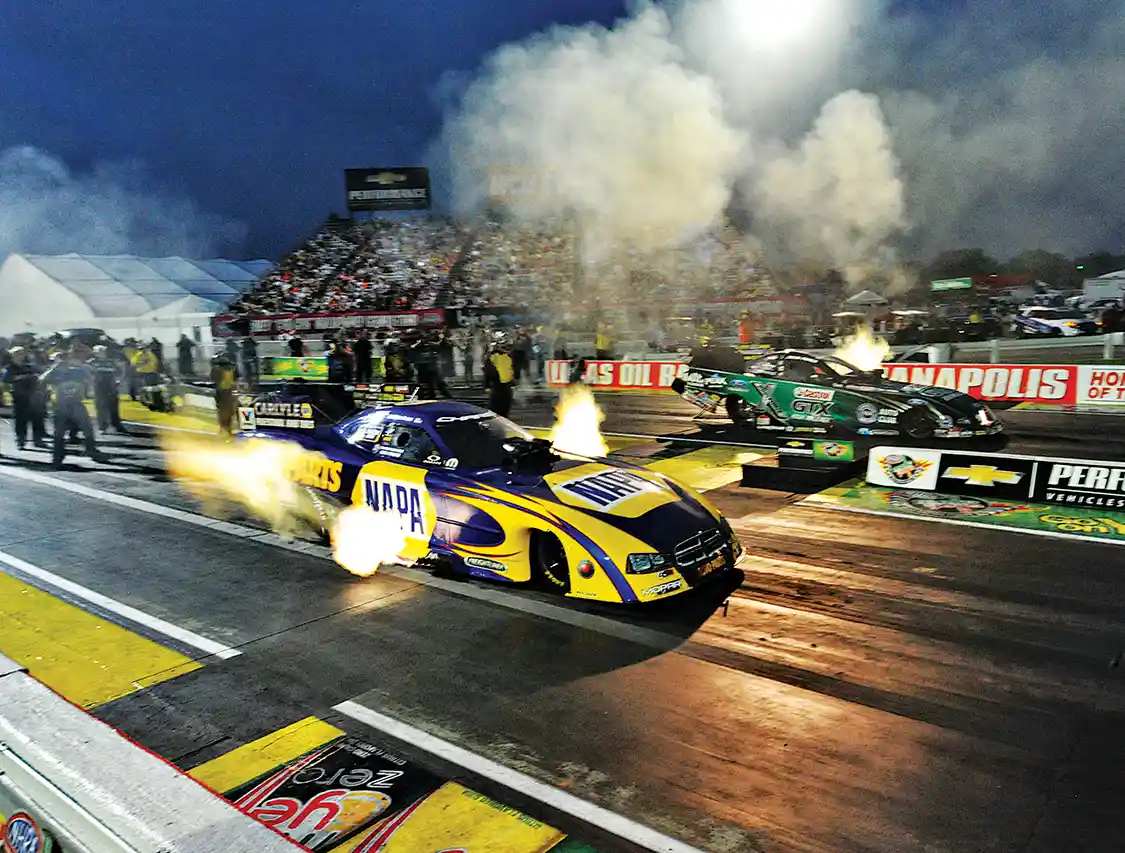
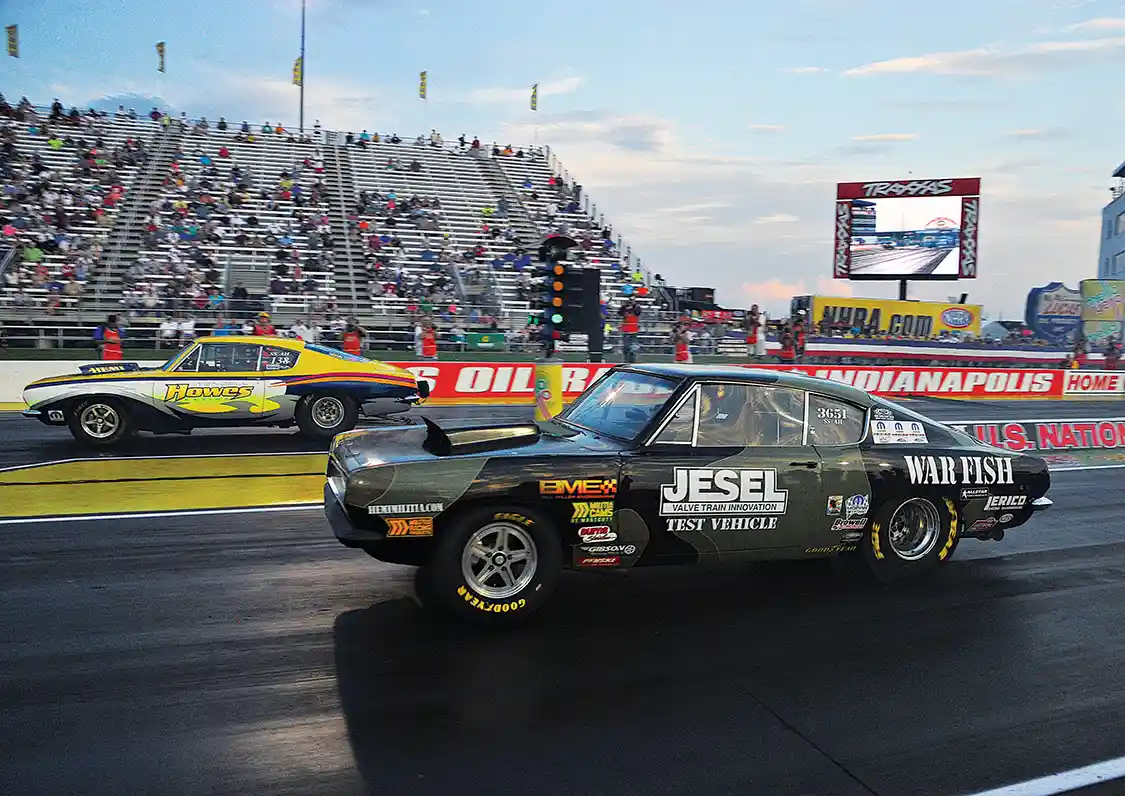
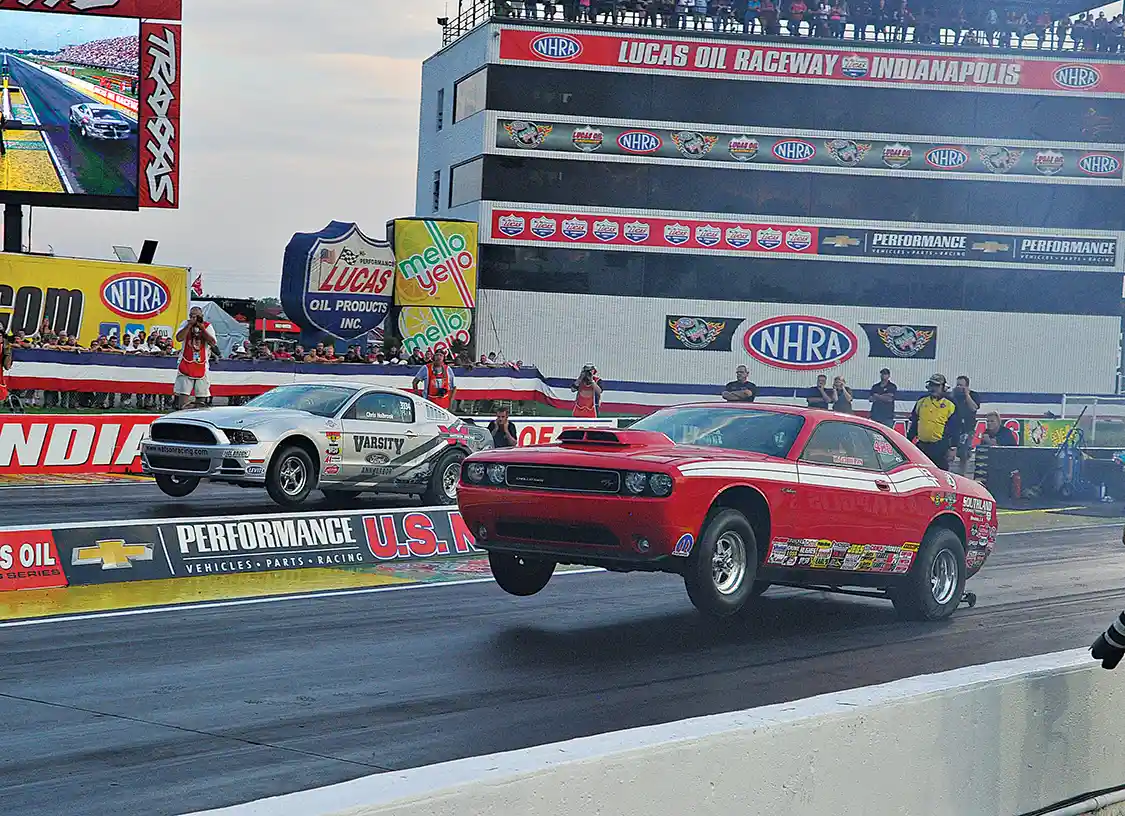
NHRA threw a birthday party for its premiere national event for these past 60 years and it was a rip snorting three-ring circus, complete with elephants (of the Mopar 426 variety). In addition to offering fans the most exciting race action of the year there was an abundance of entertaining “side shows.”
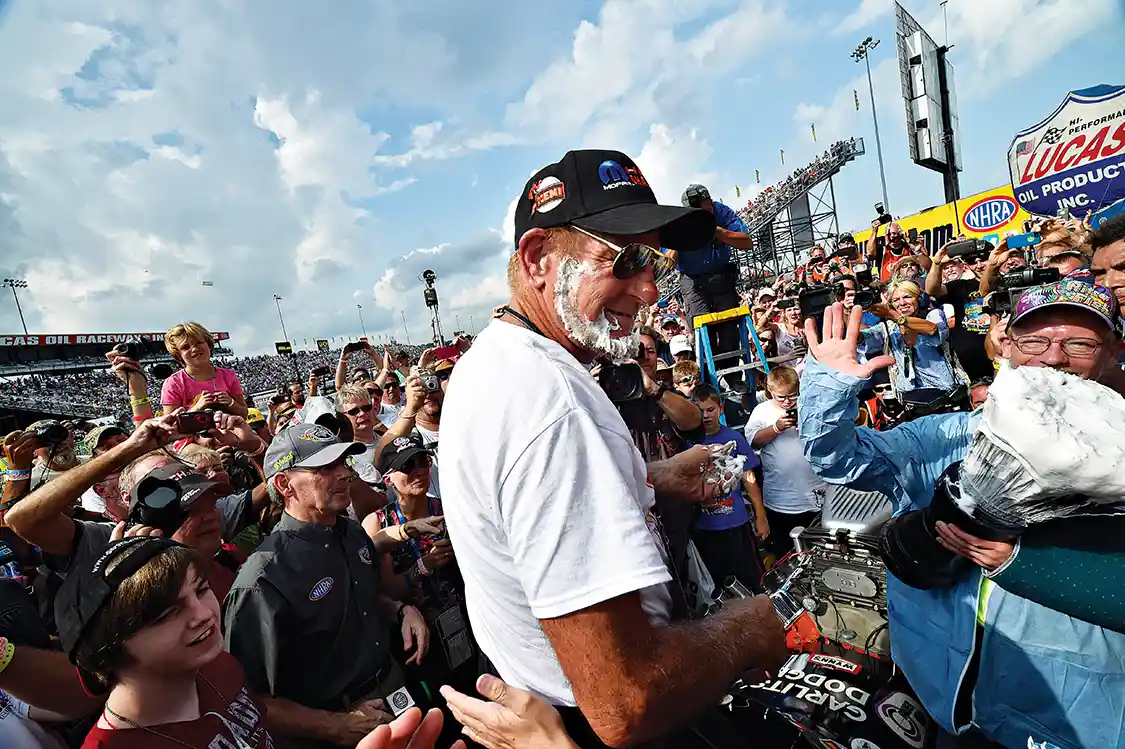
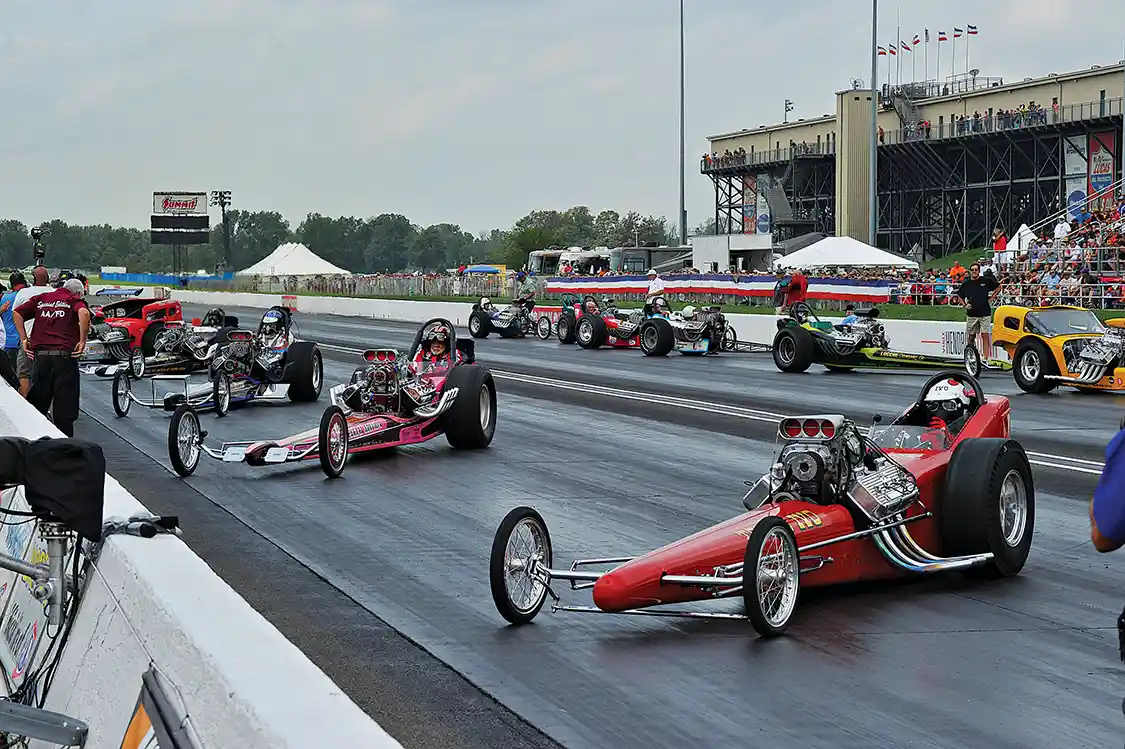
In a circus-sized tent, each day, legendary Indy performers shared their most important memories of past races. In a recreation of his 1967 Top Fuel triumph, Don Garlits cackled his restored racer to the line and shaved off his beard, just as he’d done so many years ago. Speaking of restored racers, there were dozens in attendance and several nitro cacklefests roared out during the birthday bash.
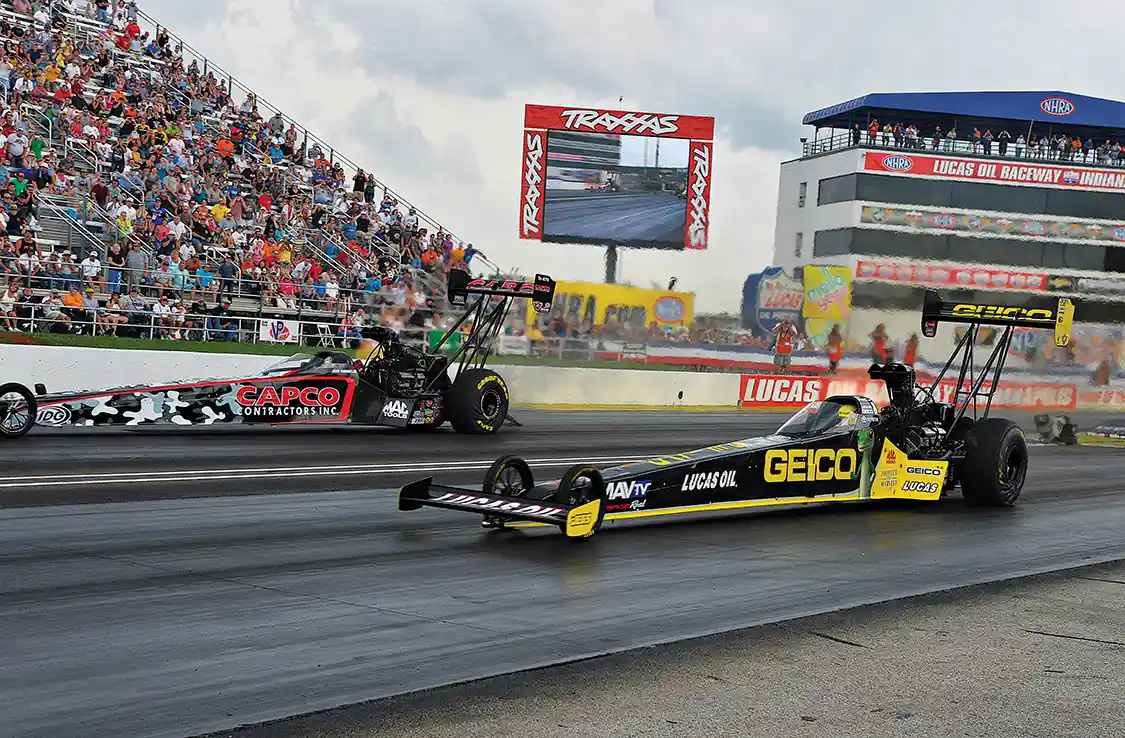
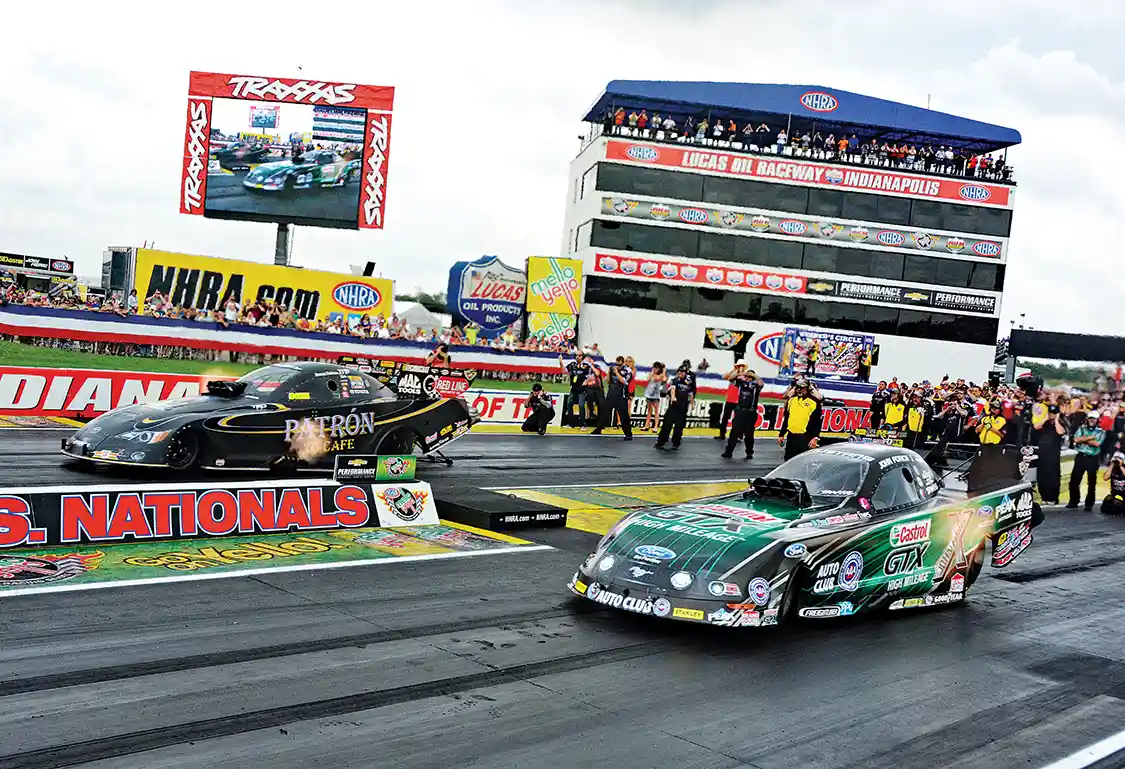
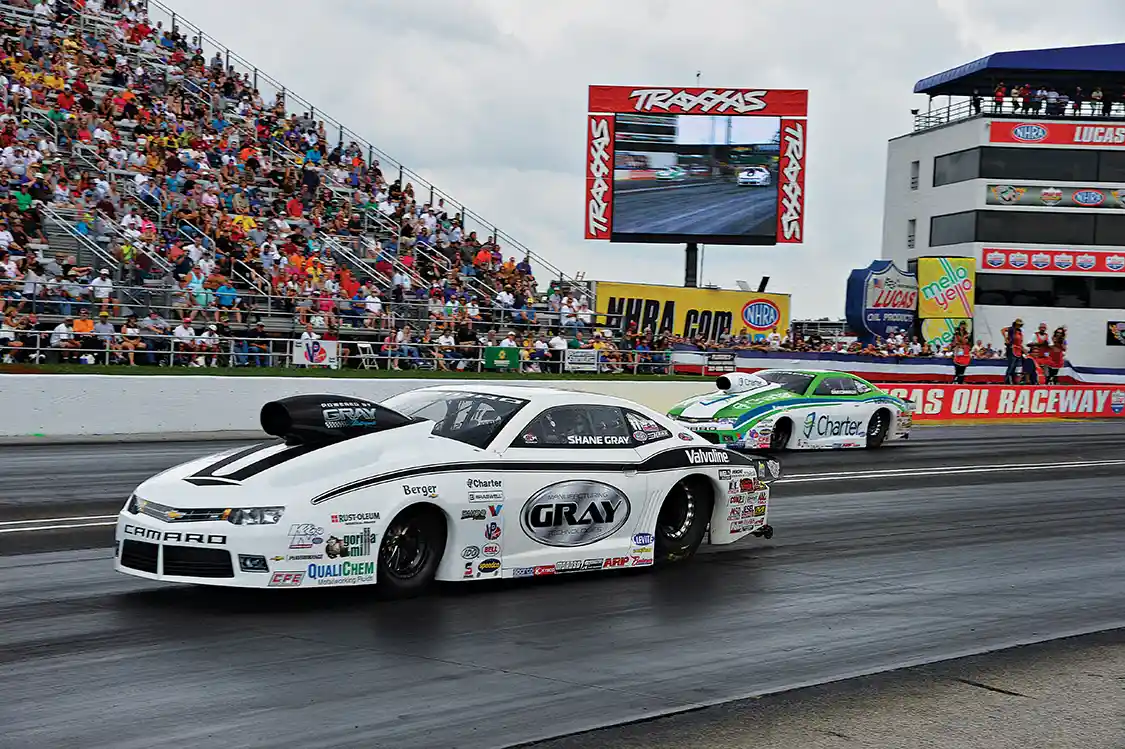
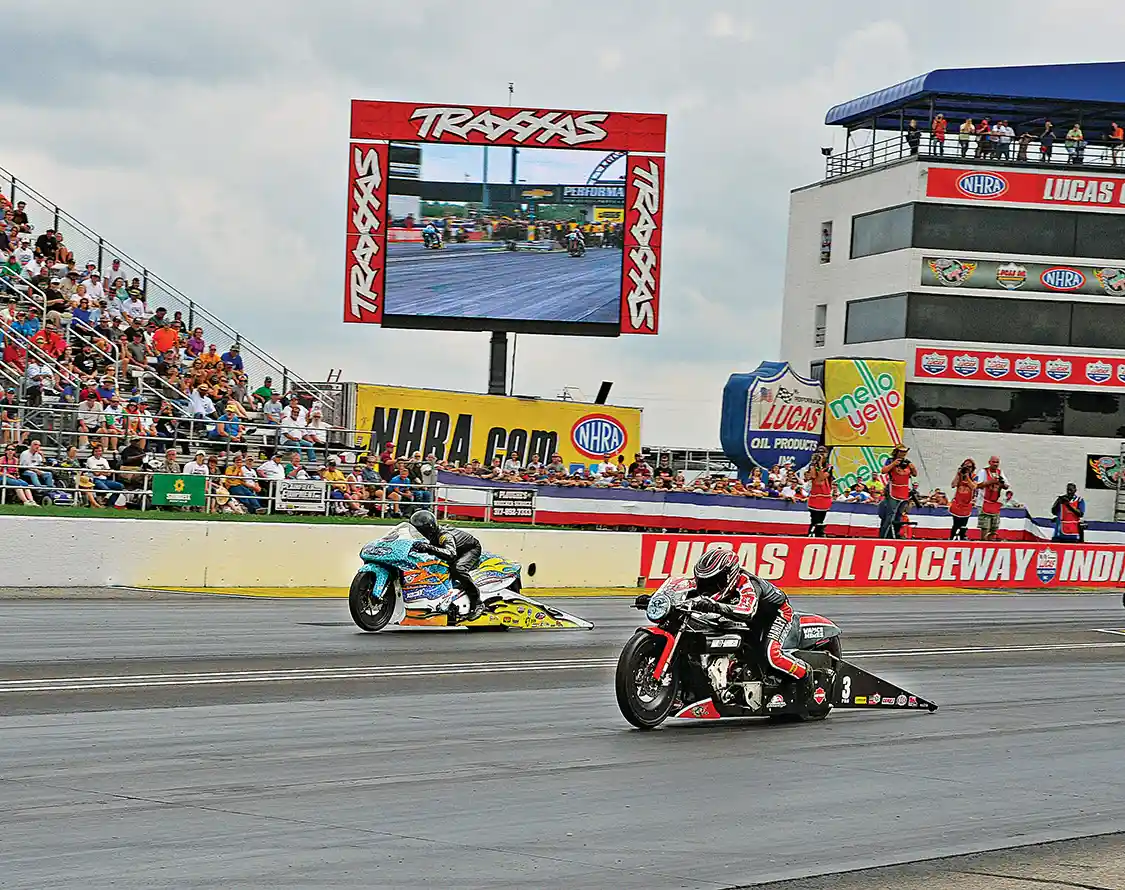
Bottom line, though, it’s about the race. All of the Eliminator brackets featured excellent car counts, including the nitro categories, which made for heated qualifying sessions. It proved to be an excellent year for new blood, of the 12 Eliminators contested 10 were Indy first timers.
Occasionally it’s about the races within the race. Indy 60 featured the Traxxas T/F and F/C Shootout, Mopar Hemi Challenge, Factory Stock Showdown and Nitro F/C plus Pro Stock finals from the rain-shortened Brainerd Lucas Oil Nationals.
Now, as they used to say on TV sports, let’s go to the highlight reel.



High Tides & Low Rides
High Tides & Low Rides Winchester Bay, Oregon
Goodguys 26th LMC Truck Southeastern Nationals
Georgia National Fairgrounds & Agriculture Center 401 Larry Walker Parkway, Perry, GA 31069
2026 American Graffiti Festival & Car Show
Modesto Junior College West Campus 2201 Blue Gum Ave., Modesto, CA
Classics With The Cardinals, Santa Barbara’s Premier Car Show
Bishop Diego High School - Football Field 4000 La Colina Rd
Goodguys 35th Speedway Motors Heartland Nationals Presented By FiTech Fuel Injection
Iowa State Fairgrounds 3000 East Grand Avenue, Des Moines, IA 50317
We use cookies to enhance your browsing experience, serve personalized ads or content, and analyze our traffic. By clicking "Accept All", you consent to our use of cookies. Visit our Cookie Policy for more info.


 Please wait...