










 GREGG OVIST
.
March 10, 2023
.
All Feature Vehicles
GREGG OVIST
.
March 10, 2023
.
All Feature Vehicles
Whether you are shopping for a classic car, attending a car show, or simply admiring a stunning vehicle at a cruise night, understanding the difference between an authentic classic car, a replica car, and a tribute car is essential knowledge for any enthusiast or buyer.
These three categories can look virtually identical on the surface same paint, same badging, same stance. But beneath the skin, they differ dramatically in terms of value, documentation, legal classification, investment potential, and long-term ownership experience.
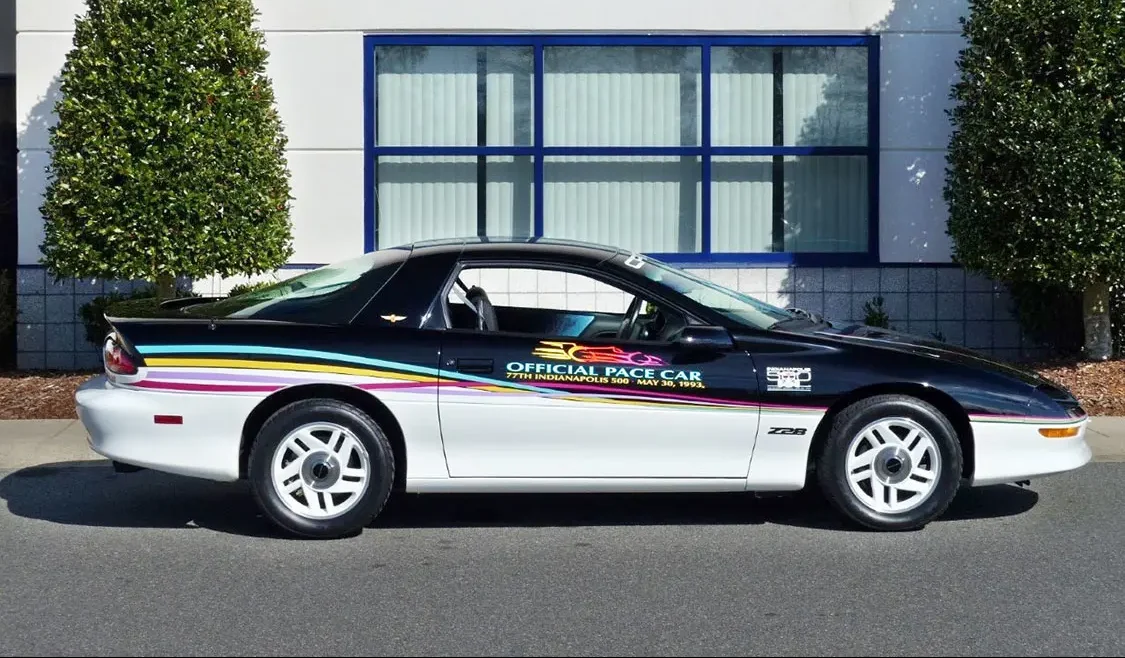
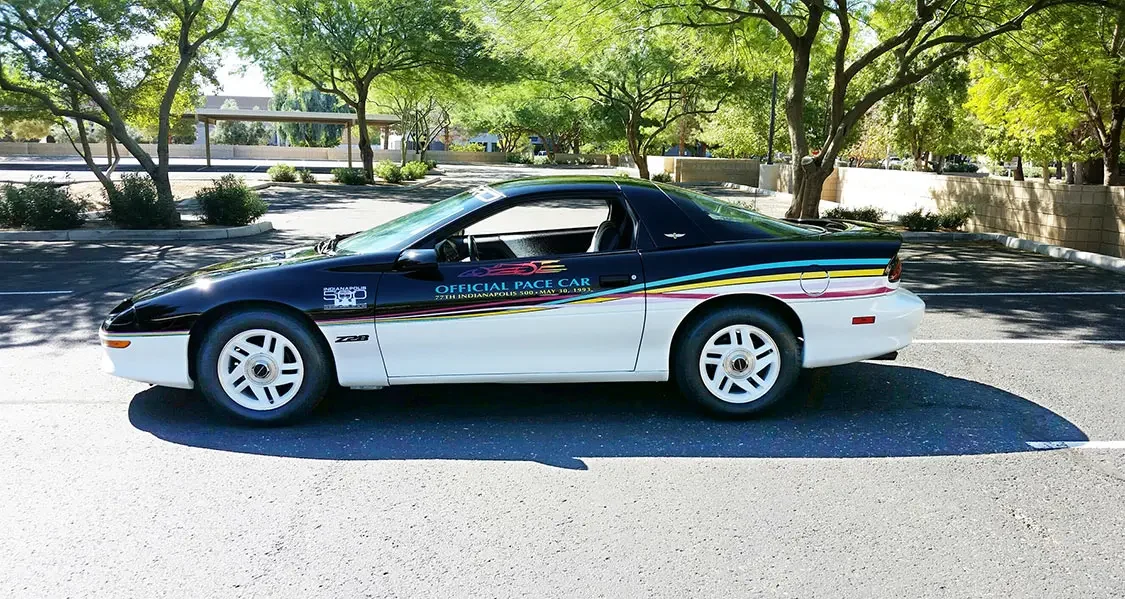
As someone who has personally owned both an authentic 1993 Camaro Indianapolis 500 Pace Car and a replica version of the exact same vehicle, I can tell you firsthand that the differences go far deeper than what you see at first glance and those differences matter enormously when it comes time to buy, sell, insure, or restore.
Before we dive into the details, let us establish clear definitions for each category. These definitions form the foundation of every decision you will make as a buyer, collector, or restorer.
An authentic classic car is a vehicle that was originally produced by a manufacturer, retains its original factory components commonly referred to as being “numbers matching” and can be fully documented through its VIN, build sheet, trim tag, and ownership history.
An authentic classic car is characterized by:
According to the Antique Automobile Club of America (AACA), a vehicle must be at least 25 years old to qualify for antique or classic car status.
Authentic classic cars represent the gold standard for collectors. They are the hardest to find, the most expensive to purchase.
A replica car is a vehicle built to match an authentic vehicle but it is not the original. Replica cars are constructed to duplicate an original car’s look, often using a modern or custom chassis, a newly assigned VIN, and reproduction or aftermarket parts rather than factory-original components.
Key characteristics of a replica car:
Real-world example: A brand-new Shelby Cobra replica built on a custom tubular steel frame to look exactly like a 1965 original is a replica car. It may be beautifully crafted, thrilling to drive, and visually indistinguishable from the real thing at a glance but it is not an authentic Shelby Cobra and will never carry the same collector value.
A tribute car is a vehicle built to resemble and honor a famous or iconic car, but uses a different base production vehicle as its foundation. Unlike a replica car, a tribute car does not attempt to duplicate every mechanical or structural detail of the original, it captures the visual spirit and aesthetic of the iconic model without trying to be an exact copy.
Key characteristics of a tribute car:
| Feature | Authentic Classic Car | Replica Car | Tribute Car |
|---|---|---|---|
| Definition | Original factory-produced vehicle | Newly built to exactly duplicate original | Existing car modified to resemble iconic model |
| Original VIN | ✅ Factory original | ❌ New VIN assigned | 🟡 Has its own VIN (base vehicle) |
| Numbers Matching | ✅ Yes — ideally | ❌ No | ❌ No |
| Build Documentation | ✅ Build sheet, trim tag, title | ❌ Not applicable | ❌ Not applicable |
| Street Legal | ✅ Standard registration | 🟡 Varies by state and country | ✅ Standard registration |
| Collector Value | 🥇 Highest | 🥈 Moderate | 🥉 Low to Moderate |
| Value Appreciation | ✅ Strong (avg. 7–12%/yr)* | 🟡 Stable if well maintained | 🔴 Limited |
| Insurance Type | Classic or antique policy | Specialty or kit car policy | Modified vehicle policy |
| Customization | 🔴 Avoid — reduces value | ✅ Fully customizable | ✅ Fully customizable |
| Budget Friendliness | 🔴 Most expensive | 🟡 Mid-range | ✅ Most accessible |
| Best For | Collectors and investors | Enthusiasts and drivers | Budget-conscious fans |
| Famous Example | 1965 Shelby Cobra 427 (original) | Factory Five Racing Cobra replica | Eleanor Mustang tribute build |
Through the years I have owned several Camaro Pace cars and tribute vehicles. Most recently I have owned an authentic 1993 Camaro Indianapolis 500 Pace Car and a replica 1993 Camaro Indianapolis Pace car.
They both were a blast to own and drive! I received a lot of attention driving both.
But there is a difference between these two cars even though aesthetically they were the same.
They both had the same Z28 drivetrain they had the matching interior and exterior color options and the same wheel and tire packages.
Regardless of the similarities, these cars fall into two different categories.
There are some points you should think about ahead of time if you’re considering purchasing a replica or a tribute vehicle.
The first thing is to know what the terms replica and tribute vehicle mean. A replica is built to match an authentic vehicle and a tribute is built to resemble.
Replicas and tribute vehicles are cars that do not have matching numbers or that are not the authentic version of an original that was produced from the factory. (i.e: a 1970 Malibu cannot be documented as a 1970 Chevelle SS just because it has badging or components that make up a SS.)
Most people use the words tribute or replica as a catch-all for any vehicle that has been modified to resemble a more desirable rendition of a vehicle.
There are some points you should think about ahead of time if you’re considering purchasing a replica or a tribute vehicle.
Learn the car!!!
Research and study the car you desire and understand what factory markings, badging, and all the other specifics make that car authentic.
You should always decode the VIN so that you can learn what options the car had when it was originally produced.
Decoding the trim tag will tell you what exterior and interior color options it had from the manufacturer. This task of decoding should be one of the first things you do while performing your due diligence before a classic car purchase.
Another option is to reach out to other owners of the same car you’re interested in and get some real-time advice from current owners. There is an abundance of knowledge that can be learned by asking key questions.
The build sheet is a huge plus to have as a project manager of auto restoration. Just having this sheet in your possession along with the coordinating car will immediately add value to the project.
It will tell you how to restore the car to meet all factory specifications which can include paint spray patterns, specific hardware, and number stampings that are on specific locations throughout the structure of the vehicle.
This type of restoration should only use original vintage factory parts if available or NOS (New Old Stock) parts.
There should be no aftermarket parts used on an authentic restoration.
The authentic parts would function as originally produced. You will always want to validate all factory stamping prior to restoring used parts on an authentic restoration project.
There is absolutely nothing wrong with that and sometimes these renditions are friendlier to the budget.
There is a benefit to buying a tribute or replica since it gives the owner the option to fully customize the car without de-valuing an authentic one.
If you do decide to purchase or build a replica you must know and understand that it is not an authentic vehicle.
A replica or tribute car is usually sold at a lower price point but still can be considered a smart investment if purchased at a below-market price.
One of the most desired replicas is the 1965-1966 Shelby Cobras. These replicas or tribute builds are amazing when they are done correctly.
Something to always remember though is that replicas and tributes don’t usually appreciate like the authentic versions. Their values will only remain stable if they are well cared for and maintained.
Again, I cannot emphasize enough to do your homework. If you do not have adequate knowledge of the difference between an authentic vehicle and a replica you may end up overpaying for a look-alike.
Also, you want to be alert to counterfeit cars. Sadly, these are purposely built to deceive buyers. It is very rare but be cautious and if something is too good to be true…..it ALWAYS is!!
A few ways in identifying a counterfeit car are by asking for the backstory of the car from the previous owner.
If the seller has gaps in the history or is unaware of some key information about the car this should be a red flag.
Always check the VIN tag on the car to the VIN on the title. Sometimes there are errors in the number-letter sequence that could cause a headache later and may require further state inspections which will cause ownership and registration delays that could end up costing more.
If this is your first time acquiring a genuine-built classic car, I encourage you to consult with an expert that can guide you through the acquisition.
So, whether you buy a replica or tribute just make it a smart purchase and have fun driving it and showing it off. There is nothing wrong with owning one of these cars if you don’t get duped during the acquisition.
Among other things always love each other and hug your car!!
About the Author:
Gregg Ovist is a lifelong classic car enthusiast and collector with decades of experience buying, selling, restoring, and evaluating classic American muscle cars. He has personally owned and driven authentic and replica versions of iconic collector vehicles, including the 1993 Camaro Indianapolis 500 Pace Car. Gregg shares his expertise and passion for automotive culture at Geezzup.com
A replica car is built to exactly duplicate a specific authentic vehicle matching its appearance, often panel by panel using a new chassis and a newly assigned VIN. A tribute car takes an existing production vehicle and modifies it to visually resemble a famous or iconic model, without attempting to replicate every original mechanical or structural detail. Both are distinct from a factory-original authentic classic car, and neither should be represented or sold as one.
Yes, replica cars can be an excellent purchase for enthusiasts who want the look and driving experience of a rare or expensive classic at a significantly lower price point. They offer the freedom to customize and drive without risking the value of an authentic original. However, replica cars do not typically appreciate in value the way authentic classics do, making them better suited for driving enjoyment than long-term financial investment. Buy at or below market value and enjoy the experience.
Most definitions require a vehicle to be at least 25 years old to qualify as a classic or antique car. The Antique Automobile Club of America (AACA) uses 25 years as their standard threshold. Most classic and antique car insurance providers including Hagerty and Grundy also use 25 years as the qualifying minimum, though some policies begin at 20 years depending on the vehicle and insurer.
A numbers-matching car is one in which the major mechanical components particularly the engine block and transmission retain their original factory-stamped serial numbers that correspond to the vehicle’s VIN documentation and factory production records. Numbers-matching cars are significantly more valuable to collectors and appraisers because these stampings are the primary evidence that the car retains its original factory identity. A car with a replaced or non-matching engine can still be a great vehicle but it will not carry the same documented authenticity or market value.
Key warning signs of a counterfeit classic car include: gaps or inconsistencies in the vehicle’s ownership history, signs of tampering on the VIN plate, component date codes that do not match or postdate the car’s assembly, a price that seems significantly below market value, missing or suspicious documentation, and a seller who cannot answer specific questions about the car’s history or configuration. Always verify the VIN against the title, check all secondary VIN locations, run a vehicle history report, and hire a certified classic car appraiser before committing to any significant purchase.
Yes, in many cases. In the United States, the Low Volume Motor Vehicle Manufacturers Act of 2015 established a legal framework allowing small manufacturers to produce up to 325 replica vehicles per year that meet specific federal safety standards. However, registration and titling requirements vary significantly by state. Some states have straightforward processes for registering kit cars and replicas, while others have more complex requirements. Always contact your local DMV and confirm the registration pathway before purchasing or building a replica vehicle.
A build sheet also called a broadcast sheet or option sheet is a factory-generated document created for each vehicle during production. It lists every specification and option installed on that specific vehicle, including paint codes, interior codes, engine and drivetrain specifications, hardware details, and assembly notes. A build sheet is invaluable for restoring a classic car to its exact factory configuration and serves as primary documentation of the car’s original specifications. A matching build sheet and vehicle together represent significantly higher collector value than a vehicle without one.
Absolutely, especially for first-time buyers or any significant purchase. A certified classic car appraiser or marque specialist can verify VIN and trim tag data, inspect factory stampings and component date codes, identify non-original parts, assess fair market value, and provide written documentation for insurance and transaction purposes. The cost of a professional inspection is always far less than the cost of purchasing a misrepresented or counterfeit vehicle. The AACA and Hagerty can both assist with referrals to qualified appraisers.


Concours D'Elegance
Cobble Beach Resort 221 McLeese Dr, Kemble, ON N0H 1S0
Charity Car Show
Mesa Marketplace 10550 E. Baseline Rd, Mesa , Az 85209
CHICO CONCOURS Car Show
Silver Dollar Fairgrounds 2357 Fair Street, Chico, CA 95928
Goodguys 33rd Summit Racing Lone Star Nationals
Texas Motor Speedway 3545 Lone Star Circle
The Sparks Show
Sevierville, TN
We use cookies to enhance your browsing experience, serve personalized ads or content, and analyze our traffic. By clicking "Accept All", you consent to our use of cookies. Visit our Cookie Policy for more info.


 Please wait...
Share Link