










 ALAN PARADISE
.
May 12, 2026
.
Drag Racer
ALAN PARADISE
.
May 12, 2026
.
Drag Racer
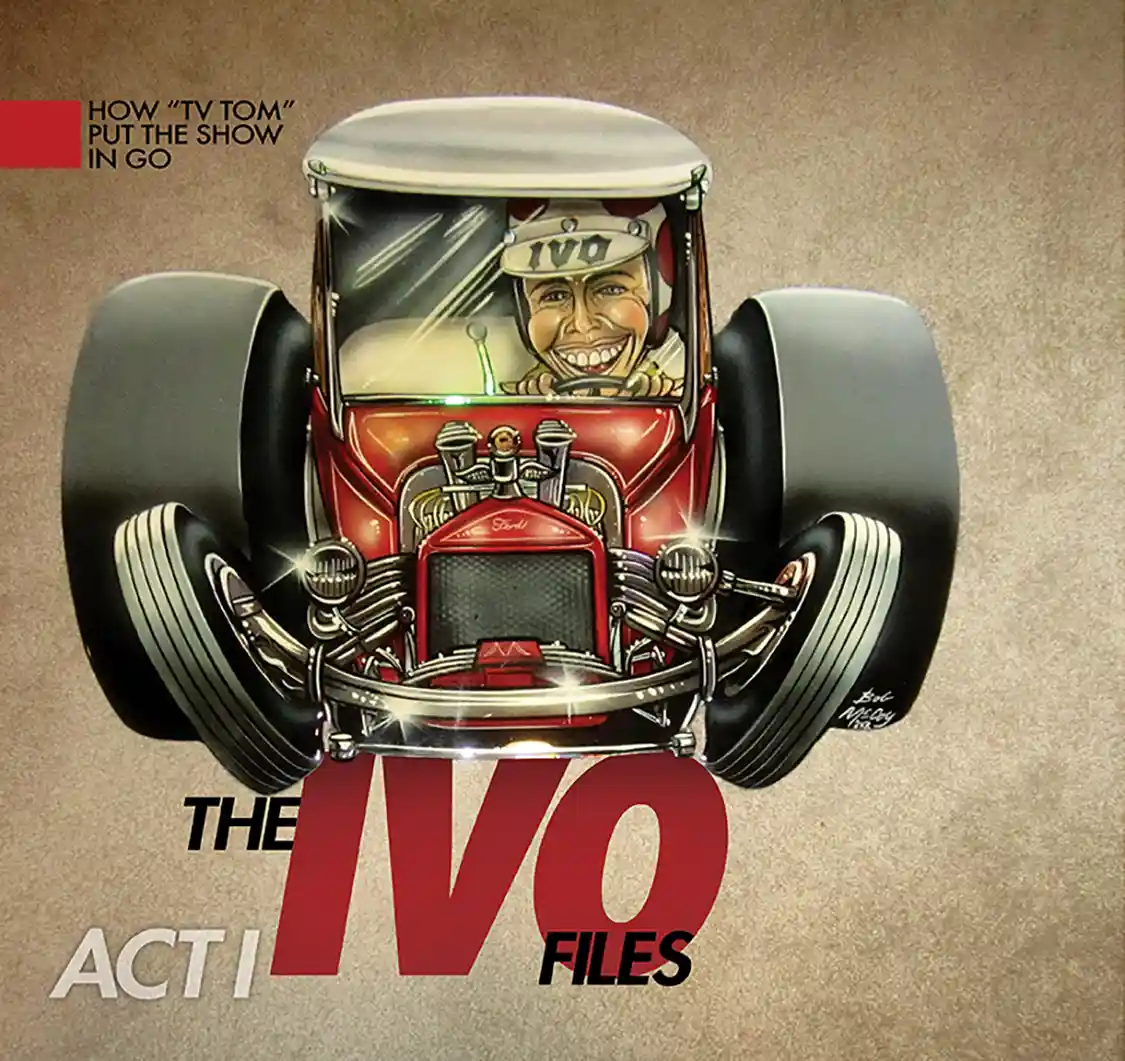
In the formative years of drag racing, the apparatus of the sport enjoyed regular waves of refinement. Engines became more powerful, tire technology moved forward, and the understanding of power-to-weight evolved – sometimes at the expense of safety. Throughout much of the ’50s there were growing pockets of performance and personalities that pushed the limits of discovery. Some of the notable names came from the Southeast, especially a kid named Garlits, and the Midwest had a charismatic Greek. But nowhere–not north, south, east or west–was there anyone like Tommy Ivo.
This larger-than-life racer was anything but an imposing physical specimen. Measuring a slight 5-foot 7 inches (in lifts), Ivo did more to elevate the excitement of early drag racing than anyone else. Never satisfied with his level of speed or fame, Ivo embarked on a lifelong journey that would bring not only new heights of performance, but also introduce the elements of showmanship, professionalism and promotion into an otherwise garage-mentality sport. And, it all came quite naturally.
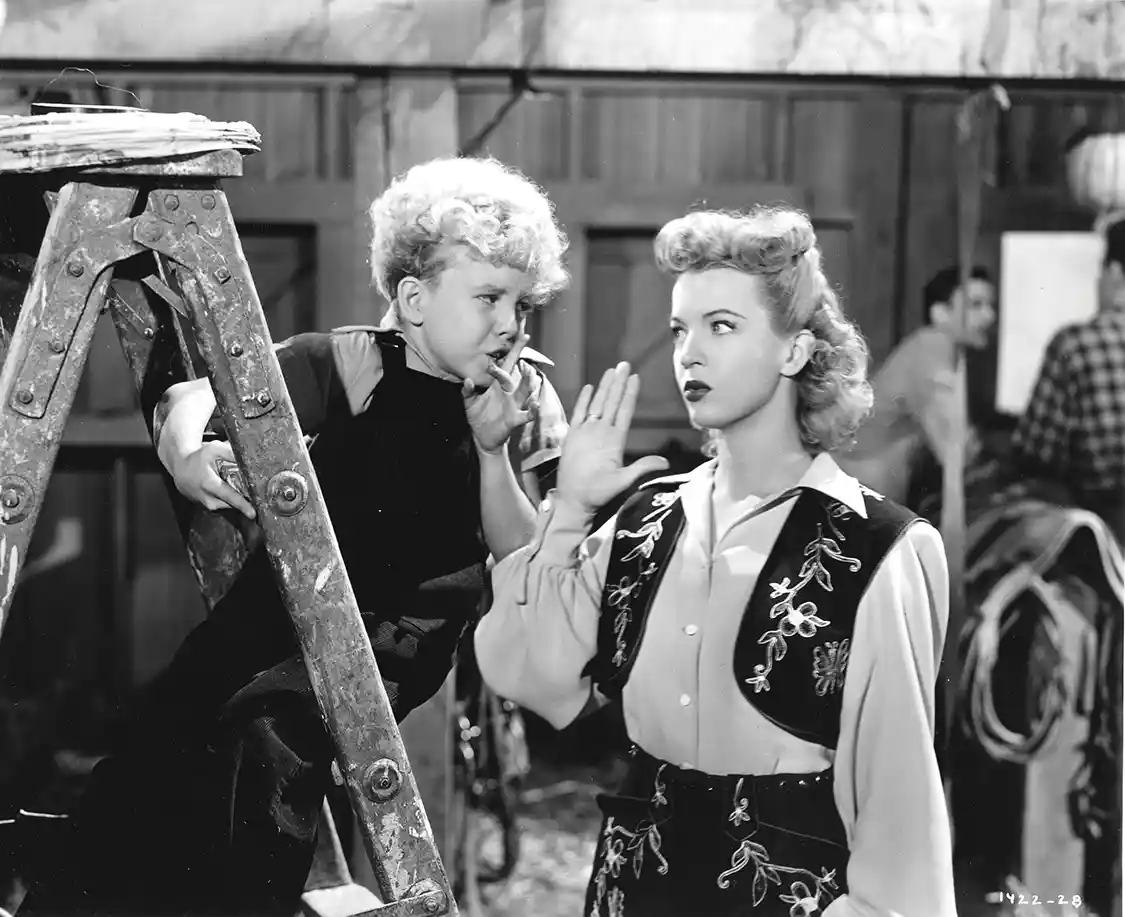
In 1942, a 7-year-old Thomas Ivo was transplanted from his home in Denver to Los Angeles. The Ivo family was forced to leave their Rocky Mountain home with hopes that the warmer, drier California weather would bring relief to his mother’s chronic arthritis. The move also benefitted Tommy, who had been performing in the Denver area since age 3. “From a very young age I could dance and sing. So, moving to Los Angeles was like being taken to the land of plenty,” said Ivo.
The land of plenty didn’t take long to become Ivo’s acting Valhalla. “Mom took me to every talent show she could find. She learned that Republic Studios was looking for a small boy to play opposite Dennis O’Keefe in Earl Carroll Vanities,” Ivo recalled. That was the start of an acting career, which would provide the means for him to enjoy another popular Southern California pastime, hot rods.
By the time Ivo was old enough to drive, he’d landed more than 100 movie and television roles. “On my sixteenth birthday, my girlfriend gave me a bunch of new car brochures. I took a keen liking to the Buicks. Unlike the guys building hot rods, a custom tail-dragger Buick could be the ticket. So, that’s the route I went.”
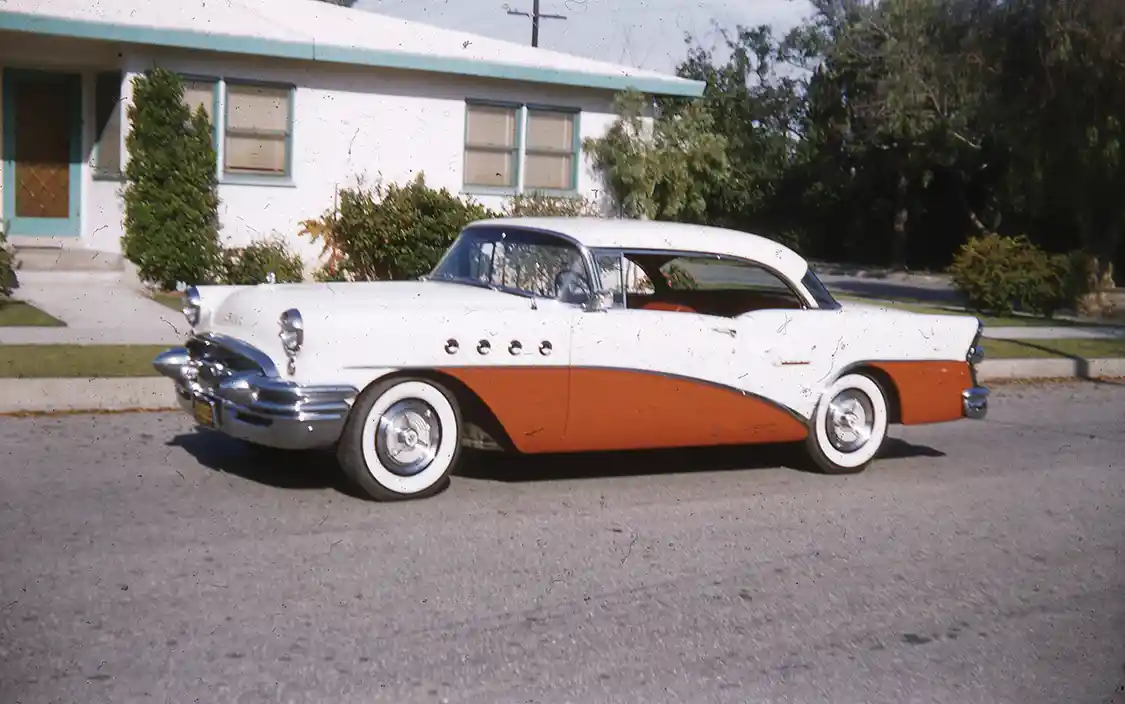
By the summer of ’52, Ivo’s Buick Super 8 had been nosed, decked and shaved. Custom paint followed, and by year’s end, Ivo had earned a boatload of show trophies. This all seemed in line with his show business personality; his training taught him that if you looked good, attention followed. However, he was also a performer and his all-show Buick was being upstaged by a new form of street-savvy activity, speed trials. “At the urging of a buddy, I took the Super to Saugus. The first run down the track was really fun, until I got the timing slip. It read sixty-six point six miles per hour. I took that as a sign and parked it.” His next ride was a new ’55 Buick Century. The Century, with its 332-cid Nailhead V-8 and duel four-barrel carbs was very fast, capable of 100-mph speeds. Ivo began his love affair with speed via the Century. “I gave in to the urge to see just how fast it could run. At my first big meet at Pomona, I won the A/Stock class. I was awarded two trophies: one for class champ and another for breaking the class record. I was hooked from then on.”
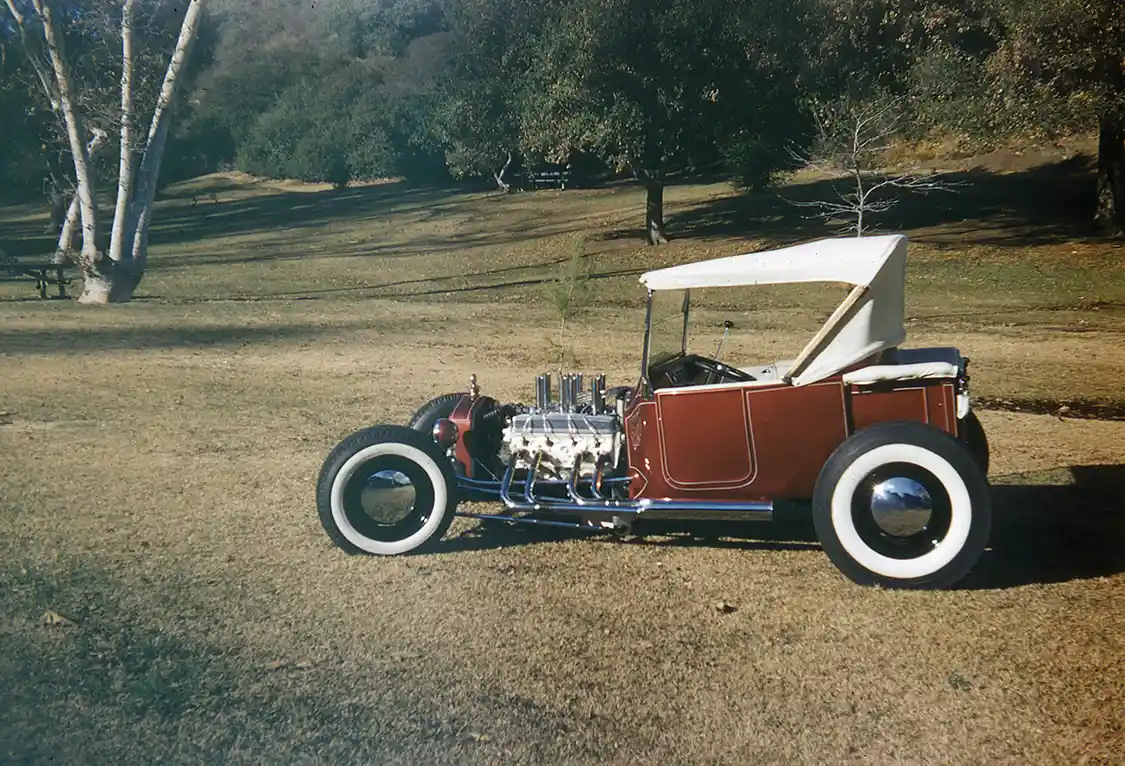
While Ivo’s “hobby” on the street and strip became the fun part of this life, his acting career continued to blossom. He landed a recurring role in The Adventures of Wild Bill Hickok and guest starred in The Lone Ranger, plus dozens of other TV shows, and he co-starred in several movies. Though his Century was good looking and powerful, Saturday night visits to the Bob’s Big Boy in Toluca Lake soon yielded a shift in attention. His Buick was no match for the little hot rod that changed Ivo’s future. As Ivo put it, “Norm Grabowsky had this awesome T-Bucket. When he pulled into the place, he owned it. Everyone just loved that car. One night, as Norm pulled in and the crowd parted like Moses at the Red Sea, I decided I was going to build a T.”
In ’55 there were no fiberglass kits, pre-fabricated frames or templates. Hot rods were one-off creations built to the whim (and talent) of the owner. For Ivo, getting a body meant a three-hour trip east. “The desert was full of old car bodies free for the taking. A buddy and I found a nineteen twenty-five T body in good shape. All we needed to do was cut down the yucca tree that had grown through the floorboard.”
Grabowsky’s T-Bucket was more than Ivo’s inspiration; it became his template. “I went by Norm’s house and his T was parked in the driveway. He wasn’t around, so I studied the exterior. It appeared time was on my side, so I crawled under the hot rod to take some measurements. Time and luck ran out as I felt someone kick the bottom of my shoes. As I crawled out from under the car, big Norm Grabowsky was staring down at me. I got out of there with my notes in hand, but I lost my tape measure,” Ivo said.
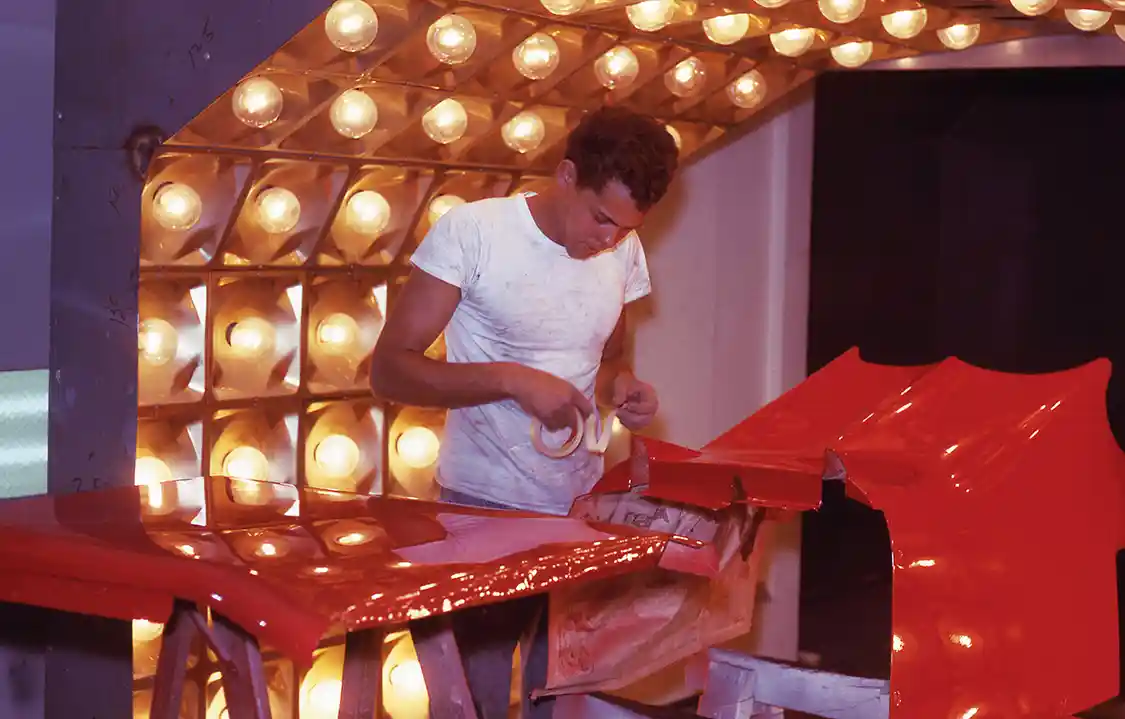
The building of one of the most famous hot rods took more than a year. And like all things Ivo, he built it with unique flair. He gathered in friends, including Tony Nancy, to help bring his vision to life. Ford flathead power was still the most popular, but Ivo had experienced success with Buick V-8s and decided to stick with the Nailhead. In hindsight, this proved to be a pivotal moment in the future of drag racing. Ivo sought out Max Balchowsky, a Los Angeles local with a reputation for getting the most out of Buick engines.
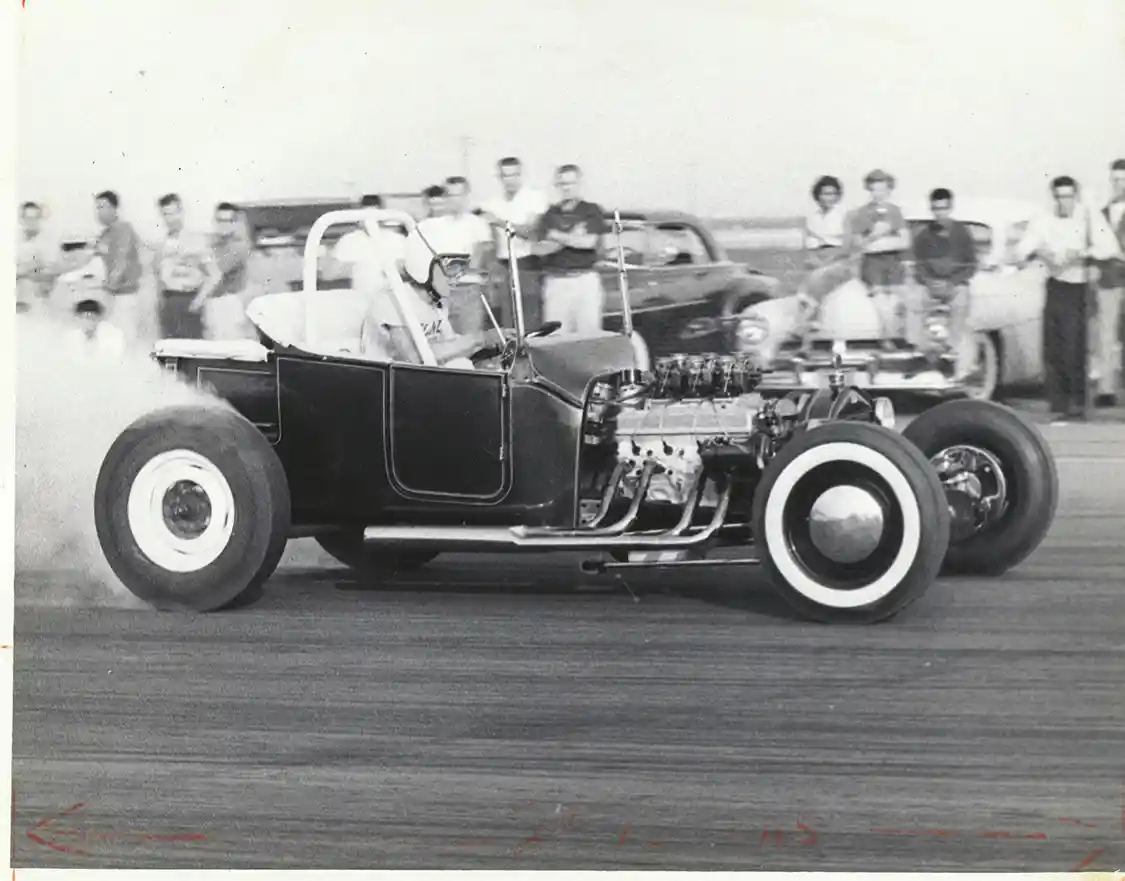
When Ivo’s T rolled into Bob’s Big Boy the reaction was swift and decisive; it was the coolest car in town, but that was only half the story. He built his rod to go as good as it showed. A trip to Pomona resulted in a 104-mph pass. The following weekend he met Grabowski and his rival T at Saugus. It was no contest; Ivo was king on the street and at the strip.
The next big turning point came as the T was showing the fatigue of being a dual-purpose machine. Ivo decided the desert could use one less derelict body, so he collected a second T roadster and constructed a Buick-powered, race-only rod. This T was called “the ugly roadster” because it was all go and no show.
For Ivo, the thrill of racing was far more exciting than the mundane world of Hollywood. He was soon putting much more time into going fast than reading scripts. He also quickly learned the limitations of a T-roadster as a serious race car. He decided to build a true dragster. Again, he started with the Buick engine that had brought him class wins and records in the T. By this time Ivo’s charismatic personality and boyish charm—not to mention his success on the track—had cultivated a long list of talented friends; among these were Dave Zeuschel, Kent Fuller, Tony Nancy and a kid from the San Fernando Valley named Don Prudhomme.
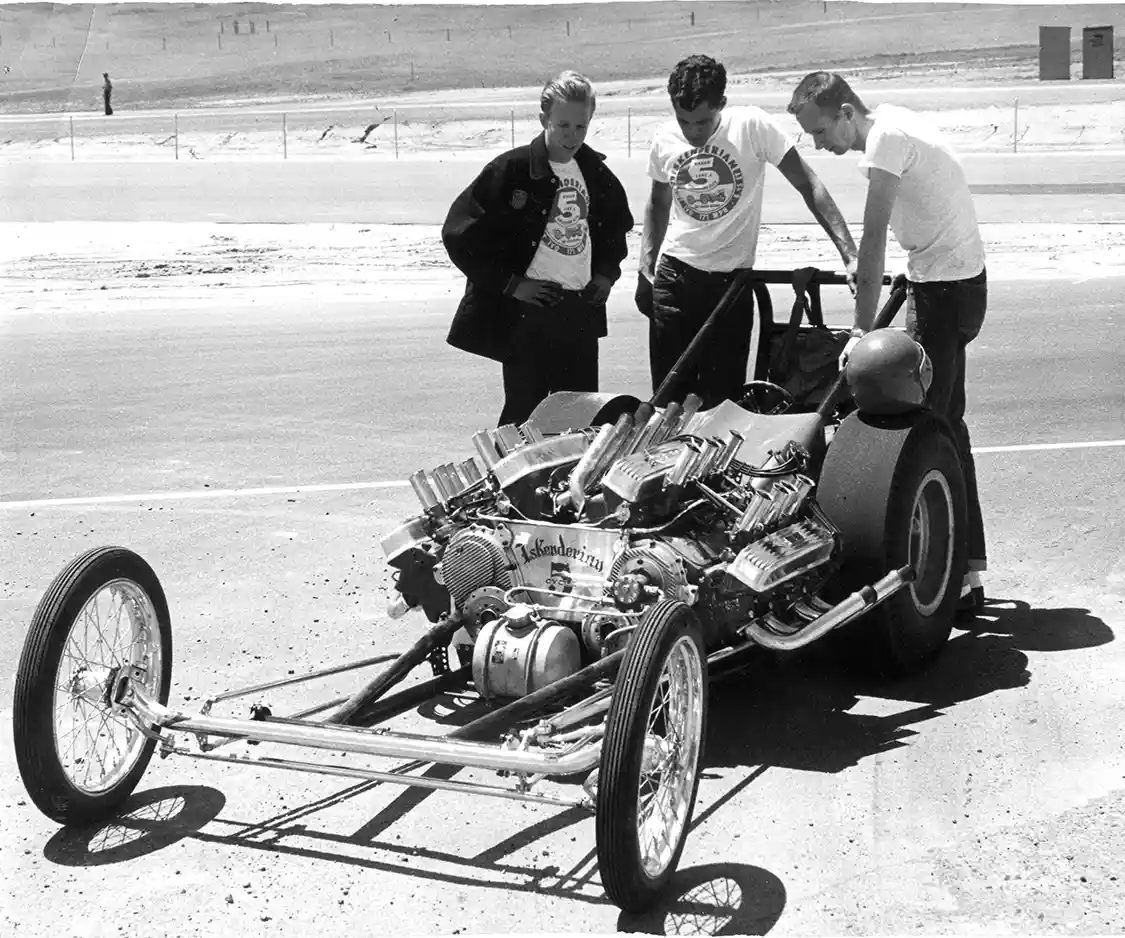
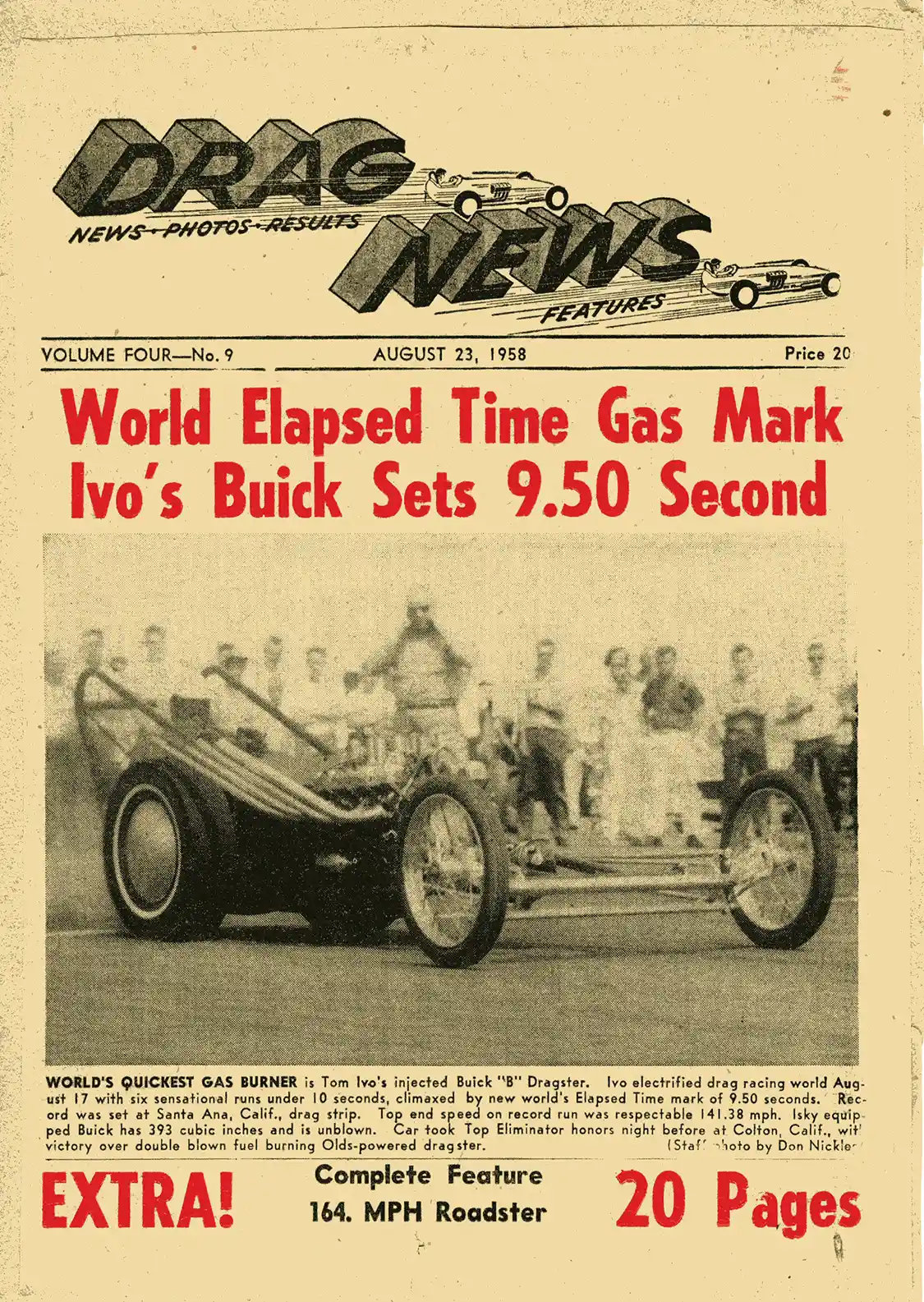
Ivo lived just blocks from the studio soundstages of Burbank. It was in his garage where Ivo built his first dragster. With a Fuller chassis, Buick power and body painted bright orange by Prudhomme, Ivo hauled the rail to the Santa Ana strip. He remembered that day this way: “It looked like a show car. In fact, it looked so good that no one thought I would run it. But the first pass I ran a nine point sixty-one at 150 mph, very fast for nineteen fifty-eight.” Once again, Ivo found a way to look and run better than anyone else.
Ivo quickly began racking up class wins and records from San Diego to Bakersfield, but he soon grew restless, wanting more. “At the time, NHRA had a fuel ban, meaning you could only run on gas. I had reached the limit with the Buick engine. I even installed a GMC blower and got a little more performance. I also tried a blown Chrysler Hemi, but that still wasn’t enough. So, I thought if one engine was good, maybe two would be better.” The advancements M&H had made in drag slicks is what made the idea possible. The new designs proved to handle the ever-increasing horsepower that pioneers like Ivo were forcing out of their engines. “It was really the advent of the drag slick that can be blamed for the twin-engine car,” he concluded. Once again, Fuller engineered the chassis. The Buick engine was pulled from the rail and the old chassis was stored in the rafters of Ivo’s garage. This would later come into play as a very significant part of drag racing history.
Ivo wasn’t the first to build a twin-engine rail, he did it differently and with his own special flare, the most notable was setting the engines side by side at a precise angle. “The side-by-side configuration helped in weight transfer,” he explained. It didn’t come without some very special problems that required unique thinking. Custom flywheels were created to allow one engine to run forward and the other backward. The side-by-side weight also mandated far different chassis engineering. It was all part of the thrill of discovery. Once again, Prudhomme paintedthebody inthesignature Ivoorange. Ivoandcrewquietly testedthecar withoutfanfare. He’dcreatedareputationfor speedandbeautyandwantedtomakesurethetwin-enginebeast wouldperform. Ivorecalled, “Theresultofthefirstrunwasbeyondmy wildestexpectations.” His first test pass in the new twin-engine rail scored an E.T. of 9.0 at 170 mph. A few tweaks and it was ready for its Lion’s debut, the track known as the fastest quarter-mile in the country.
Fromthefirstrun, Ivo’stwin-enginedragster wasthetalkofthesport. Thebrightorangepaint, polished wheels, chrome-plated headers, injector stacks and valve covers reflected everything Ivo was known for; it was all first class. It took only a few runs for Ivo to be the first to break into the eight-second zone on gas. He was rapidly becoming sport’s first true super star with a dedicatedfanfollowing. Thetwinappearedineverymajor automotivemagazine. Whenitwasn’trunning the quarter-mile, it and the Ivo T were featured in custom car shows throughout Southern California. Thetwocarswereastunningpair. Ivo’snextbrightideawastousethetwoonthetrack, as well. He created a push plate to drop onto the front of the T. He asked Prudhomme to drive thepushcar andhelpprepthe Twin betweenruns. Tom McEwenremembershisfirstencounter with Ivo’s new crewmember. “It was at Lion’s one Saturday evening. Ivo was getting ready to be pushed down the track. I stuck my head in the T and asked the skinny kid driving for a ride to the front of the track. He barked back, ‘No way, Ivo doesn’t let anyone else in the car.’ And with that he took off, leaving me standing in the run-off area.”
Ivo had a soft spot for Prudhomme. “We were both members of the Road Kings car club.” Recalled Prudhomme. “That was a big deal to be accepted into a club like that.” Ivo noticed a lot of promise in Prudhomme. “He was a very smart kid. He just seemed to absorb everything that was going on. He really wanted to learn about every aspect of the race car— engine, suspension, clutchsettings, tirepressures—itallmatteredtohim. Plus, hewasbothfunny andfearless, that made for a good combination,” Ivo told us.
As success grew on the track, Ivo’s interest in acting waned. He was able to skew his roles toward movies such as Dragstrip Girl and found much success in TV. He was offered bigger co-starring roles, but those demands meant he couldn’t focus on where he really wanted to be, thetrack. Ivoneededtobeinfrontofthecamerainorder tostaybehindthewheel. In ’59 hetook recurring roles in two top-rated TV shows, Leave It to Beaver and The Donna Reed Show. “Workingin TVwasmorepredictablethanmovies. Schedulesweretighter, everythingtookplaceatthe studio, and when filming was done for the season, I was off, kind of like summer vacation.”
Meanwhile, Ivo and his twin engine were attracting fans, prompting track owners to aggressively pursue him to appear. “I knew I could get appearance money from one track on Saturday and another on Sunday. If I was lucky and didn’t need to shoot on Fridays, I could get paid to run on Friday night as well.” Track owners paying drivers appearance money was a fairly new concept, and they quickly reaped the benefits. The famous radio ads and posters drew fans in to seethewildestcarsandthemosttalenteddrivers. Ofallthepersonalities, therewasnoonebetter at packing the stands than Ivo. His status as an actor provided the means to build the coolest street cars and race the most exciting dragsters. His fame on the track was beginning to rival his work in movies and TV. The age-old choice of work or play was going to have to be made. Theidealsolutionwastocreateaway to turn his passion into a profession.
All the show was nothing without the go, having both was unstoppable. Ivo and the twin engine was a force to reckon with. The car wasasfast, ifnotfaster thanthefuelersof the time, and because it was running on gas, he could race on any track under any sanction. Withtheadvantageofbeingonnational magazinecovers, thestatusofbeinga Hollywood star, as well as a mounting résumé of drag racing records, Ivo was set to make another major first for the sport, a paid national tour. The results of the summer of 1960 cemented Ivo as the face of national drag racing. In one stroke of genius and determination, he became the first truly professional drag racer. He also unknowingly provided the classroom for one who would become one of the sport’s biggest stars. DR
In Act II:
Drag Racer
The Joys of New Pipe To ask whether or not Dan Lafferty loves life and racing is like asking if there are glaciers in Glacier… Continue reading
Brian Losness . July 21, 2026
Feature Stories
While the Ford Bronco wasn’t the first sport utility vehicle when it was introduced for the 1966 model year, Ford could legitimately lay claim to… Continue reading
TODD ZUERCHER . October 02, 2023
Feature Stories
The Vegas Bronco that Stole the Show In the realm of custom creations, where automotive dreams become reality, lies the mighty weapon of a Bronco… Continue reading
Jerome Andre . September 27, 2023
Feature Stories
STP Diesel’s Mean, Clean F-250 THERE’s a truck repair shop in Houston called STP Diesel, which is owned by Benito (Benny) Diaz, managed by his… Continue reading
John Mata Jr. . April 09, 2025
Drive Online
The Ultimate Thrill In the realm of high-performance sports cars, few names command as much respect and admiration as McLaren. Known for their exceptional engineering… Continue reading
DRIVE MAGAZINE EDITORIAL TEAM . August 27, 2024

Chevrolet
Tim Katz’s 1990 Chevy C1500 Say hello to this year’s OBS BG cover truck named “Bubbles,” a 1990 Chevy C1500 owned by Tim Katz, better… Continue reading
Chris Hamilton . November 19, 2025


The Sparks Show
Sevierville, TN
Dino's Git-Down
State Farm Stadium, Glendale, AZ
Dino's Git-Down
State Farm Stadium
Goodguys 36th Autumn Get-Together
Alameda County Fairgrounds 4501 Pleasanton Avenue, Pleasanton, CA 94566
Goodguys 29th Speedway Motors Southwest Nationals
WestWorld of Scottsdale 16601 North Pima Road, Scottsdale, AZ 85260
We use cookies to enhance your browsing experience, serve personalized ads or content, and analyze our traffic. By clicking "Accept All", you consent to our use of cookies. Visit our Cookie Policy for more info.


 Please wait...
Share Link