





 Susan Wade
.
June 30, 2026
.
Drag Racer
Susan Wade
.
June 30, 2026
.
Drag Racer
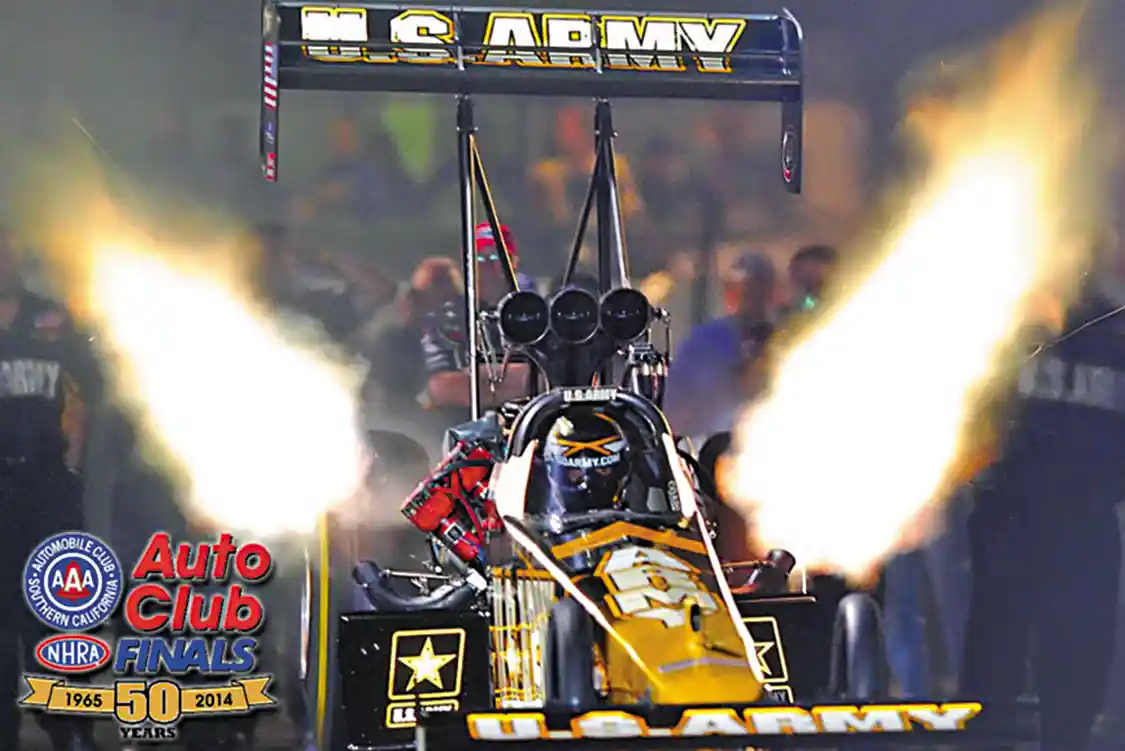
The Blackhawk helicopter was circling over Baghdad, and the U.S. Army pilot was on his cell phone in those dangerous skies in 2006, connected to his NHRA buddies at the Auto Club Finals at Pomona, California. He wanted to know the outcome of Top Fuel driver Tony Schumacher’s final-round run.
The championship was hanging in the balance. Doug Kalitta had lead the standings for the entire second half of the season and had his first championship locked up, unless Schumacher could win the final round against Melanie Troxel with a national record-setting elapsed time.
In 4.428 seconds, Schumacher did just that, clinching his fourth of seven championships in the U.S. Army Dragster. Somehow, amid dozens of stunning twists of racing fortune throughout drag racing’s decades, this pass will live in legend simply as “The Run.”
Funny Car icon John Force heard Schumacher tell that story and said he had his own motivation that year to win his 14th of 16 series titles. “I didn’t have a Blackhawk helicopter,” Force deadpanned, “but I had eight or nine creditors hanging around.”
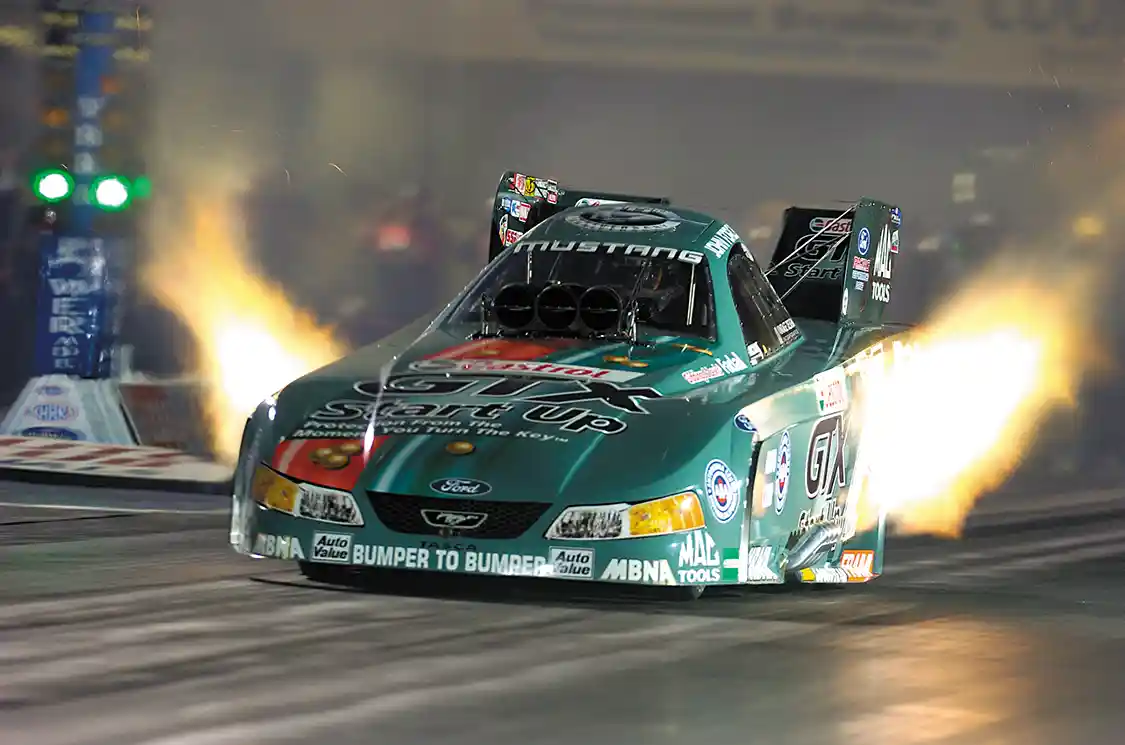
He said Ford Racing Technology Director Dan Davis whacked him on the helmet and told him as he sat in the staging lanes in his Castrol GTX Mustang that day, “You will win this championship, or I will fire you,” Force told us. “That’s really how it goes down in drag racing.”
As this 50th edition of the NHRA’s Finals, or World Finals, approaches, the sport has seen dramatic finishes to the season at six different venues, under the sponsorship umbrella of Winston then Coca-Cola (Powerade, Full Throttle, MelloYello), with a diverse cast of racers from the well-known to the dark horses and featuring an evolution of vehicles. Moreover, they have been framed by several formats from an invitational for division champions to a points system to the current Countdown to the Championship. It has wrapped up seasons that consisted of five or fewer national events to the current schedule of 24.
Tracing the path to this year’s 50th Finals is this selective recollection of heart-pounding action and sometimes heartwarming, sometimes heartbreaking results.
During its first nine seasons, the Finals was the championship event. Division and regional champions represented their local areas, much like today’s JEGS Allstars sportsman extravaganza that takes place at the Joliet, Illinois event. Whoever won this invitation-only race earned the title.
Maynard Rupp stole the 1965 spotlight in Top Fuel before a reported 37,000 fans that October day at Southwest Raceway and in front of National Dragster and NBC television color cameras. TV game-show host Bill Cullen, who loved mechanics and had once aspired to a racing career, supplied the commentary.
Rupp made a solo pass to win the inaugural. His lovely parting gifts from this popular show included a new Mustang, $1,000 in merchandise from torque-wrench giant P. A. Sturtevant, $2,000 in contingency awards and two cams (Crower & Isky), a Teleflex tachometer, a Bell fire suit and a set of wheels from Motor Wheel Corporation.
The following fall, Ed Schartman drove Roy Steffy’s S/XS Mercury Comet to both ends of the class national record at 8.61 seconds, 172.72 mph and beat Don Nicholson to become the first Funny Car world champ. Pete Robinson scored the Top Fuel victory, setting the pace with a 7.19-second elapsed time in the semifinals.
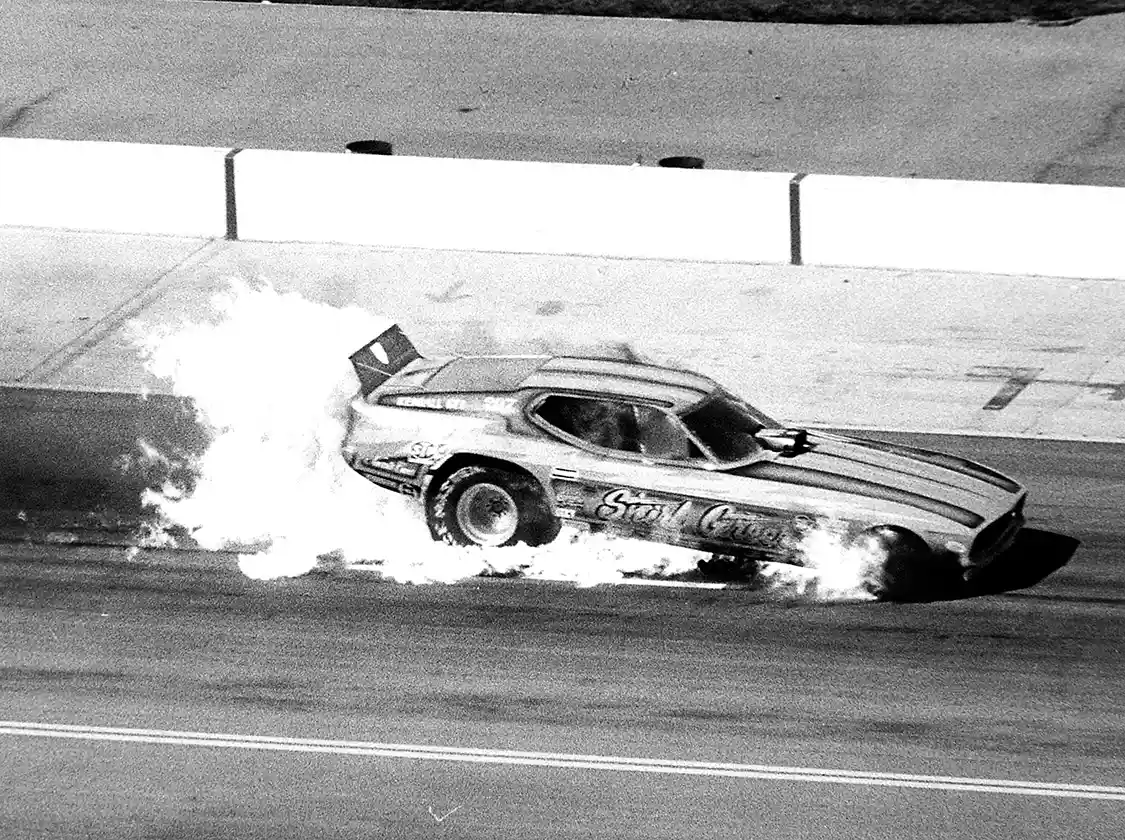
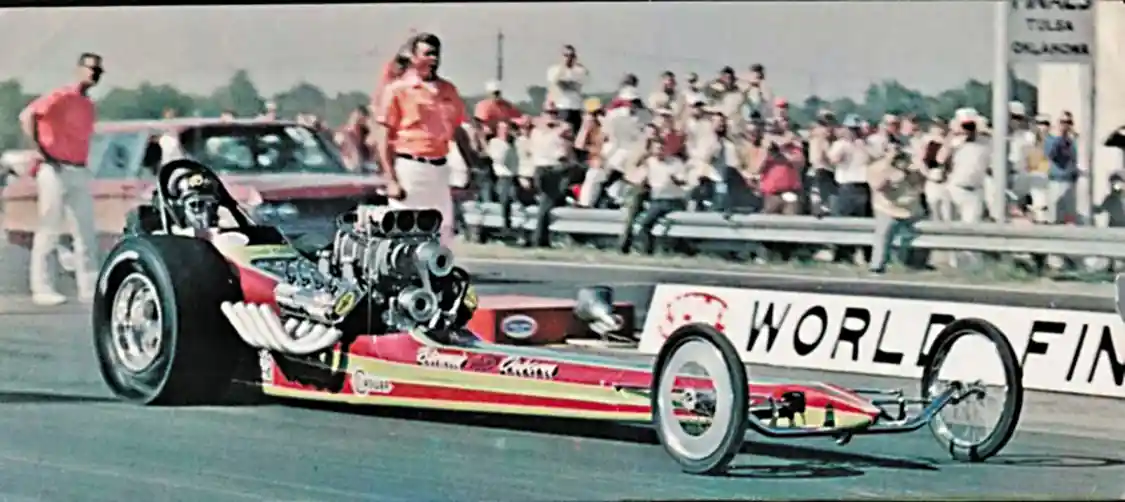
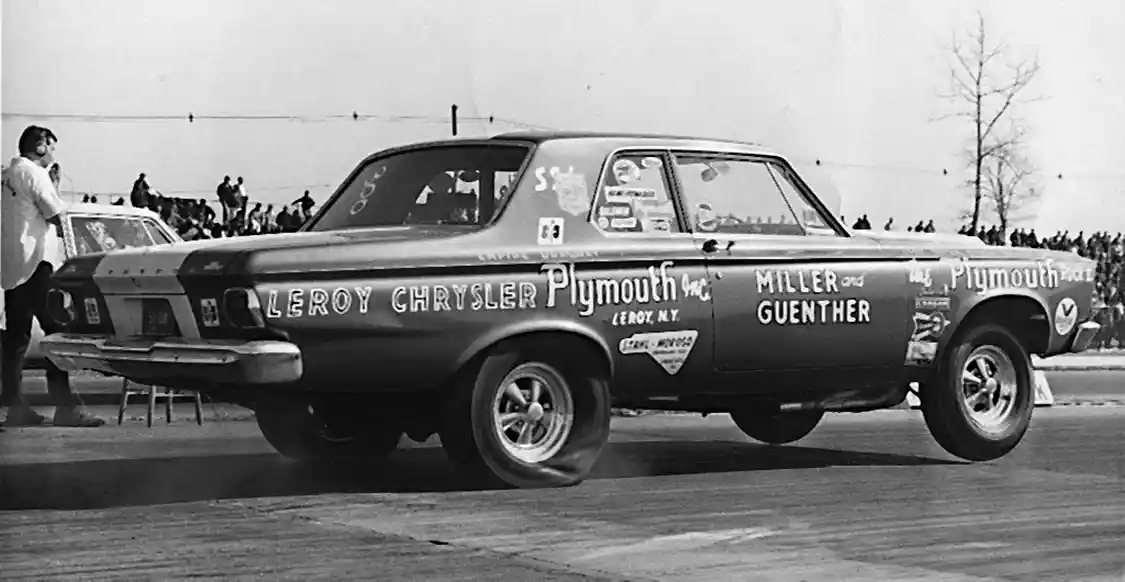
Favorite son Bennie Osborn put his Okie stamp on the Finals at Tulsa. Osborn wasn’t a familiar name nationally in 1967, but he knew Southwest Raceway intimately and used that to become the first to win back-to-back Top Fuel championships. With help in the 1967 semifinal from Steve Carbone, who clicked off his engine early, believing his holeshot had done the trick, Osborn advanced to a showdown with Don Prudhomme. The legend, in the Pink-Baney Ford that ran in the six-second range, morphed into “The Snake,” but Osborn was “The Wizard.” He wove his top-end magic, pulling away from Prudhomme for the title. Shockingly, the event’s biggest winner financially was the unheralded Ed Miller and his ’65 Plymouth who captured the Super Stock crown and with it the $10,000 cash prize, the largest ever in NHRA competition, which was posted by George Hurst.
The next year, Osborn repeated (against John Mulligan) as six cameras transmitted closed circuit World Finals coverage to theaters nationwide. With Osborn no longer a surprise, Bill “Grumpy” Jenkins created the buzz of the event. He had his bases covered in the Street and Super Stock categories. He had three “Grumpy’s Toys” on the property, with hired driver Ed Hedrick piloting the two Camaros. Hedrick lost in the Modified final in the ’67 Camaro, and Jenkins was Super Stock runner-up in his ’68 Chevy Nova in 1968 to Dave Strickler, who relied on a Jenkins-built small-block Chevy engine in his SS/F Z28. Jenkins had hauled Strickler’s car in a fully enclosed double-deck car transporter (one borrowed from a York, Pennsylvania dealership). So Grumpy arrived in style, not just with a fleet of highly competitive race cars, but also with a trailer that put him way ahead of his peers. So he, like Osborn, had left an unmistakable impression on the competition.
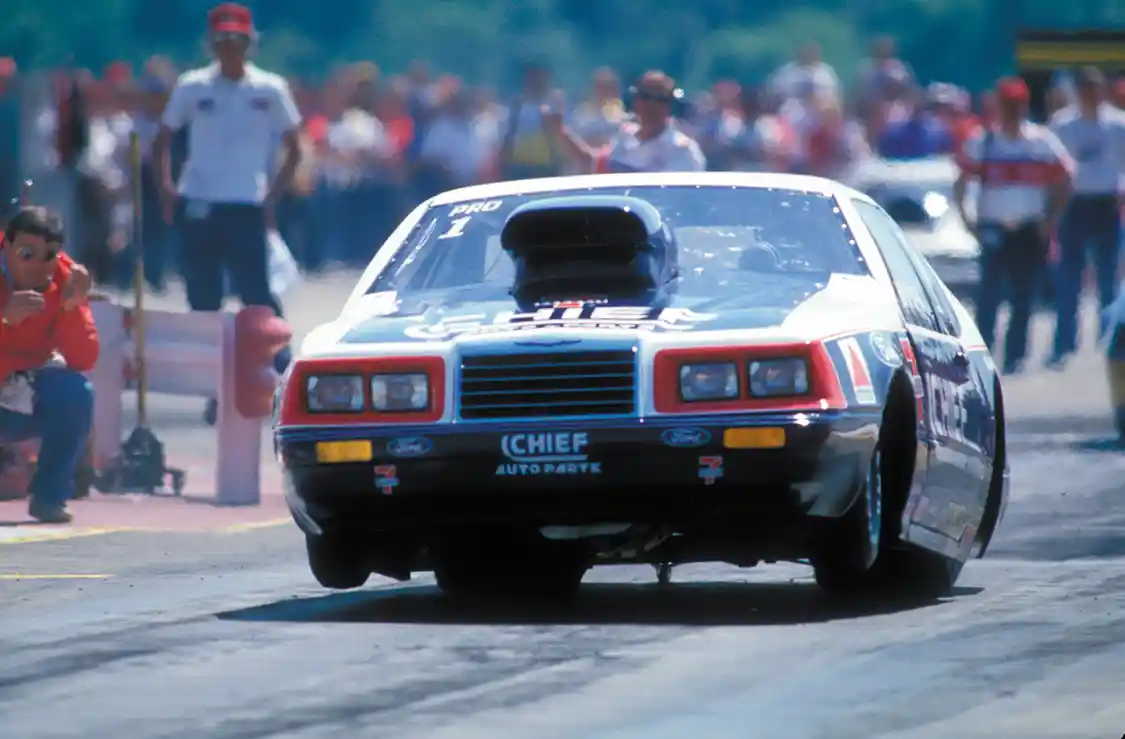
Carbone atoned for his gaffe with the 1970 Top Fuel title as the Finals headed south to Dallas. Ronnie Martin (Top Fuel), Gene Snow (Funny Car) and Ronnie Sox (Pro Stock) ushered out the Dallas era with championships.
Jerry Ruth, the Northwest’s self-proclaimed king, indeed earned his crown in 1973. In the Finals’ last season in the Texas panhandle, two Seattle natives duked it out: Ruth and Gary Beck. “I knew how good he was. I raced him a lot,” Ruth, who won in the Pay-N-Pak entry, said.
Beck, who helped build Seattle’s iconic Space Needle as an apprentice bricklayer in the ’60s, was proud of his region’s showing: “That’s two Northwest cars in the final round of what then was the championship.”
But Ruth, who was, and still is, notoriously uninhibited about trumpeting his skills, drew this wisecrack from a National Dragster writer: “The only bad thing about Ruth’s win is the fact that now everyone will have to listen to him expound upon his World Championship for the next year!”
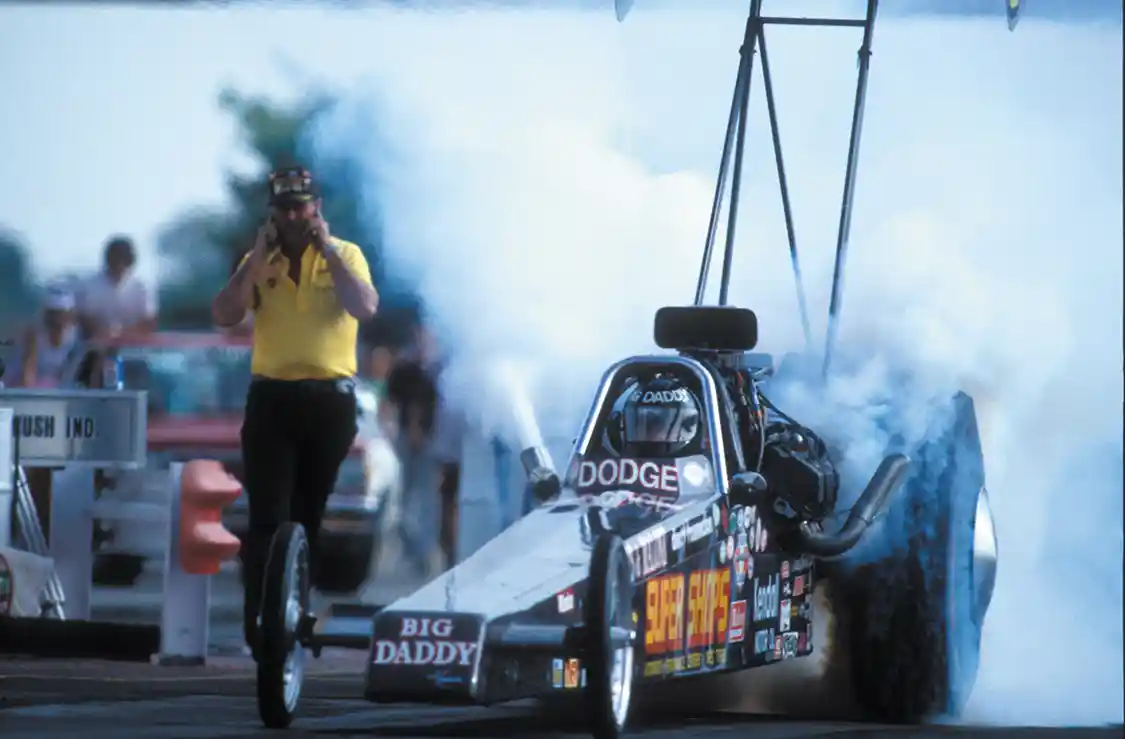
The Finals found a new home in 1974 at Ontario Motor Speedway, and with the venue change came a format change. The Finals no longer was an invitational, with points determining the champions. Don Garlits (Top Fuel), Dave Condit (Funny Car) and Bob Glidden (Pro Stock) won the event, but based on points accumulated all season, Beck, Shirl Greer and Glidden had the distinction of being the first national series champions in 1974.
Beck earned his first of two Top Fuel championships that year, thanks to a comfortable point margin entering the event. The driver with the most dramatic story that weekend was Georgia native and longtime Tennessee resident Greer. He entered the Finals 174 points behind Funny Car leader Paul Smith, and his prospects of closing the gap dimmed considerably with a devastating fire during Saturday qualifying. That blaze put him in the hospital with severe burns to his hands and face, and it incinerated the rear tires and the back half of his Ford Mustang.
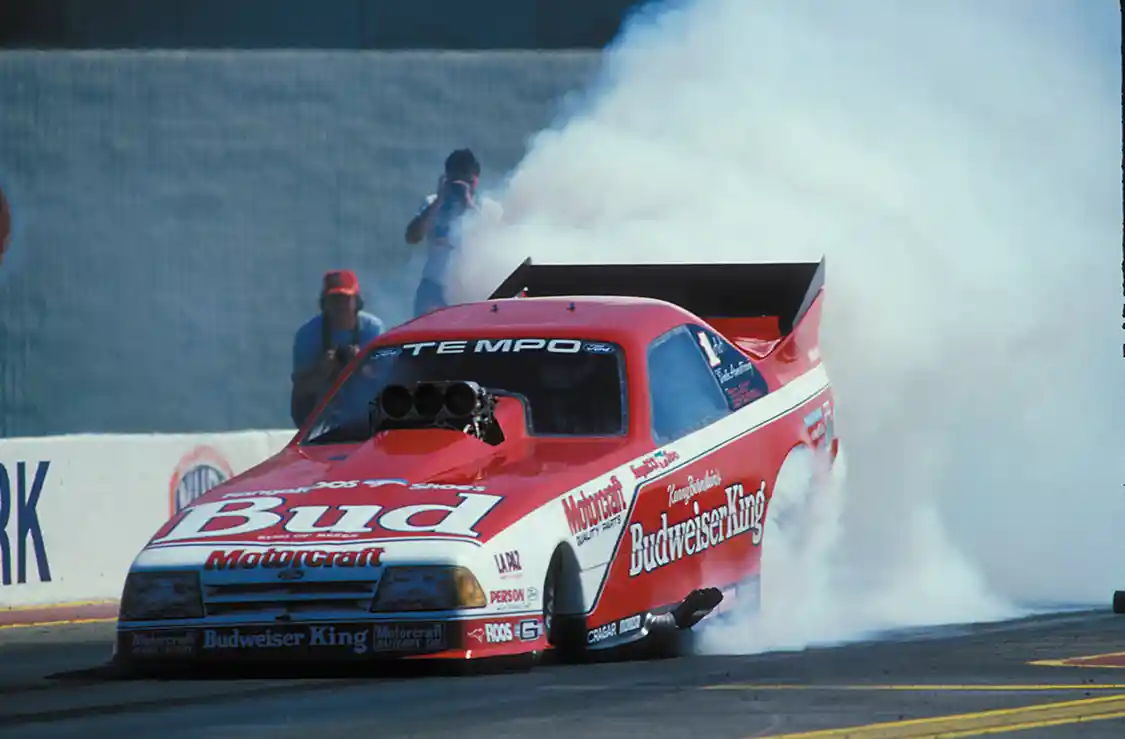
Smith failed to qualify for the race, so he and the crew of his ironically named Fireball Vega rebuilt Greer’s engine and the back half of his car. They worked overnight, and the car sported a patchwork-like appearance. Greer plodded through his pain, borrowed a fire suit from Al Hanna and gloves from Prudhomme, and slipped back into his cobbled-together car on race day.
Greer beat Leroy Chadderton in the first round but exploded the supercharger. It didn’t matter, because Prudhomme’s second-round loss gave Greer the $10,000 championship by 23 points over Smith. Brian Greer remarked of his late father, “To all of us, Dad was always larger than life. Superman didn’t have anything on him.”
No one in Pro Stock that weekend had anything for Glidden. He won both the season title and the Supernationals trophy, raking in a whopping $25,000. His performance was stunning, considering he entered 330 points off leader Wally Booth’s pace and 293 behind Wayne Gapp. He drove his Ford Pinto to a national elapsed-time record worth 200 points, advanced farther than Booth (who dropped out early with mechanical trouble), edged Gapp in their final-round blast, and took the first of his class-best 10 championships.
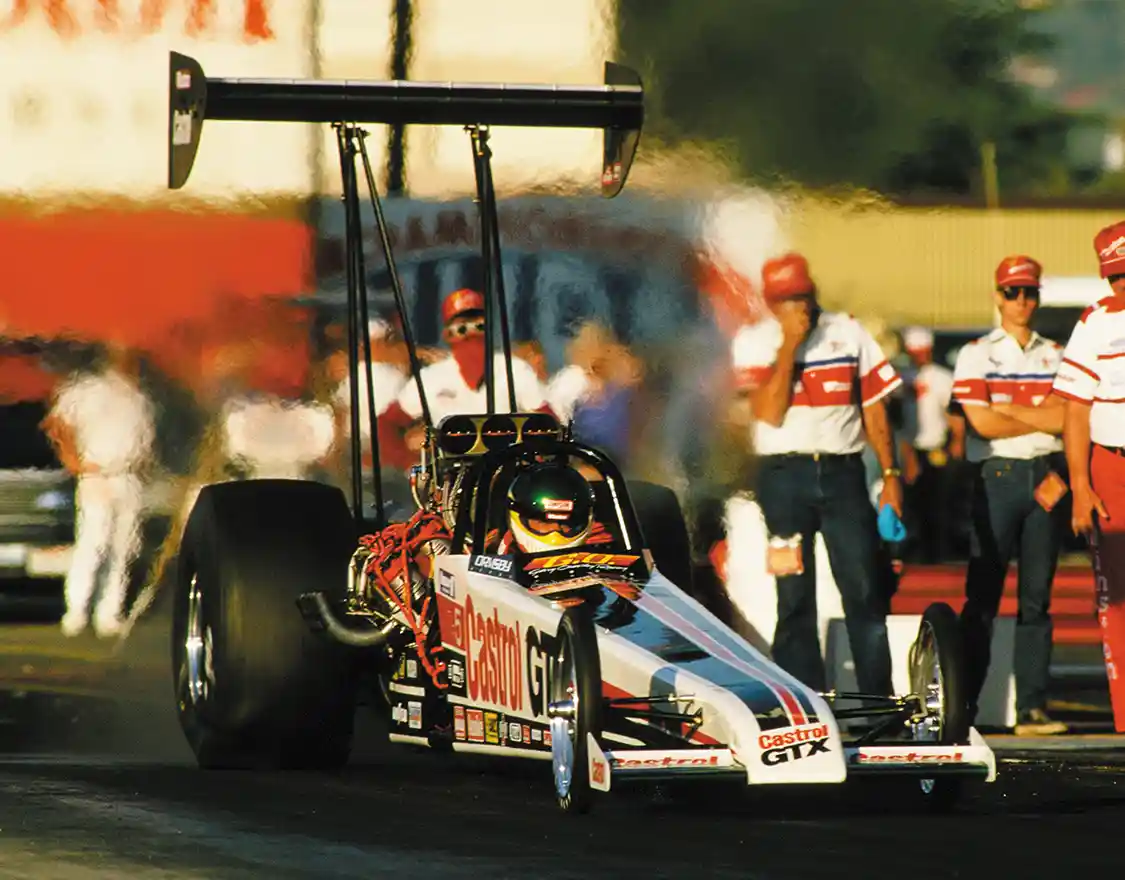
The next year Garlits, Prudhomme and Glidden were the first Winston champions, as the R.J. Reynolds Tobacco Company began its powerful sponsorship reign. “My greatest win was the 1975 NHRA Finals at Ontario, California,” Garlits said. “The deck was stacked against me from the get-go, but I prevailed and set both ends of the record that held for seven years! I came to Ontario to win the World Championship, and I knew it would take the sport’s best-ever clockings.” He left no honor unswiped, becoming the first to top the 250-mph plateau, qualifying No. 1, posting a series of 5.6- and 5.7-second runs to rewrite the national E.T. standard, and running away from Herm Petersen in the final. This was first of his three Top Fuel titles.
Beck closed his career 2-for-4 in six final rounds at the Finals (at four different sites), curiously with none of them coming in his championship seasons of 1974 and 1983.
Glidden continued his march, scoring six Finals victories in seven years at Ontario. In 1978, he became the first and only driver in any category to reach the finals at every event in the series (nine).
Rob Bruins claimed the dubious distinction in 1979 of earning a title without having won a single event all season, a feat unrepeated until 2008, when three-time Pro Stock Motorcycle champion Eddie Krawiec walked away from Pomona with his first.
Shirley Muldowney won the second of her three Winston Top Fuel titles in 1980 at Ontario, which shut down weeks later, giving way to commercial development. And she did it in grand style, barging her way from third place in a four-driver dogfight to best Gary Beck, Jeb Allen and Marvin Graham.
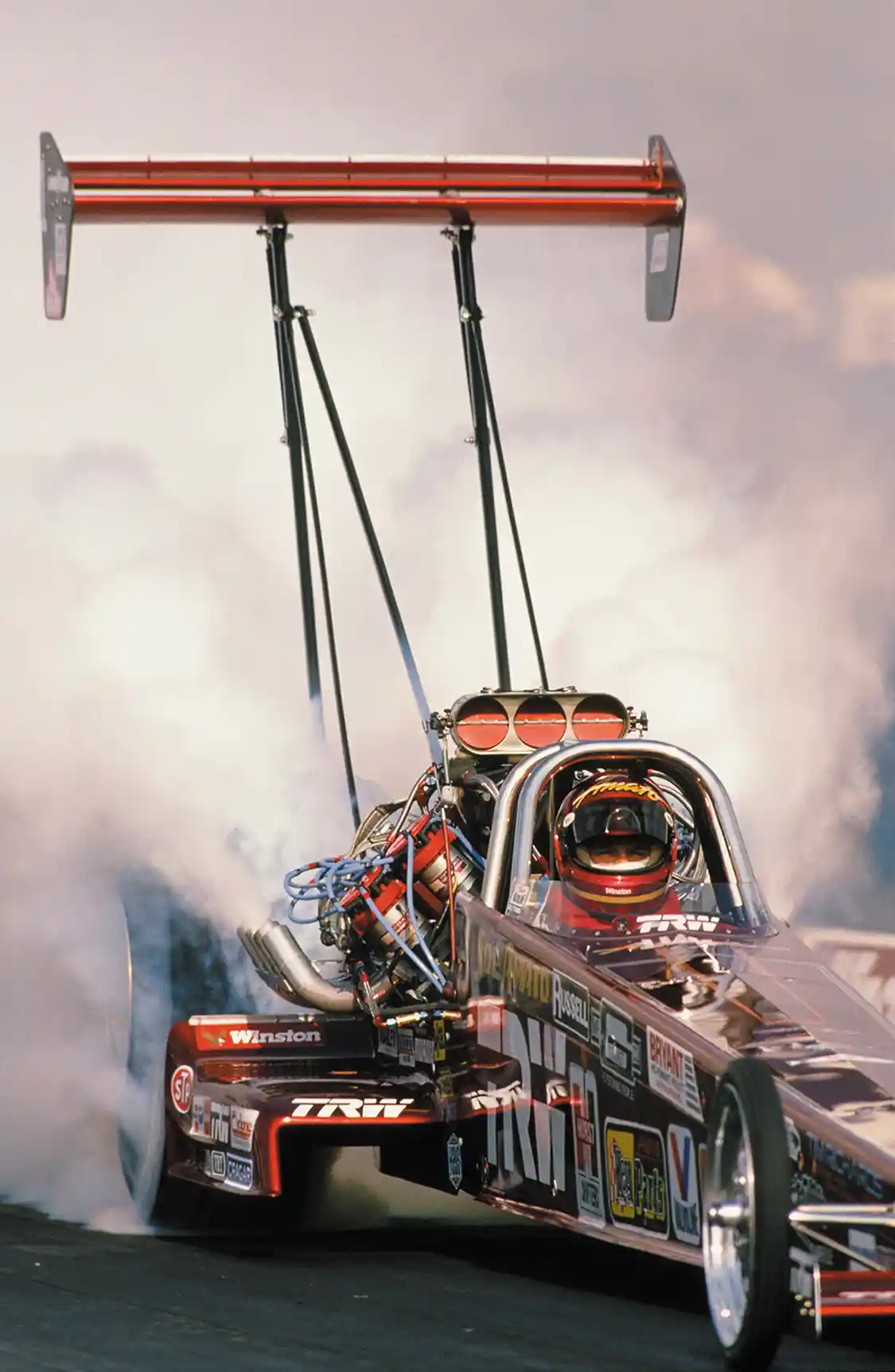
Beck book-ended the NHRA Finals’ run at OCIR, first with a disappointment, then with a triumph. He and Jeb Allen provided the Top Fuel drama in 1981. Beck defeated Dwight Salisbury for the race victory but lost the bigger prize, the Winston series championship, to Allen by a mere three points, the class’ narrowest margin under that point system.
Beck had one last shot in finals to take the title. He had to run quicker than 5.641 seconds, faster than 247.93 mph and win. Salisbury shut off early, and Beck won with a 5.57 E.T. that at the time was the quickest in drag-racing history. P.A. Announcer Dave McClelland declared, “He’s got the time!” Meanwhile, an amped-up Allen was screaming for news of the speed. McClelland gathered himself and informed the crowd, including Allen, “For want of 2 miles per hour, Gary Beck has missed the world championship.” Beck had registered a 245.23-mph speed.
Just like she bade farewell to Ontario, Muldowney did the same at Orange County International Raceway by winning the 1983 Final. Warren Johnson won back-to-back Finals in 1982-83, a decade before he started earning his six series crowns at Pomona.
In a good-bye salute to perhaps the NHRA’s most fabled track, the 1983 Finals at OCIR saw a spate of record-breaking performances, with John Lombardo emerging as Funny Car winner and Pro Stock Motorcycle’s Terry Vance winning his second of only two bike races that year. Beck also finally scored his second Top Fuel championship.
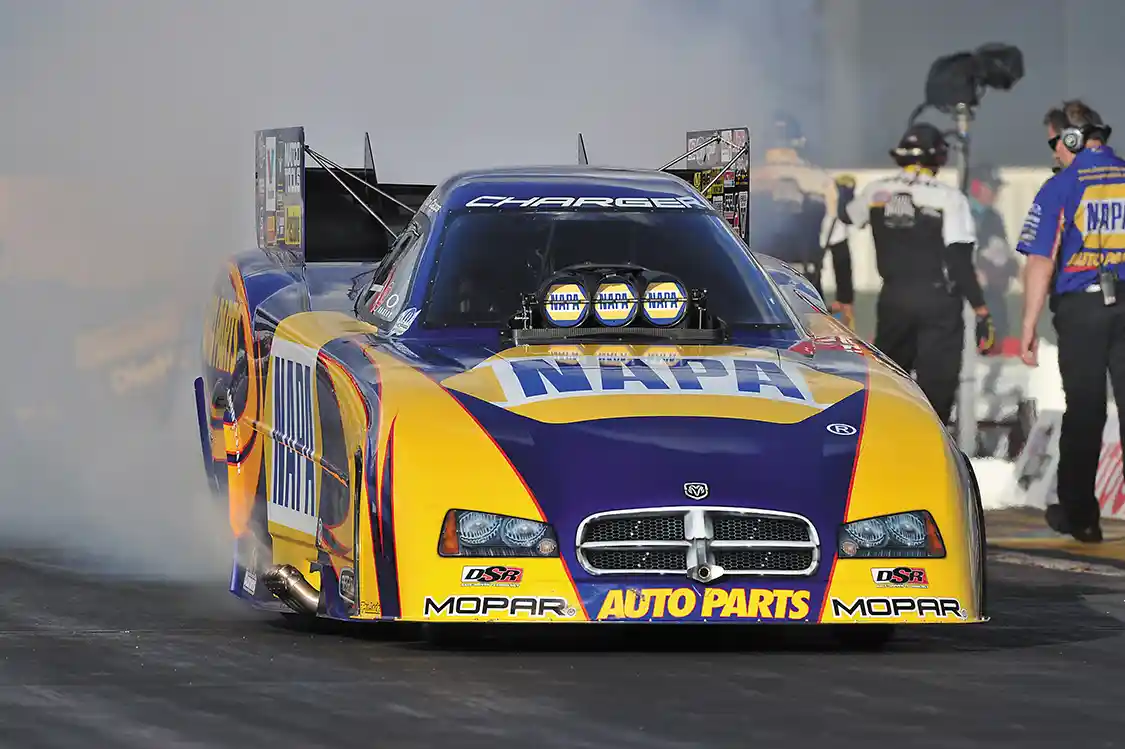
Each November, this current home of the Finals at the Los Angeles County Fairplex wakes up with fans cheering on the sport’s greatest stars. Kenny Bernstein won here six times: four times in a Top Fuel dragster, twice in a Funny Car. This is where Joe Amato sealed five Top Fuel championships. Where John Force finally achieved the stature for which he’d struggled, where his rags-to-riches story blossomed as he recorded eight Finals victories in 15 total at Pomona and celebrated all 16 of his championships and two more as a car owner.
Pomona Raceway, now Auto Club Raceway at Pomona, was the stage for all of Tony Schumacher’s seven championships and his most recent in 2009, when he nosed three-time champion and keen rival Larry Dixon by just two points. Schumacher had lost dominating Crew Chief Alan Johnson to the new Al-Anabi Racing team that hired Dixon, and Schumacher defied critics who said he’d never win a race again, let alone a championship. The U.S. Army Dragster driver presented his championship trophy to the soldiers at Fort Hood in Texas, where a shooting days before had claimed 13 lives.
He won by qualifying No. 1 and gaining two points on Dixon. Both lost in the semifinals, so that made the difference. “That run was bone-crushing, weight-of- the-world pressure, and that U.S. Army team came through. We knew we had one shot at low E.T. and that extra point that would help us control our own destiny,” said the standout who claims to like what he calls big moments. “I was blessed with the greatest team that gave me the ability to make that one shot.”
But for every Schumacher title is a Cory McClenathan calamity, as in 1992, when Cory Mac skipped the Montreal race for financial reasons and ended up losing the series title by nine points. He won the Finals, and had he done nothing more than qualify at Montreal, he would have earned enough points to pass Amato for the crown.
For every triumph, such as Antron Brown’s Top Fuel title by virtue of Brandon Bernstein beating Brown’s teammate Schumacher in the 2012 Finals showdown, is a stunning disappointment. A blatant example is Jack Beckman’s two-point Funny Car championship run that same year that relegated Don Schumacher Racing colleague Ron Capp to his four-time runner-up status. “I don’t know what to say, man,” the completely dejected Capps said. “It’s heartbreaking. It’s going to be tough to sit at the table [with Beckman at the awards ceremony the next day].”
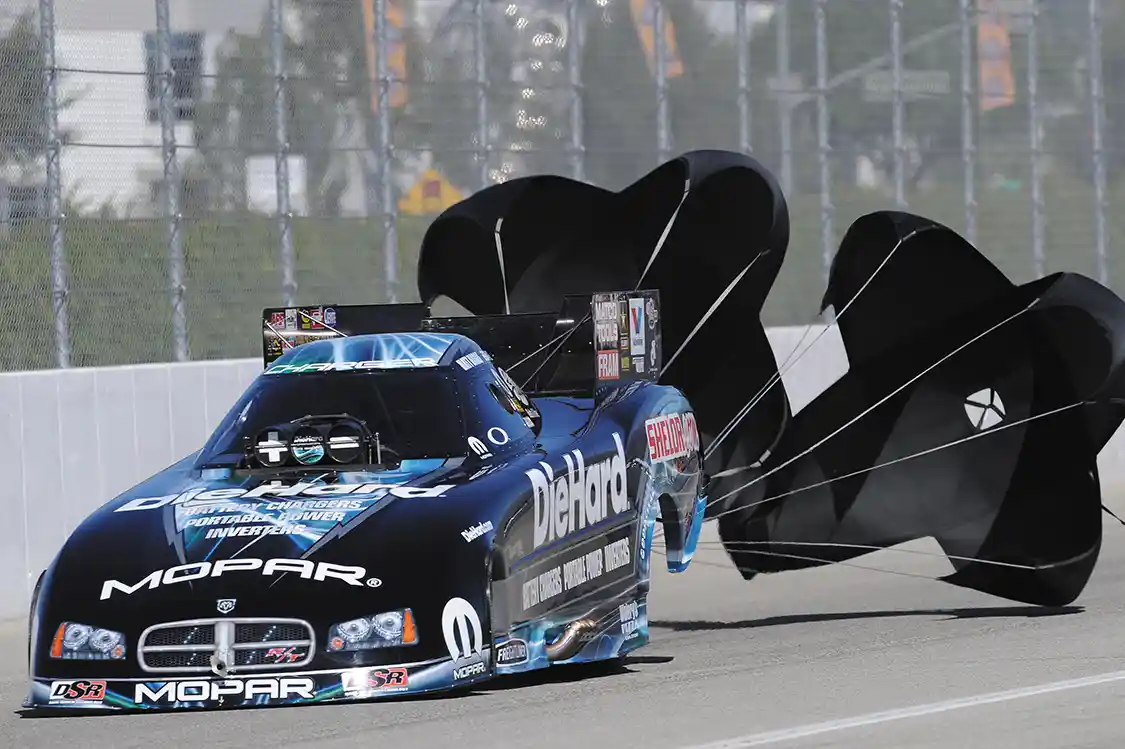
Or it’s the hard lesson learned when Funny Car’s Matt Hagan battled Force in points in 2010 and got knocked out of contention by Bob Tasca. However, Hagan came back the following year and won the championship.
It includes the bittersweet victories, such as Amato’s 1990 duel with Gary Ormsby. The title came down to one final-round, winner-take-all match. Ormsby redlighted, and Amato had the third of his five crowns, but he said, with “mixed emotions. I remember he congratulated me and went over and sat in his van and he was looking dejected. I remember that next year he had cancer and ended up dying.” The victory, in retrospect, Amato said, “was good and bad at the same time. You’re happy you won, but…he was a good guy. There’s a winner and a loser in everything. That’s life, but that’s my memory of Gary Ormsby.”
Surely Force remembers his tenacity in the 1992 Finals at Pomona and of losing his bid for a third straight championship. Relentless Cruz Pedregon had made him crazy, and John decided if he were to go down, he’d go down swinging. He’d hit the wall in the previous race in Dallas, trying so hard to regain his points lead, and in qualifying he ended up rolling his Mustang onto its roof, sliding down the strip. Unqualified, his crew fixed the damage and he managed to slip into the field in his last chance. Pedregon interrupted Force’s title streak, but that weekend Force proved his passion.
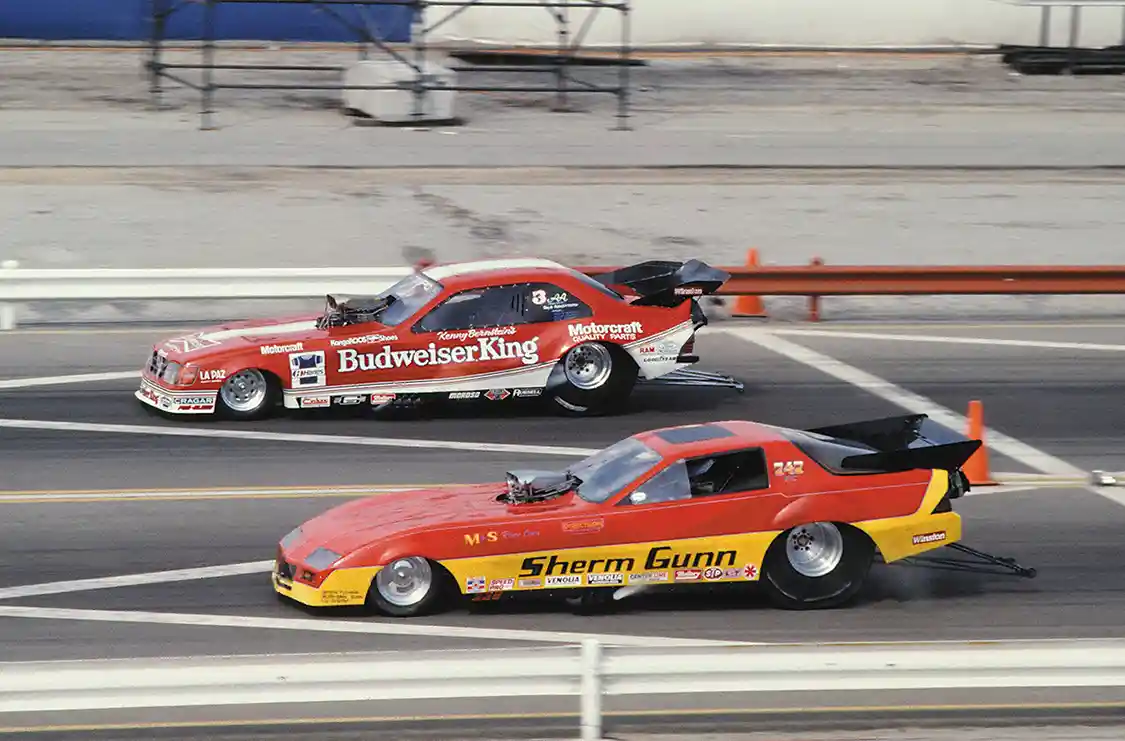
The 1984 Pomona Final saw the first of 30 years of surprises with privateer Funny Car driver Sherm Gunn capturing the event trophy. From the nondescript No. 11 starting position, Gunn took aim at Kenny Bernstein, then Don Prudhomme, knocking out both on holeshots. Then he eliminated Billy Meyer in the Chief Auto Parts/7-Eleven entry. Gunn earned his only national-event trophy by beating Mark Oswald and the Candies & Hughes Trans-Am.
What surprises, satisfactions and sorrows await this year’s racers? It’s always worth the price of a ticket to find out.
EV Builders Guide
This week we try installing a “bolt-on” air suspension system for Tesla Model 3. This kit is designed for the everyday mechanic and do it… Continue reading
Chris Hamilton . June 19, 2023
Drive Online
The Remix When you see a super clean, body dropped truck rolling down the road or sitting at a show, your first thought might be,… Continue reading
Chris Hamilton . August 04, 2023
Drive Online
What a weekend it was! The 8th annual All or Nothing car show had us all buzzing. Teaming up with Arts Partners of Central Illinois… Continue reading
Nicole Hamilton . August 16, 2023
Buyer’s Guides
A Long Haul C60 Built For the Highway Defiance is often looked upon with disdain from those who don’t quite fully understand that it’s just… Continue reading
Mike Self . August 25, 2023
Events
AS SEEN IN OUR OBS BUILDERS GUIDE FALL 2026 ISSUE – Buy Now! 956 is Back on the Map! The most anticipated show to ever… Continue reading
Joe Acevedo Jr. . September 09, 2026
Electric Vehicle Features
Transforming Vehicles Large and Small—Electric Power Fits All EV conversions are nothing new—we’re on our 11th issue here at EV Builders Guide, and the movement… Continue reading
Rob Ward and Mavrick Knoles . August 22, 2025

Goodguys 33rd Summit Racing Lone Star Nationals
Texas Motor Speedway 3545 Lone Star Circle
The Sparks Show
Sevierville, TN
Dino's Git-Down
State Farm Stadium, Glendale, AZ
Dino's Git-Down
State Farm Stadium
Goodguys 36th Autumn Get-Together
Alameda County Fairgrounds 4501 Pleasanton Avenue, Pleasanton, CA 94566
We use cookies to enhance your browsing experience, serve personalized ads or content, and analyze our traffic. By clicking "Accept All", you consent to our use of cookies. Visit our Cookie Policy for more info.

 Please wait...
Share Link