








 Motortopia Staff
.
April 06, 2026
.
News
Motortopia Staff
.
April 06, 2026
.
News
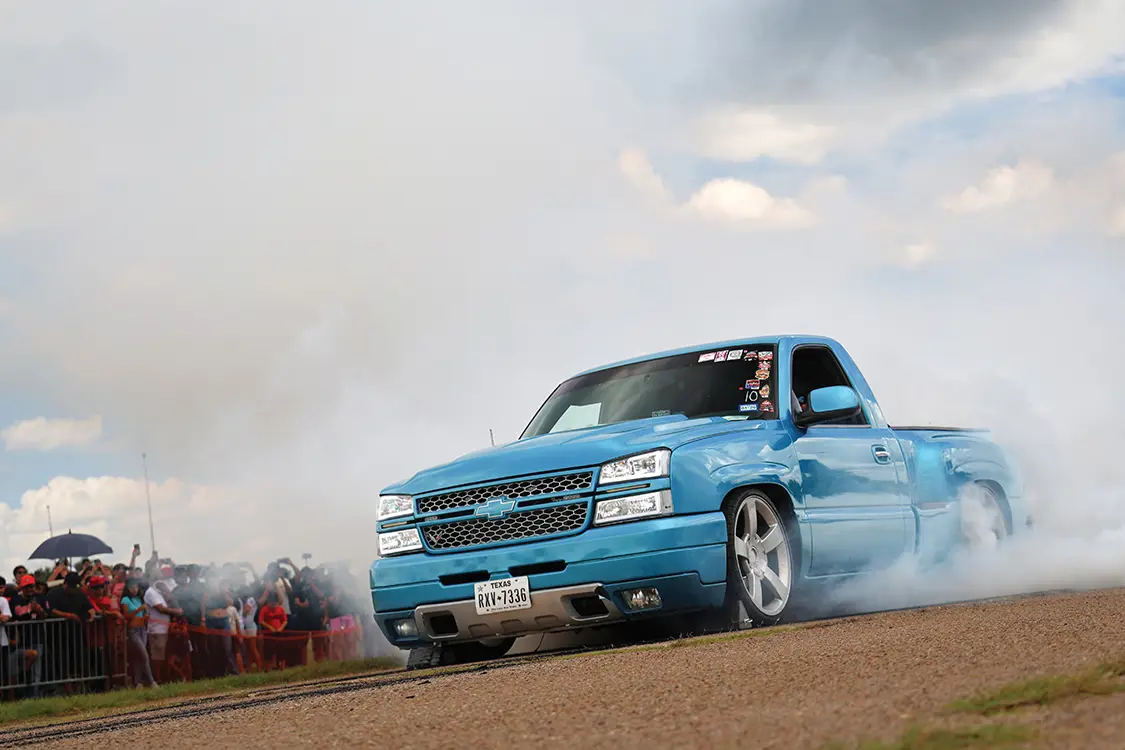
So you’ve decided it’s time to get your truck sitting lower. Maybe you want that slammed street stance, better aerodynamics, or just the satisfaction of knowing your build looks exactly how you imagined it. Whatever your reason, you’ve already hit the first fork in the road: air suspension or lowering blocks?
Both are legitimate paths to a lowered truck — but they’re not the same, and choosing the wrong one for your situation can cost you money, ride quality, and headaches down the road. Before we break down each option, though, there’s something that comes first.
Before you spend a dime on any suspension modification, you need to know the baseline health of your truck’s existing suspension. And that means checking for open recalls.
Suspension-related recalls are more common than most people realize. Ford, for example, has recalled over 412,000 Explorer SUVs multiple times because of recurring suspension failures. The problem was so persistent that Ford issued recalls in 2016, 2019, 2021, and again in February 2026, each time expanding the scope of affected vehicles.
Owners described the experience as terrifying: sudden loss of rear-wheel control, vehicles sliding sideways, near head-on collisions. GM, for its part, has recalled tens of millions of vehicles over the years for failing rear suspension components.
The sobering part? According to NHTSA’s own recall completion data, suspension recalls have only a 52% completion rate, meaning roughly half of all vehicles recalled for suspension defects are still driving around with the problem unresolved.
Before you start modifying, do a quick automobile recall search to confirm your truck doesn’t have any open suspension recalls. It takes about 30 seconds and could save you from building on top of a factory defect. Once you’ve got a clean bill of health, then it’s time to talk modifications.
Lowering blocks are exactly what they sound like — solid blocks (usually aluminum or steel) that get installed between the rear axle and the leaf springs to drop the rear of the truck. They’re one of the most popular entry-level suspension mods in the custom truck scene, and for good reason.
Pros:
Cons:
Lowering blocks are the right call if you want a clean, static drop on a budget, aren’t planning to show the truck competitively, and just want a lower, meaner stance without a major investment. They’re the go-to for weekend builds and daily drivers where function still matters. Jalopnik has a good first-hand take on what lowering your daily driver actually feels like if you want a real-world perspective before committing.
Air suspension replaces your factory springs (and sometimes shocks) with air bags — inflatable rubber bladders that let you raise and lower your truck at will using a compressor and control system. In the custom truck world, this is the gold standard. If you’ve seen a truck at a show that can lay frame on command, it’s almost certainly running airbags.
Pros:
Cons:
Air suspension is the right call if you’re building a show truck, want maximum stance flexibility, or plan to drive the truck daily without sacrificing your spine. It’s a long-term investment in the build, not just a quick mod.
Here’s the honest breakdown:
Either way, the path to a clean build starts before you ever order a part. Check that recall status, confirm your suspension is solid from the factory, and then get to work. The last thing you want is to spend thousands on bags and management only to find out your rear axle had a factory defect the whole time.
Lowering blocks are simple, affordable, and effective for a static drop. Air suspension is the ultimate in adjustability, ride quality, and show-worthiness. Neither is the wrong choice — it just depends on what you’re building and why.
Know your truck, know your goals, and build accordingly. That’s how the best trucks on the scene get made.

Chevrolet
QA1 Suspension did the thing we have ALL been waiting for! Full front and rear coilover conversion for 2003-2006 2WD Chevrolet Silverado 1500. Here’s a… Continue reading
Chris Hamilton . June 19, 2025
News
The scissor-lift scene is exploding. With global demand climbing, fresh safety rules kicking in, and electric powertrains reshaping duty cycles, choosing the right platform in… Continue reading
Motortopia Staff . December 11, 2025
News
Some cars are too good to die. A BMW M3 with a dented frame, a Tesla Model S with a cracked battery case, an Audi… Continue reading
Motortopia Staff . December 23, 2025

News
Image by Marcel Langthim from Pixabay Roads in Florida are among the busiest and most erratic in the entire nation, particularly in larger cities such… Continue reading
Motortopia Staff . November 20, 2025
New Products
RealTruck just raised the bar again. Their best-selling truck bed cover, the BAKFlip MX4, has officially leveled up with the launch of the Gen 3… Continue reading
Chris Hamilton . August 01, 2025

News
Image source: trinityrental.com Dubai is a real center of luxury cars. Here you can often find exotic vehicles that attract attention from the first minutes.… Continue reading
Motortopia Staff . June 23, 2025



Goodguys 25th Meguiar's Del Mar Nationals Presented By FiTech Fuel Injection
Del Mar Fairgrounds 2260 Jimmy Durante Blvd., Del Mar, CA 92014
Goodguys 11th Griot's Garage North Carolina Nationals Presented By Grundy Insurance
North Carolina State Fairgrounds 4285 Trinity Rd, Raleigh, NC 27607
Classic burgers 6th annual classic car show fundraiser
6525 Inyokern rd Inyokern, ca 93527
Classic Burgers 6th Annual Car Show Fundraiser
Inyokern, CA
Whatcom County Cruisers
Whatcom County Cruisers Summer Car Show Series (Spring Car Show) Les Schwab Tires. 1731 LaBounty Dr. Ferndale WA 98248 (first event)


 Please wait...
Share Link