








 JEROME ANDRE
.
January 23, 2026
.
Electric Vehicle Features
JEROME ANDRE
.
January 23, 2026
.
Electric Vehicle Features
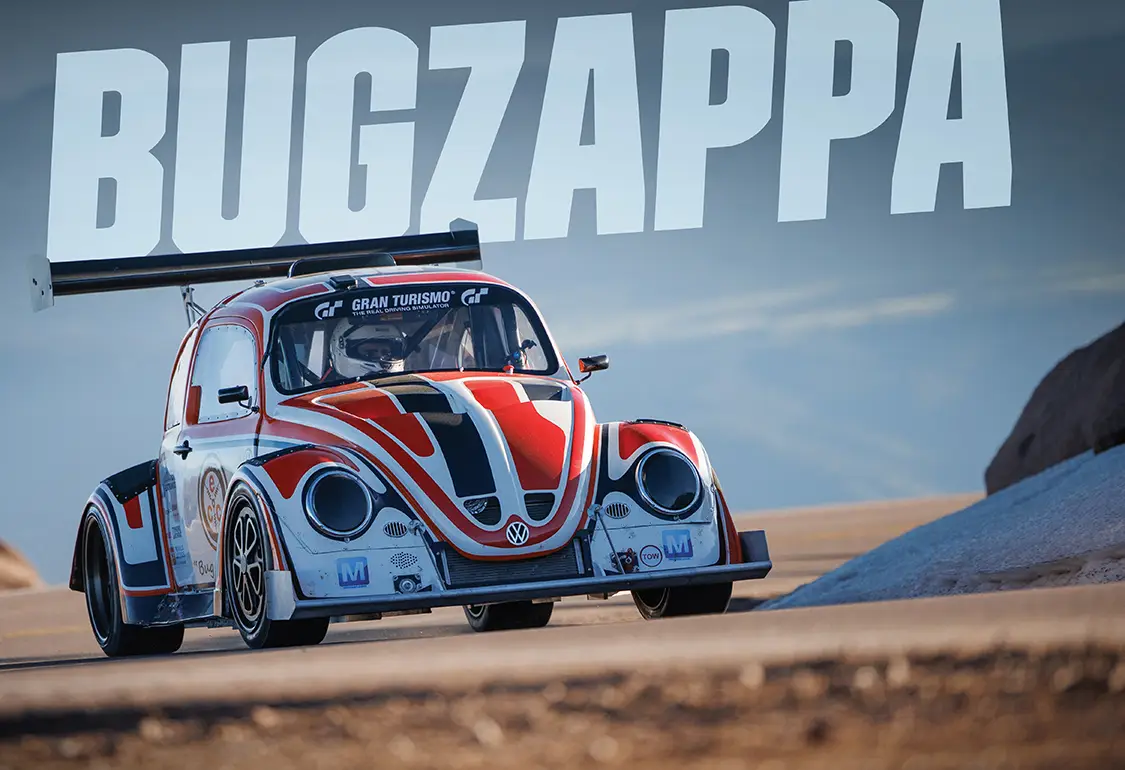
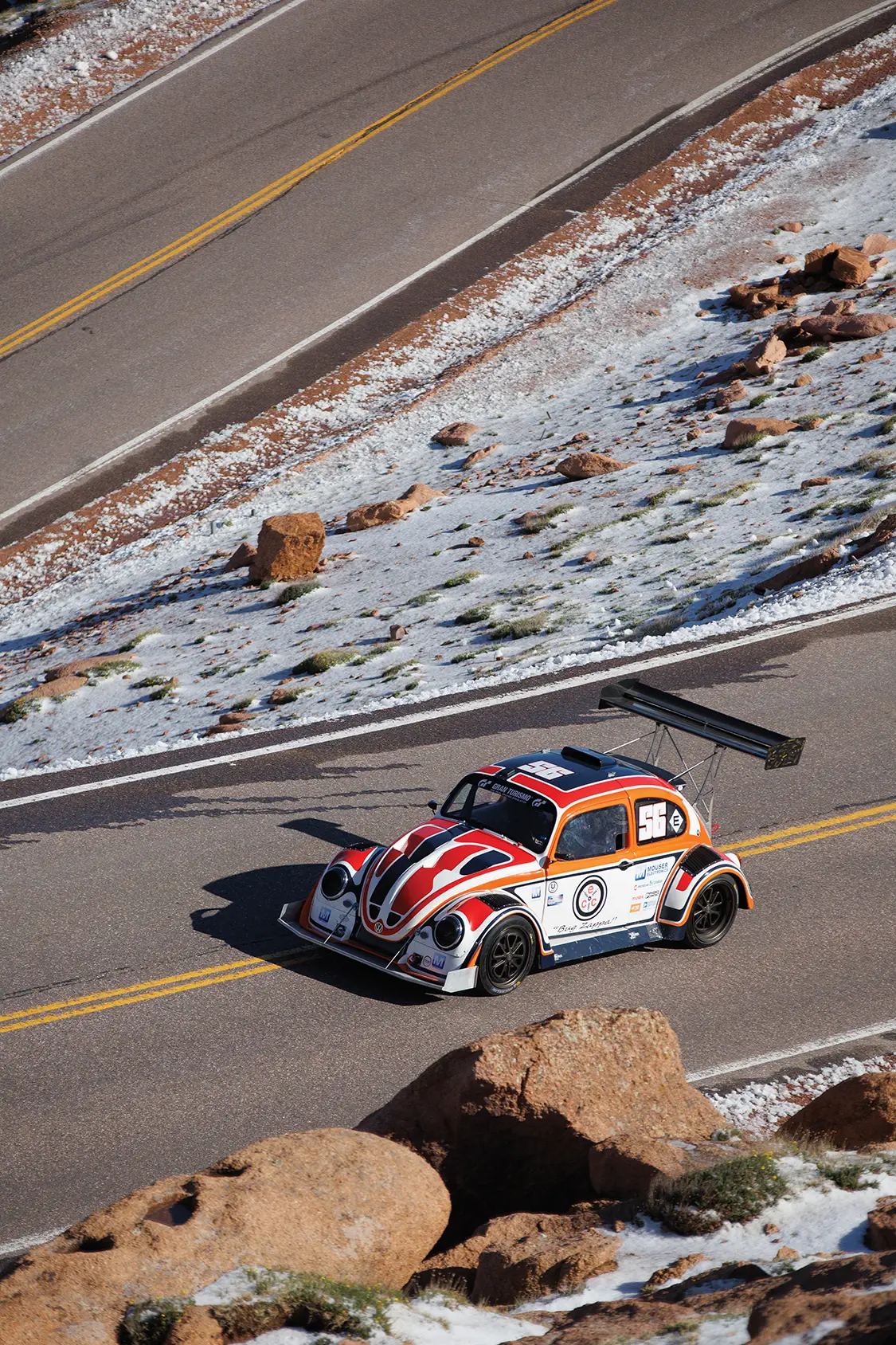
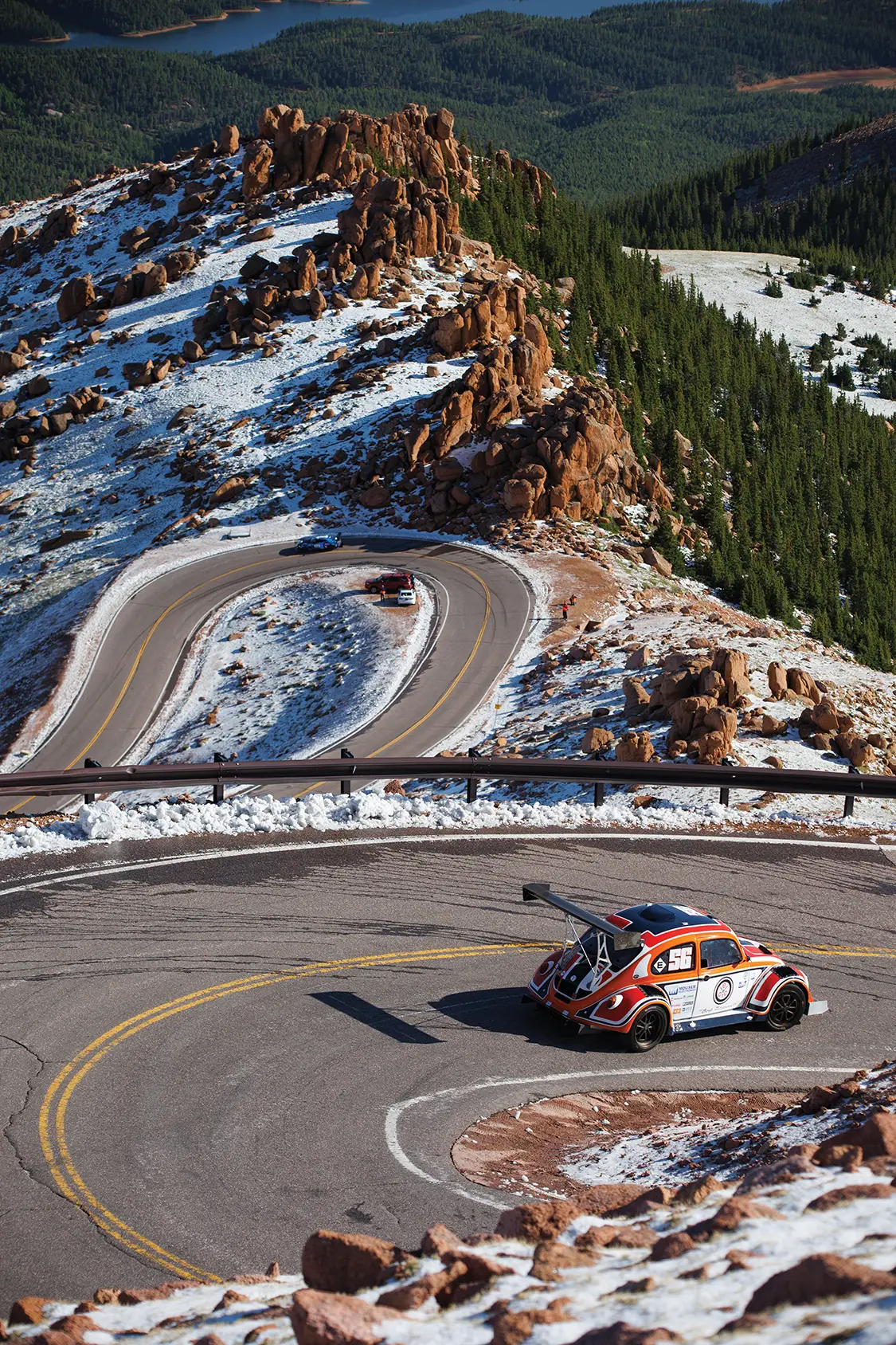
When Richard “Moggy” Morgan of Electric Classic Cars set out to build Bugzappa, the plan wasn’t just to create another wild YouTube build or quirky EV conversion. From day one, the target was the Pikes Peak International Hill Climb, the legendary “Race to the Clouds” in Colorado. That meant building a car capable of surviving 156 turns, 4,720 feet of elevation gain, and weather that can switch from summer to snow in a single run. It meant rethinking everything from the drivetrain to cooling. And it meant taking a humble Volkswagen Beetle and turning it into one of the most technically ambitious EV race cars ever attempted by an independent shop.
“Ultimately, the aim was always to go Plaid,” Moggy explains with a grin, referencing Tesla’s most powerful powertrain. “But before we could unleash that, we had to dial in the chassis and learn what the car wanted. Pikes Peak is unforgiving—you don’t get second chances up there.”
Choosing a Beetle was more than nostalgia (Moggy’s first custom cars were Beetles, and his first EV conversion was also a Beetle). The car’s compact footprint, rear-engine layout, and enormous aftermarket support made it an ideal test bed. At the same time, its underdog image fit Moggy’s trademark sense of humor. “Everybody loves a Bug,” he says. “But nobody expects one to go four-wheel drifting at 80 miles an hour up a mountain. That’s the fun of it.” From the beginning, Bugzappa wasn’t about comfort or range. It was about power-to-weight, repeatable launches, and surviving the mountain’s brutal mix of hairpins and flat-out sprints. That meant race car engineering and plenty of compromises.
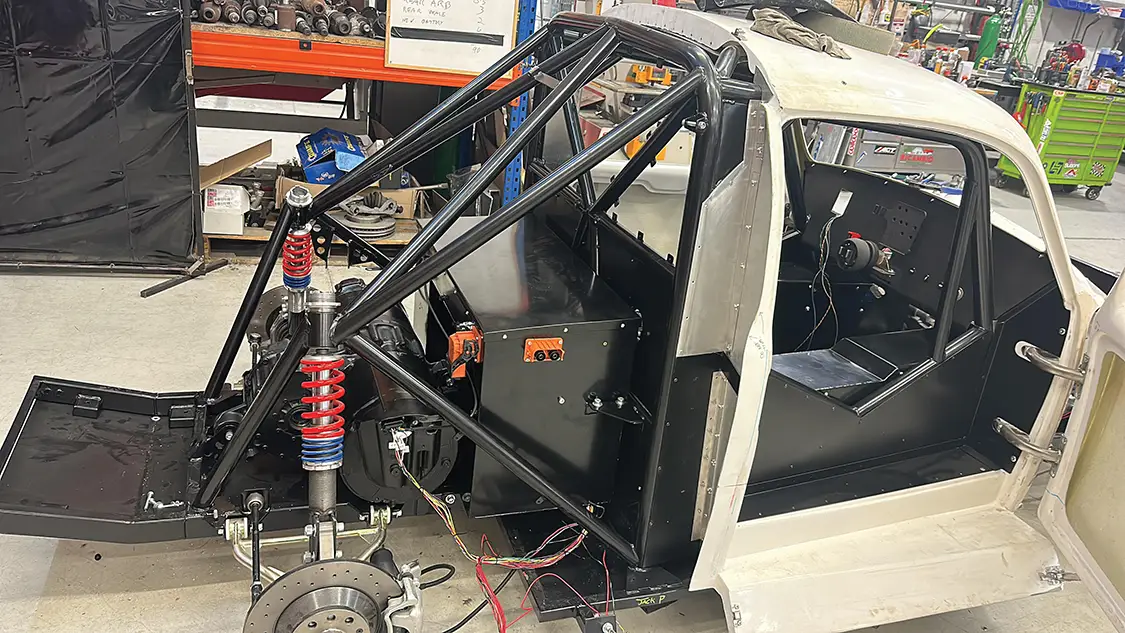
Most road-going EV conversions keep their chargers onboard. Bugzappa didn’t. In the pursuit of weight savings, the car was built like a purebred race car, which meant off-board charging only. The setup involved a trolley-mounted charging system, essentially three-phase AC chargers on wheels that could be wheeled up to the car in the paddock. The Beetle itself carried only what it needed to climb the hill—nothing more, nothing less! Power comes from a 3P6S module configuration split into three separate packs. Each pack holds 15.6 kWh, giving a combined total of around 46.8 kWh. The packs were designed not for range but for raw current delivery—the ability to dump massive amounts of power in short bursts. Cooling was handled through custom billet aluminum coolant plates bonded together inside each pack, circulating a 50/50 water-glycol mix.
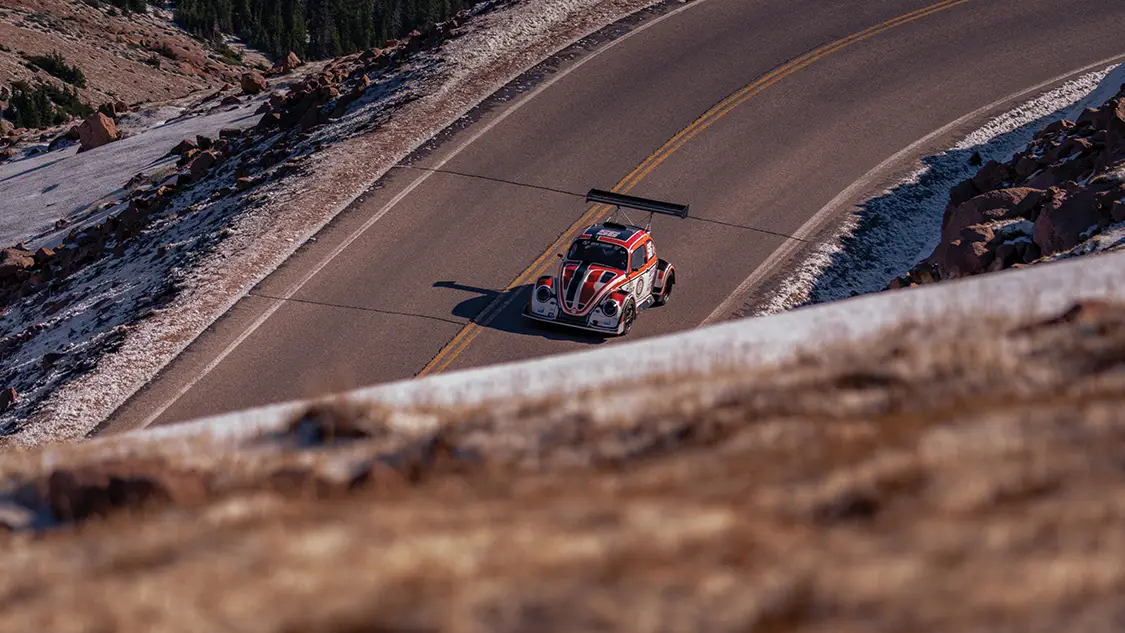
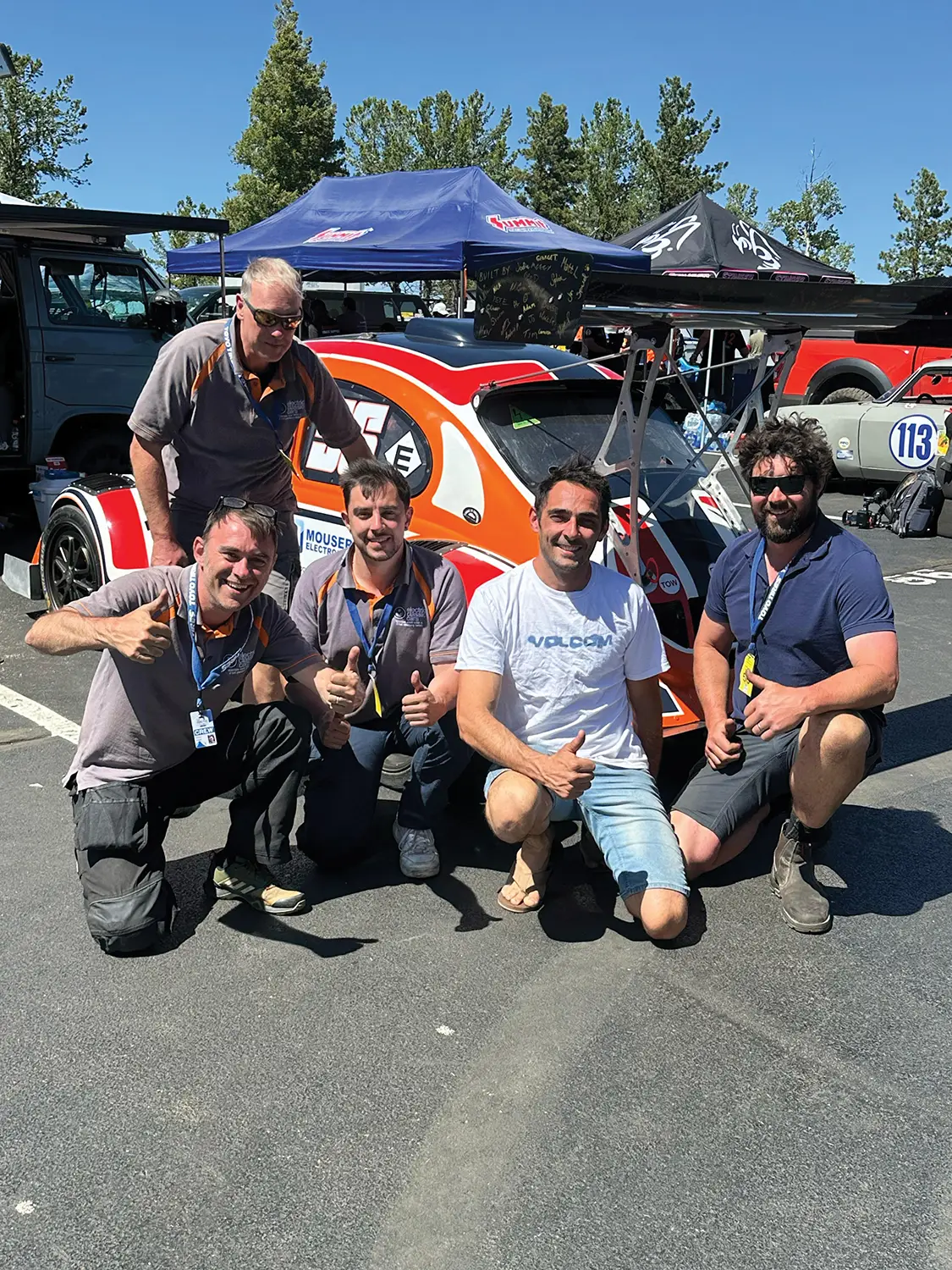
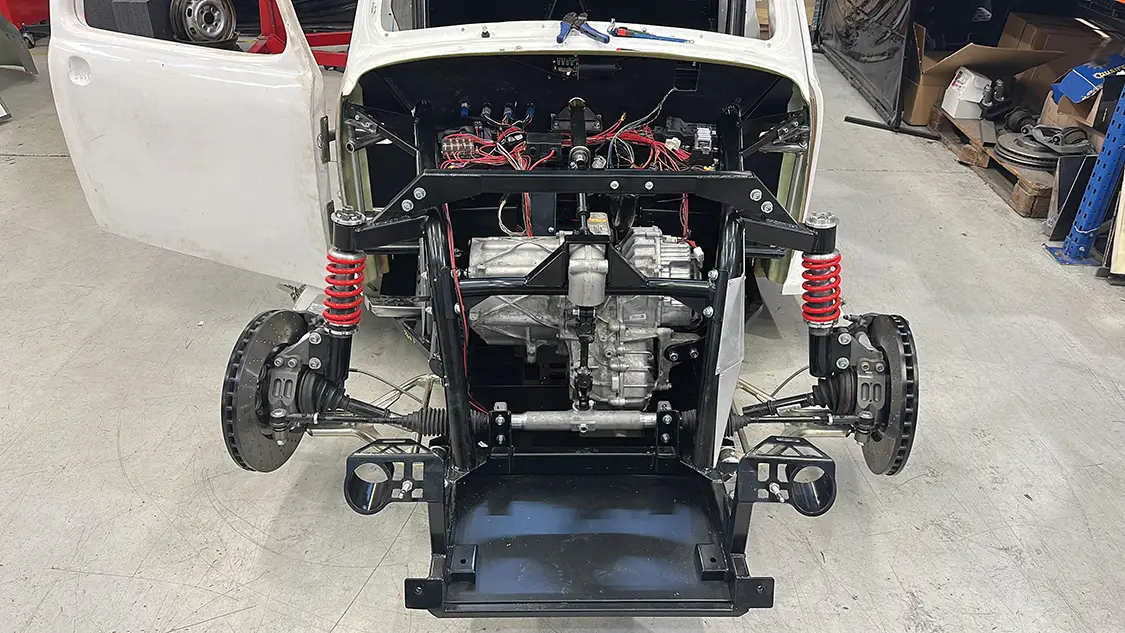
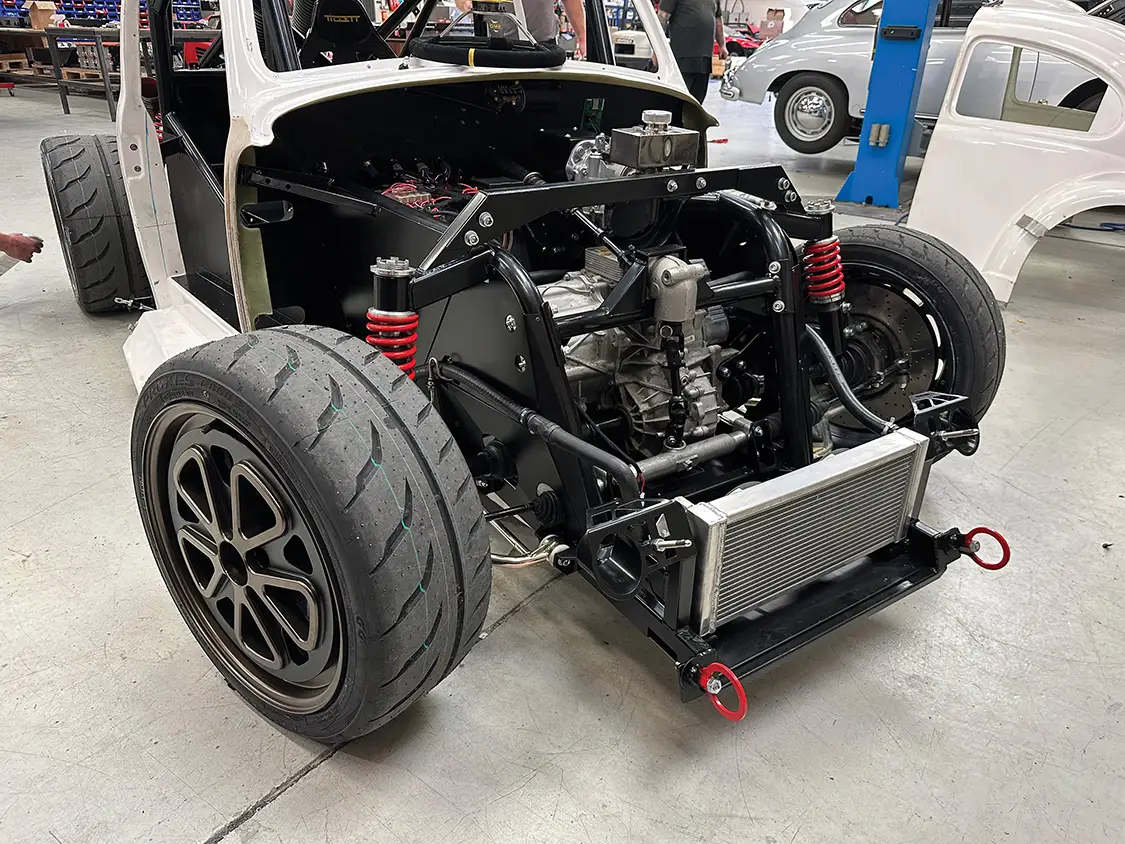
Bugzappa’s cooling system is split across two ends of the car. At the front sits a radiator dedicated solely to the packs. At the rear, a second radiator paired with a roof scoop feeds cooling air to the motors and inverters. This separation allowed for precise thermal control, which was critical on Pikes Peak. As Moggy explains, “The AlliSport front radiator was all about keeping the packs happy. The rear was for the motors and converters. With the altitude and rapid load changes on the mountain, they needed different cooling strategies.”
The ultimate plan for Bugzappa was always the Tesla Plaid drivetrain. In fact, the build began with a P100D rear motor and a front motor from a Tesla Model S. On paper, the setup delivered insane numbers, but in practice, it was simply too much car. “Even on a straight road, you’d floor it, and the thing would just four-wheel slide,” Moggy recalls. “It was impossible to tune the chassis with that much shove.” To tame the Beetle and get the suspension geometry dialed, the team swapped to a Tesla Model 3 Performance dual-motor setup. Less power, yes, but far more manageable. With the Model 3 system, Bugzappa could be tested, tuned, and refined without trying to kill its driver in the process. This was the configuration the team shipped to Colorado. But Pikes Peak revealed new problems.
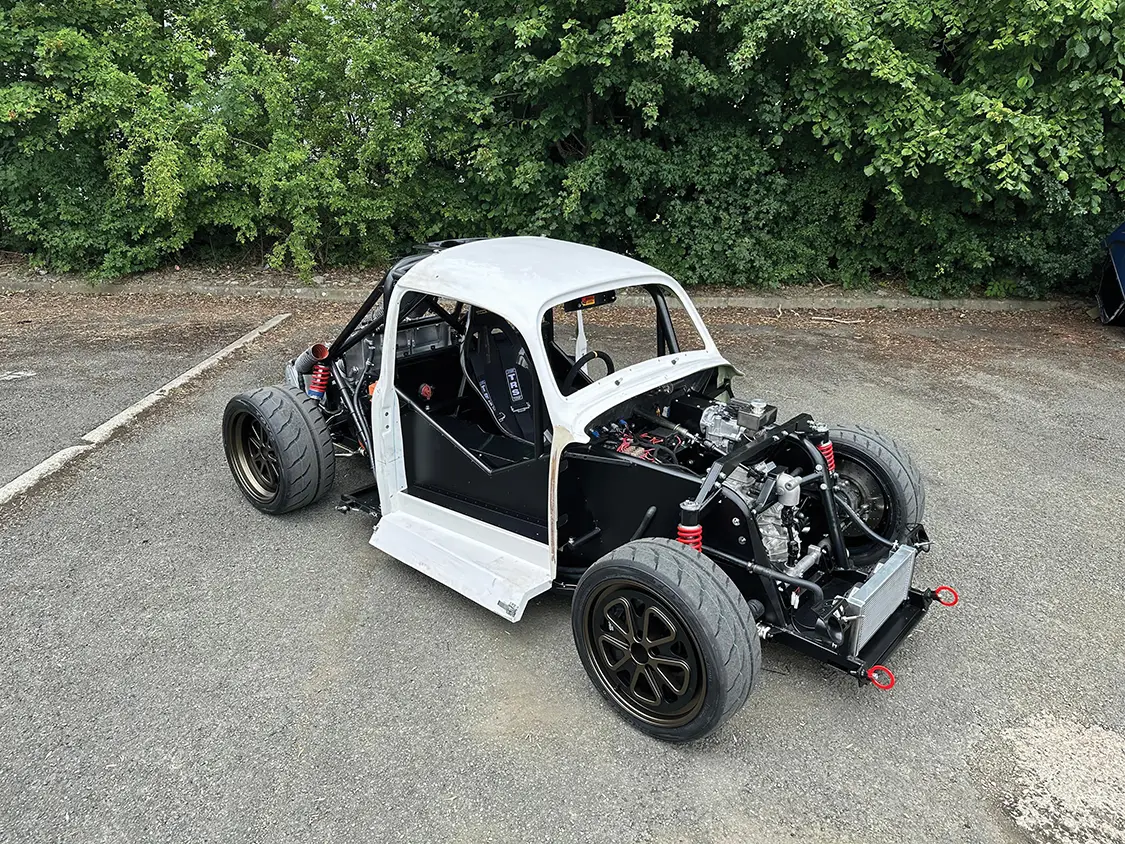
On the hill, Bugzappa suffered from what Moggy calls “torque vectoring chaos.” The traction control system, tasked with balancing torque between the front and rear motors, simply couldn’t keep up with the hill’s rapid grip changes. “If the front locked up, the rear was still doing 80 mph—and it all happened in a tenth of a second. The traction control just couldn’t react that fast, and sometimes the system would trip into limp mode.” With limited time at altitude to troubleshoot, the team made a drastic decision: strip the car back to rear-wheel drive only. The front motor came out, dead weight was removed, and the car ran the race in RWD trim. This fix created knock-on issues with brake bias, which the crew had to adjust on the fly, but it kept Bugzappa in the fight.
To survive the mountain, Bugzappa received a full motorsport-grade undercarriage. Gaz adjustable coilovers allowed for ride-height and damping adjustments during testing, coupled with AP Racing four-wheel disc brakes.
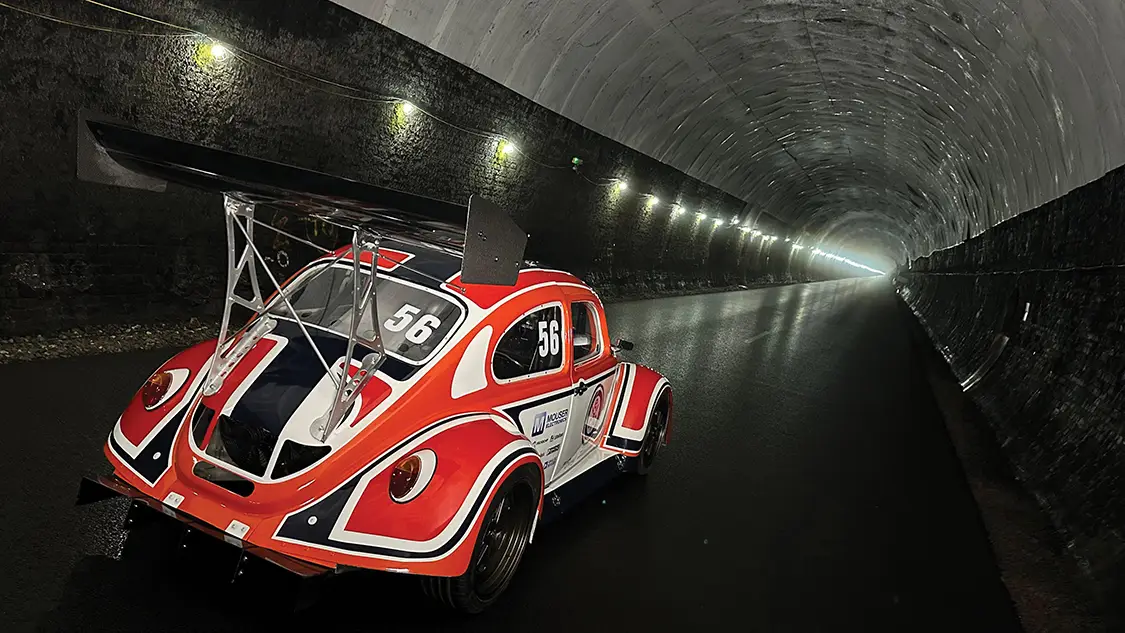
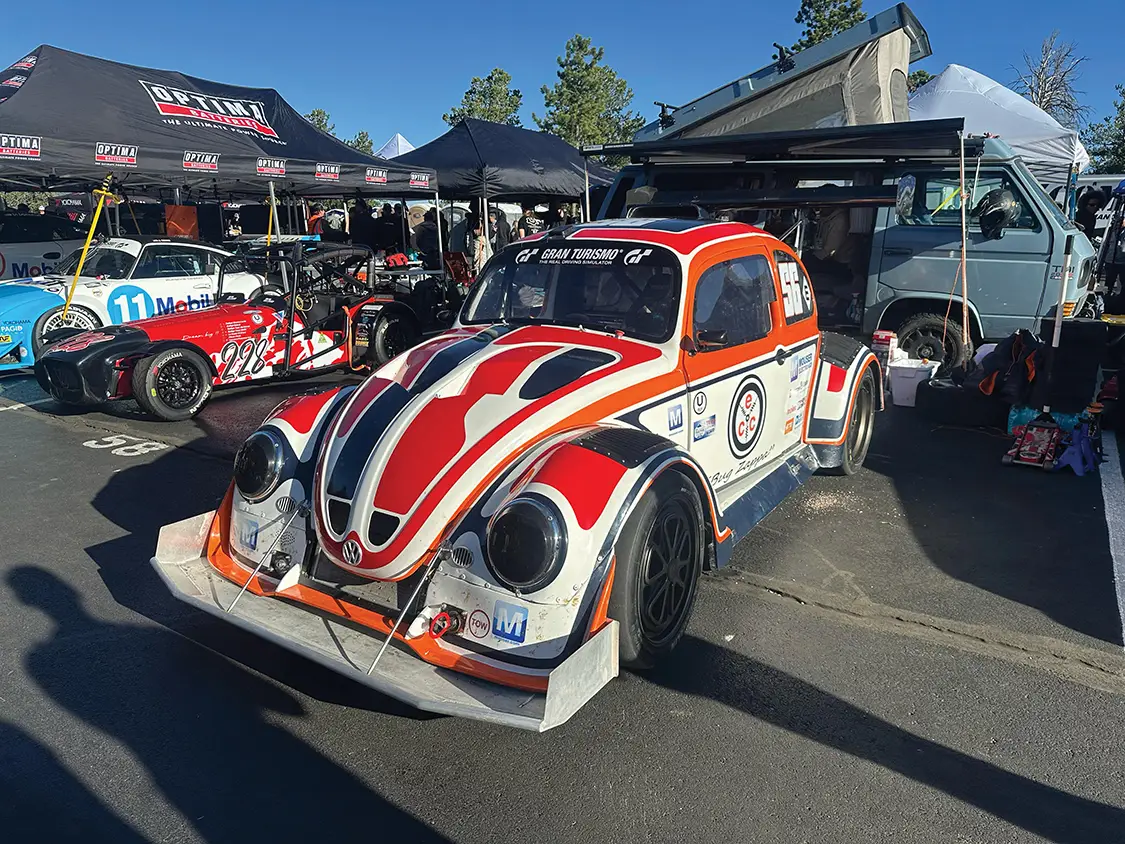
To survive the mountain, Bugzappa received a full motorsport-grade undercarriage. Gaz adjustable coilovers allowed for ride-height and damping adjustments during testing, coupled with AP Racing four-wheel disc brakes. A full FIA-compliant roll cage tops the tubular chassis, paired with a race bucket, harnesses, and fire suppression. Even with all the modern gear, Moggy wanted the car to retain its Beetle charm. From a distance, it still looked like a Bug—albeit one squatting on Toyo R888R semi-slicks with a mega wing and a wild color scheme.
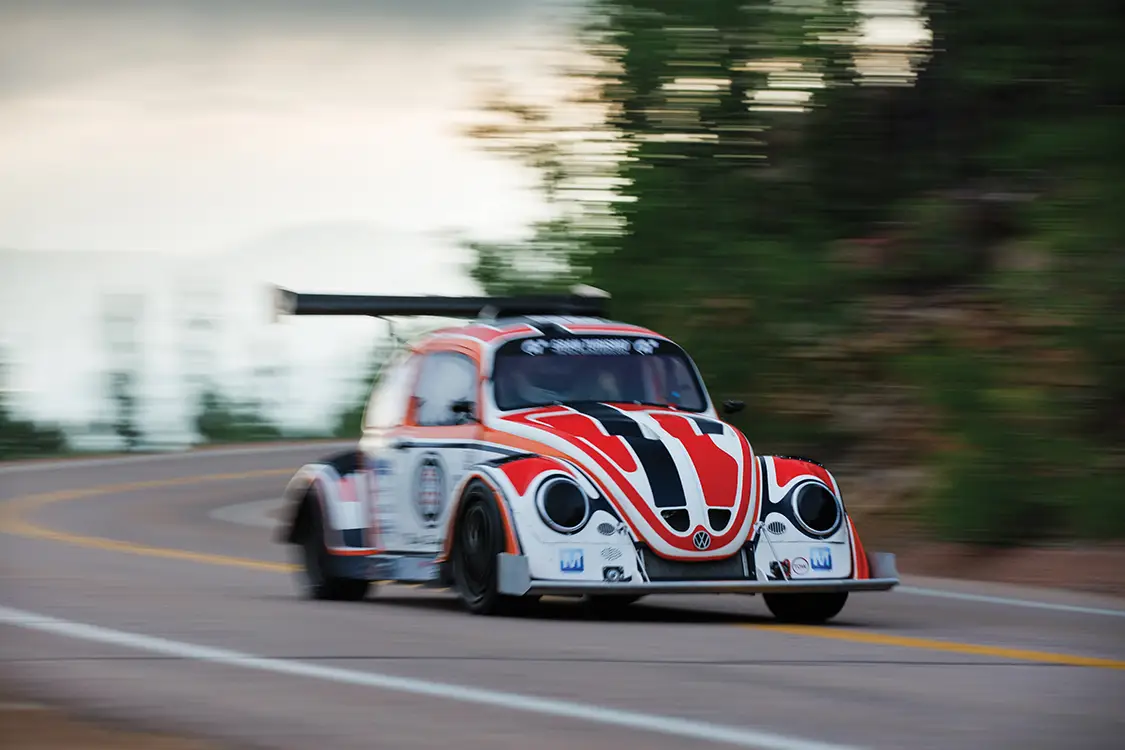
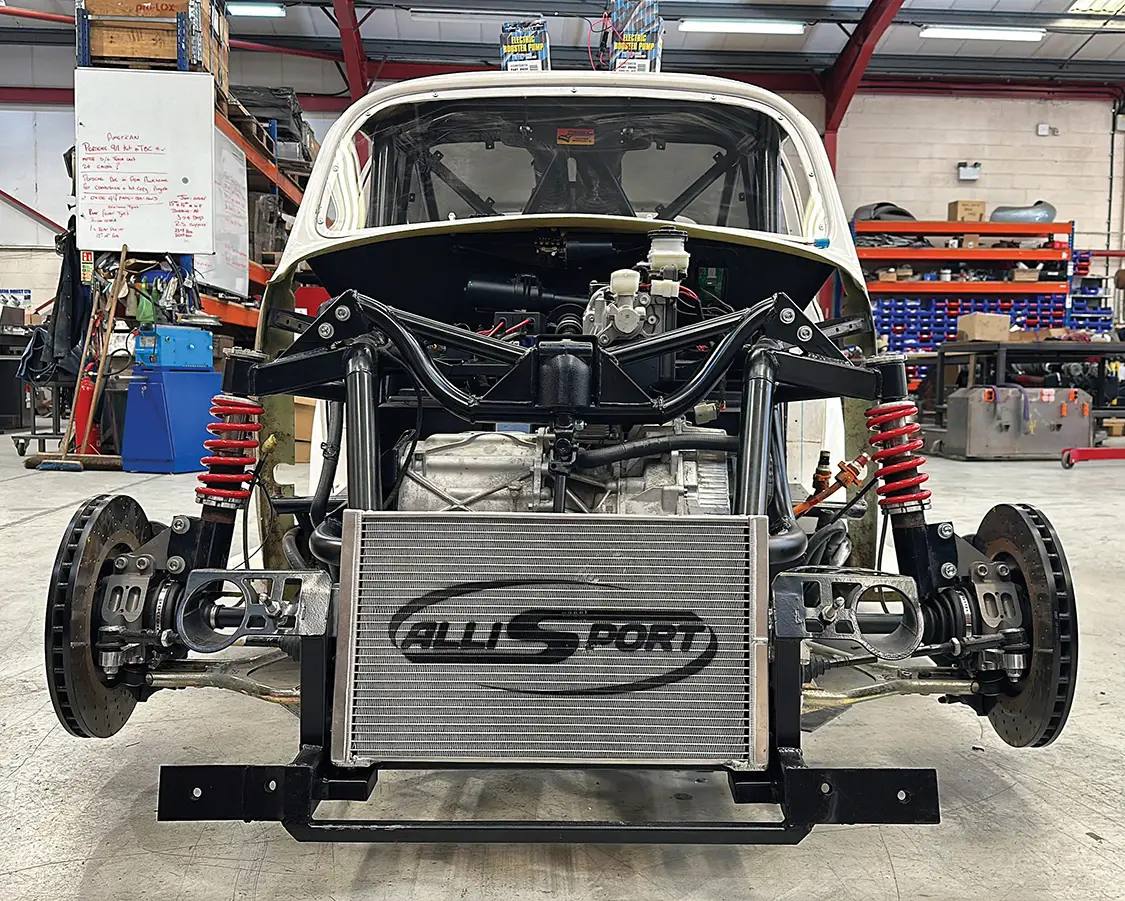
Shipping Bugzappa across the Atlantic was a story in itself. The car was loaded into a container, shipped to the U.S., and trucked to Colorado Springs. The crew arrived with their makeshift pit setup, chargers on a trolley, tools packed from Wales, and nerves jangling. At altitude, the car immediately proved how tough Pikes Peak is on machinery. Cooling was stretched, electronics were temperamental, and every run taught the team something new. But Bugzappa made its point: an independent shop from mid-Wales could build an EV to take on one of motorsport’s most famous challenges.
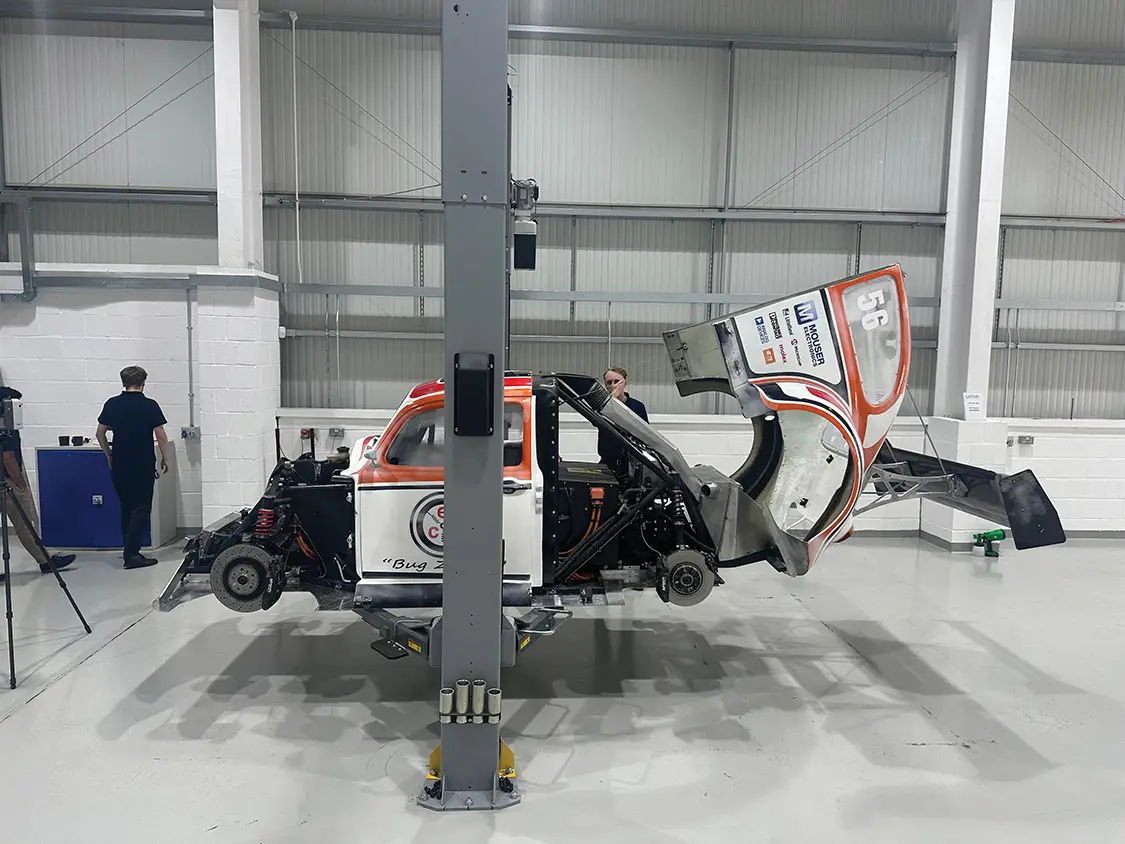
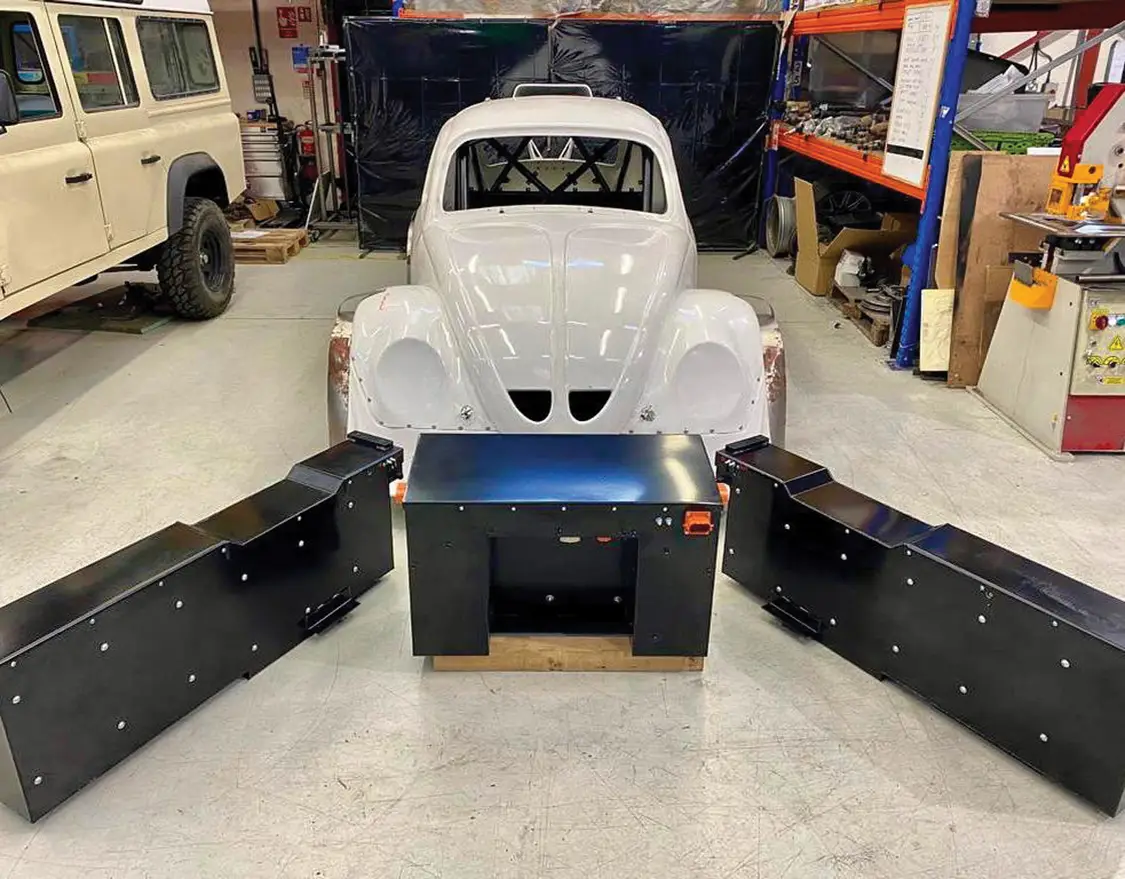
With Bugzappa back in the UK, the Model 3 drivetrain has already been pulled, and the Tesla Plaid system is going in. To handle the added voltage, the battery packs are being redesigned to run at 450V instead of 400V. This next evolution will unlock the full potential Moggy originally envisioned and likely push Bugzappa into even more terrifying territory.

Bugzappa started life as a people’s car. It became a YouTube star (check out Electric Classic Cars’ 20-part series). Then it went to Colorado to prove that electric conversions aren’t just for Sunday drives; they can take on the hardest racecourse in the world. “Pikes Peak was never about winning,” Moggy says. “It was about showing what was possible. And now that we’ve learned the lessons, we’re going Plaid. We’ll be back next year, and in 2027.” From a Welsh workshop to the Race to the Clouds, Bugzappa is proof that with the right mix of humor, stubbornness, and high-voltage engineering, even a Beetle can climb mountains. Who would have thought?
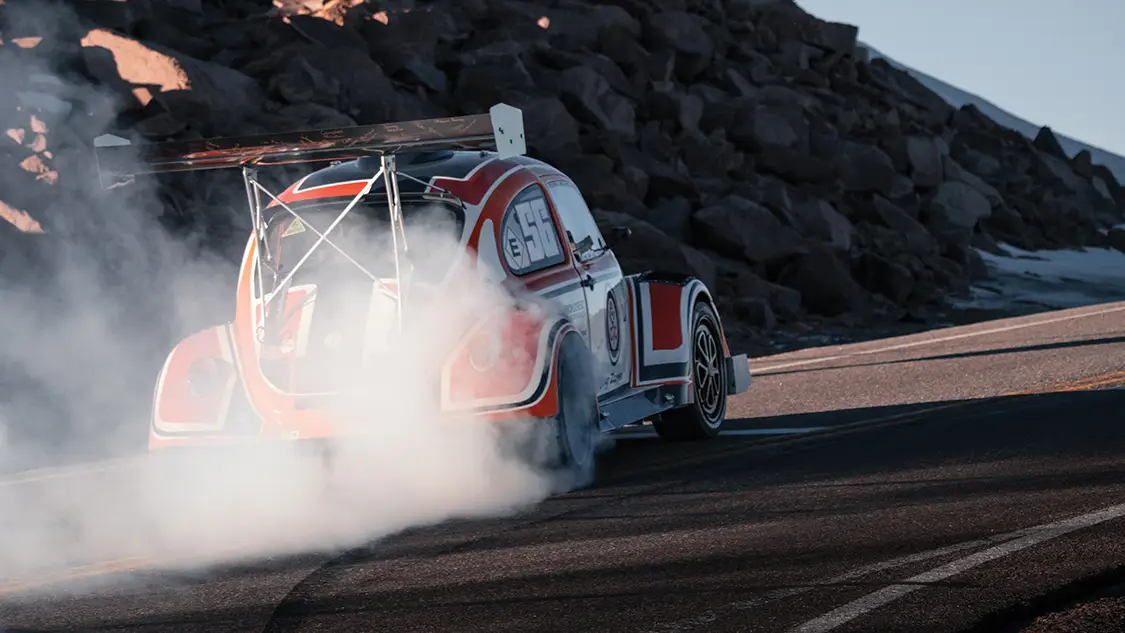
Across the 20-episode YouTube build series on ECC’s channel, Bugzappa provided more than its fair share of drama. There were late nights where wiring looms refused to cooperate, mornings spent machining brackets that still didn’t fit, and the odd expletive deleted for broadcast. But there were also magic moments: the first time the motor spun the wheels under its own power, the first successful launch, and the first burnouts that left the workshop filled with smoke and grins. Moggy’s humor carried the project as much as the engineering. “We’ve built race cars before,” he shrugs, “but never one that tried to electrocute us in the process.”
Builder: Electric Classic Cars (Richard “Moggy” Morgan & team)
Base Vehicle: Highly modified Volkswagen Beetle race car
Motor(s): Tesla Model 3 Performance dual-motor system (now being upgraded to Tesla Plaid)
Output: ~450 hp in Model 3 spec; Plaid system will exceed 1,000 hp
Drivetrain: Dual-motor AWD (Pikes Peak run ended in RWD configuration due to torque factor issues)
Transmission: Direct Tesla single-speed reduction drives
Pack Configuration: 3P6S module architecture, split into three separate packs
Capacity: 15.6 kWh per pack (≈46.8 kWh total)
Voltage: 400V (current); redesigned packs for 450V Plaid setup
Cooling: Billet aluminum coolant plates in each pack, circulating 50/50 water-glycol mix
Radiators: Allisport Front radiator dedicated to battery cooling
Rear radiator (fed by roof scoop) for motor and inverters
Charging: Off-board, via three-phase AC trolley chargers
Suspension: Gaz adjustable coilovers, reinforced chassis mounts
Brakes: AP Racing four-wheel disc setup, race pads, adjustable bias
Roll Cage: FIA-compliant welded cage with harness mounts
(Model 3 setup at Pikes Peak)
0–60 mph: ~4.0 seconds
Top Speed: ~120+ mph (geared for hillclimb)
Range: 100 miles (race use only; full power climbs ~12. miles)
Wheels & Tires: Lightweight alloys on Toyo Proxes R888R semi-slicks
Aero: Roof scoop for rear cooling, air dam for stability, spoilers
Body: Classic Beetle glass-fiber shell and panel, one piece front and rear.
Seats: Lightweight racing bucket with safety harnesses
Instruments: Digital EV telemetry, real-time torque monitoring

C10 Builders Guide
A Revolutionary C-10 Build Since the C-10 craze has exploded, it’s difficult to imagine a time when they weren’t so common. Although some of the… Continue reading
Kevin Aguilar . February 20, 2026

Feature Stories
Party Up Front, Business Out Back ProTech Industries has worked hard to put itself on the map as a go-to builder/provider of custom truck flatbeds and… Continue reading
Mike Self . June 27, 2024

Drive Online
Two friends built an orphan 1928 Hudson hot rod; then the car built a business for them Longtime friends Ben McCloy and Scott Satterla didn’t… Continue reading
ALAN GALBRAITH . July 22, 2024
Feature Stories
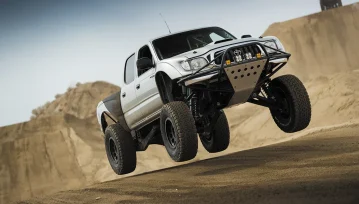
Taking a Chance on a Pre-Owned Taco We’ve all spent endless hours online searching for local and not-so-local trucks listed for sale. Even if we… Continue reading
John Mata Jr. . February 20, 2025
Electric Vehicle Features
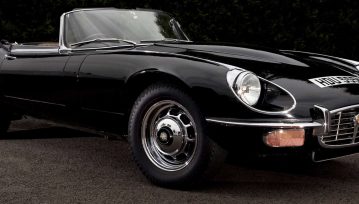
Florida-based ECD Automotive Design will soon offer Tesla motor and battery-equipped Jaguar E-Types, along with their Land Rover Defenders and Range Rovers offering. Headquartered in… Continue reading
EV Team . June 29, 2022
All Feature Vehicles
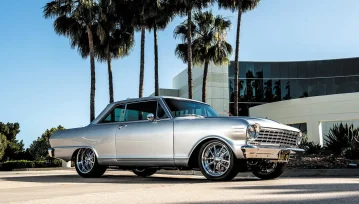
True to form Growing up in Southern, California with a fairly large age gap between myself and my two older brothers, I had the privilege of… Continue reading
Scott Gibson . May 03, 2023



Terminal Takeover 2026
21 airport rd Ext, Greenville, SC
Altered Metal 2026
Rayne, LA
Orange Beach Invasion 2026
The Wharf Orange Beach, Alabama
Southern Tradition Car/Truck Show 2026
Etowah River Park Canton, GA
Local Studebaker Drivers Club Chapter Private Tour Of John Muir House
John Muir House 4202 Alhambra Ave., Martinez, CA


 Please wait...
Share Link