










 Bob McClurg
.
September 21, 2026
.
Drag Racer
Bob McClurg
.
September 21, 2026
.
Drag Racer
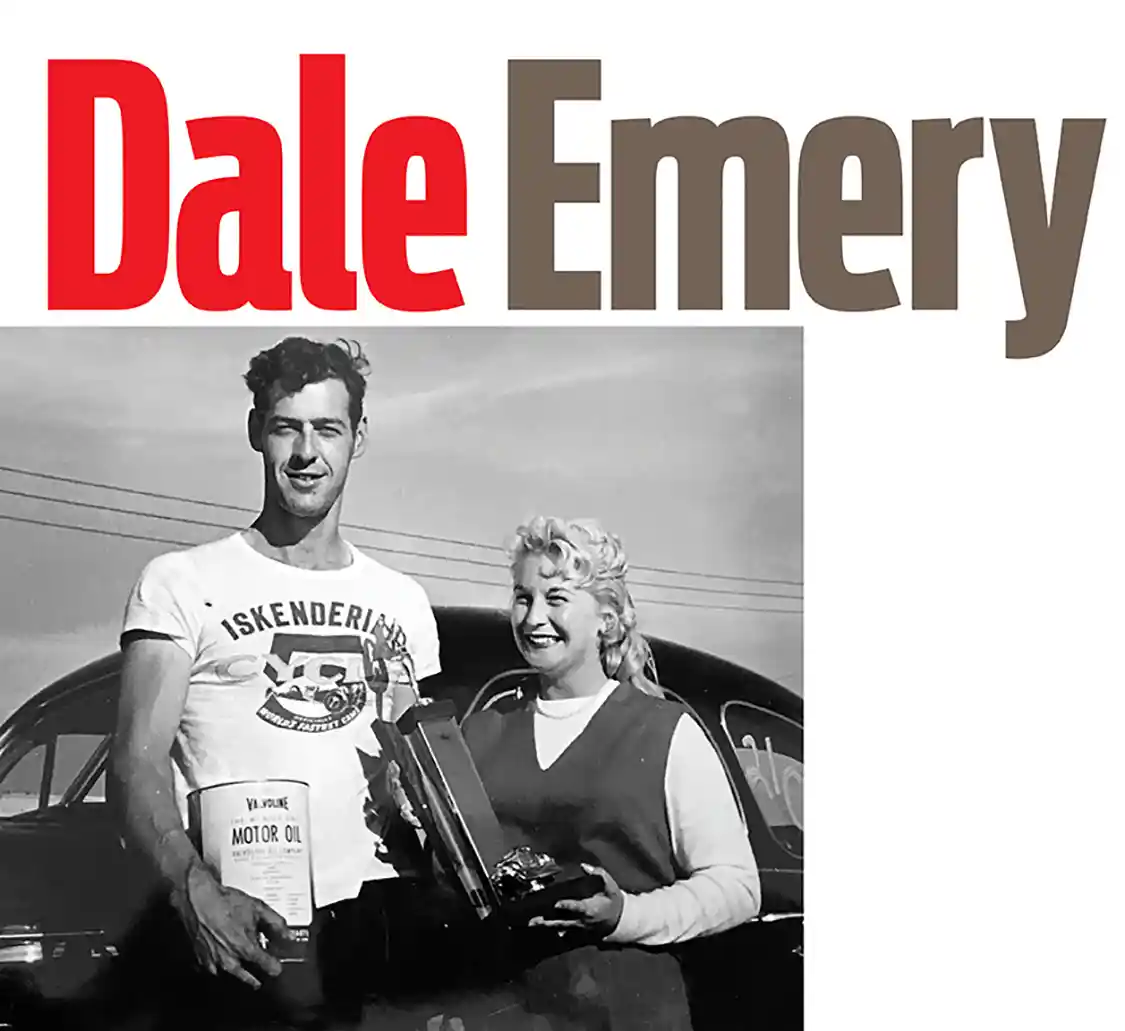
With our sport mid-stride through its seventh decade, many of the greatest drivers and personalities who ever strapped on a helmet or turned a wrench are leaving us at an alarming rate. Sadly, Dale “The Snail’ Emery is one of the latest to go to that great drag strip in the sky. Drag Racer Magazine had the opportunity to sit down with Emery just prior to the 2017 British Drag Racing Hall of Fame Bench Race Session and Gala, where he was a featured guest, and talk about his life with cars.
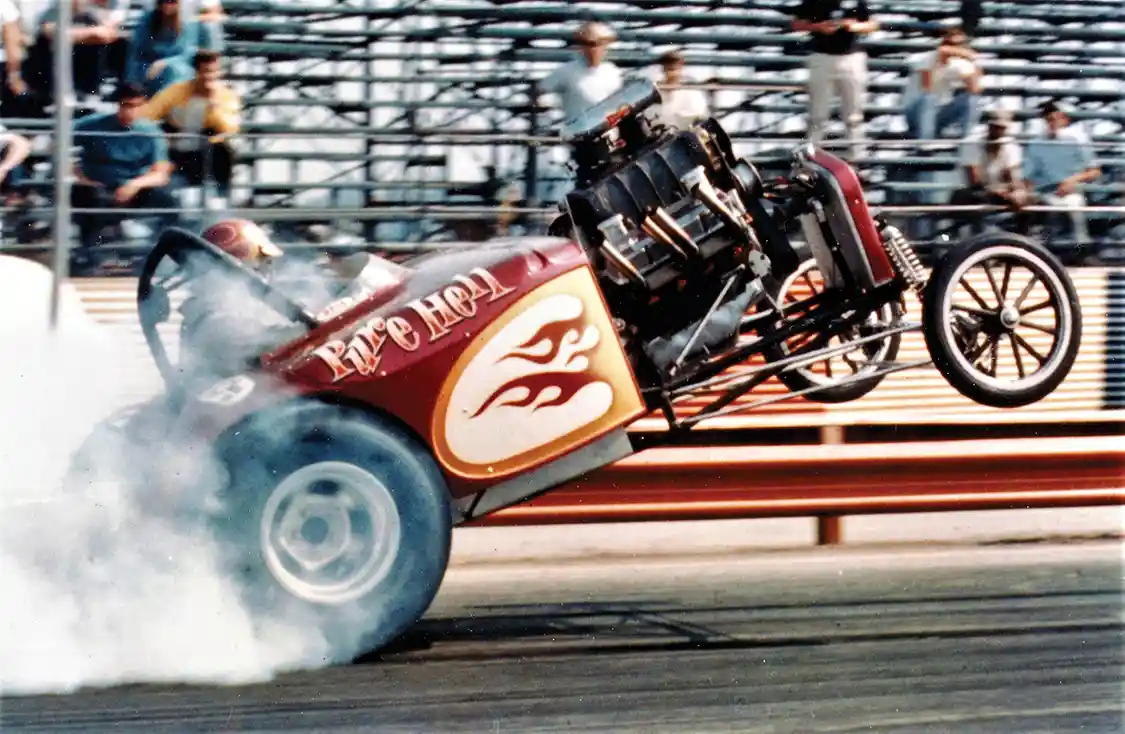
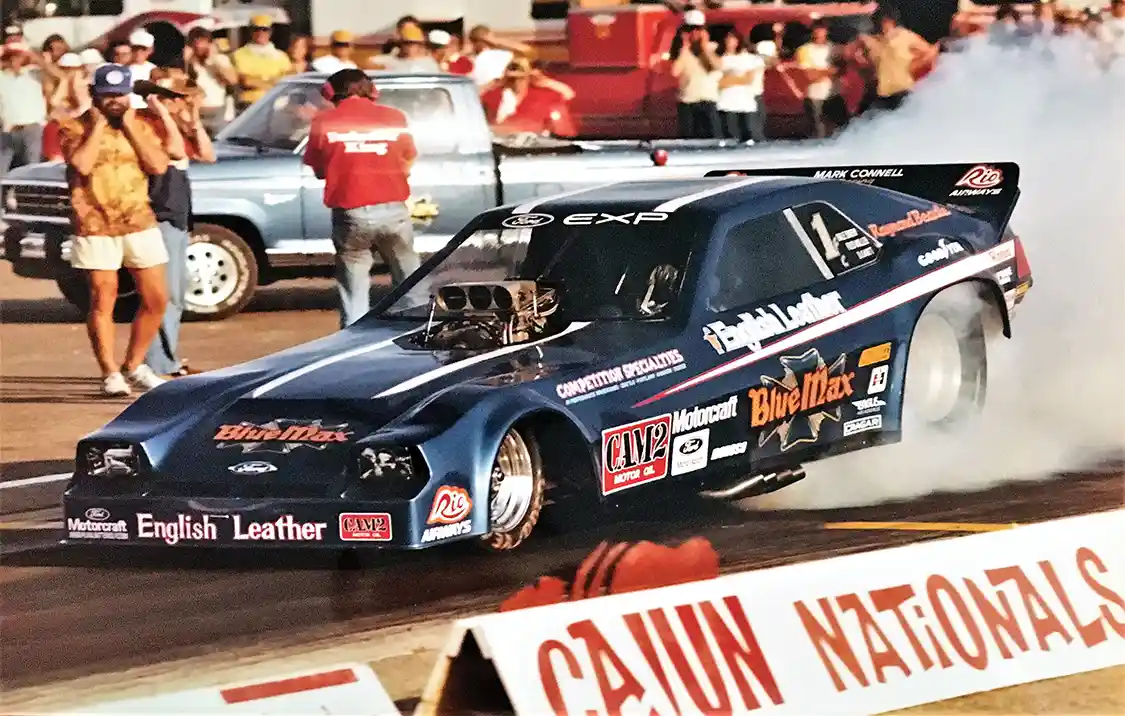
It’s a toss-up as to which achievements have brought Dale Emery the most fame: His role as crew chief to Raymond Beadle and the fabled Blue Max, or his driving talents, especially at the helm of Rich Guasco’s infamous Pure Hell ’32 Bantam AA/Fuel Altered roadster. Emery was also one of the movers and shakers behind the early-’70s Funny Car revolution, both as a driver and a tuner, and he possessed one of the greatest mechanical minds in the sport.
Emery was also one of the movers and shakers behind the early-’70s Funny Car revolution, both as a driver and a tuner, and he possessed one of the greatest mechanical minds in the sport.
Drag Racer: When did you become interested in hot rods?
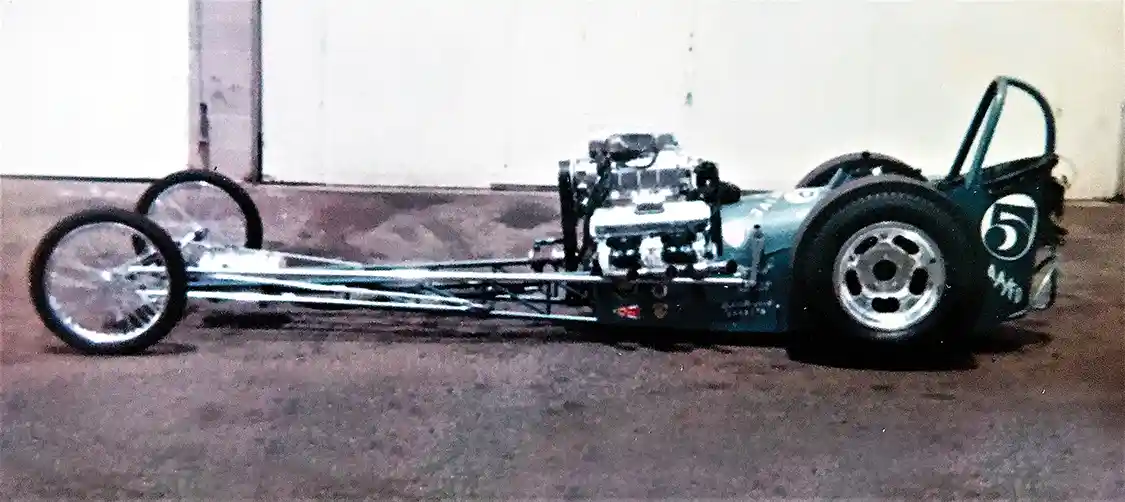
Dale Emery: Around 1956 I bought a ’41 Chevy coupe. I took the body off the frame, did all the bodywork and completely rebuilt all the mechanicals prior to installing a 283 Chevy that had a ½-inch CT stroker crank, Howard’s rods and cam and Jahns pistons. I raced it around the Bay Area in the Gas class until around 1962 when I built an Oldsmobile-engined Top Fuel car with Woody Parker. We were moderately successful, and after that I started driving for Rich Guasco; the rest is history.
DR: When did that happen?
DE: We’d hurt the old block in my Top Fuel car in early 1963 and sat out for a while. At the time I had a little machine shop in Richmond [Califronia], and Rich used to come over and I would fix things for him. One day he asked me if I would drive his new blown Chevy-powered AA/HR. I said that I had never driven anything with that short of a wheelbase before, but all I could do is try. We took the car to Fremont Raceway, and I got kind of out of shape and shut it off on the first pass.
On the next run I ended up making a full pass and ran an 8.86, or something like that. Back in those days altereds ran in the low nines, so Guasco got all excited. I couldn’t figure out what all the excitement was about because it just seemed like—keeping in mind that I was used to driving a Top Fuel car—just an ordinary run to me. We ended up getting together and forming a team.
DR: Not every run was a record-breaker was it?
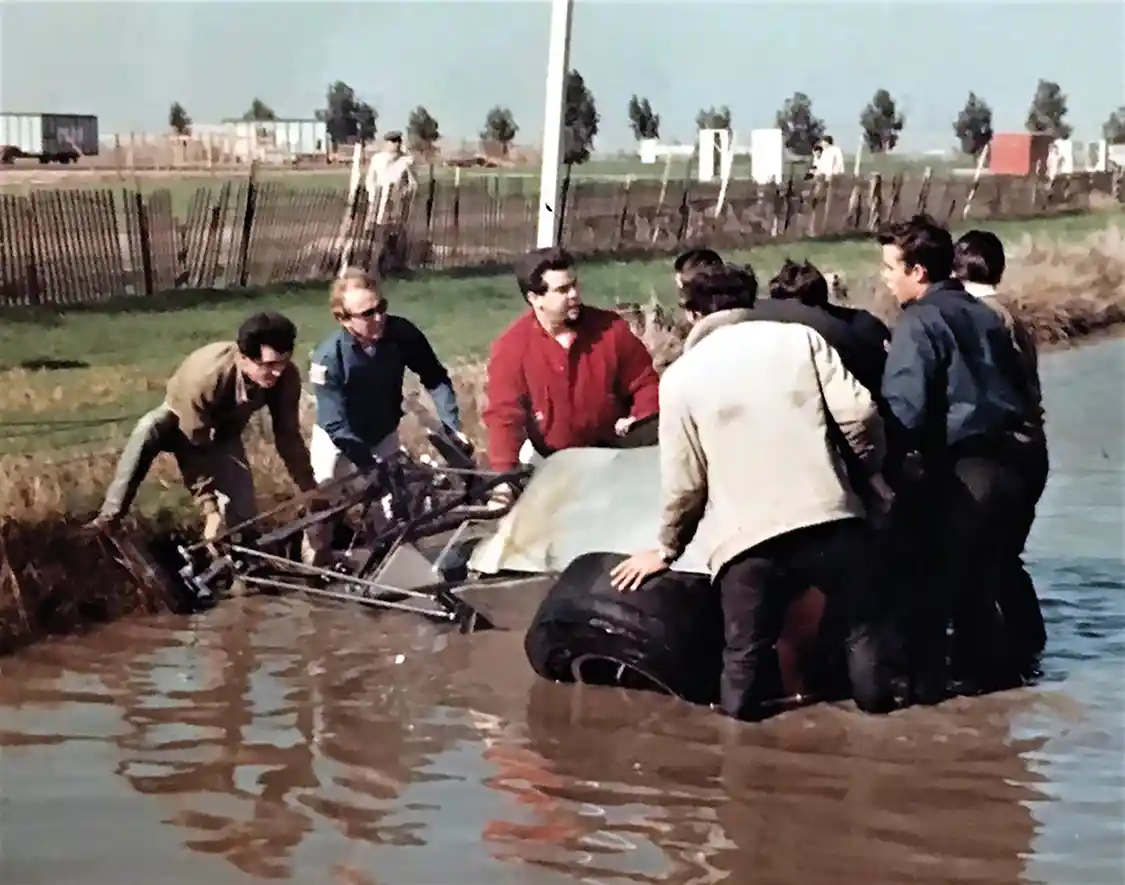
DE: Over the winter of 1966, we replaced the worn-out Crossley steering box with a new one from P&S. In February 1967, we went to Fremont to run the car. It had rained hard the night before, so there was water all over the place. Someone forgot to pin the steering box at the steering shaft. With no pin holding the shaft in place, the steering wheel came off in my hands right off the starting line at about 65 miles per hour.
I tried to jam the steering shaft back into the box, and that didn’t work, so I pulled back hard on the brake. The car slid off the track into the wet grass and flipped over in about 2 feet of water. I had to decide really quick whether I wanted to drink water or hold my breath!
I had already undone my lap belts, but the cowl was holding me in, and I was hoping that somebody would get there quickly and pull me out of the car! Then I started to feel somebody rocking the car. When it finally turned back over I jumped out, but I couldn’t see a damned thing. There was mud all over the place and my goggles were packed full of it. All I knew was somebody—it turned out to be the ambulance driver—had me in a wrestler’s head lock and they were trying to pull off my helmet. Only problem was I hadn’t unfastened my chin strap, so it felt more like they were trying to yank my head off.
Tony De Rio came along and quickly sized up the situation. He smacked the ambulance attendant and knocked him into the water. Later the guy asked me who was it that had hit him, and I said, believe me, brother, you don’t want to know.
Anyhow, they took me to the hospital and I was fine. I rode back to the track in the ambulance but didn’t see Rich Guasco anywhere. They said that he had chased the ambulance all the way to the hospital. By the time he arrived he was so stressed out that they had to give him a shot just to calm him down. The whole thing felt like an episode straight out of the Three Stooges.
DR: You guys ran a career best of something like a 7.27-218.00 in Pure Hell after switching to Chrysler power, didn’t you?
DE: We raced Pure Hell for five years, set the mile-per-hour record in 1969 at 207 during the Hot Rod Magazine Championship Drag Races at Riverside Raceway, and had ourselves one heck of a good time.
DR: What happened after Pure Hell?
DE: After Rich parked the car, I moved to Texas, and I’ve been living there with my wife Brenda ever since.
DR: But you continued to race?
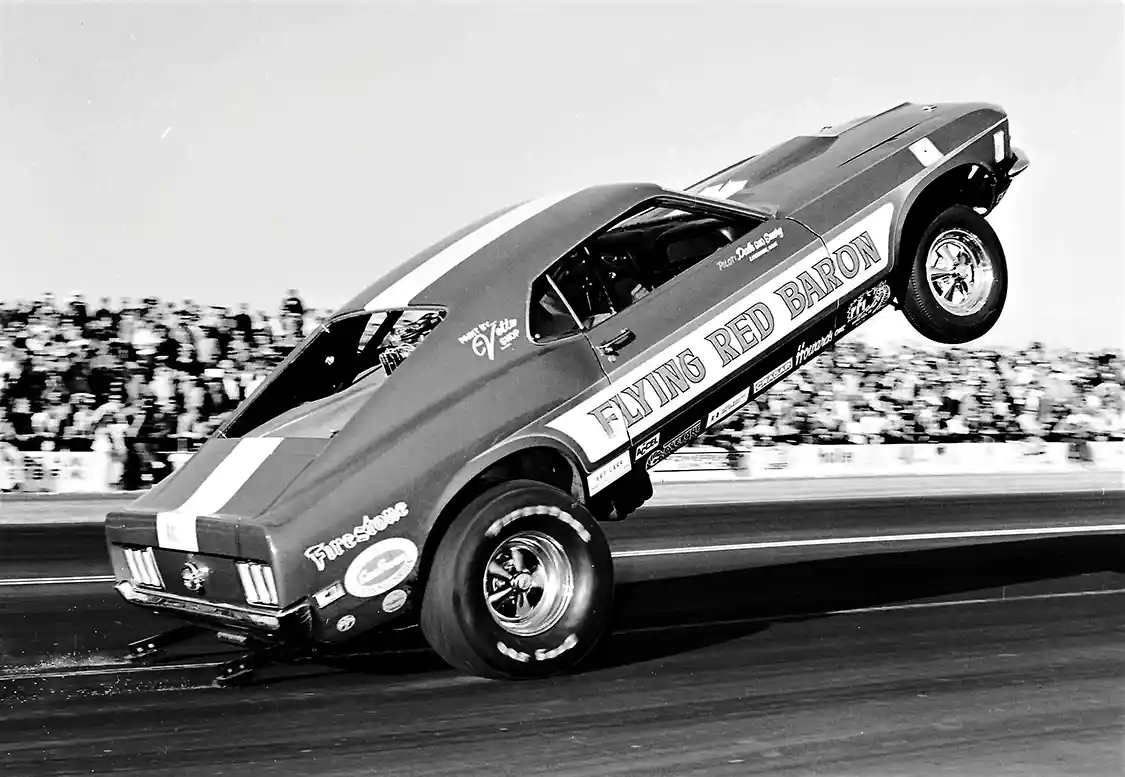
DE: I briefly drove the Rousin & O’Hare AA/FD prior to getting hooked up with Gary Watson of Paddy Wagon wheel-stander fame. He had built a second wheelie car, a blown Chevrolet engine 1970 Mustang called the Flying Red Baron, but on one run the car came down on one wheel and went into a barrel roll and was totaled.
After the accident Gary wanted to rebuild, but I’d had enough of wheelie cars, which I felt were nothing more than circus acts, so I went to work for Bob Riggle. He had bought Don and Roy Gay’s old Logghe Chassis ’68 Pontiac Firebird Funny Car and renamed it Hemi Under Glass, but all he wanted to do was match race the car and make money with it.
Trouble was that the car was so outdated that it was anything but competitive. Eventually Riggle and I parted ways and I got a job working with Sam “Chaparral Vega” Harris who owned the Chaparral Trailer Company in Dallas, Texas.
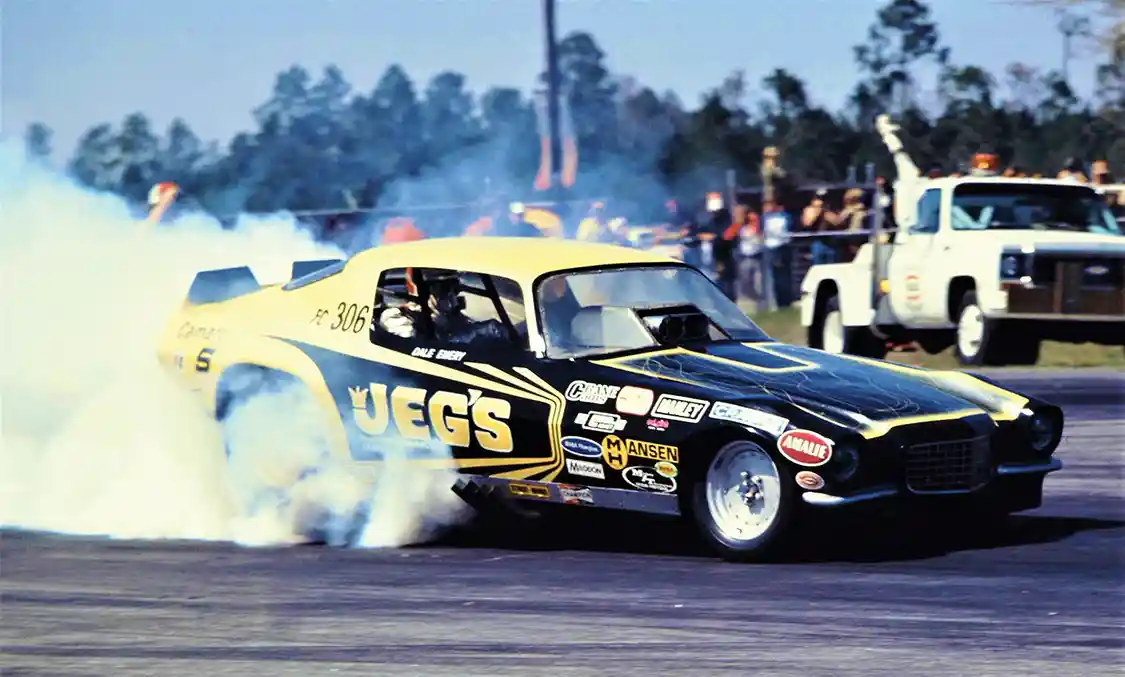
Then Jeg Coughlin contacted me about running his Logghe Camaro Funny Car, so I thought that I would give it a try. We raced Jeg’s Camaro for about a year or so and did pretty well. We won Sanair and were runner-up at the NHRA meet at Ontario Motor Speedway. That was the event where I blew the body off. Over the winter we fixed the car and won Funny Car Eliminator the following February of 1974 at Pomona Raceway. Then we built a brand-new Sarte chassis mini Camaro and ran the car at Gainesville before things got a little crossed up.
DR: Crossed up in what way?
DE: Jeg and I had made a deal where he was going to pay me a big bonus at the end of the year if we [Emery, D. Gantt and “Waterbed Fred” Miller] did well. I went into his office to talk to him about collecting that bonus, and he said that he didn’t owe me anything. I said, Do you mind if I use your telephone for a minute? I called Sam Harris in Dallas and said, Sam, I need a job. He said, ‘Get yourself down here,’ so I left that afternoon and went back to work at Chaparral Trailer again.
DR: But you’re driving career wasn’t quite over yet was it?
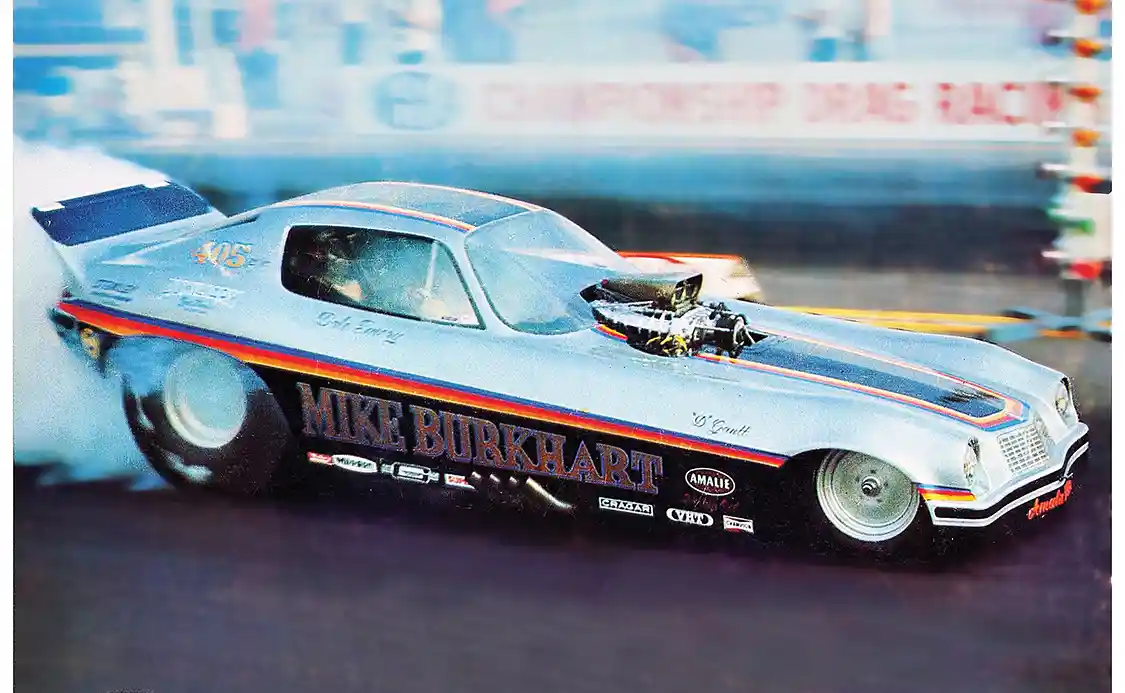
DE: I signed on to drive for ‘Big Mike’ Burkhart for a while and drove his new mini Camaro, but I ended up wrecking the car and almost killing myself at the U.S. Nationals at Indy.
The next week, Raymond Beadle came over to the trailer shop and said that he and partner Harry Schmidt were breaking up and he wanted me to work for him. I said, Well, I don’t know. I need to go over and talk to Burkhart and see what he plans to do.
DR: Was that around the time Raymond and Waterbed Fred took the car to England?
DE: Yes, they spent a couple of weeks there, and I didn’t think any more about it. A couple of weeks later, Raymond came back over to Chaparral again and asked me if I was interested. I said, Well, I noticed that you guys were having trouble getting the car down the track, and I don’t know whether I can fix the problem or not. He said, ‘Let’s give it a try.’ We ended up fixing the problem [in 1977], but it took us over a year to do it. I tried all kinds of different stuff, but nothing seemed to cure the problem, which turned out to be the fuel tank and fuel system.
Once we discovered the culprit, we smoked it out to Jim Hume’s H&H Race Craft shop out in Tarzana, California, and had a new fuel tank built. Then we took the car to Seattle and ended up winning the 1964 Funny Car feature event. Then we went to Boise, Idaho, and won that deal too.
DR: Then it was on to Indy?
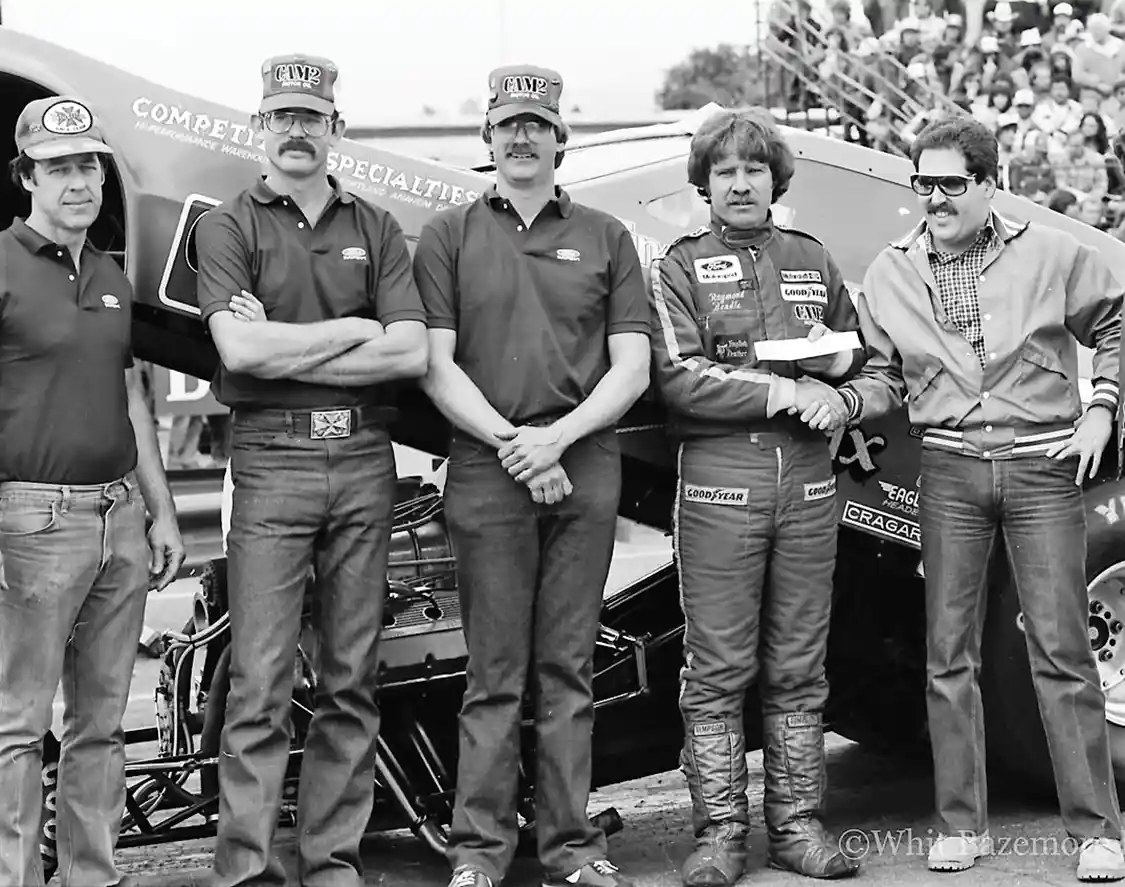
DE: We won the U.S. Nationals at Indy and ran our first five-second pass, which paved the way for three consecutive NHRA-Winston Funny Car World Championships in 1979, 1980 and 1981, with me as crew chief.
DR: How long did you and Beadle and crew race together as a team?
DE: I stayed with Blue Max Racing up until 1990 when Raymond quit. Then I built a flow bench and started doing fuel pump and injector work and still do some of that today.
DR: What about your early Chrysler Hemi engine program?
DE: I started helping Jim Cullen and Denver Schutz run a nostalgia Top Fuel car. The first race we ran with a brand-new Donovan 417 motor. The car left the starting line, went about a hundred feet and kicked a rod out. The explosion was so intense, it split the block in half and damaged it to the extent that about the only thing it was good for was Coors Beer cans. I said to Jim, Why don’t we make a couple of 392-style engine blocks out of billet?
John Rodek got wind of what I was thinking about doing and contacted me. He said he wanted me to bring the project in-house. It took us about a year to do it successfully. At first, we did four blocks, two of which we turned into all-out race engines. Then John talked me into doing a dozen more of them [aka D.E. forged 392 aluminum blocks] and suggested that we start selling them. Once word got around, we had them sold even before we had them finished. Gene Adams was one of the first guys to buy one, and the thing just sort of snowballed from there. I think we made a total of 78. Then when NHRA and the Goodguys started allowing nostalgia cars to run 426 Hemis, sales started tapering off and we quit making them.
DR: Are you retired today?
DE: More or less. I helped nostalgia racer Jack Harris in Salt Lake City, Utah, for about a year. Then I helped Frank Mosley from Illinois for about six months just to get him going. I just love drag racing and always have. When I was 16 years old, my dad used to drop me off at the Richmond shipyard where they’d Outlaw drag race on the weekends. I just loved it. As soon as I got my own wheels I was on the go and have never stopped.
I forgot to mention, after my ’41 Chevy I built a rear-engine chop-top ’34 Ford with a blown fuel Chevy and six Stromberg carburetors. I ran as a Fuel Altered and won Bakersfield in 1960, so I guess you could say that I’ve always been sort of an innovator.

Feature Stories
Blake Wilkey’s Solid-Axle Swapped ’92 Ford Bronco When we heard that Blake Wilkey of Urban Assault video fame was taking a quick pause from shredding… Continue reading
John Mata Jr. . July 25, 2024
Chevrolet
A 500+ Horsepower 2008 Chevy Could the ultimate street-driven hot rod be a diesel truck? Quite possibly, yes! Modern diesel trucks are easy to modify,… Continue reading
Chris Tobin . August 11, 2026
All EV Vehicles
Belgian Geniuses Perfect One of the Best Mercedes Benz Ever Made Roel Pollen is the man behind Monceau Automobiles in Hasselt, Belgium, a unique, high-end… Continue reading
Jerome Andre . July 28, 2023
Feature Stories
Can everyone say SUMMER!?! I love the warmer, longer days this time of year. I feel like it allows for so many more adventures in… Continue reading
Devan Ence . September 17, 2024

Events
2024 NATIONAL EVENT SCHEDULE JUN June 8-9 Atlantic City Truck Meet Atlantic City www.atlanticcitytruckmeet.org @atlanticcitytruckmeet June 13-16 Tailgate N Tallboys Maxxed Bloomington Bloomington, IL www.tntmaxxed.com… Continue reading
STREET TRUCKS STAFF . September 20, 2024
Buyer’s Guides
Another Home Run When you’ve got it, you’ve got it. And when the world around you doesn’t know you’ve got it, you show them you’ve got… Continue reading
Mike Self . November 21, 2023



Charity Car Show
Mesa Marketplace 10550 E. Baseline Rd, Mesa , Az 85209
CHICO CONCOURS Car Show
Silver Dollar Fairgrounds 2357 Fair Street, Chico, CA 95928
Goodguys 33rd Summit Racing Lone Star Nationals
Texas Motor Speedway 3545 Lone Star Circle
The Sparks Show
Sevierville, TN
Dino's Git-Down
State Farm Stadium, Glendale, AZ
We use cookies to enhance your browsing experience, serve personalized ads or content, and analyze our traffic. By clicking "Accept All", you consent to our use of cookies. Visit our Cookie Policy for more info.


 Please wait...
Share Link