










 Motortopia Staff
.
April 14, 2026
.
Industry Updates
Motortopia Staff
.
April 14, 2026
.
Industry Updates
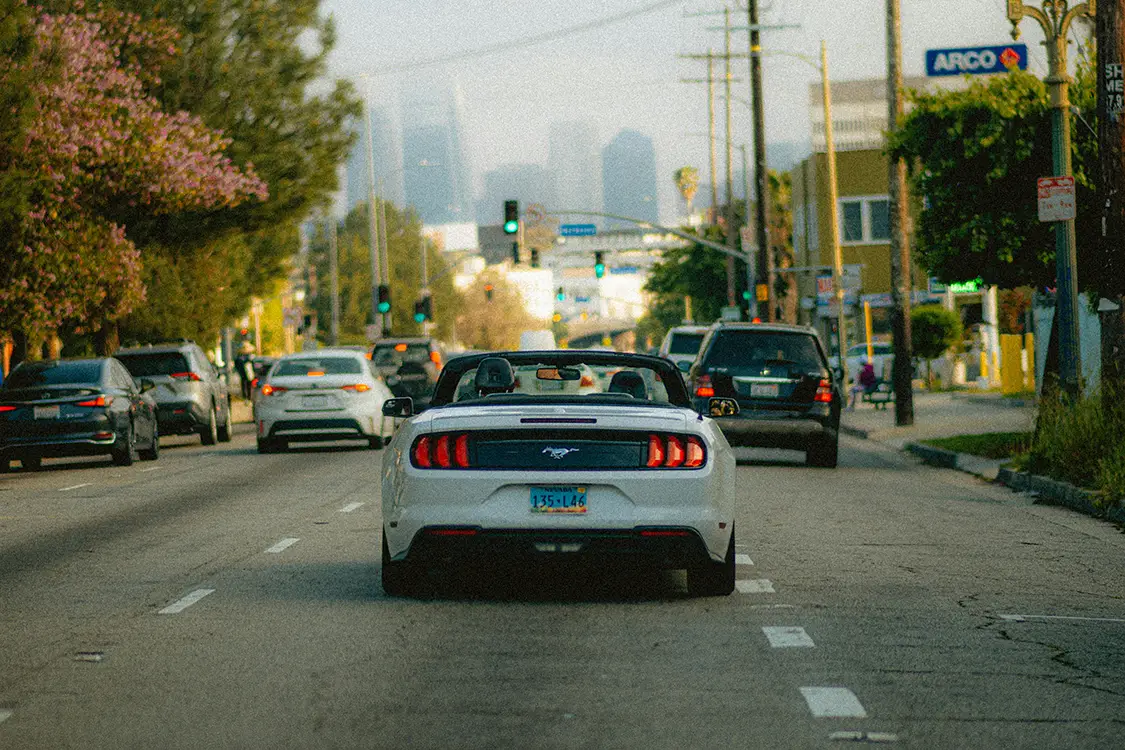
Image source: pexels.com/photo/convertible-driving-through-los-angeles-streets-33383462/
We hear about the power of artificial intelligence and its growing impact on every imaginable sector. It is transforming the media and entertainment industry, changing retail spaces, and saving time everywhere.
But when you hear about more real, closer to life benefits like avoiding vehicular accidents, you probably feel a little skeptical. Nah, you think. It will be years before AI can actually prove to be a safety support system on the road, especially in the busy streets of the US or Asia.
Interestingly, AI has already started to show results in improving road safety. Even the United Nations notes that such technologies can help developing nations maintain safer roads, highlighting digital transformation as a viable framework for Africa.
The best part is that AI is accomplishing a lot in accessible, increasingly easy-to-implement ways that motorists must explore.
As any auto accident lawyer will tell you, a majority of road accidents happen due to distracted driving and overspeeding. Unfortunately, the repercussions can be severe, as official data notes year on year. The CDC even reports that thousands of pedestrians are killed because of motor vehicle crashes.
TorHoerman Law notes that since such accidents frequently lead to brain and spinal cord injuries, the expenses involved can be considerable. Accessing legal help can bring victims some support in these situations.
However, if there are approaches that can minimize the probability of such accidents, it makes sense to consider them. Artificial intelligence, through its components for predicting and analyzing risks, can be a concrete preventive approach.
Imagine what you could do if you correctly predicted whether a crash is likely to happen.
For one, you could prevent it by encouraging the driver not to venture out. You could create a road diversion or implement better traffic management. Theoretically, you could even issue warnings and advisories directly to stop a tragedy from occurring.
A team of researchers at Johns Hopkins has created an AI tool called SafeTraffic Copilot. This model, which was trained on road conditions as well as human factors affecting drivers, can predict the risk of accidents with almost 70 percent accuracy.
These categories of training data cover everything that could arguably play a role, from satellite images of the roads to blood alcohol levels and signs of fatigue. After all, yawning or looking at the phone while driving doesn’t inspire confidence about how safe someone is while driving.
Of course, since LLMs function as black boxes, it will be time before we can implement this tool (and others like it) in decision-making scenarios. But it does make for an excellent start.
Suppose you had a cautious and very vocal assistant in your vehicle who immediately alerted you if you felt drowsy at the wheel. Or picture a fellow passenger who was too responsible to allow you to overspeed. They didn’t think twice before alarming you into following the rules, confronting you as harshly as needed.
Thanks to AI, drivers can now benefit from safety features that accomplish something very close. AI-powered driver assistance technologies can help drivers keep to their lanes and drive within the required speed limits.
A McKinsey feature highlights the capabilities of Nauto, an AI-powered safety system for commercial fleets. Some industry experts feel that the security these systems extend may even surpass the seatbelt.
More automakers are likely to adopt these mechanisms for personal vehicles as well. Bosch explains that V2X technology can also help prevent collisions by allowing vehicles to exchange data with other road users.
Besides making personal and commercial vehicles safer, artificial intelligence is also proving to be a powerful safety strategy from an infrastructural standpoint.
For example, AI-powered cameras installed in critical spots can check if any pedestrians may be at risk. Accordingly, they can send real-time alerts to incoming vehicles, potentially preventing a collision.
The possibilities are numerous, from weather prediction linked to traffic advisories to faster emergency response for crashes that have already happened.
While AI can prove beneficial for infrastructural road safety, it evokes apprehension about data privacy and surveillance. The Conversation discusses how many American cities now suddenly have automatic license plate readers. When these systems are integrated with AI, the possibility of data misuse cannot be overlooked.
One can hope for stricter regulation in the short-term future to guarantee that AI-driven road safety interventions can be implemented sustainably and without resistance.
For motoring aficionados, these developments spell terrific news. What’s better than enjoying our vehicles in their full power without risking injury to anyone involved?
In this sense, AI can help us focus on the things that first fascinated us about automobiles. We can enjoy them for their sheer power to bring the world closer, keeping us safe and connected to people and places that matter to us.
Drive Online
At SEMA 2023, automotive enthusiasts and industry leaders gathered under the neon lights of Las Vegas to witness a spectacle of innovation and passion. Among… Continue reading
Nicole Hamilton . November 09, 2023
Events
The Friends of Steve McQueen Car and Motorcycle Show has become one of Southern California’s finest automotive gatherings. Vehicle entries from many different eras and… Continue reading
Roger Rohrdanz . March 18, 2023
Industry Updates
If you hang around car people long enough, you hear the same story again and again. Someone rushed a deal, ignored a few warning signs,… Continue reading
Motortopia Staff . December 02, 2025

Feature Stories
30 Years in the Scene As custom truck enthusiasts, we have all either been in a car club at some point or know people who… Continue reading
Chris Hamilton . July 06, 2023
Industry Updates
The automotive industry is at a crucial juncture, with 2025 set to be a year of significant transformation. Emerging technologies, evolving market dynamics and regulatory… Continue reading
Motortopia Staff . January 02, 2025

Buyer’s Guides
The Final Final Word (For reals this time) For the past few years, I’ve had the privilege of writing the “Final Word” for the C10… Continue reading
Ronnie Wetch . November 29, 2024


Super Run 2026 Classic Car Show
Super Run 2026 Classic Car Show Casablanca Resort 950 West Mesquite Blvd Mesquite, NV 89027
Concours D'Elegance
Cobble Beach Resort 221 McLeese Dr, Kemble, ON N0H 1S0
Charity Car Show
Mesa Marketplace 10550 E. Baseline Rd, Mesa , Az 85209
CHICO CONCOURS Car Show
Silver Dollar Fairgrounds 2357 Fair Street, Chico, CA 95928
Goodguys 33rd Summit Racing Lone Star Nationals
Texas Motor Speedway 3545 Lone Star Circle
We use cookies to enhance your browsing experience, serve personalized ads or content, and analyze our traffic. By clicking "Accept All", you consent to our use of cookies. Visit our Cookie Policy for more info.


 Please wait...
Share Link