










 Jeff Burk
.
November 25, 2026
.
Drag Racer
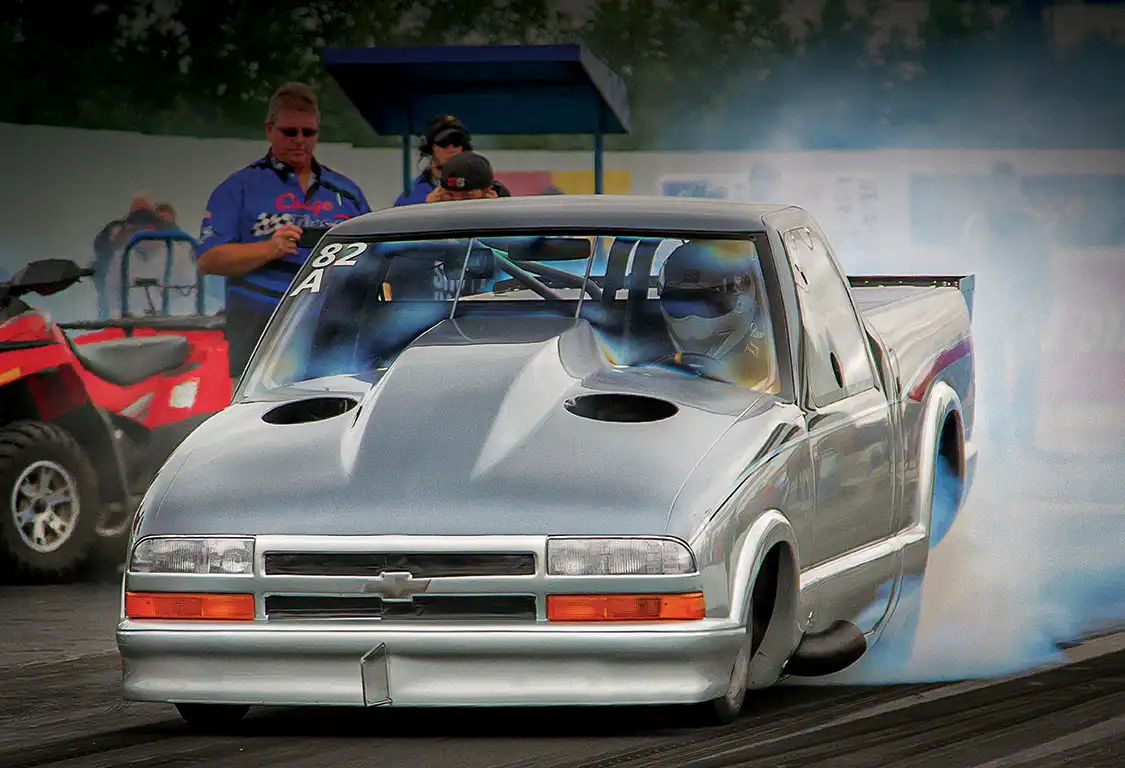
Larry Larson is a quiet, laconic Midwesterner with a race-car-building business near Kansas City, Missouri. He also happens to be a street-legal legend by virtue of winning five Hot Rod Magazine Drag Week competitions plus building and racing two of the most iconic cars in the genre. Larson also built and drove the first street car in the five-second ET zone. He’s the street legal racing community’s version of “Big Daddy” Don Garlits.
Larson didn’t grow up in a racing environment. He was reared on his family’s Kansas dairy farm, and following high school, attended diesel mechanic vocational school. His first race as a spectator was at the dragstrip in Wichita, Kansas (currently Kansas International Dragway), in 1979. There he saw a couple of wheel-standing SS/K Chevy IIs (one was Allan Paterson).
“I always had an interest in cars from Hot Wheels on,” Larson said. “I raced motocross in the ’80s, and then went back to cars in the late-’80s. I purchased and back-halved my Chevy II in 1988 and started attending some races.”
He got into the chassis business after attending a Super Chevy Show in Topeka in 1992. Larson told us, “I was approached by two guys that had just started a shop in Topeka and were looking for help,” he recalled. “I moved from Colby to Topeka and went from being a diesel mechanic to a fabricator from 1992-96. After being laid off in Topeka in ’96 I wasn’t sure what I wanted to do, but soon some of the customers I worked with in Topeka called asking where they could bring their cars. So, in the fall of ’96 I started LRC.”
Today, Larson is the very successful owner of a virtual race car factory specializing in doorslammers. LRC builds everything from Pro Stock, Pro Mod, Comp Eliminator, Outlaw 10.5 and five-second street-legal trucks down to street cars. His HRM Drag Week success has also brought customers who participate in that world.
Larson noted, “Since the notoriety from Drag Week, our builds have changed to include some high-end DW-style cars. Cars that can be driven on the street, but also raced in the five-, six- and seven-second range.” LRC built Mike Moran’s twin-turbo Chevy, which was the first legal street car to exceed 200 mph in a quarter-mile, and John Mihovetz’s car, the first modular Ford engine and Comp Eliminator door car in the fives.
Larson’s credentials as a car/chassis/component builder are unassailable, but he is also a hardcore, extremely talented drag racer. He has built, raced, won championships and set many records driving two very iconic street/race cars.
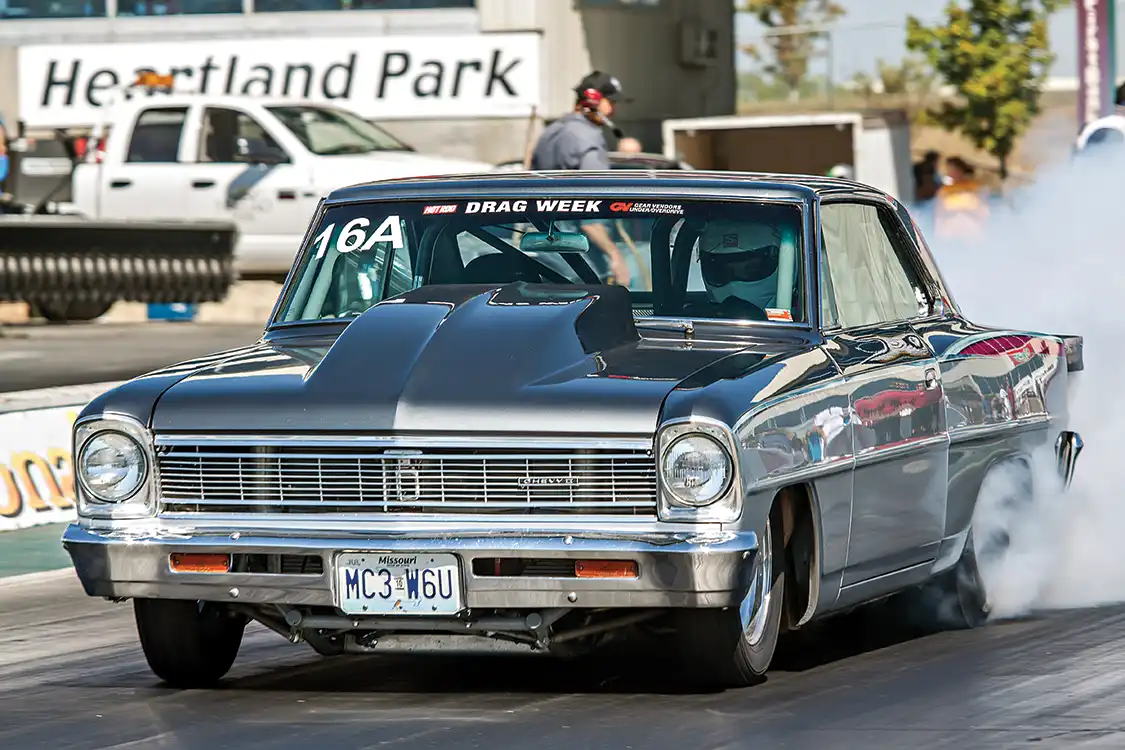
His ’66 Nova started as a back-halved eight-second street car, albeit with the drivetrain, engine and suspension that you might find in a Pro Mod car. The Nova is more of a real street-driven race car than any in history. Although the floor, firewall and hood are carbon fiber, the bumpers are steel, as are the original mint GM quarter-panels installed in 1966. The steel is a hindrance in the weight department; this “little” Nova tips the scales at a portly 3,500 pounds. Its fuel cell has a small compartment for race gas and a 15-gallon compartment for pump gas.
Even though the Nova has won a record five Hot Rod Drag Week events, the story that most explains why racers and fans love the Nova is the fact that Larson drove it from Kansas City to Topeka Raceway Park and raced it.
“I drove the Nova from my shop in KC to Topeka [220-mile round trip] in 2012 for the NHRA national event. We ran in Competition Eliminator and went three rounds and fulfilled the plan to run in the sixes at 200” (with a lap of 6.98 at 206 mph). The Nova eventually recorded a best of 6.93/211.
The Nova was entered in the AA/AT class for turbocharged V-8 vehicles. The minimum class weight is 1,500 pounds, but it’s a weight-to-cubic-inch class, set at 5.9 pounds per cubic inch. That meant Larson’s Mike Moran-built dual turbocharged 565-ci big-block Chevy with twin 88mm turbo combination had to weigh 3,334 pounds. The Nova was closer to 3,500 pounds as raced. Asked if he would run the Nova in Comp Eliminator again, Larson said he wasn’t planning to. “The Nova had enough to qualify well but not enough to win, and I don’t ever race unless I think I have a chance to win.”
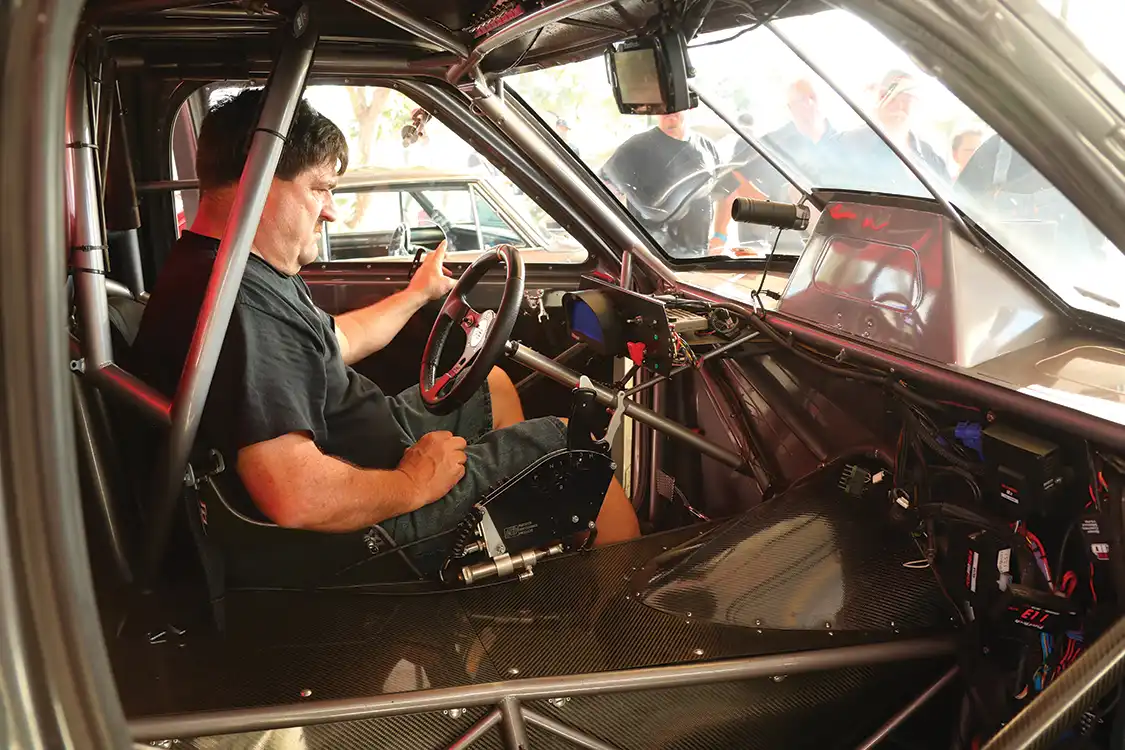
In Drag Week competition, due to rule changes, Larson’s Nova wasn’t the dominant car that had won five consecutive championships. The new rules allowed for real Pro Mods if they had license plates and a VIN plate. His Nova was heavy and underpowered compared to the competition, and he wasn’t able to accomplish his desire to field the first five-second street car.
Since his last win in 2012, Larson had drifted away from the Drag Week and other Hot Rod Magazine-backed street car events. But, in 2014, following conversations with Hot Rod’s David Freiberger regarding the Drag Week rules, he decided to build a new ride to once again compete in the race.
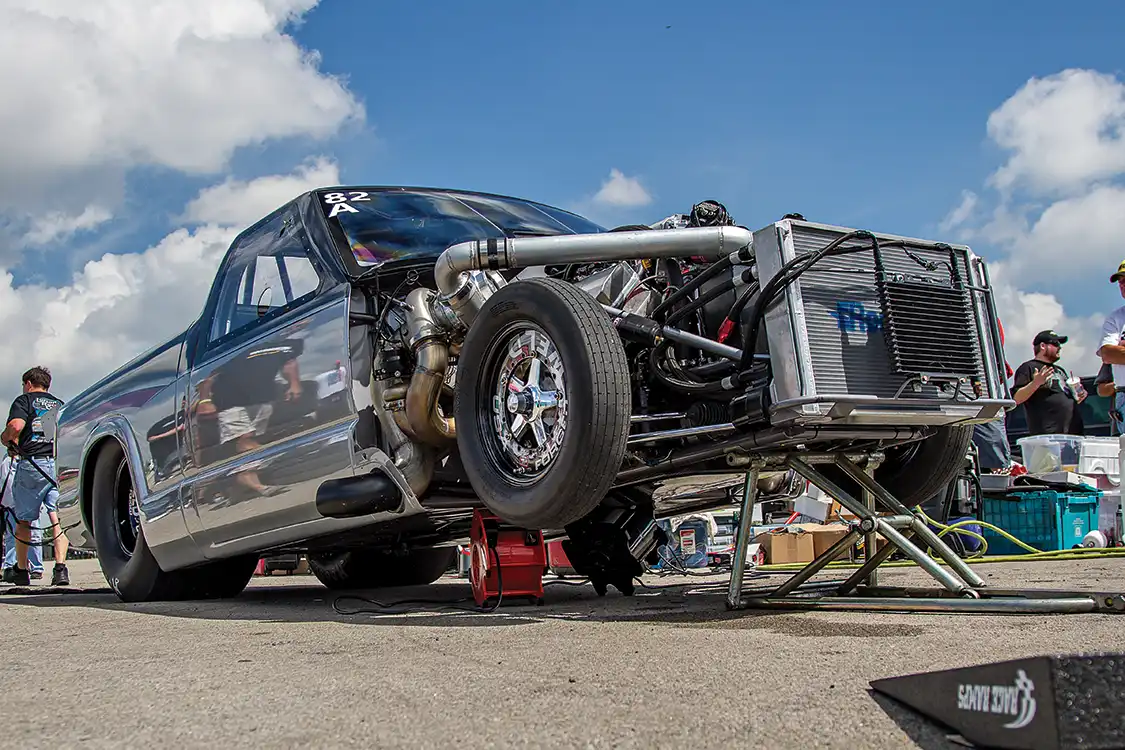
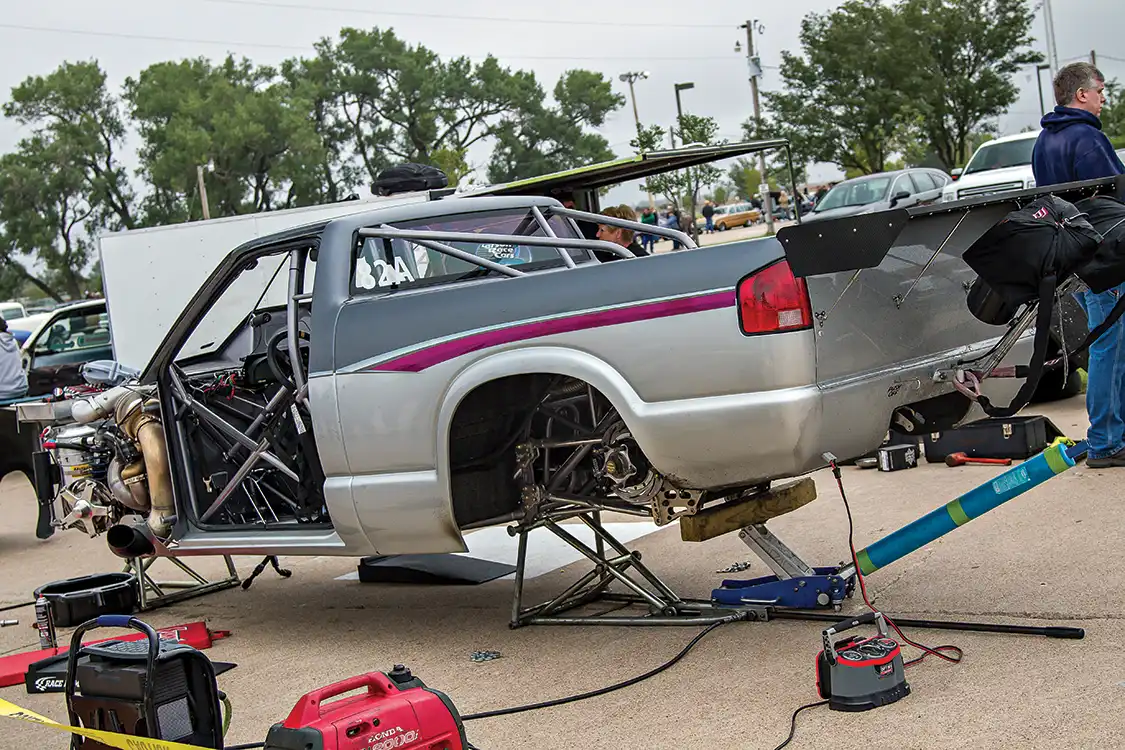
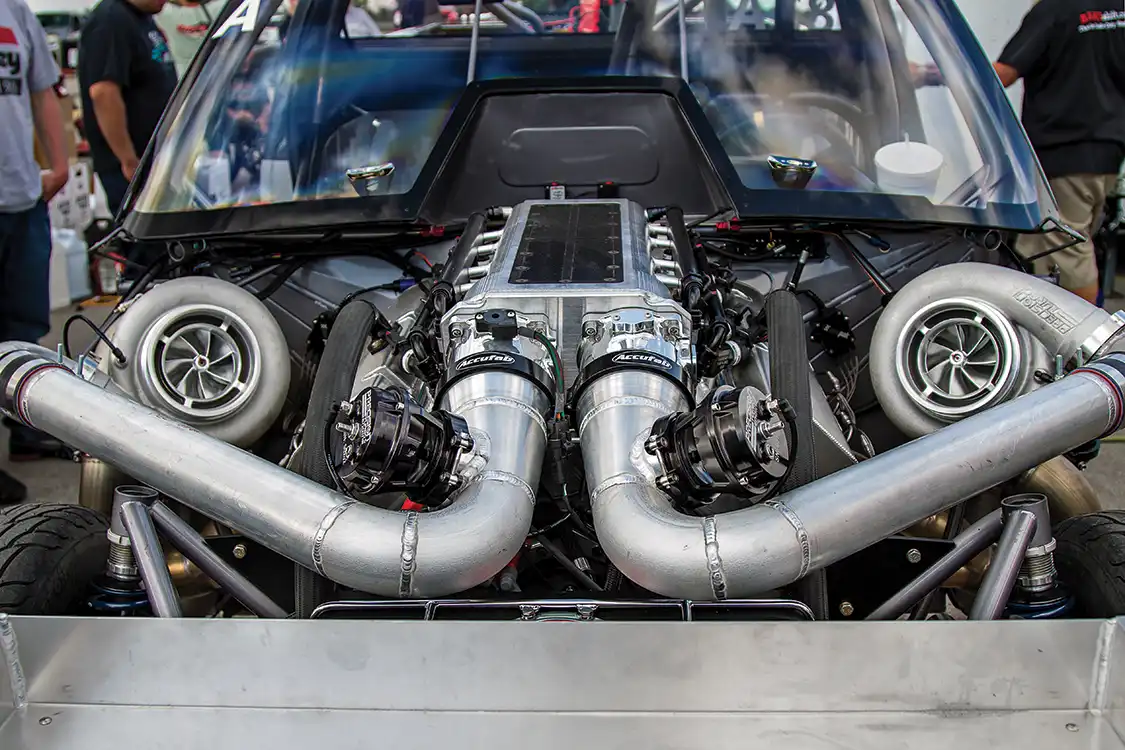
Larson Race Cars constructed a mostly steel ’98 S-10 Chevy truck with the original steel cab, doors and bedside and an SFI-certified chassis legal for five-second ETs with the express goal of building a street-legal, street-driven car capable of routinely clicking off five-second ETs at faster than 240 mph in the quarter-mile.
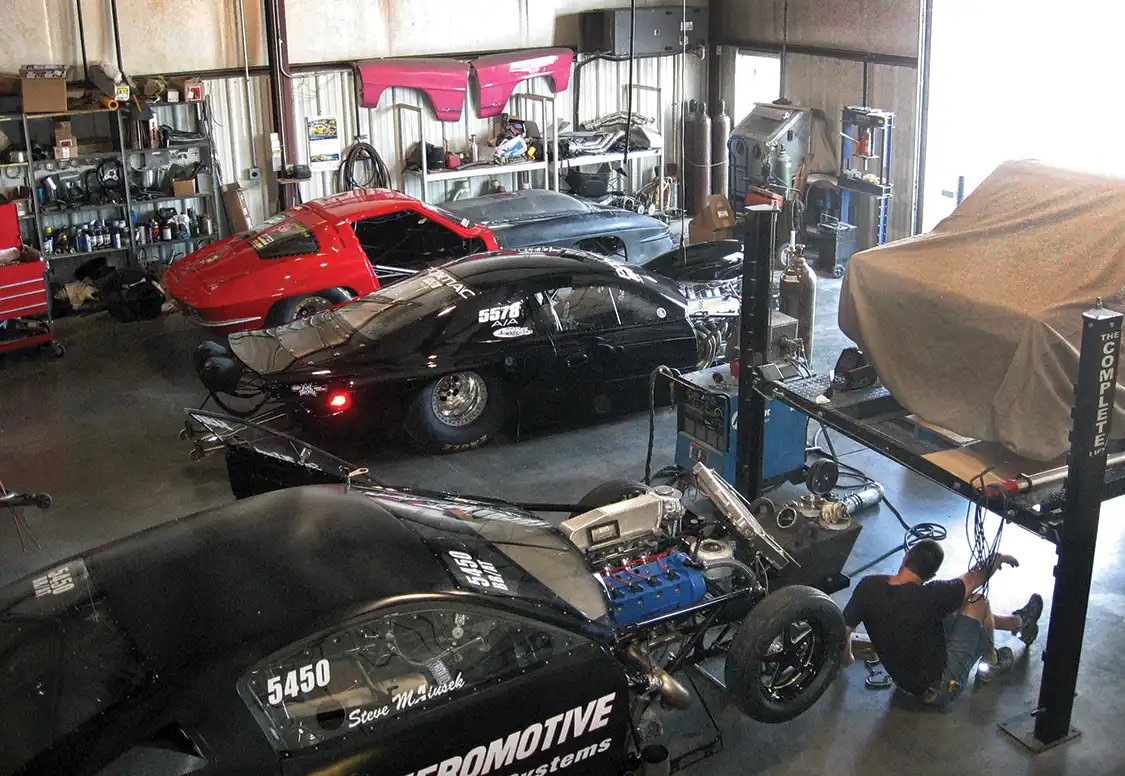
Aside from the momentous change in body styles from ’60s coupe to ’90s truck, Larson and his master builders used the same basic philosophy employed when building the Nova: Use as many original steel body parts as possible and keep the truck truly streetable and street legal. Perhaps the most significant difference between the two is that the Nova really can’t go on a diet. Larson noted, “The Chevy II gets raced as it gets driven, full exhaust, DOT street tires, etc. The truck was made to get as much weight off as possible by removing the exhaust, radiator/water pump, rear fuel cell/pump, steel doors to carbon, etc.”
Larson got the truck’s curb weigh to approximately 2,800 pounds down from around 3,500 pounds for the steel Nova. He also acquired more power with a ProLine dual turbocharged 3,000-plus-hp big-block. The S-10 is considerably lighter than the Nova, has more power and employs an automatic trans instead of a Lenco.
Once on the track it quickly became apparent the truck had the capacity to propel Larson into the fives. Upon returning to Hot Rod Mag Drag Week competition in 2014, he captured the title of Quickest Street Car in the World with a heady 6.16 effort, but that mythical five-second mark still eluded him.
Shortly thereafter, Larson took the truck to Mel Roth’s Street Car Super Nationals in Las Vegas. The team experienced three frustrating days, then finally on Sunday, Larson recorded a 1.025-second 60-foot time that led to a 5.950 clocking at 244.43 mph, the first-ever five-second pass. Mission accomplished.
As far as building and driving real street cars that go really fast, Larson has no peers. His was the first real street car in the six-second zone with his “no-wheelie-bar.” all-steel Nova, and he was the first street car in the five-second zone with his street-driven S-10 pickup.
Now there are some quicker cars, like Jeff Lutz’s Pro Mod ’69 Camaro, but Larry Larson is still as admired in street-legal racing as Don Garlits is in drag racing and Richard Petty in NASCAR. He doesn’t care too much about fame, though; he’s too busy driving and racing his truck or getting into his Nova, turning up the stereo and taking his wife, Sherry, on a cruise. Life is good if you’re Larry Larson.

C10 Builders Guide
If you want to see how you can support Mission 22 as they work to support our veterans, check out StreetTrucks’ Sgt. Square page!… Continue reading
Nicole Hamilton . July 13, 2023

Feature Stories
Party Up Front, Business Out Back ProTech Industries has worked hard to put itself on the map as a go-to builder/provider of custom truck flatbeds and… Continue reading
Mike Self . June 27, 2024
Chevrolet
Follow Along as we Install CFR Series Gauges in a ’94 Silverado We began our search for a shop vehicle on a chilly April day.… Continue reading
New Vintage USA . October 13, 2023

All EV Vehicles
Jason Halvorsen’s Custom Ford Mach-E is Lighting Up the Florida Mod Scene Jason Halvorsen is a yacht captain who lives in Hollywood, Florida. He’s also… Continue reading
Jerome Andre . December 05, 2023
Chevrolet
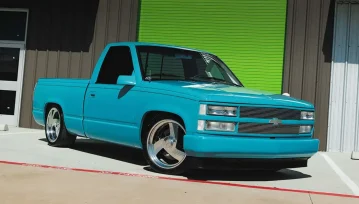
Greg and Carrie Nettles’ 1991 Chevy C1500 In the world of OBS trucks, Greg and Carrie Nettles’ 1991 Chevy C1500 is a ride that refuses… Continue reading
Chris Hamilton . February 18, 2025

F Series Builders Guide
Not Your Grandpa’s Classic It can be a bit tricky to separate words from context. For custom enthusiasts especially, the word “classic” carries all kinds… Continue reading
Michael J. Phillips and Mike Alexander . June 10, 2026

We use cookies to enhance your browsing experience, serve personalized ads or content, and analyze our traffic. By clicking "Accept All", you consent to our use of cookies. Visit our Cookie Policy for more info.


 Please wait...
Share Link