










 Motortopia Staff
.
May 08, 2026
.
Press Release
Motortopia Staff
.
May 08, 2026
.
Press Release
Solid-state batteries are quickly becoming one of the most talked-about technologies in the EV space.
With promises of higher energy density, improved safety, and faster charging, they represent real progress. But for EV conversions, the key question is not whether the technology is better. It’s how and when it becomes usable in real-world builds.
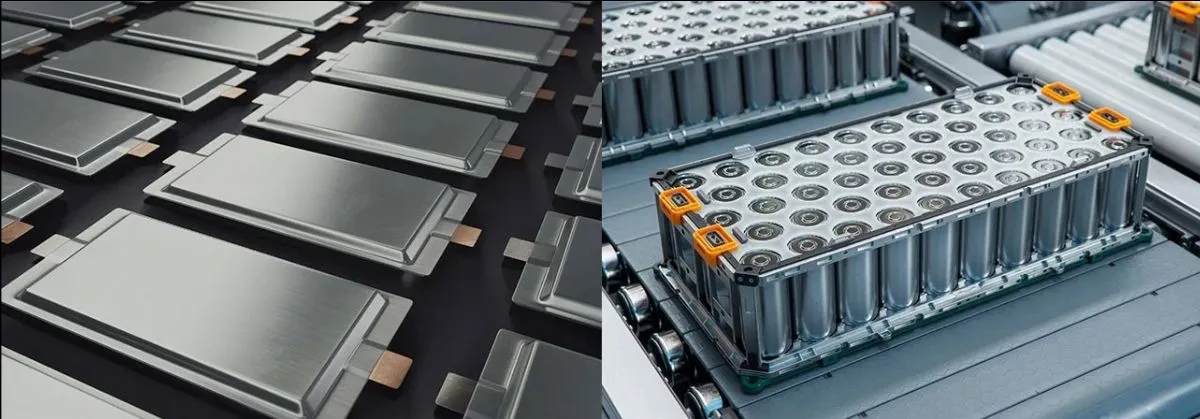
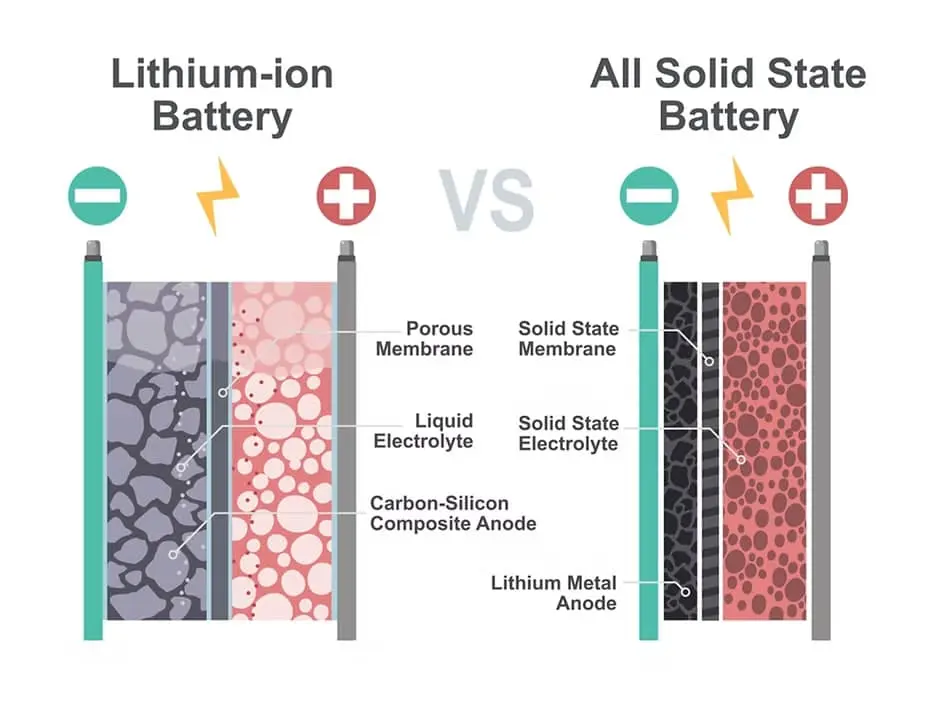
Solid-state batteries replace the liquid electrolyte found in today’s lithium-ion systems with a solid material. This allows for tighter cell packaging and potentially safer operation, since solid materials are less prone to leakage and thermal instability.
The most tangible progress is in energy density. While current lithium-ion cells operate around 250–300 Wh/kg, solid-state developments are pushing significantly higher, with some prototypes aiming well beyond that range, up to 500 Wh/kg and above. This opens the door to either more range within the same space or more compact battery systems.
Along with density, weight reduction is often highlighted, but the more significant shift is in safety, as solid-state batteries dramatically lower fire risk by eliminating flammable liquid electrolytes and slowing the progression of failure events.
And if solid-state batteries are getting better at handling power and heat, they could also charge faster and last longer than today’s EV batteries.
That said, they are not shock-resistant nor fireproof; if a battery is severely damaged, overheated, or pushed beyond its operating limits, dangerous heat buildup can still happen.
Finally, cost remains the limiting factor. Lithium-ion benefits from massive industrial scale and continues to get cheaper. Solid-state, by contrast, is super expensive due to complex manufacturing and low production volumes. That gap may not close quickly.
For EV conversions, solid-state batteries represent progress, but not a shortcut.
The core challenges remain unchanged: weight distribution, battery configuration, BMS integration, thermal management, and system reliability. Even with better cells, these constraints still define the success of a build.
What is changing is the emergence of semi-solid-state batteries as a transitional step. These hybrid systems combine liquid and solid electrolytes, making them easier to manufacture and closer to commercial reality. In fact, semi-solid designs are currently the most viable advanced battery technology reaching early production, with applications already appearing in EVs and smaller mobility platforms. Some prototypes are already demonstrating meaningful improvements in energy density and safety, bridging the gap between today’s lithium-ion and future solid-state systems.
At Fuel2Electric, we see the trajectory clearly. Battery technology is improving, and solid-state will eventually expand what’s possible. But EV conversions will continue to be defined by system design, not chemistry alone.

Press Release
Wilwood Racing Releases New Front Left DPS Sprint Car Brake Kit Wilwood is proud to announce the release of its new high-performance scalloped rotor kit,… Continue reading
Motortopia Staff . December 22, 2025
Press Release
City of Industry, CA – March 3rd 2025 Spyder Automotive is proud to introduce its latest innovation in automotive lighting for the Peterbilt 579/589. This… Continue reading
Motortopia Staff . March 24, 2025
Press Release
FrostHeater has been manufacturing custom-fit engine heaters for over 25 years, and has kits for Volkswagen TDI, Super Duty 6.7L, and now Sprinter diesels! FrostHeater… Continue reading
Motortopia Staff . January 31, 2025

Press Release
The Atturo AZ810 The Atturo AZ810 is a ultra-high-performance, all-weather tire built for trucks and SUVs that look as sharp as they drive. With an… Continue reading
Motortopia Staff . May 21, 2025
Press Release
You pull in, you swipe your card, you stand there inhaling fumes while the numbers tick upward, you get back in the car smelling faintly… Continue reading
Motortopia Staff . April 09, 2026
Press Release
Velocity has partnered with luxury dealerships across nine states and counting, making Velocity’s Re-engineered Classics™ more accessible than ever Pensacola, Fla. (April 9, 2025) – Velocity,… Continue reading
Motortopia Staff . April 15, 2025



Charity Car Show
Mesa Marketplace 10550 E. Baseline Rd, Mesa , Az 85209
CHICO CONCOURS Car Show
Silver Dollar Fairgrounds 2357 Fair Street, Chico, CA 95928
Goodguys 33rd Summit Racing Lone Star Nationals
Texas Motor Speedway 3545 Lone Star Circle
The Sparks Show
Sevierville, TN
Dino's Git-Down
State Farm Stadium, Glendale, AZ
We use cookies to enhance your browsing experience, serve personalized ads or content, and analyze our traffic. By clicking "Accept All", you consent to our use of cookies. Visit our Cookie Policy for more info.



 Please wait...
Share Link