










 Motortopia Staff
.
July 06, 2026
.
Press Release
Motortopia Staff
.
July 06, 2026
.
Press Release
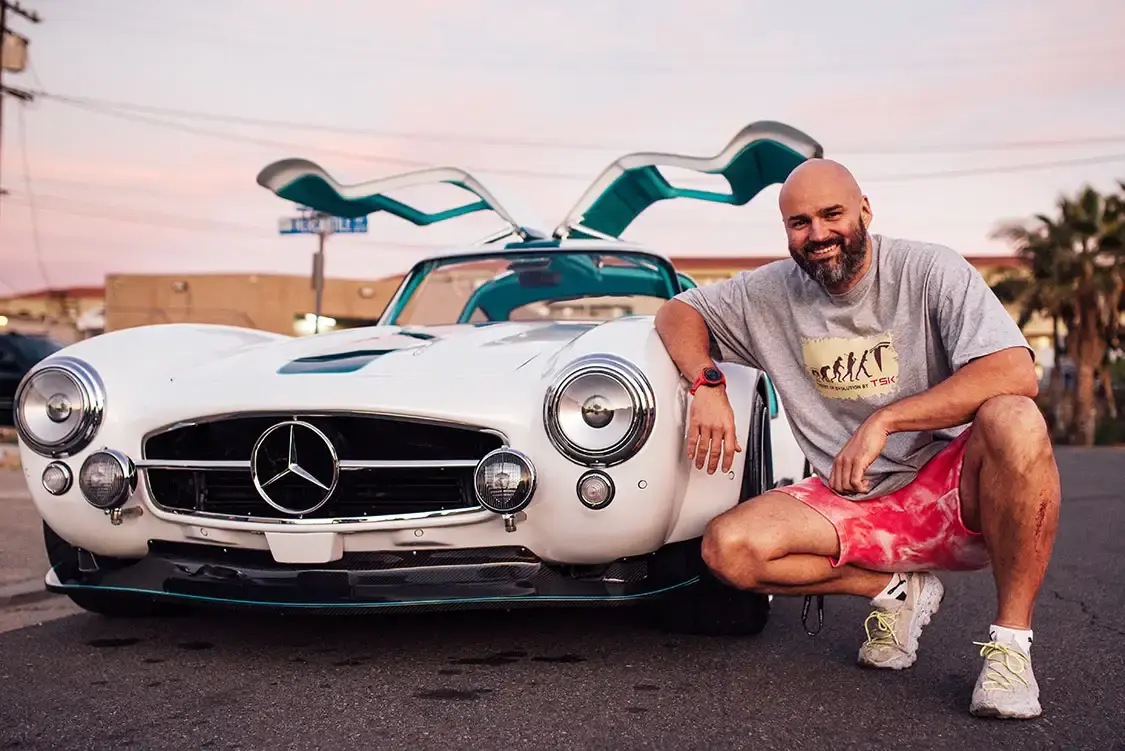
Scroll through Instagram for 10 seconds #evconverion and you’ll see why people think EV conversions are easy. The average Joe buys a wrecked Tesla, then he buys a rusty classic, some sparks fly in a time-lapse, and boom! A million-dollar-looking car for the price of a used sedan, a caption like “Tesla heart, classic soul”, and the algorithm does the rest. It looks effortless.
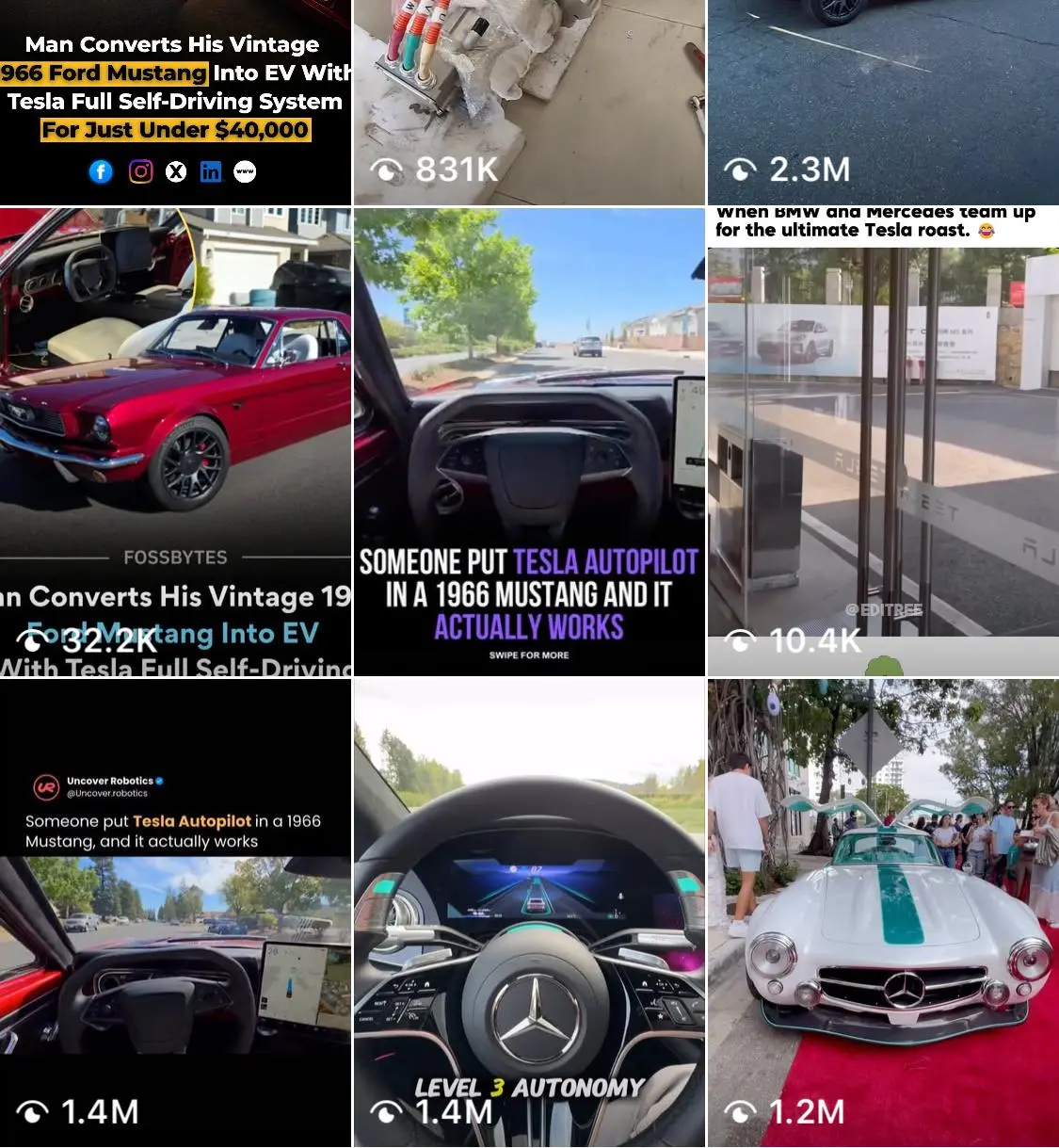
Calimotive’s 1966 Mustang is the perfect example of that gap between Instagram and reality. Yaro Shcherbanyuk found the car on Facebook Marketplace in the summer of 2022 and built it with his father, Viktor, and brother Daniel. The family had the single biggest advantage anyone attempting this kind of build could ask for: Calimotive specializes in Tesla and Rivian parts, so Shcherbanyuk already had access to the components and the knowledge needed for an ambitious build.
Even with a parts warehouse and deep technical fluency in Tesla architecture sitting right there, this wasn’t a weekend drop-in. The family even reconsidered their plan mid-build. They initially intended to use a Model S drivetrain before realizing, once the Mustang was stripped down, that the Model 3 battery pack was the better fit. Not a “cheap and easy” decision tree. That’s engineering iteration by people who already had every advantage.
In the end, Shcherbanyuk retrofitted Tesla’s full camera suite onto the Mustang, enabling Autopilot, Sentry Mode, and Full Self-Driving (Supervised). They literally built the first non-Tesla vehicle to ever run FSD. Not impressed? Tesla’s vision-based neural network was trained on camera positions specific to Tesla’s own body shapes, and the Mustang’s completely different roofline and mounting geometry put every camera at a different angle and height than the system was designed for. Getting that to work isn’t a parts swap; it’s closer to applied machine-learning detective work, done in a garage.
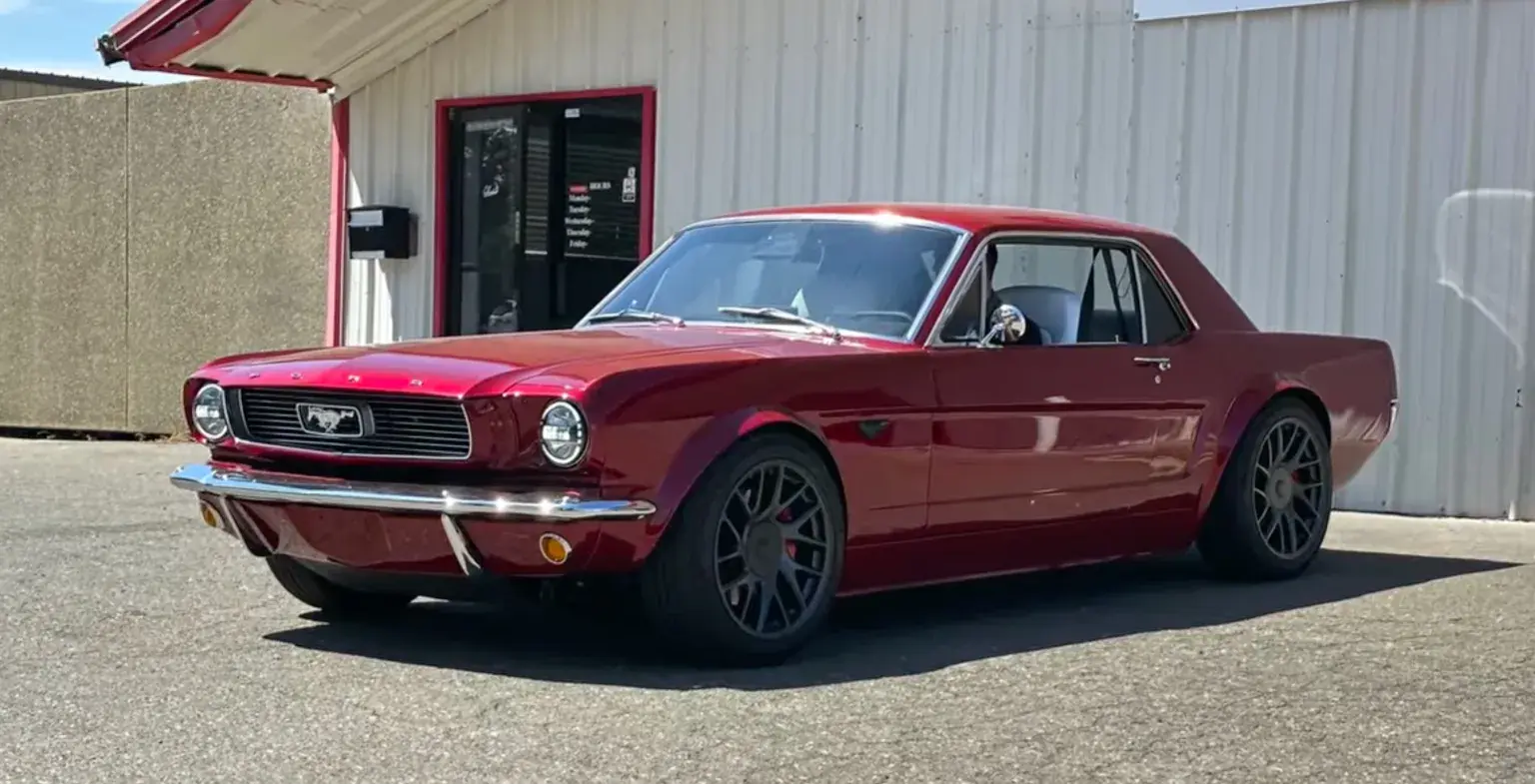
In a Road & Track interview, they said that the idea came from years of selling Tesla components to other people who wanted to attempt their own conversions, meaning Calimotive had literally watched other builders struggle with this exact thing before deciding to do it “right.”
No build-hours figure here. Nobody’s published a real one. What we do know is the timeline alone: two years, with a specialist crew, surrounded by inventory most builders would have to source piece by piece. That’s the honest cost of “looks easy.”
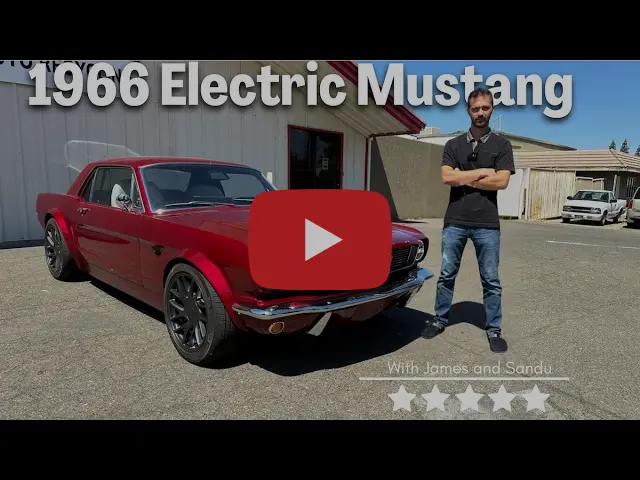
If the Mustang is about brute charisma, the S-Klub LA’s “Tesla 300SL” is the opposite kind of flex: precision.
The project was the brainchild of John S, an automotive artist from Southern California, and was built with the team at S-Klub LA, alongside Tesla repair specialist Bogdan Golovatiuk of TSK in Cypress, California.
Unlike the Mustang, the S-Klub team bought a fully functional Tesla Model 3, cut its body off, and built a fiberglass reproduction of the 300SL Gullwing body directly onto the Tesla’s own chassis “skateboard.” It’s less a swap and more a complete bodyswap surgery on a donor car that was working fine the day before.
And here’s where “looks cheap” really falls apart: the Model 3 is longer than the original 300SL, so the team had to physically cut the rolling chassis in half to remove nearly 16 inches of length. It means cutting a unibody EV chassis and stitching it back together shorter, without wrecking the battery, the crash structure, or the drivetrain alignment. The battery itself had to be shortened, too. The team used a 50 kWh pack from an early Model 3 Standard Range with four shorter modules so the rear could be trimmed down. Then, because the geometry changed, the charger unit (originally mounted under the back seat) ended up sitting where the front seat base needed to go, forcing a full relocation behind the seatbacks. Every “simple” decision triggered three more problems downstream. Even just the bodywork stretched into working hours that ran past midnight to hit their SEMA deadline.
The payoff is real, though. By retaining about 99% of the Tesla’s own technology, the Gullwing keeps the dual-loop cooling system, the torque-sensing limited-slip differential, and real-time telemetry, with a 0-60 km/h time of roughly 3.7 seconds and around 217 miles of range. Inside, autopilot and the sensor suite remain fully functional, with cameras replacing traditional mirrors and the original FSD cameras tucked discreetly into the roof, front wings, and top of the windshield, just like on a stock Model 3.
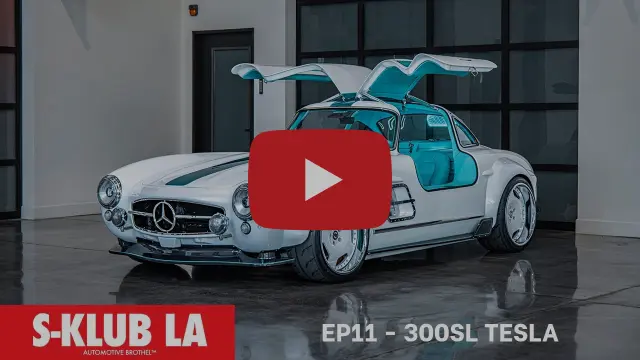
The Mustang keeps a real American steel body and chassis, while the 300SL goes the other direction entirely: it keeps the Tesla’s actual chassis and electronics intact and rebuilds a fiberglass replica body around it.
Both are staggeringly clever, but neither one tells you the truth and cost of the R&D it required: the cut, the reengineering, the rebuilding twice…
The whole EV-conversion scene is growing absurdly fast and is full of people who are genuinely brilliant: shops figuring out battery geometry, camera recalibration, chassis surgery… Builds like these two didn’t exist five years ago but are reflecting today’s hot rod 3.0 scene. And that’s what makes this whole movement worth paying attention to.

Press Release
XDP 6.7L Powerstroke Fuel Contamination Kit XD514 and restore the fuel system in your 2011-2014 Ford 6.7L Powerstroke. When the CP4 pump fails in your… Continue reading
Motortopia Staff . July 24, 2024
Press Release
Revive classic charm with our retro-styled LED headlights, featuring a vintage front lens pattern. Illuminate your path with a brilliant 2,700-lumen high beam (4 LEDs)… Continue reading
Motortopia Staff . December 01, 2023
Press Release
New website – Easier Navigation Same Great Products www.bornoutdoor.com We outgrew our old website and launched a new site that is easier to navigate and… Continue reading
Motortopia Staff . September 01, 2025

EV Education
Converting to electric is about preserving heritage, and creating a vehicle you trust—mile after mile, year after year. It’s about bringing the past into the… Continue reading
Motortopia Staff . June 03, 2025
Press Release
We’re proud to keep expanding our lineup of EV-converted vehicles for sale — in April we added two 2022 Ford Transit-350 vans converted by Lightning eMotors, professionally… Continue reading
Motortopia Staff . May 05, 2025

Press Release
Eaton’s Mobility Group is expanding its aftermarket differential portfolio with a new Eaton ELocker® and new Detroit Truetrac® differential. The new Detroit Truetrac is a… Continue reading
Motortopia Staff . October 30, 2024


The Sparks Show
Sevierville, TN
Dino's Git-Down
State Farm Stadium, Glendale, AZ
Dino's Git-Down
State Farm Stadium
Goodguys 36th Autumn Get-Together
Alameda County Fairgrounds 4501 Pleasanton Avenue, Pleasanton, CA 94566
Goodguys 29th Speedway Motors Southwest Nationals
WestWorld of Scottsdale 16601 North Pima Road, Scottsdale, AZ 85260
We use cookies to enhance your browsing experience, serve personalized ads or content, and analyze our traffic. By clicking "Accept All", you consent to our use of cookies. Visit our Cookie Policy for more info.



 Please wait...
Share Link