








 Motortopia Staff
.
February 20, 2026
.
Press Release
Motortopia Staff
.
February 20, 2026
.
Press Release
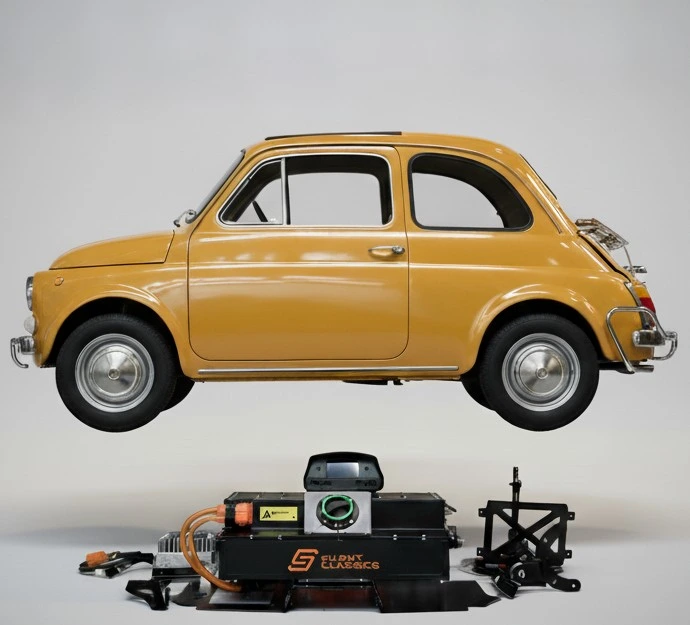
It’s one of the most common questions we hear — from DIY enthusiasts, fleet operators, classic car owners, and even investors watching the electrification space. The honest answer is nuanced. EV conversion is unlikely to experience a sudden price drop. But something more meaningful is happening: the industry is evolving toward higher quality and greater accessibility simultaneously.
The Question Everyone Asks — And How the Market Is Really Evolving
In the early days, EV conversions were largely experimental and DIY. Builders were adapting salvaged motors, repackaging used battery modules, and engineering solutions on the fly. Creativity was high, documentation was scarce, and every project felt like a prototype. Costs varied wildly because every build was essentially custom R&D.
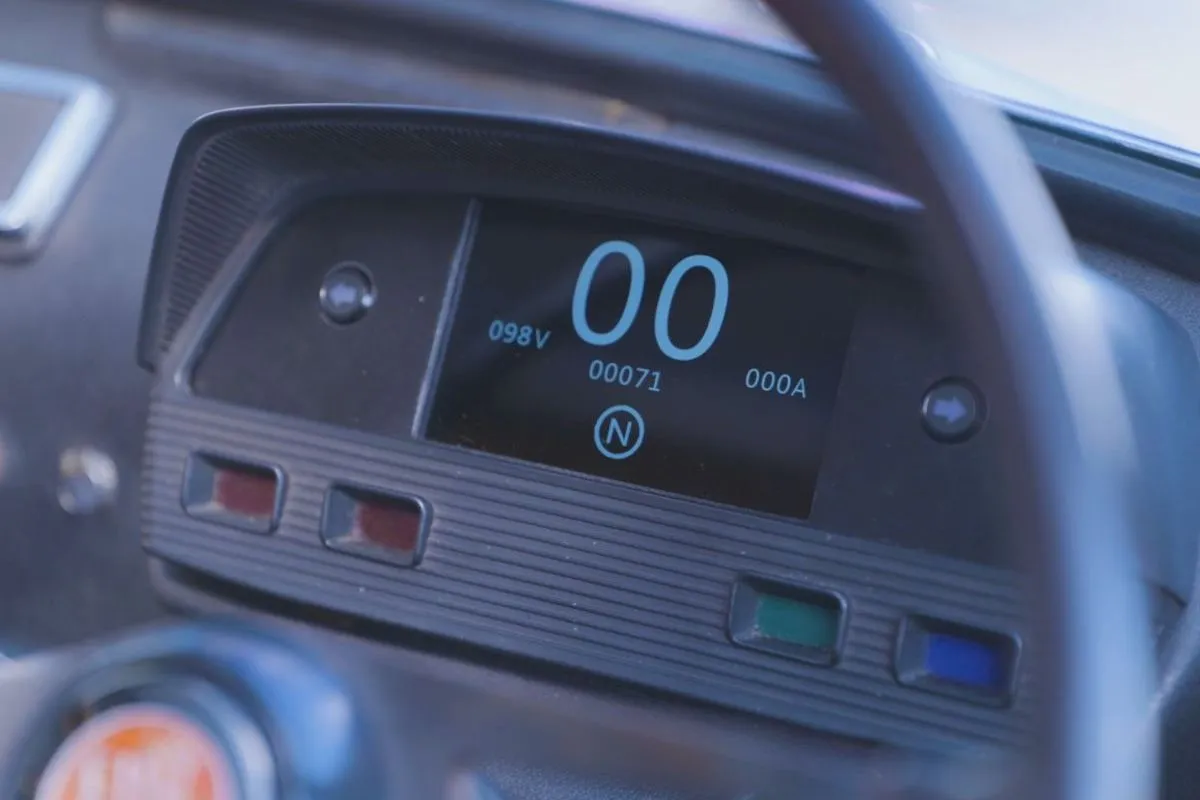
Today, expectations are very different. Customers want reliability. They want predictable range. They want proper thermal management, safe high-voltage architecture, well-integrated regenerative braking, clean packaging, and robust battery management systems.
They want their converted vehicle to feel engineered — not improvised.
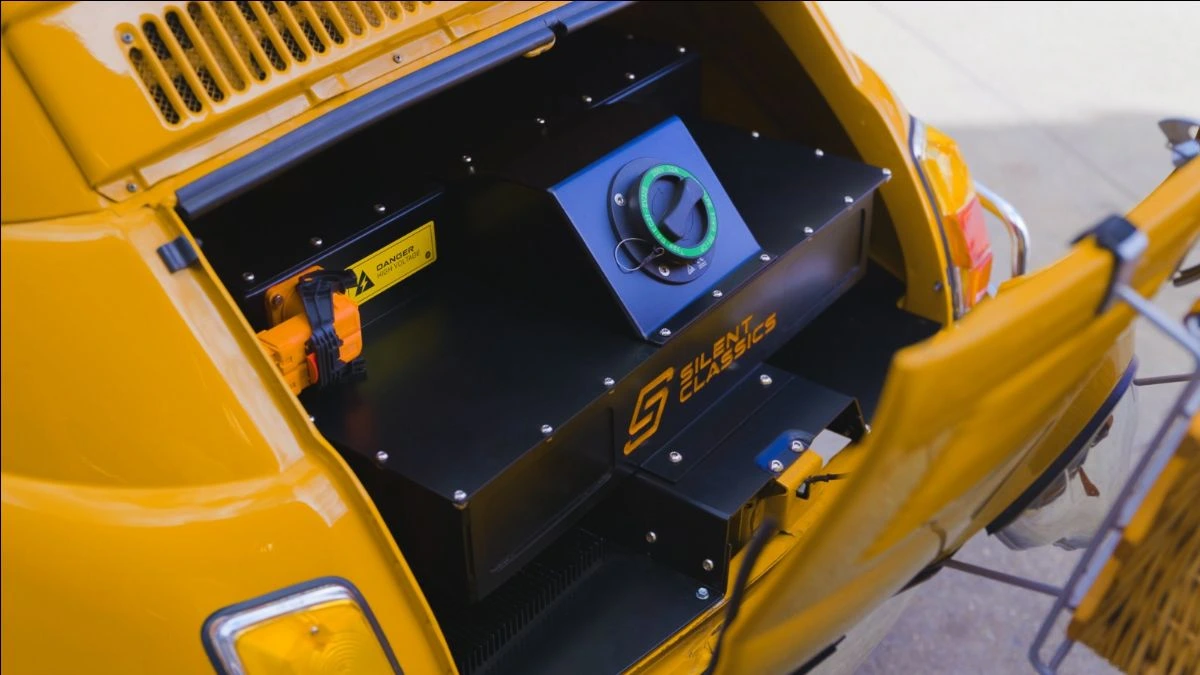
That shift in expectations has raised the quality bar across the industry. Professional shops now design repeatable systems rather than one-off experiments. Modular battery boxes are replacing improvised enclosures. Advanced BMS solutions protect battery longevity. Integration between motor, inverter, and battery is more deliberate. Safety practices, from proper fusing to HV disconnects, are becoming standard.
This maturation naturally increases professionalism. And professional labor has a cost. Engineering time, testing, validation, and support do not disappear simply because component prices fluctuate. That is one reason why dramatic price drops in battery cells have not materialized across the board.
However, accessibility is improving in parallel. Battery technology continues to evolve. Energy density is increasing. Manufacturing scale is expanding globally. Repurposed battery packs and motors are being professionally tested and sold as kits with warranties. Motors from mainstream EVs are more widely available. Knowledge sharing across the industry is accelerating.
There are also powerful counterarguments that suggest the economics could shift more rapidly in the future.
Battery innovation is the most obvious catalyst. If next-generation chemistries significantly reduce cost per kilowatt-hour while simplifying cooling and packaging requirements, conversion builds could become materially cheaper and easier. Improvements in modular pack formats, or breakthroughs could reduce integration complexity and lower barriers to entry. If battery costs drop sharply at scale, the ripple effect would be felt throughout the conversion market.
Policy could be another game-changer. In many states, incentives primarily support the purchase of new electric vehicles. But what if tax credits or grants were extended to vehicle conversions? Converting an existing vehicle prevents manufacturing emissions associated with producing a new car and extends the lifecycle of durable assets. If policymakers recognize that environmental benefit and design targeted incentives for conversions, affordability could improve immediately.
Regulation also plays a crucial role. Today, regulatory frameworks for converted vehicles vary widely by countries and states. This lack of standardized regulations can create hesitation among consumers, insurers, and fleet operators. Without clear safety standards and homologation processes, buyers may worry about long-term compliance, resale value, or insurance coverage.
Standardized regulations would not necessarily make conversions cheaper overnight. But they would reduce uncertainty — and uncertainty carries a cost.
Clear rules encourage manufacturers to design compliant kits. They reassure insurers. They give consumers confidence. Most importantly, they enable scale. And scale is where meaningful cost reductions happen.
From our perspective at Fuel2Electric, we experience this evolution every day.
Some days, we feel extremely optimistic. We see custom builds reaching levels of refinement that rival OEM vehicles. We see professional shops developing scalable drop-in kits: Fiat 500, Ford Model A, Defender and Porsche 911… We see fleet operators seriously evaluating electrification strategies. We see better engineering discipline, stronger supplier networks, and increasing demand for high-quality systems. On those days, we are convinced we are moving in the right direction — building vehicles that are safer, smarter, and more durable.
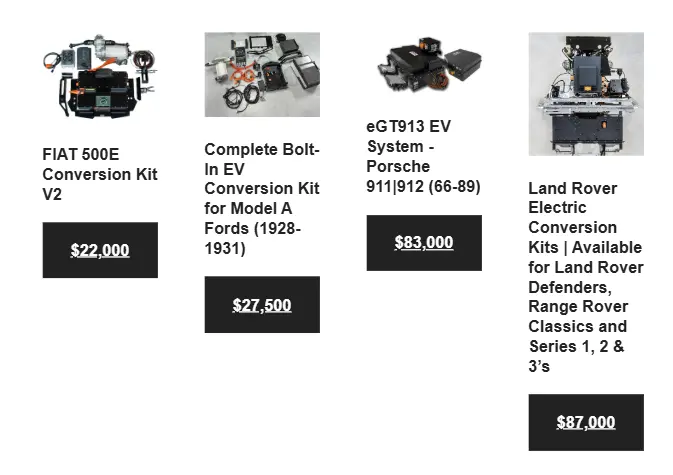
Other days — especially the rainy ones — we wish progress moved faster. We wish there were more drop-in kits available for more vehicle platforms, and less expensive. We know that for EV conversion to reach broader adoption, integration must become simpler. Packaging must become more standardized.
EV conversion may not become “cheap” in the way consumer electronics do. Vehicles are complex mechanical systems. Safety standards matter. Reliability matters. Professional labor matters. But while dramatic price collapses may be unlikely in the short term, steady progress is undeniable.
The industry is becoming more engineered. More structured. More reliable. More trusted.
And that is why we continue building — even on the rainy days.
Press Release
A new year always brings noise. Bigger claims. Faster numbers. Louder promises. At Fuel2Electric, 2026 starts grounded, focused, and clear-eyed about what actually matters. To… Continue reading
Motortopia Staff . January 09, 2026
Press Release
Fort Worth, TX (April 10, 2024) – Goodguys Rod & Custom Association crowned their first Top 12 winner of year by naming Ken Reister’s absolutely stunning… Continue reading
Motortopia Staff . April 19, 2024
Press Release
Now available from FLEXTREAD™, floor mats for the 2009-2018 RAM 1500, 2500 & 3500 models! These floor mats are designed to fit the entire floor… Continue reading
Motortopia Staff . December 19, 2024

Press Release
Experience the future of performance today with our New CPP Mustang II Front Suspension Kit for 1965-79 F100 / F-150 Fords. This bolt-on Mustang II… Continue reading
Motortopia Staff . March 11, 2025
Press Release
We don’t post much on Reddit. We don’t jump into comment wars on social media. But we read. Almost everything. More importantly, we talk. Every… Continue reading
Motortopia Staff . January 16, 2026
Press Release
Upgrade your classic Ford with the ultimate in performance and style – Fat Fender Garage’s 1973-79 Ford Hood Hinges! Crafted from high-quality Billet Aluminum,… Continue reading
Motortopia Staff . January 07, 2025



Goodguys 25th Meguiar's Del Mar Nationals Presented By FiTech Fuel Injection
Del Mar Fairgrounds 2260 Jimmy Durante Blvd., Del Mar, CA 92014
Goodguys 11th Griot's Garage North Carolina Nationals Presented By Grundy Insurance
North Carolina State Fairgrounds 4285 Trinity Rd, Raleigh, NC 27607
Classic burgers 6th annual classic car show fundraiser
6525 Inyokern rd Inyokern, ca 93527
Classic Burgers 6th Annual Car Show Fundraiser
Inyokern, CA
Whatcom County Cruisers
Whatcom County Cruisers Summer Car Show Series (Spring Car Show) Les Schwab Tires. 1731 LaBounty Dr. Ferndale WA 98248 (first event)


 Please wait...
Share Link