










 Motortopia Staff
.
October 30, 2025
.
News
Motortopia Staff
.
October 30, 2025
.
News
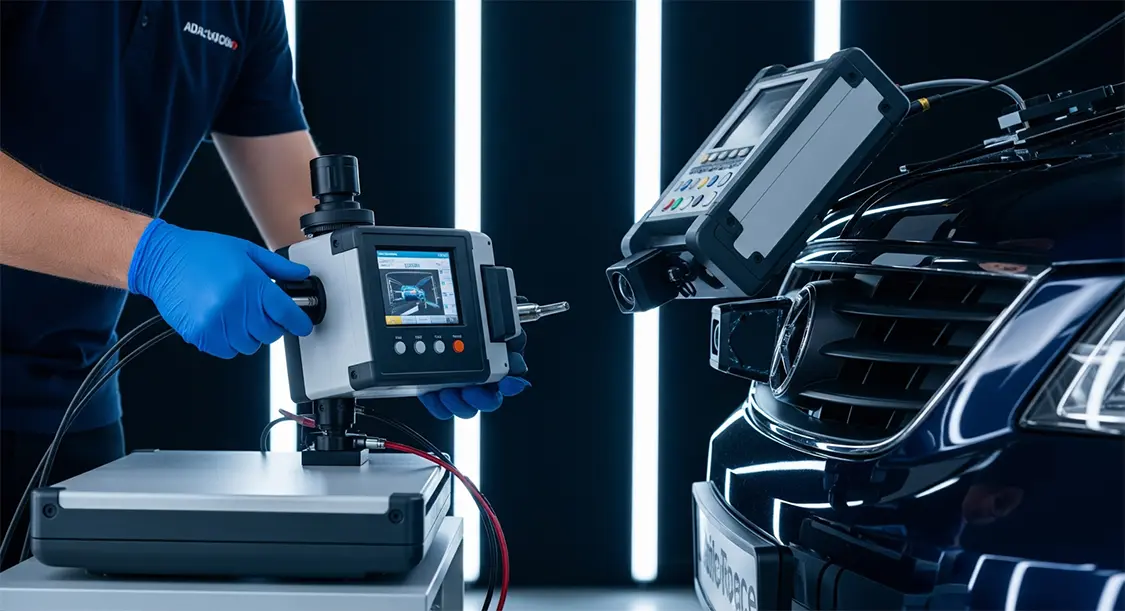
As Advanced Driver Assistance Systems (ADAS) become a common feature in modern vehicles, it’s crucial to understand what they do, how they work, and why professional calibration matters after any windshield work.
In this article, we’ll explore how ADAS relies on your windshield, the importance of proper windshield camera calibration, and how to ensure your system is functioning properly before getting back on the road.
Advanced Driver Assistance Systems (ADAS) are designed to improve driving safety and reduce the risk of collisions through features like lane-keeping assist, adaptive cruise control, and automatic braking. These systems rely on a network of sensors and cameras to detect road conditions and respond in real time.
What many drivers don’t realize is that the windshield serves as a structural platform for many of these components. Most modern vehicles house forward-facing cameras at the top center of the windshield, allowing for precise visibility and positioning.
In addition to forward-facing cameras, many windshields include built-in rain sensors that adjust wiper speed automatically, as well as LIDAR units in high-end models for object recognition and depth sensing. It’s important to understand what sensors are in a windshield before performing any kind of repair.
Replacing a windshield in an ADAS-equipped vehicle isn’t as simple as swapping out a piece of glass. That’s because many safety systems depend on windshield-mounted cameras and sensors to function properly. So, why do windshields need to be calibrated after a replacement? Because even a tiny misalignment can throw off the entire system.
That’s where recalibration after windshield replacement comes in. It realigns your vehicle’s sensors to make sure features like automatic braking and lane assist respond at the right time, in the right way. Without it, your car might miss a hazard, delay a reaction, or issue warnings when nothing’s wrong.
ADAS windscreen calibration is the process of realigning the cameras and sensors mounted on or near the windshield to ensure they function accurately after repair or replacement.
Because ADAS systems rely on precise sensor positioning, calibration is critical to maintain the safety and effectiveness of features like lane-keeping assist and emergency braking. There are two main methods for windscreen camera calibration:
Static calibration is performed in a controlled indoor environment using a fixed target or pattern positioned at a specific distance from the vehicle. The technician connects the car to a diagnostic tool, which guides the system through a recalibration process. This method doesn’t require driving the vehicle, making it ideal when road testing isn’t possible or when the system requires highly controlled conditions.
Dynamic calibration takes place on the road. The vehicle is driven at set speeds on clearly marked roads while the ADAS cameras adjust themselves in real time. The calibration tool monitors sensor readings as the vehicle collects environmental data—like lane markings and traffic signs—until the system confirms proper alignment.
As established in the previous paragraphs, ADAS is only as effective as the calibration behind it. If the sensors or cameras are not properly realigned after a windshield repair, the system’s ability to support safe driving can be severely compromised. Here’s how improper calibration can impact ADAS safety:
When it comes to vehicles equipped with ADAS, a basic windshield replacement won’t cut it. However, not every auto glass shop is equipped to handle the complexity of ADAS-equipped vehicles. To ensure you’re in good hands, ask the shop the following:
A professional auto glass provider understands that ADAS calibration isn’t optional—it’s a necessary step after any windshield service.
Advanced safety systems like ADAS are only as reliable as the sensors and cameras they depend on. If those components aren’t properly recalibrated after a windshield repair or replacement, even the most advanced features can fail at the moment you need them most.
That’s why it’s essential to choose an auto glass provider that not only understands how your vehicle’s technology works but is equipped to protect it.
News
The best motorcycle jeans are models certified to AA or AAA safety standards, equipped with adjustable Level 2 knee protectors and reinforcements made of abrasion-resistant… Continue reading
Motortopia Staff . April 27, 2026

Drag Racer
The Formative Years IN PART 1 OF OUR TRIBUTE TO THE 50TH ANNIVERSARY OF THE FUNNY CAR, DRAG RACING HISTORIAN “200-MPH” DAVE WALLACE EXPLAINED THE… Continue reading
Bob McClurg . August 18, 2026

News
Image source: trinityrental.com Dubai is a real center of luxury cars. Here you can often find exotic vehicles that attract attention from the first minutes.… Continue reading
Motortopia Staff . June 23, 2025

EV Builders Guide
As we wrap up this issue, one thing is crystal clear: The electrifying surge of enthusiasm for EV-converted classics and custom modern EVs is propelling… Continue reading
Jerome Andre . February 05, 2026
News
America’s vast network of highways facilitates transportation and commerce but also brings considerable safety risks. Even responsible motorists can end up in crashes, so knowing… Continue reading
Motortopia Staff . September 01, 2025
News
(Professional rider. Closed course. Do not attempt.) Today, a new generation of riders is entering the cycling world differently—and electric bikes are playing a central… Continue reading
Motortopia Staff . March 13, 2026



Super Run 2026 Classic Car Show
Super Run 2026 Classic Car Show Casablanca Resort 950 West Mesquite Blvd Mesquite, NV 89027
Concours D'Elegance
Cobble Beach Resort 221 McLeese Dr, Kemble, ON N0H 1S0
Charity Car Show
Mesa Marketplace 10550 E. Baseline Rd, Mesa , Az 85209
CHICO CONCOURS Car Show
Silver Dollar Fairgrounds 2357 Fair Street, Chico, CA 95928
Goodguys 33rd Summit Racing Lone Star Nationals
Texas Motor Speedway 3545 Lone Star Circle
We use cookies to enhance your browsing experience, serve personalized ads or content, and analyze our traffic. By clicking "Accept All", you consent to our use of cookies. Visit our Cookie Policy for more info.


 Please wait...
Share Link