










 Whit Bazemore
.
June 08, 2026
.
Drag Racer
Whit Bazemore
.
June 08, 2026
.
Drag Racer
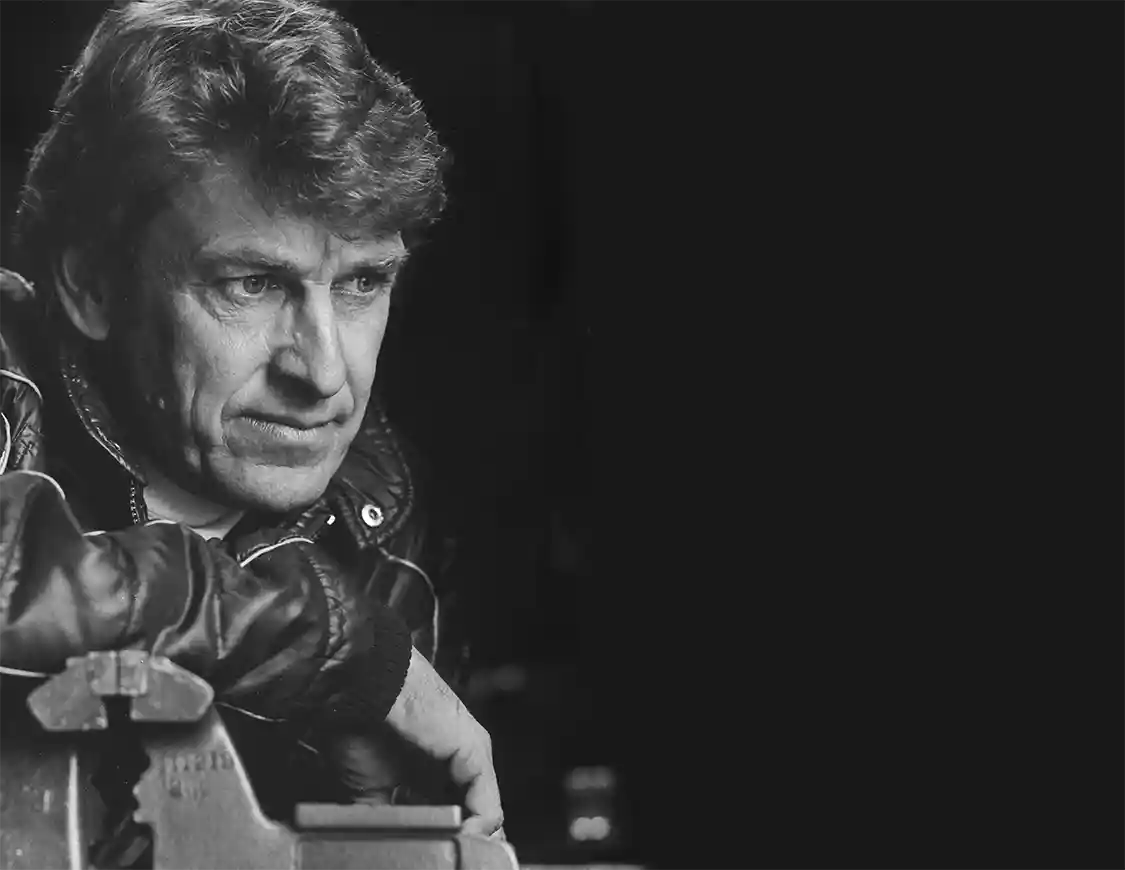
We may know who the fastest, quickest and winningest racers are at any given time, but no one in the sport has ever tried to officially crown the smartest racer ever. Perhaps it’s because the answer is too subjective, making the question impossible to answer, or it’s simply because, in a sport comprised of ultra-intelligent people, too many are at the same high level, and therefore equal. But maybe, just maybe, one guy stands out just that little bit from all of the other champions, winners and record setters—a king of kings. Surely someone is the best of the best, the smartest to ever tune a car for the quarter-mile.
This person would be the one who has contributed the most towards increasing the performance of the sport as a whole, because after all, drag racing is nothing if not a contest to go a quarter-mile (or today, 1,000 feet) as quickly as possible, and quicker and faster than anyone else.
Don Garlits is the greatest ever and at the top of the NHRA 50 best list, but is he the smartest? If not, he’s damn close. Some of his innovations seemed to be made just for the sake of being different; the sidewinder rear-engine car comes to mind, but Garlits’ wing over the engine in 1963? Pure genius and so far ahead of its time. Wings didn’t show up in F1, supposedly the most advanced form of motorsport, until five years later.
There are guys like Ken Veney, no doubt one of the smartest individuals the sport has ever seen, who started milling his own heads, manifolds and other parts in the late ’70s and early ’80s in an effort to save money. “It was cheaper to build the parts, than to buy them,” Veney once told me. But Veney did more than just build the parts, he drastically improved them, all the while racing on a budget that would have kept most people watching the races on TV.
Austin Coil dominated FC racing and literally made John Force the multi-year world champ and national celebrity he’s become. Coil, like Veney, won races and championships on a small, race-to-race budget. Coil is a pure genius, as anyone who raced against him can attest. Often, Coil had a tenth on the field.
Alan Johnson is arguably the smartest current-day tuner. Alan has made untold millions of dollars as a tuner, manufacturer and team owner. He also played a large role in making Tony Schumacher the winningest TF driver ever. It seems that if you want to win a world championship in TF, your best bet is to drive an Alan Johnson-tuned car. Schumacher, Gary Scelzi, Larry Dixon, Del Worsham and Shawn Langdon have won a combined 11 championships for Johnson, and Alan’s brother Blaine was leading the TF championship when he died at the 1996 U.S. Nationals.
There are many others on the list including Tim Richards, Dick LaHaie, Frank Manzo, Warren Johnson and Bob Glidden. The sport is filled with people so intelligent you have to wonder where they would have fit into society had there been no drag racing where they could use their incredible intelligence to indulge in one singular passion: going quicker and faster than anyone else.
When you consider the eras of huge increases in race car performance, the heyday was the mid ’80s through the late ’90s. It was an exciting time with well-funded, corporately-backed professional teams, packed, standing-room-only grandstands and E.T. records dropping like rain on Seattle. At the forefront of the majority of all this performance gain was one guy, multi-time U.S. Nationals winner and world champion racer turned crew chief Dale Armstrong.
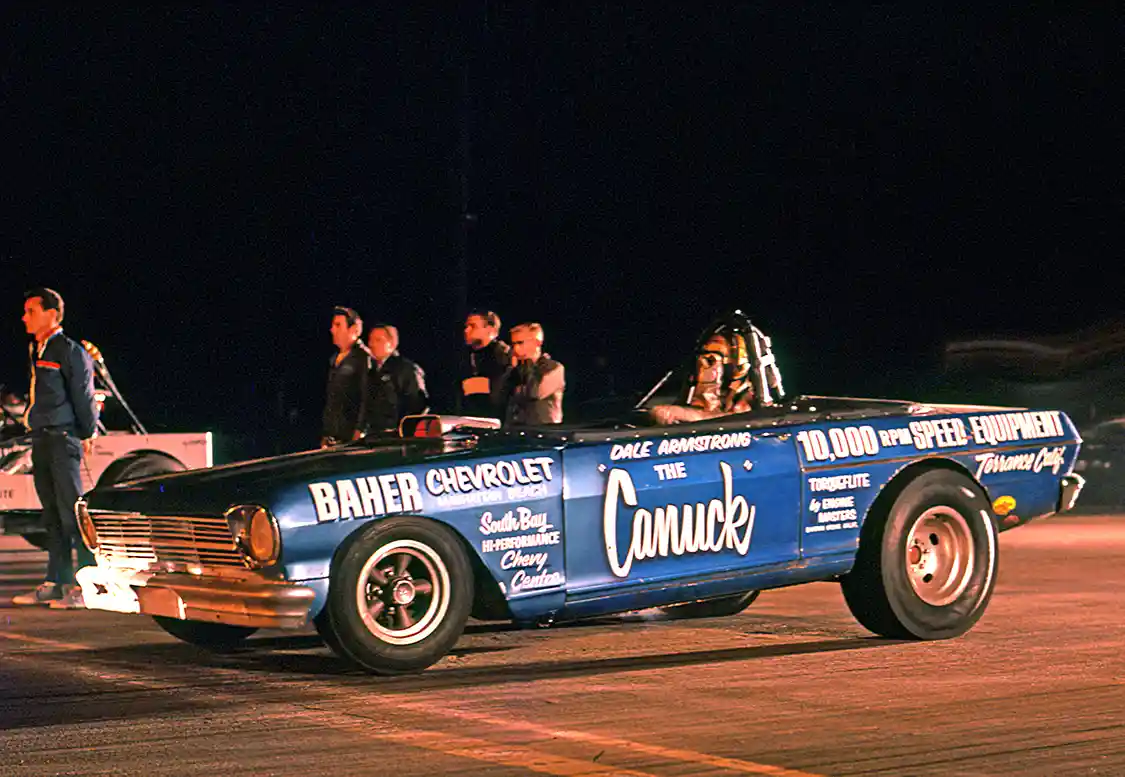
Born and raised in Alberta, Canada, by the mid ’60s, Armstrong had moved to Southern California. He was an expert mechanic and quickly became an outstanding, but mostly local, racer.
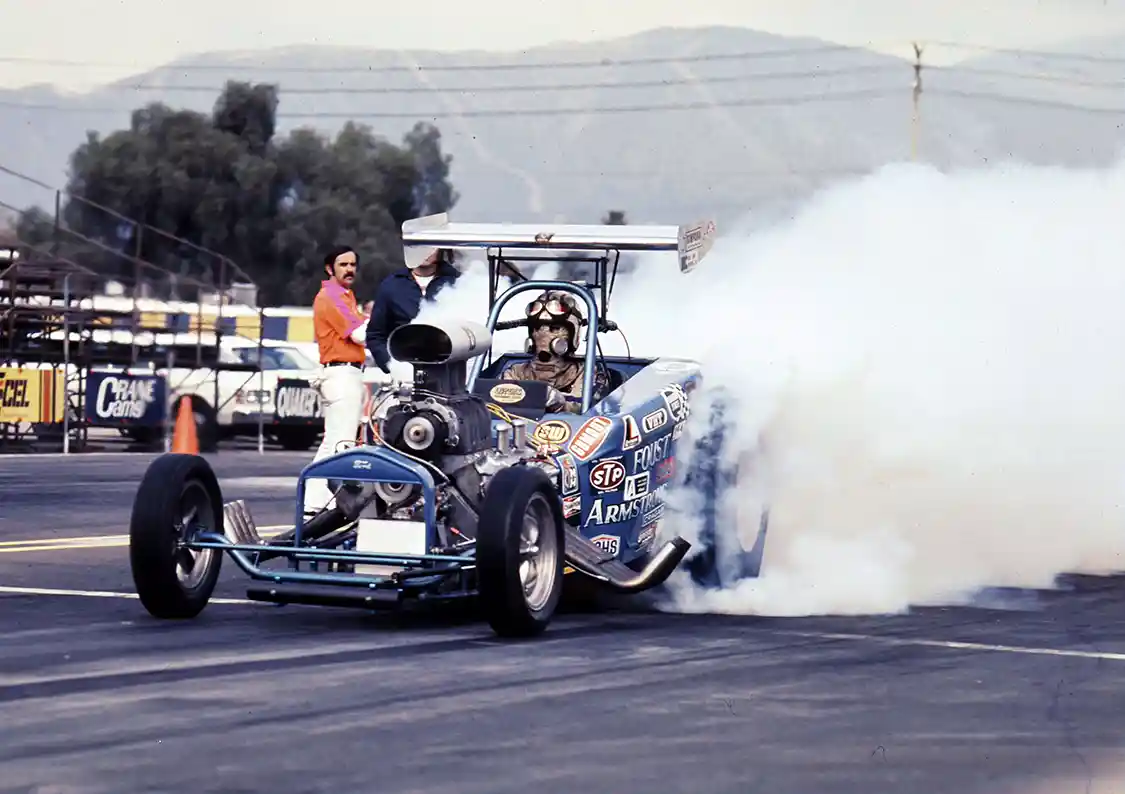
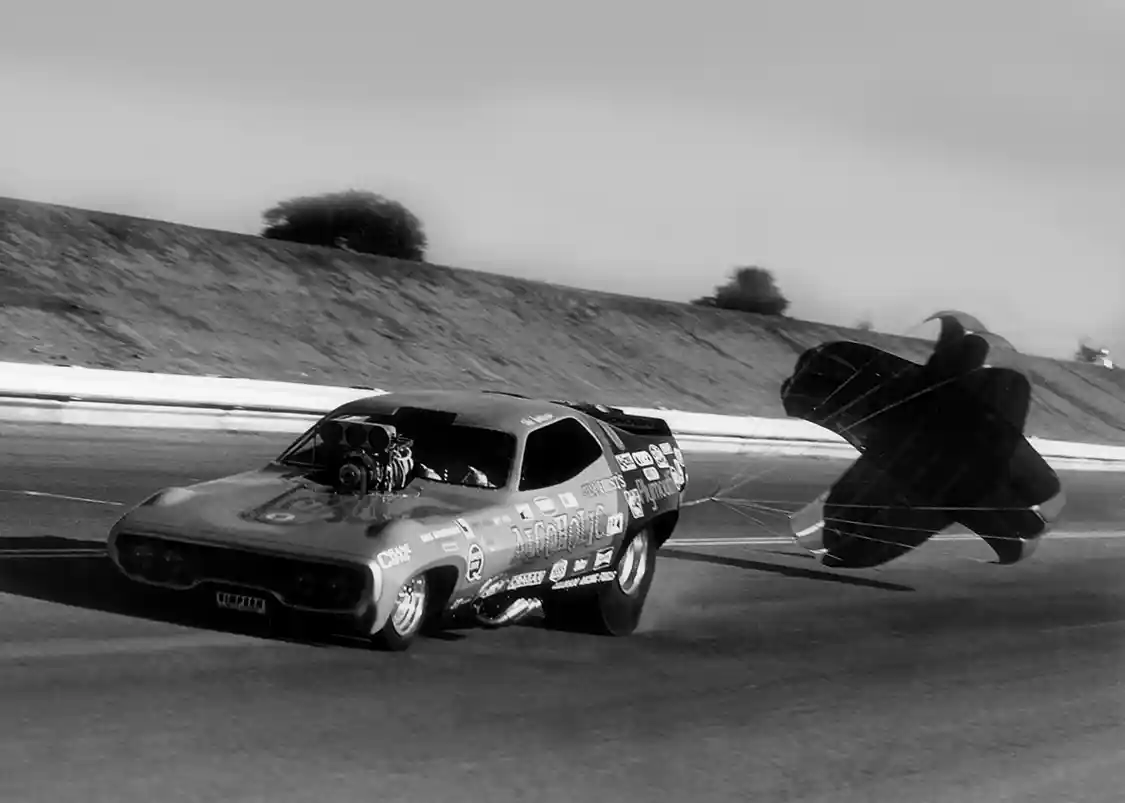
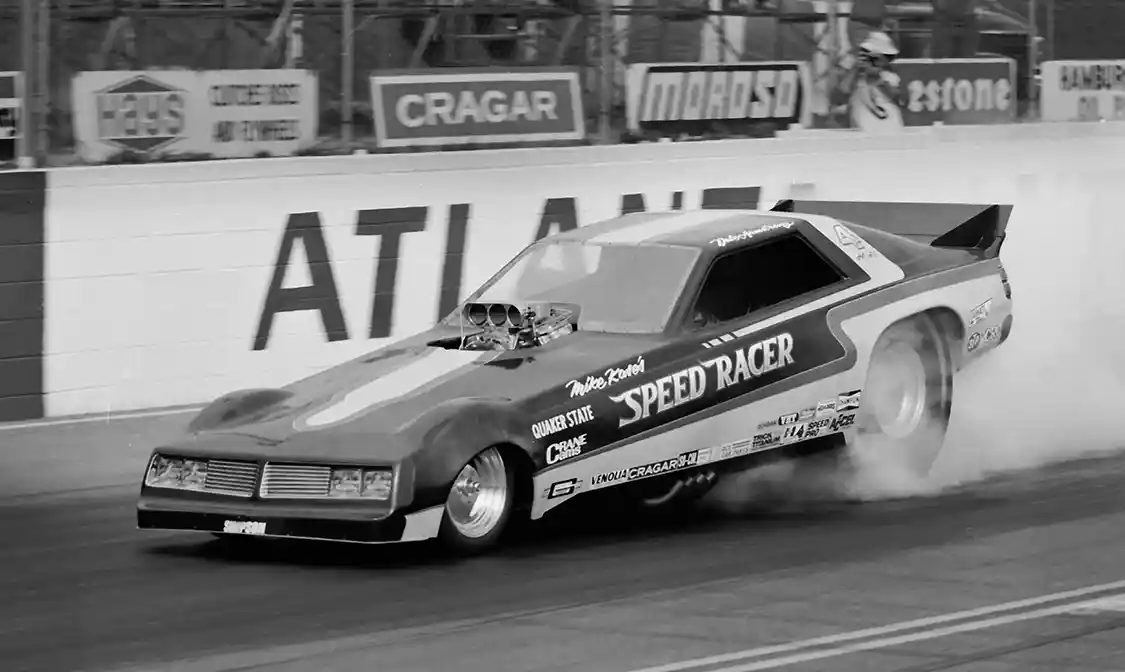
It wasn’t until the Pro Comp class was created in 1974 that Armstrong became a superstar, winning 12 national events, including three U.S. Nationals and one Winston Championship over a span of six years. He did all of this winning in every type of car eligible to race in Pro Comp: AA/Altered, A/Fuel Dragster (in which he won his first national event, the 1974 Winternationals, teamed with his close friend Ken Veney, whom he beat for the win), BB/FC, and finally BB/dragsters. In 1980, he moved up to fuel Funny Car with car owner Mike Kase and drove the Speed Racer to three runner-ups and a national record of 5.89 in his last race as a driver in the 1981 Winston Finals.
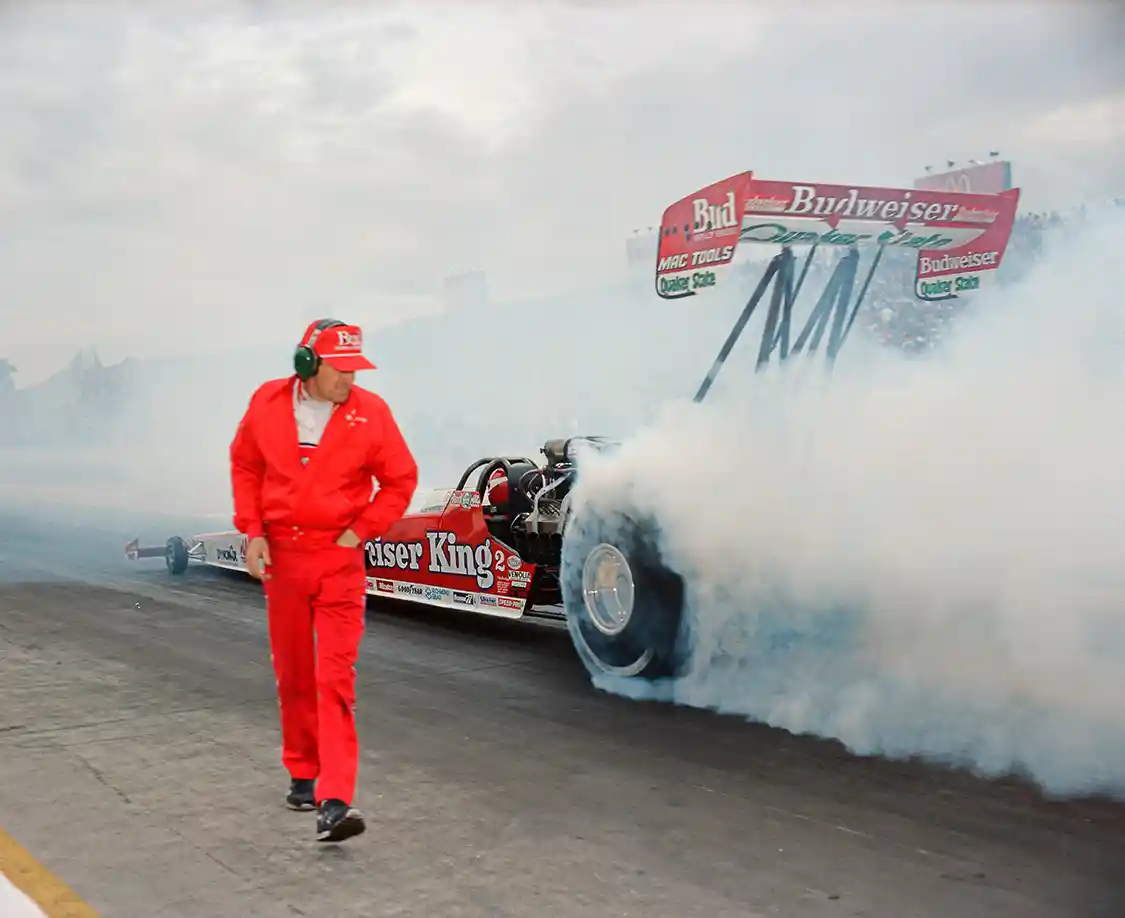
Armstrong’s “second” career began in 1982 as a crew chief for Kenny Bernstein and the Budweiser King Funny Car team. It was here a major portion of his legacy was created and where he established himself as one of the all-time great drag racers and quite possibly the smartest ever. He had a difficult first year, though. Bernstein had trouble driving the car until Armstrong himself made a pass and discovered it was undriveable, but soon the group started to gel and quickly became the team to beat, winning four consecutive Winston Championships (1985-88), then in TF in 1996, and 49 races throughout 16 years. Bernstein was going to be successful, but to say Armstrong made him a superstar is an understatement.
Bernstein worked his magic in the boardrooms, securing a budget that enabled Armstrong to dream big, and then turn them into opponent-crushing reality. Those dreams of advanced technology propelled the Bud King cars to records, wins, championships and a place in drag racing history as one of the baddest racing teams ever.
Obviously there is much more required of a successful tuner than just being a dreamer and an innovator. You also must have intuition and street smarts. You can create the most wicked and technologically advanced car ever, but if you can’t read a race track on Sunday mornings at 11 a.m., you’ll go nowhere. Armstrong had a gift for reading a track and tuning the car for the given conditions, and because of all of his innovations, the car simply hauled ass.
Bernstein says that Armstrong was a “gigantic thinker, always thinking about the car and how it could be better. His great strength was that he was so mechanical. He knew not only what something did, but why and how it did it. He understood the whys of how something worked, or didn’t work, as the case sometimes was.”
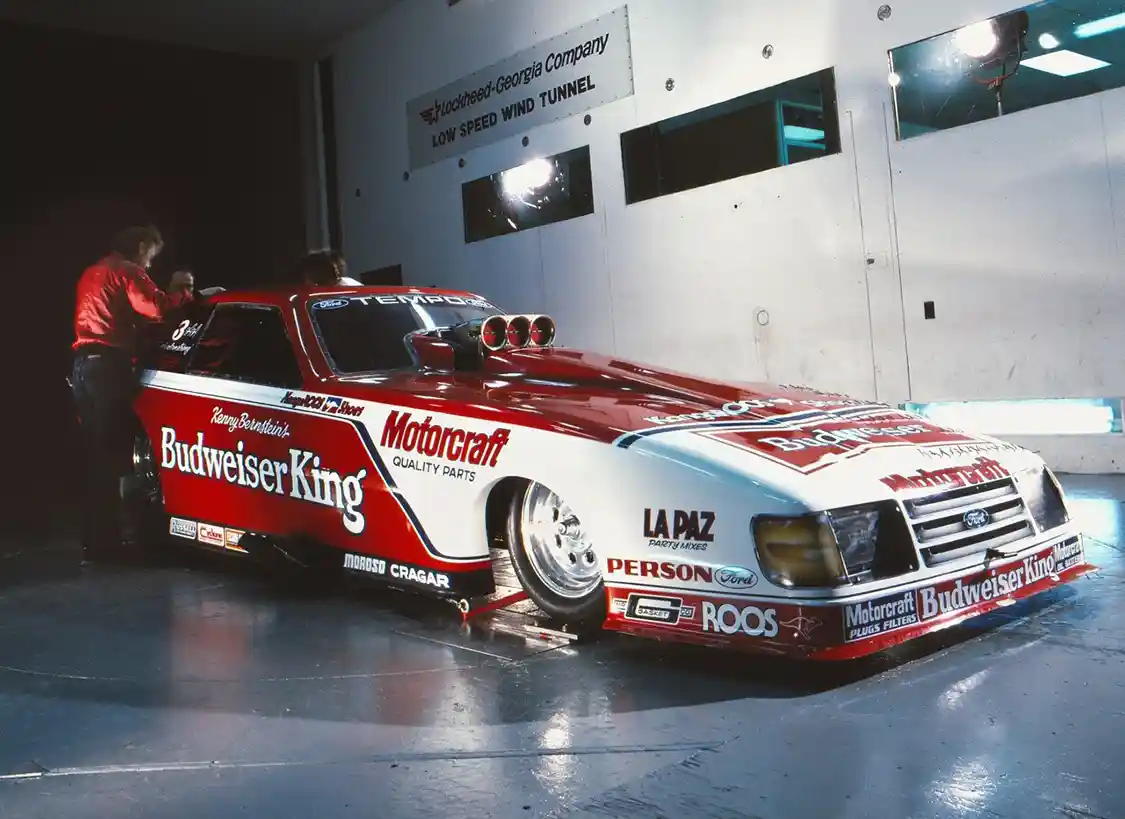
A quick look at the technology Armstrong either developed or perfected on the Bud King exemplifies his genius: He was first to fully develop an FC body in a wind tunnel (Lockheed, Marietta, Georgia 1994 Ford Tempo); first to successfully utilize an internal onboard computer and data acquisition system (RacePak, 1984) and the first to successfully utilize a multi-stage lock-up clutch (1986).
In 1990, the team switched to Top Fuel Dragsters and it was here Armstrong felt his legacy lay, which, considering his years of dominance in the Funny Car, is almost unbelievable. In 1992, at the Gatornationals, Armstrong, with Wes Cerny, tuned Bernstein through the magical 300-mph barrier. It’s a record Armstrong said defined his entire drag racing career, and surprisingly, in his opinion, is his greatest achievement. “Being the crew chief on the first car to run 300 means more to me than any national event win or any Winston championship,” said Armstrong to National Dragster’s Steve Waldron in 2001. “There isn’t any question at all. People will forget what years we won the Winston championship, but they’ll never forget when the first 300 was run and who did it.”
While there was no technological magic bullet to the 300-mph run, there was a pneumatically controlled, adjustable-mag drive (developed with Wes Cerny) on the car, which was another Armstrong innovation.
Not everything Armstrong thought of worked, however.
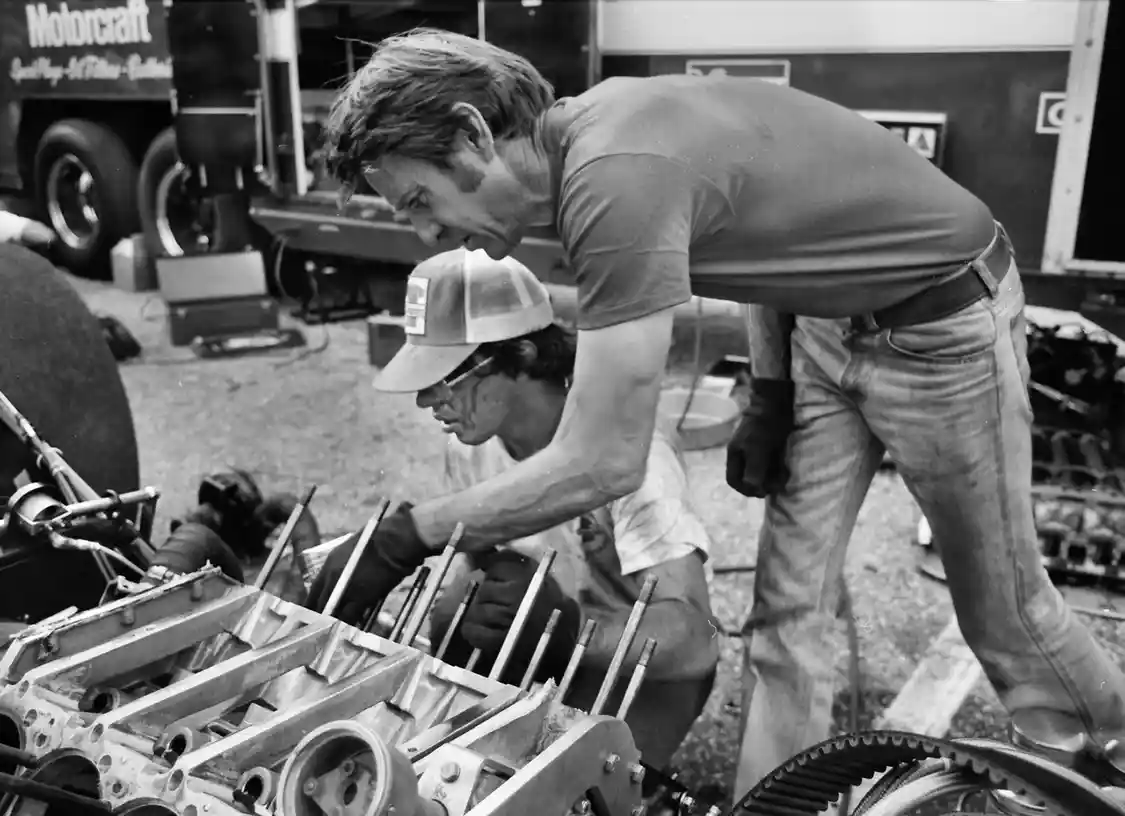
Bernstein recalls the McGee quad-cam engine Armstrong wanted to try in the late ’80s as one of the bigger failures and says it illustrated their relationship. “I never said no, not one time, to his ideas, but there were times when we just couldn’t get things to work, and the McGee was one of those things. We ran the hell out of that thing, we tested and tested and tested, and we just couldn’t get it to work. We spent $250,000 trying to get that engine to work, and couldn’t [it had an exhaust valve burning problem-ed.] Finally, it was just time to pull the plug, sometimes you have to look at the situation hard. Dale realized it.”
Another was an air clutch developed with Bob Brooks. “We pounded on that thing for months, it would smoke the tires instantly,” recalls Bernstein with more than a hint of frustration still evident some 25 years later. “We did tons, and I mean tons, of testing with that thing, and it was the only time I ever said, ‘Stop, we gotta go back.’ But we tried like hell to make it work; we really did.”
Then there is the infamous engine dyno built in the team’s California shop in the early ’90s. The legendary stories of the dyno blowing up and almost burning the building down are true. It was built to test fuel motors, but after testing it with alcohol motors, “we were too scared to run it on nitro,” laughs Bernstein today. “There was just no way. One time the alcohol motor blew up; I mean this huge, loud-as-hell explosion and oil and alcohol fumes so thick you could hardly breathe. We were in the office; it was awful. Typical Dale, he just opened the doors to air out the shop, then he and Brooks promptly went to lunch. Well, the neighbor thought we had all been killed, seriously. He was afraid to come inside and look. So he called 911, and here comes all these fire trucks, ambulances, police cars—sirens screaming—and Dale is out having lunch! It just didn’t work out. He realized pretty quick he couldn’t learn the things he wanted to learn, so we used it to seat clutch discs a couple of times a year. It was just part of the deal of having Dale—you know what I mean— we were so far ahead with all of his thinking, that a few failures were more than ok.”
Bernstein is quick to tell another dyno story, this one a little more serious. Armstrong and Brooks fired it up having forgotten to go up on the roof to remove the huge steel exhaust caps (to keep rain and birds out of the giant mufflers), which promptly blew straight up in the air, very high. “Those caps were real heavy, and one crashed down all the way through the roof and into the office, just 6 feet in front of Christine [Bernstein’s secretary], and it smashed the fax machine—just flattened it. If it would have hit her, it would have killed her—no question. There was a giant hole in the roof, it was unbelievable.”
After winning the 1996 TF Championship, Armstrong and Bernstein parted company, and Armstrong moved to Don Prudhomme’s team where he continued to impress and innovate, perfecting the set-back blower and tuning young driver Larry Dixon to a handful of wins and records, including busting through the 4.40-second barrier.
He retired from the sport in 2000, but stayed very busy building cars, engines and doing just about anything mechanical. Today, if you want to see and hear an Armstrong engine run on nitro, go to a cacklefest and find the original Wale & Candies 1963 TF Dragster. It’s painted sparkly blue and will no doubt be one of the loudest and longest running cackle cars at the event. The late Paul Candies had Armstrong build the motor, and now Paul’s two sons, PB and Brett, proudly show it off several times each year with a crew of lifelong friends, all of whom were part of the car’s original Louisiana team.
Although Armstrong was a mechanic’s mechanic, his intelligence was far from being limited to just race cars and mechanical things. Bernstein says Armstrong’s most impressive trait was his ability to offer solutions to the numerous business challenges Bernstein faced in running both a NASCAR and an Indy car team. “He was a great reader; he had tremendous knowledge and a thought process that enabled him to understand things from a unique perspective. If I had trouble in NASCAR or Indy, I could go to Dale and talk about it, and never, not one time, did he not come up with a different thought process which helped me tremendously. He was so smart at understanding problems. It let me think about new answers and directions that I hadn’t thought about. I cherish those moments as much as anything we did together on the race track.”
The technological advances developed by Armstrong and others during the great era of the ’80s and ’90s were a story unto themselves and created tremendous anticipation within the sport (and even outside of it) before they hit the track. As the records dropped and speeds increased, the awe of the sport was immeasurable. It’s the nature of racing, when it’s innocent and free, free in terms of doing whatever you want, it’s at its best and most popular. Plus, the best people want to be challenged, and Armstrong answered the challenge perhaps better than anyone.
Tragically, Dale Armstrong died Friday, November 28, 2014.
In a sport of geniuses it’s difficult, if not impossible, to pick the one person who is truly smarter or better than everyone else, but, in the eyes of many, including most of his peers, Armstrong is that guy. While Kenny Bernstein may have benefitted the most from Dale’s genius, the reality is that all of us who knew him, or simply watched him race, are the lucky ones. We got to witness a guy doing what he loved better than anyone else ever thought possible.
All EV Vehicles
Jack Kerridge Turned His Passion for Fiat into a Flourishing Business Meet Jack Kerridge, the automotive talent behind the wheel at Silent Classics based in… Continue reading
Jerome Andre . August 02, 2023
Buyer’s Guides
Skylight Blue Stunner Saved from a Farm All of us get into custom vehicles in many different ways. Shane Hall from College Grove, Tennessee, did… Continue reading
Adam Johnson . September 08, 2023
Chevrolet
A 1980 Chevy K5 Blazer That’s as Classy as it is Low Photos by Brandon Burrell/Burrell Images The adjective “classy” (class-y / klas’e) is used… Continue reading
GREGG OVIST . April 16, 2024
Drive Online
A World Apart. One weekend, a while back, I had the opportunity to attend two car shows. Both shows were hosted by true automobile enthusiasts.… Continue reading
TOMMY SCALERA . June 29, 2023
Feature Stories
AS SEEN IN OUR TREAD MARCH/APRIL 2026 ISSUE – Buy Now! The Overlanding Fortress When you’re structuring a build, there are different ways that you… Continue reading
Chad Dougla S . April 28, 2026
Chevrolet
Custom Systems for ’88-’98 GM Trucks With the scarcity of affordable C10 trucks out there, the interest in finding other vintage GM truck models has… Continue reading
John Mata Jr. . August 23, 2023



Super Run 2026 Classic Car Show
Super Run 2026 Classic Car Show Casablanca Resort 950 West Mesquite Blvd Mesquite, NV 89027
Concours D'Elegance
Cobble Beach Resort 221 McLeese Dr, Kemble, ON N0H 1S0
Charity Car Show
Mesa Marketplace 10550 E. Baseline Rd, Mesa , Az 85209
CHICO CONCOURS Car Show
Silver Dollar Fairgrounds 2357 Fair Street, Chico, CA 95928
Goodguys 33rd Summit Racing Lone Star Nationals
Texas Motor Speedway 3545 Lone Star Circle
We use cookies to enhance your browsing experience, serve personalized ads or content, and analyze our traffic. By clicking "Accept All", you consent to our use of cookies. Visit our Cookie Policy for more info.



 Please wait...
Share Link