










 Motortopia Staff
.
April 09, 2026
.
Press Release
Motortopia Staff
.
April 09, 2026
.
Press Release
You pull in, you swipe your card, you stand there inhaling fumes while the numbers tick upward, you get back in the car smelling faintly of petroleum, and you call it Tuesday. It was always like that. So it stayed like that.
Until the math stopped working.
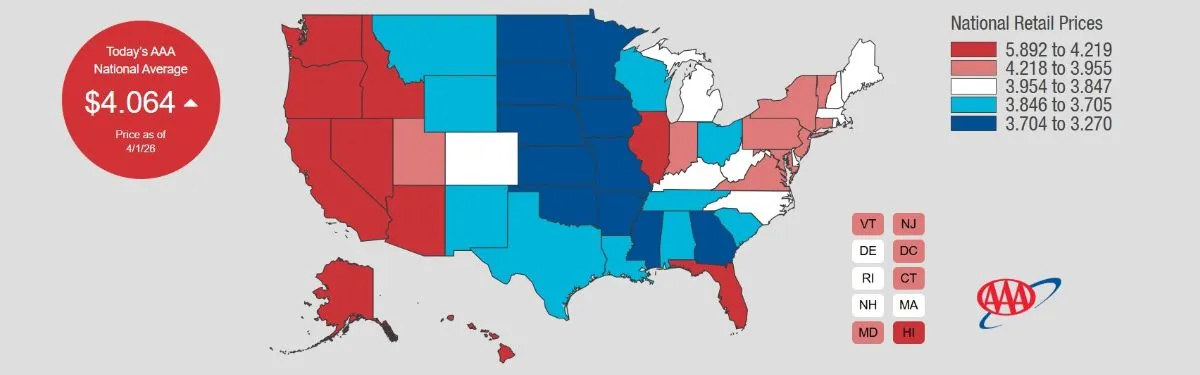
As of April 2026, the national average for regular gasoline in the United States sits at $4.02 per gallon, the first time it has crossed that threshold since 2022, according to AAA’s national tracking data. That number alone tells part of the story. The rest of it lives in the extremes: California drivers are paying $5.89 per gallon for regular. Oklahoma, the cheapest state in the country right now, sits at $3.27, itself up 18% from a year ago, when Mississippi held the cheapest-state title at $2.69 (SmartAsset, April 2026).
For diesel, the numbers are starker. According to AAA and SmartAsset data from April 2026, the national average for diesel has risen 50% year-over-year, from $3.62 to $5.43 per gallon. In Arizona, Florida, Texas, and the Carolinas, diesel costs have climbed more than 60% in twelve months. In many states, a gallon of diesel now costs north of $6.00.
These are not the numbers of a market going through a temporary correction. They reflect a structural disruption driven by geopolitical instability, supply chain stress, and a global crude oil market that has rarely been less predictable. The price at the pump has always fluctuated. What’s different in 2026 is that the floor keeps moving up.
Now for the other side of the equation, the one that gas station receipts never show you.
The U.S. national average residential electricity rate in early 2026 is approximately $0.17–$0.18 per kWh, according to multiple sources including the EIA, ElectricChoice, and ChooseEnergy. State rates range from a low of around $0.11/kWh (North Dakota, Louisiana) to a high of $0.40/kWh in Hawaii, with California at roughly $0.34/kWh and most of the continental US between $0.12 and $0.25/kWh.
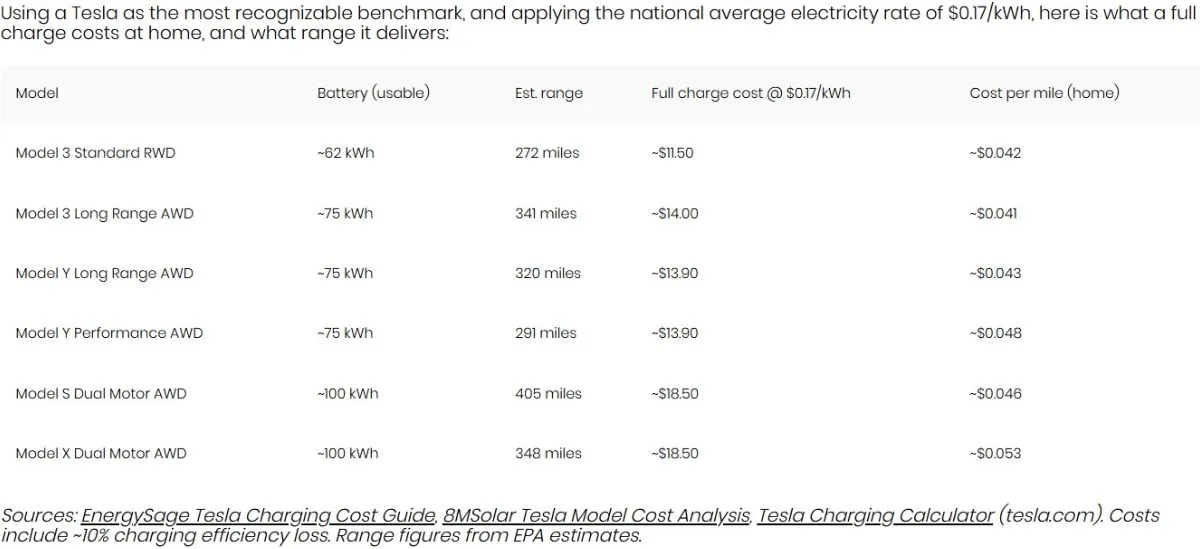
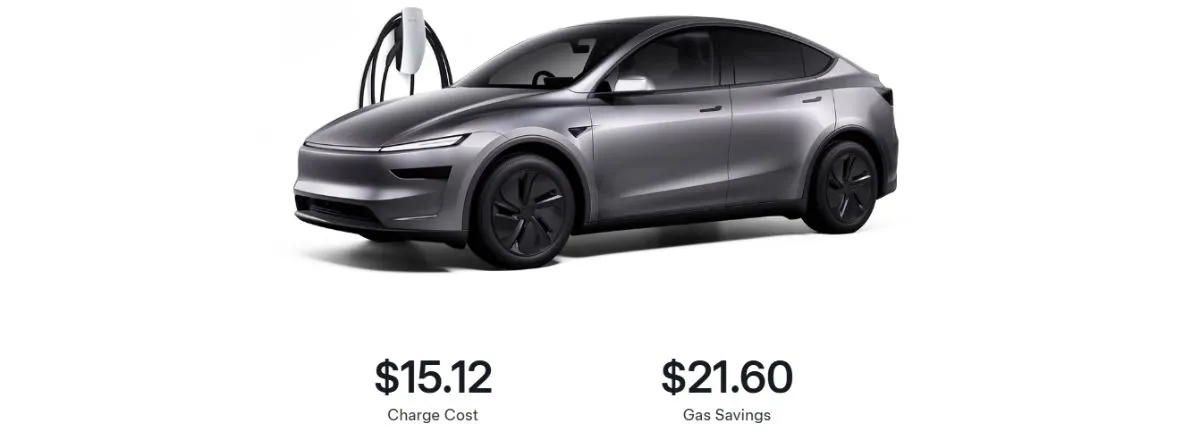
A full charge on the most popular EV in America (the Model Y Long Range) costs $15 at home. It takes you over 300 miles. You do it overnight. You wake up full.
Compare that to filling a 16-gallon tank on a comparable SUV at today’s national average of $4.02: $64.32. On a good day, that gets you 350 miles at 22 mpg. And you had to go somewhere to do it.
At the state extremes: in North Dakota ($0.11/kWh), that same Model Y charges for around $10. In California, where electricity sits around $0.34/kWh, it rises to roughly $30. Still significantly less than the $94 a California driver pays to fill a 16-gallon tank at $5.89/gallon
Most of the people who work with Fuel2Electric have already made their decision. They own electric vehicles. They’ve driven them, charged them overnight, and experienced firsthand what it means to never visit a gas station again, not as a political statement, but as a practical reality that quietly improves daily life in ways they didn’t fully anticipate.
They stopped smelling like fuel. They stopped scheduling oil changes. They stopped watching the pump counter tick past $80 while exhaust fumes competed for their attention. They stopped explaining a slow leak to a mechanic. These aren’t dramatic transformations. They’re the accumulation of small frictions, so familiar that most people don’t register them as frictions at all, until they’re gone.
Not everyone can buy a new electric vehicle. New EVs represent a significant capital commitment, and for many individuals and small businesses, replacing a working vehicle fleet with new hardware simply isn’t viable in the near term. The vehicle you have runs. It just runs on something that costs $4 to $6 a gallon and is getting more expensive from one day to another.
This is exactly where EV conversion changes the equation. The vehicle you already own (your classic, your daily driver, your work truck, your delivery van) can be converted to electric without replacing it. You keep the chassis you know. You replace the powertrain. And you step off the gasoline price roller coaster permanently.
The durability argument matters too. Converting an existing vehicle extends its useful life dramatically, reducing the environmental cost of manufacturing a replacement, and giving you a drivetrain with far fewer moving parts. No exhaust system to corrode. No fuel injectors to foul. At $0.04–$0.05 per mile in energy costs versus $0.13–$0.18 per mile in gas, the payback math on conversion has never been stronger.
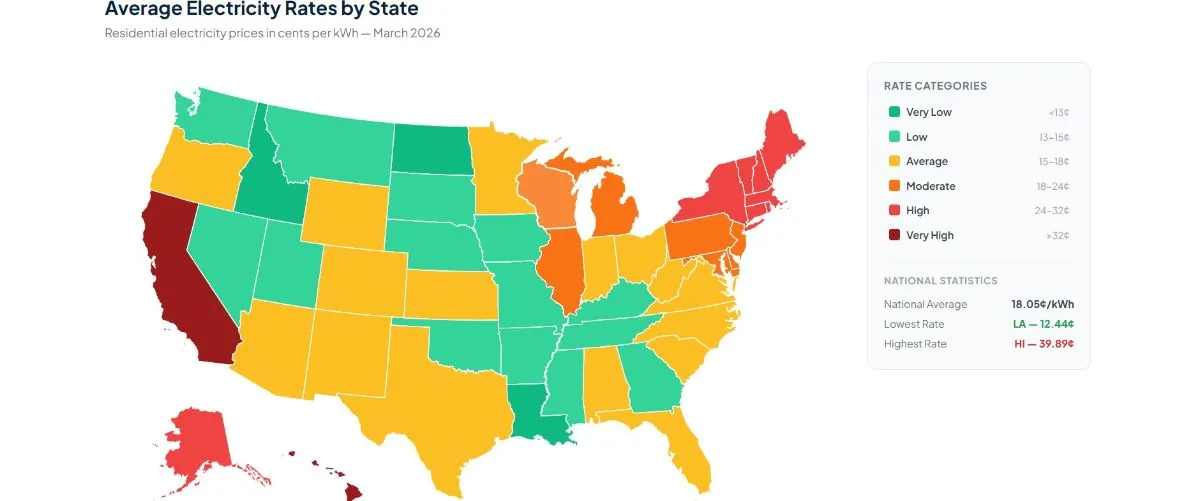
There is No State in the US Where Gasoline is Curently Cheaper Than Home-Charged Electricity for a Mid-Size EV.
What’s happening in 2026 is a quiet, practical, arithmetic realization that the thing we accepted as normal has a cost that keeps going up and a stability that was always an illusion. Gas prices are not going back to $2.69.
But for anyone who can’t or won’t buy new, the answer already exists. The vehicle you already have can be made to run on energy that costs less, fluctuates less, and can be generated at home.
That’s what Fuel2Electric is here to help you do. The math already made the argument. We’re just here to help you act on it. Continue reading.
https://www.fuel2electric.com/

Press Release
The Ultimate Recovery Tool — Now in Textured Matte Black. Introducing the all-new Hi-Lift® Stealth Edition – the same legendary performance of our X-TREME Jack,… Continue reading
Motortopia Staff . June 30, 2026

Press Release
Nitrous Supply now offers an upgrade to its popular Super Hi-Flow bottle valve that looks as good as it performs. The DeLuxe model of the… Continue reading
Motortopia Staff . August 22, 2024
Press Release
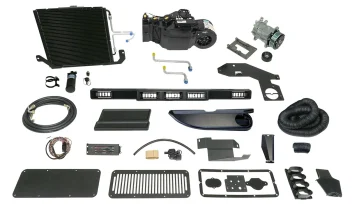
SAN ANTONIO, TEXAS (Oct. XX, 2025) – Vintage Air, the premier manufacturer of performance air-conditioning systems for classic cars and trucks, proudly announces its latest… Continue reading
Motortopia Staff . March 02, 2026
Press Release
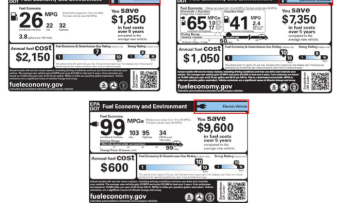
For decades, miles per gallon (MPG) was the number that defined how we measured a vehicle’s efficiency. It told us how far a tank would… Continue reading
Motortopia Staff . September 01, 2025

Press Release
We’d love to answer your questions and discuss our products and capabilities first-hand. If you want to hear from an EV expert that can simplify… Continue reading
Motortopia Staff . July 12, 2024

Press Release
COSTA MESA, CALIFORNIA – Toyo Tires® announces the new Open Country® R/T Pro, an on-/off-road rugged terrain hybrid M/T tire. Designed to tackle dirt, sand, mud, rocks,… Continue reading
Motortopia Staff . May 01, 2025




Southern Wisconsin All Airborne Chapter Annual Car Show
Petrifying Springs Park 5555 7th Street Kenosha, WI 53144
Goodguys 28th Griot’s Garage Colorado Nationals
The Ranch Events Complex 5280 Arena Circle, Loveland, CO 80538
Florence Fall Classic
Florence Fall Classic Car Show Old Town Florence Oregon
Elks Auto Show
Elks Auto Show 1140 Umpqua College Rd. Winchester OR. 97470
42nd Oregon High Desert Swap Meet, Car Show And Antiques
Deschutes County Fairgrounds 3800 Airport Way, Redmond, Oregon 97756
We use cookies to enhance your browsing experience, serve personalized ads or content, and analyze our traffic. By clicking "Accept All", you consent to our use of cookies. Visit our Cookie Policy for more info.



 Please wait...
Share Link