










 Motortopia Staff
.
June 08, 2026
.
News
Motortopia Staff
.
June 08, 2026
.
News
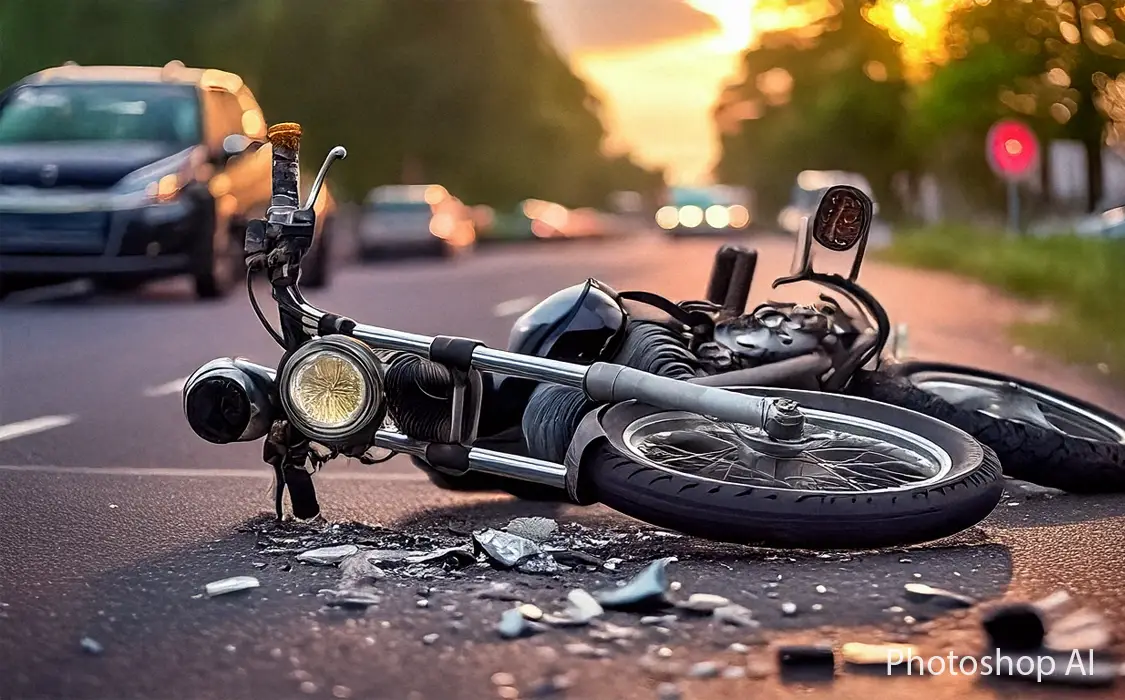
As the National Safety Council (NSC) reports it, the number of motorcycle fatalities in 2024 is 6,228 and the rate is 28.00 per 100 million vehicle miles. The council has also reported that motorcyclists contributed to 16.2% of all injuries and accounted for 3.6% of all fatalities in 2024.
Most motorcycle drunk-driving accidents are a result of alcohol abuse and lead to severe injuries that can last for a long time. According to the National Highway Traffic Safety Administration, 11,904 people lost their lives as a result of drunk-driving car accidents in the year 2024, marking approximately 30% of all road fatalities in the country.
There are certain things that an individual must do to protect their rights following a motorcycle accident involving drunk driving.
Let’s look at the implications of a drunk driving or motorcycle crash aftermath and examine the steps on how to address them.
With a regular accident, establishing liability is all about proving that there was a duty that was breached and that this breach led to the injury in question. When it comes to driving-under-the-influence accidents, many of the important questions surrounding the issue of liability will have already been settled as part of that charge.
A decision by an individual to operate a vehicle or a motorbike with a blood alcohol concentration higher than the prescribed amount means that he or she clearly did not care about other people’s well-being.
Your degree of exposure to alcohol affects both the strength of the case and the type of damages that can be sought. The courts usually perceive the act of drinking and driving to be more than a case of ordinary negligence. If such is the case, punitive damages are allowable and cannot be sought in negligence cases.
The intent of punitive damages is to punish the defendant for behavior that showed conscious disregard for other people’s safety. Being intoxicated while driving typically fulfills the legal definition of this type of damage in several jurisdictions.
The real impact of the risk associated with punitive damages is quite significant. Insurance policies typically do not cover punitive damages, so whatever gets awarded usually comes out of the defendant’s own personal assets. The possibility of being awarded punitive damages increases settlement pressure before trial.
Insurers and defense attorneys know juries in drunk driving matters tend to be less sympathetic to the defendant. Cases where drivers have a high BAC or prior DUI convictions routinely settle for amounts that reflect that exposure.
The requirements to recover punitive damages differ from one jurisdiction to another. Normally, these cases involve showing that the defendant acted in a manner characterized by extreme recklessness and deliberate disregard for the well-being of others.
According to Orange County motorcycle accident lawyer Matthew R. Price, not all accidents in which a driver is at fault are the result of negligence. Sometimes, legitimate accidents do happen. A large number of motorcycle accident cases involve careless or negligent behavior by one party or the other.
A motorcyclist who is involved in an accident because of a drunk driver’s negligence is now the subject of two simultaneous proceedings: a criminal trial and a civil action. Both legal proceedings are governed by different criteria. The standard in a criminal case is that proof of guilt has to be established beyond any reasonable doubt. Meanwhile, in a civil case, the plaintiff just needs to prove that the defendant caused the accident and the resulting injury.
Once there’s a criminal conviction for DUI, the civil case can use that outcome right away. It is directly admissible to show that the driver was operating the vehicle while impaired, so the civil matter usually does not have to replay the whole impairment issue again. A DUI conviction can really tip the scales against the driver’s credibility in a civil hearing or during a deposition.
If the criminal case gets resolved before trial, which happens in most DUI prosecutions, then that plea or the conviction is still admissible. The liable driver in a criminal proceeding could be found not guilty, but this judgment will not prevent the filing of a civil suit. The standard of proof for a civil case is different. A fact that failed to convince a jury in a criminal trial may be adequate in a civil lawsuit.
Both the civil case and the criminal case come with different strategic effects. The civil attorney may coordinate with prosecutors and review the criminal file, including field sobriety results, BAC measurements, officer observations, and any earlier DUI history that can matter for punitive damages. That file often supplies evidence that makes the civil liability analysis much easier than it otherwise would be.
The actions taken in the immediate aftermath of a drunk-driving motorcycle accident affect the firmness of every later legal claim and everything else that follows. Evidence that exists at the scene begins degrading within hours.
When a motorcycle crash involves drunk driving, the injured person may have access to extra legal claims that usually aren’t there in many other types of accident matters. In particular situations, the case could cover punitive damages, potential claims toward a business that unlawfully served alcohol, and even evidence connected to a related criminal conviction. All these factors can increase the potential compensation in a civil lawsuit. The person who decided to consume alcohol and then operate the vehicle is clearly liable under the legal system.
Should a bar or restaurant ignore a person’s state of intoxication and serve them alcohol, the business may become involved in liability determination proceedings.
The proof people rely on can be police statements, court or criminal records, and camera footage. NHTSA statistics on drunk driving show these accidents are frequent and mostly preventable.
When drunk driving involves motorcyclists, they suffer the most severe injuries. The legal framework applicable to these cases reflects that seriousness.
Acting promptly to preserve evidence, identify all liable parties, and understand the full scope of available recovery is what allows that framework to produce positive outcomes.
News
Photo by: pixabay.com Classic and antique cars, those 20 years or older, are a joy to own and show off. With only around 40 million… Continue reading
Motortopia Staff . June 12, 2025
News
Sedans Lost the Status War. SUVs Won It. Here’s Why Image Source: https://unsplash.com/photos/man-in-suit-walks-past-black-suvs-in-parking-lot-KDA9cnw8jZw Back at the end of the last century, status cars in the… Continue reading
Motortopia Staff . May 04, 2026
News
America’s vast network of highways facilitates transportation and commerce but also brings considerable safety risks. Even responsible motorists can end up in crashes, so knowing… Continue reading
Motortopia Staff . September 01, 2025

News
Image source: trinityrental.com Dubai is a real center of luxury cars. Here you can often find exotic vehicles that attract attention from the first minutes.… Continue reading
Motortopia Staff . June 23, 2025
News
You spend years hunting for the perfect classic car, months restoring every detail to perfection, and countless hours maintaining its pristine condition. Then one day,… Continue reading
Motortopia Staff . June 05, 2026
News
A car does not need a six figure price tag to feel premium. In many cases, the difference between an average daily driver and a… Continue reading
Motortopia Staff . June 01, 2026


Goodguys 28th Griot’s Garage Colorado Nationals
The Ranch Events Complex 5280 Arena Circle, Loveland, CO 80538
Florence Fall Classic
Florence Fall Classic Car Show Old Town Florence Oregon
Elks Auto Show
Elks Auto Show 1140 Umpqua College Rd. Winchester OR. 97470
42nd Oregon High Desert Swap Meet, Car Show And Antiques
Deschutes County Fairgrounds 3800 Airport Way, Redmond, Oregon 97756
International Drive Your Studebaker Day
89 Center Rd., Petaluma, CA
We use cookies to enhance your browsing experience, serve personalized ads or content, and analyze our traffic. By clicking "Accept All", you consent to our use of cookies. Visit our Cookie Policy for more info.


 Please wait...
Share Link