










 EVBG STAFF
.
October 23, 2025
.
Electric Vehicle Features
EVBG STAFF
.
October 23, 2025
.
Electric Vehicle Features
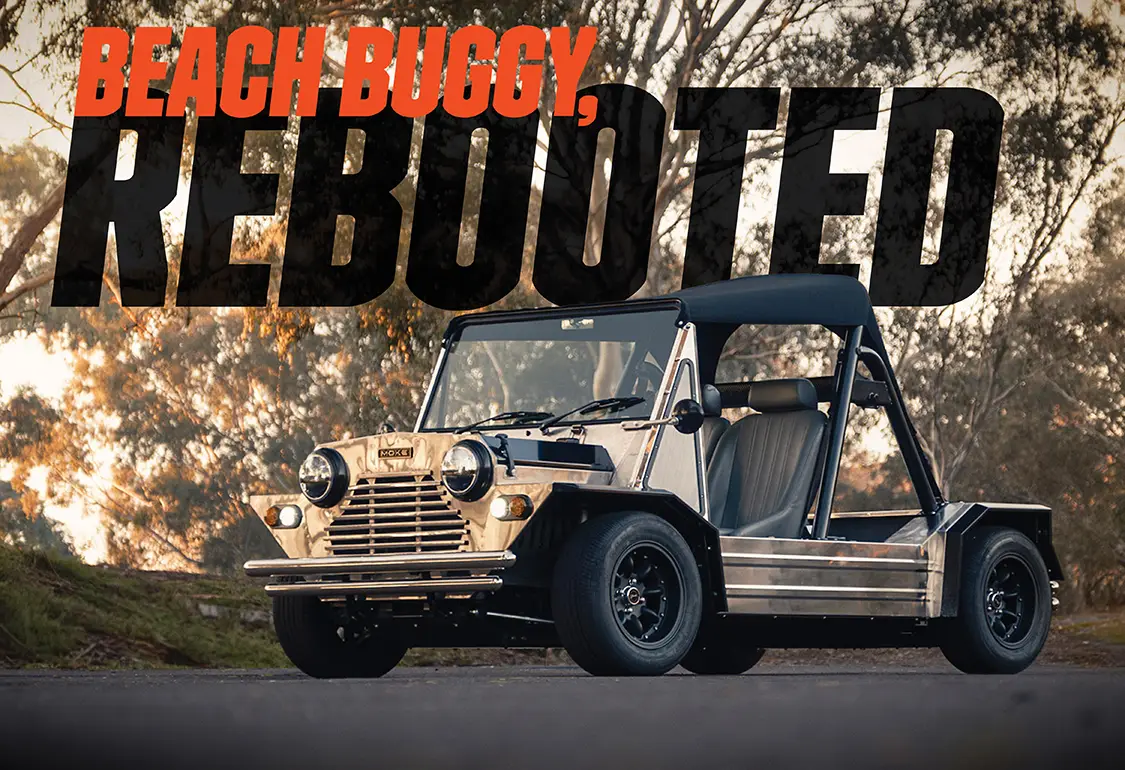
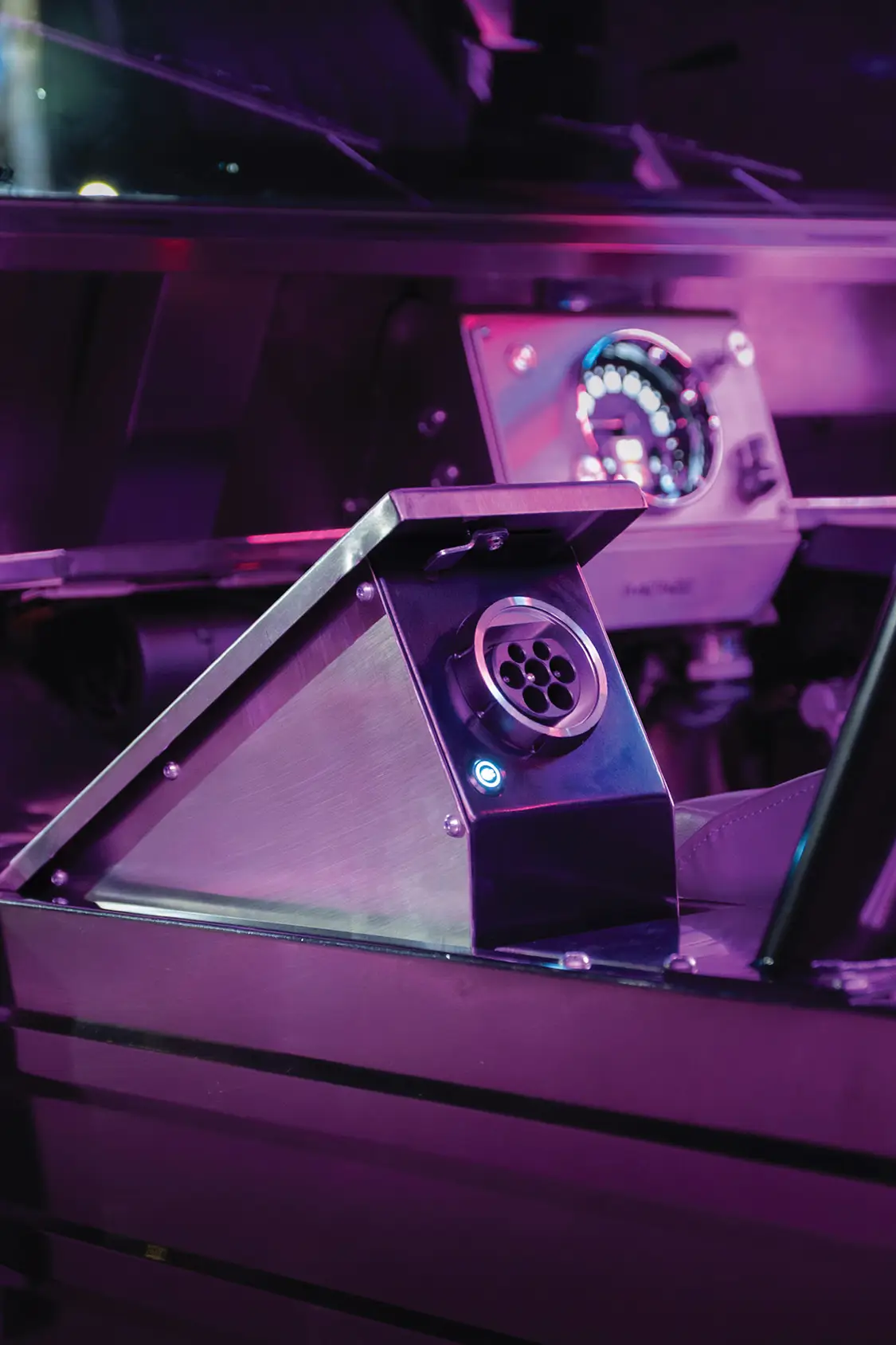
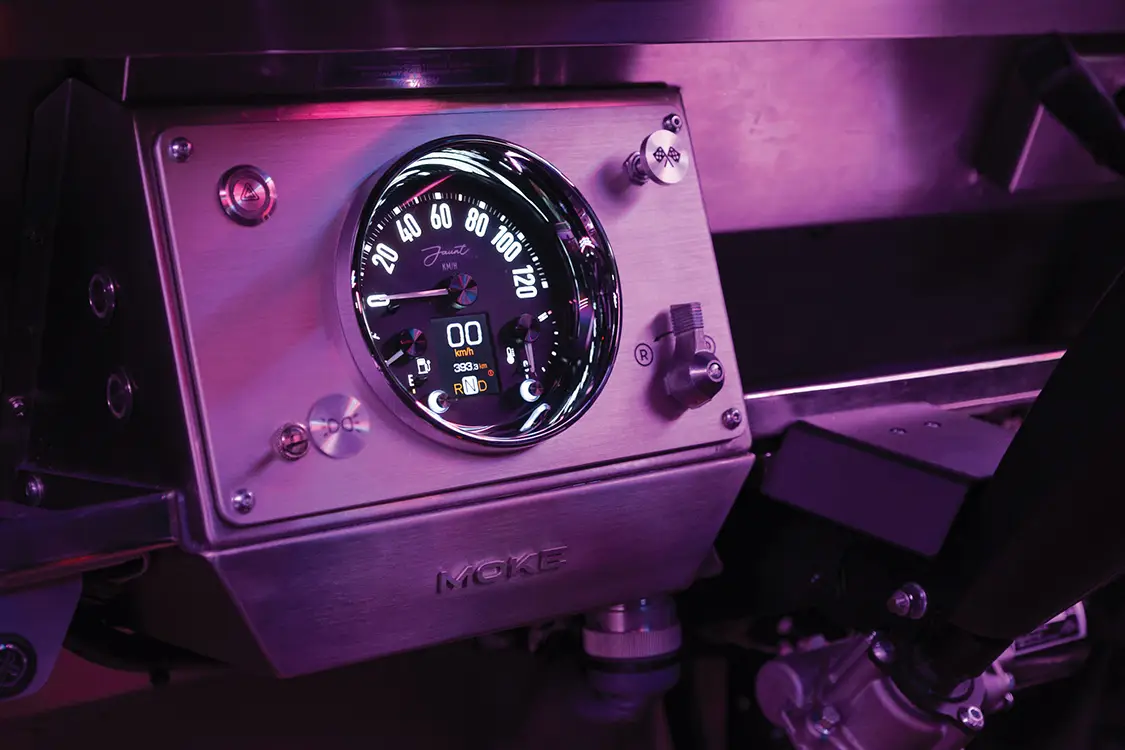
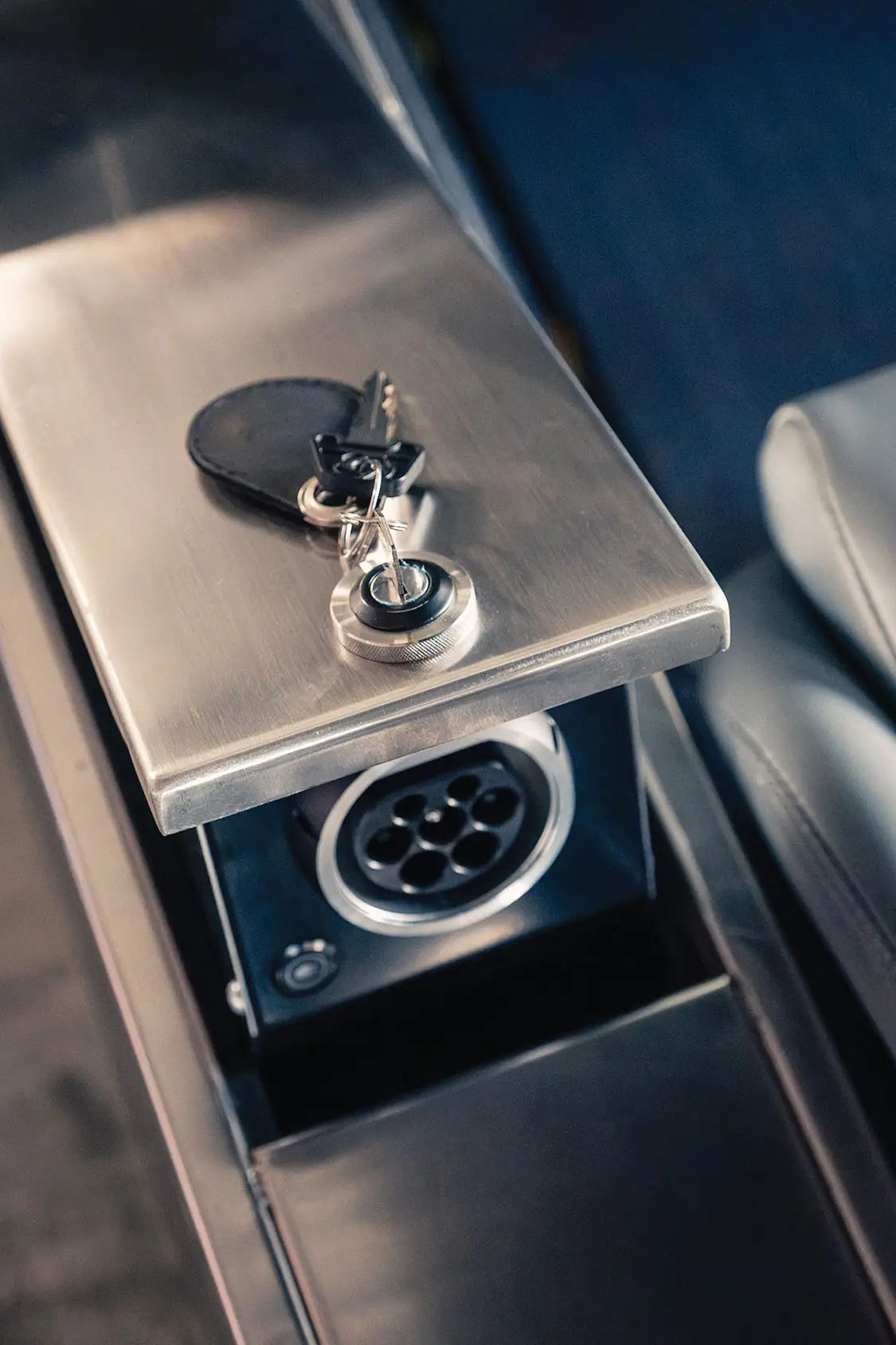
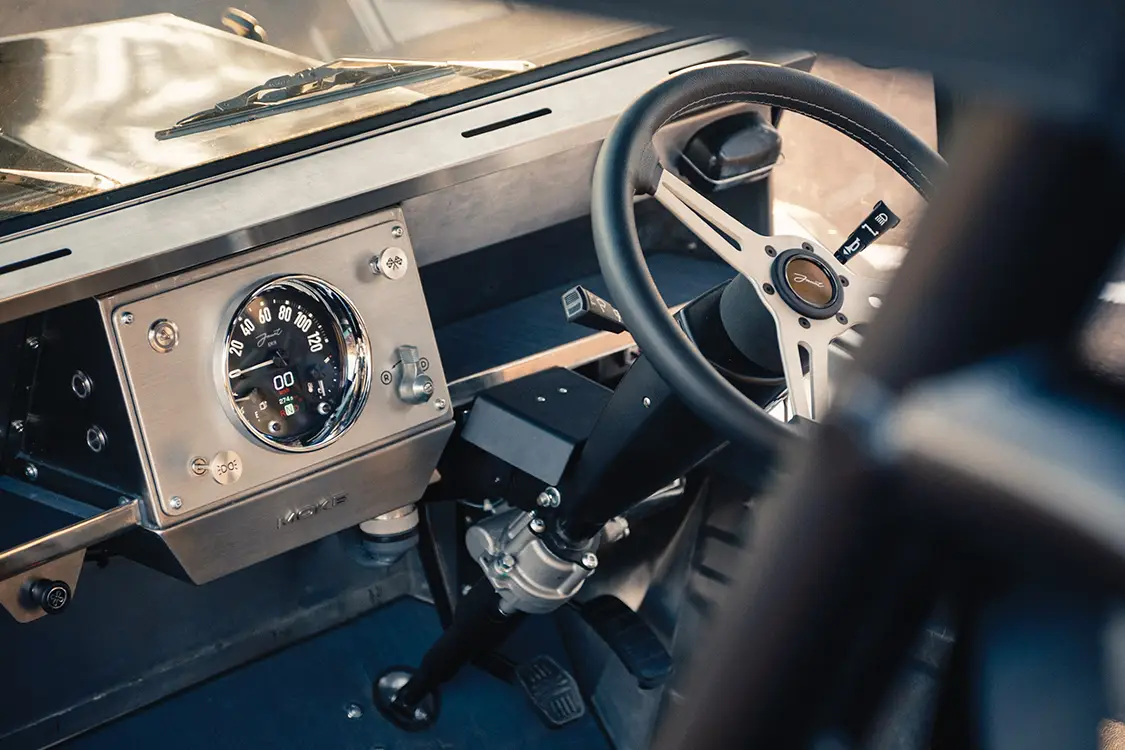
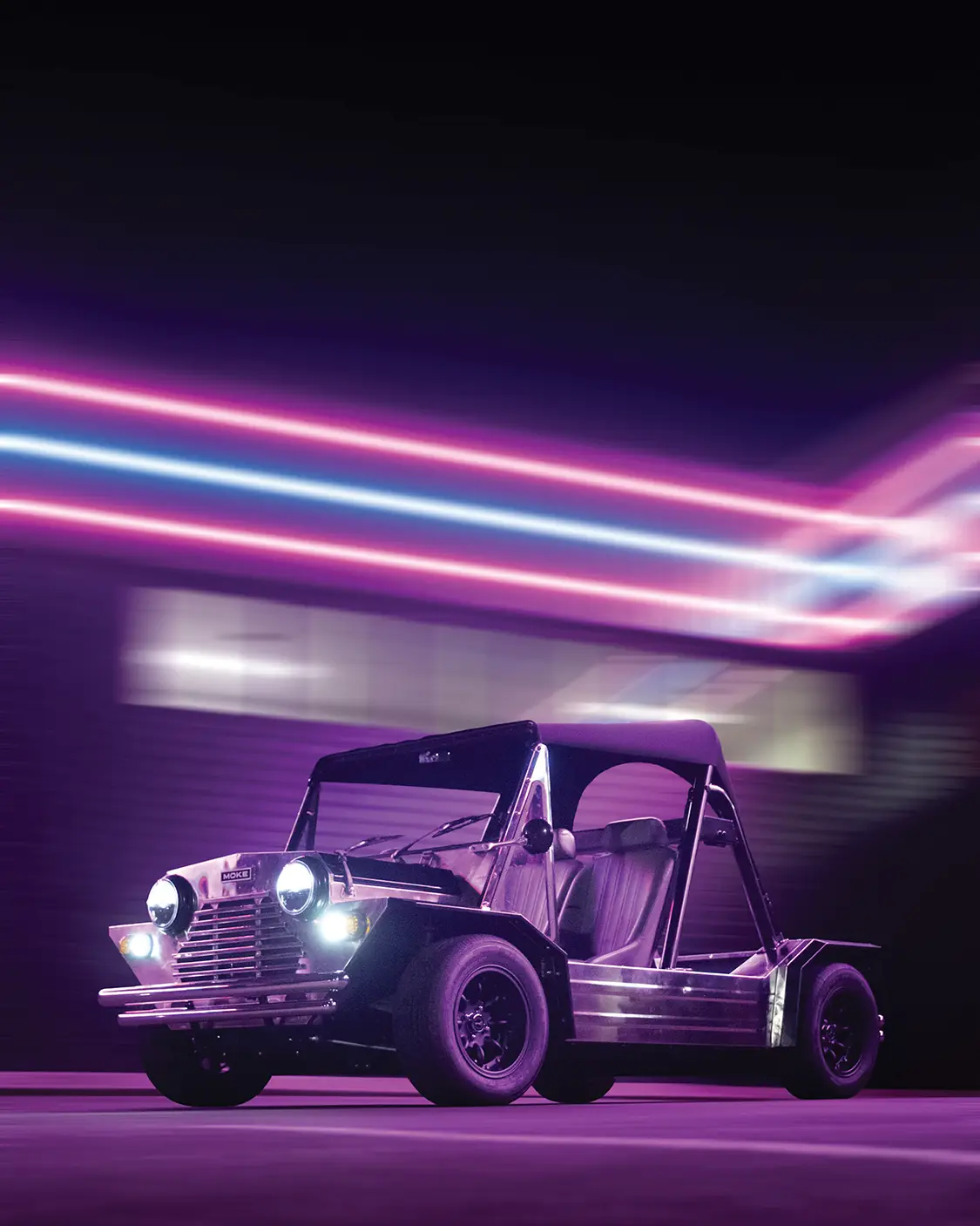
There’s a specific kind of grin that a Moke pulls out of you. It’s the open-air, elbows-out, hair-in-the-breeze smile that says, “Errands can wait.” Australia’s Jaunt Motors’ new electric Moke leans hard into that grin and then future-proofs it. From a distance, it’s a pure icon: upright windshield, bathtub shell, and canvas top. Up close, you spot the tells: a pop-up charge port instead of a fuel cap, a modern gauge set where Smiths dials used to live, and a near-silent drivetrain that swaps putt-putt for instant smiles. This isn’t a one-off or a backyard science project. It’s a fully engineered, government body-compliant, road-legal restomod you can order today, with deliveries targeting 2026.
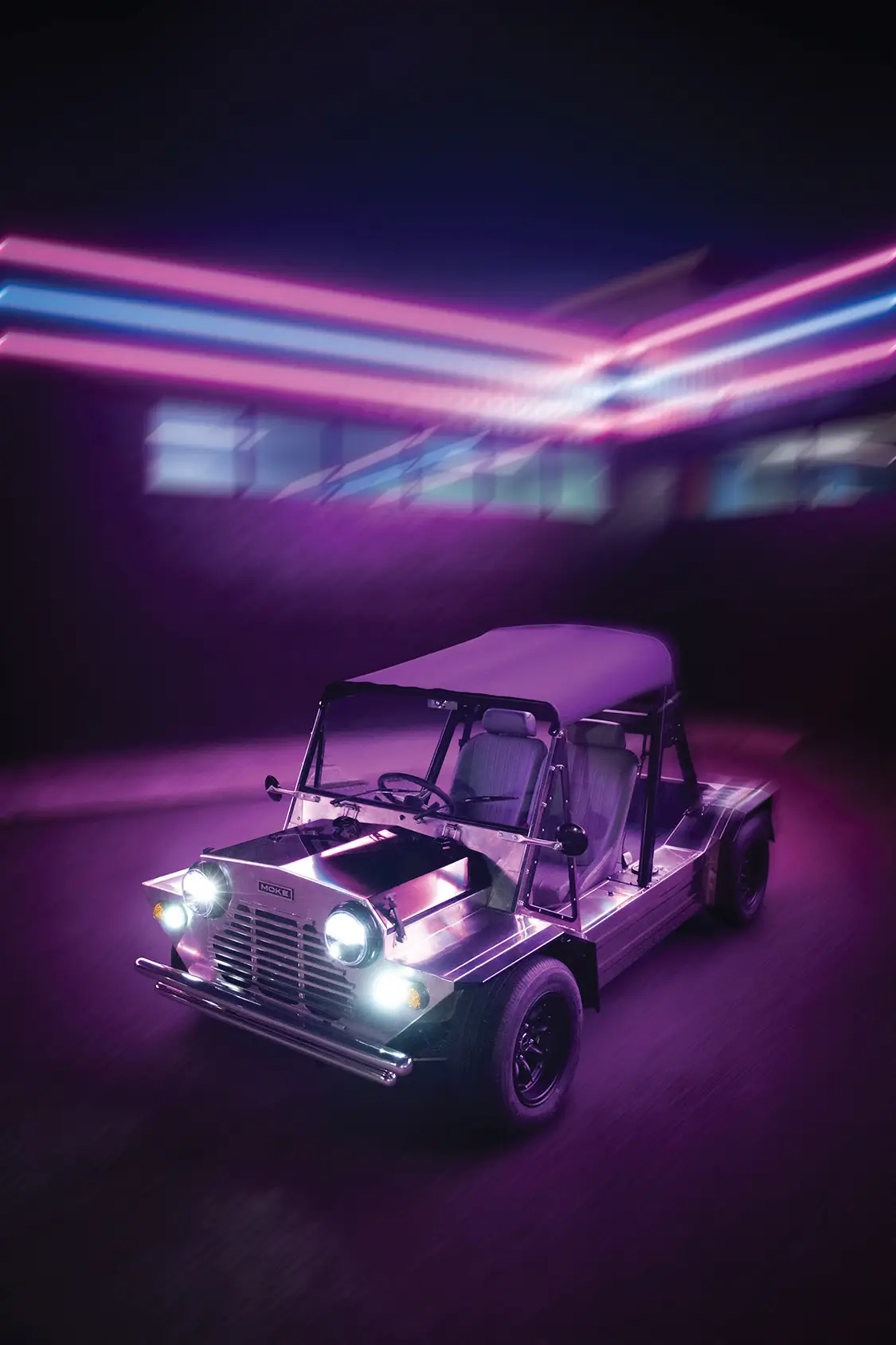
Before we jump in: Jaunt’s vision starts with the Moke but doesn’t end there. CEO and co-founder Dave Budge says the team is scaling its engineered EV platforms across other icons, including the original Range Rover, Volkswagen Kombi, and further Porsche and Mini classics, so they’re not just drivable but truly reliable and sustainable for the next generation. “This isn’t about reinventing the car,” Budge says. “It’s about fixing what wasn’t great and preserving what was.”
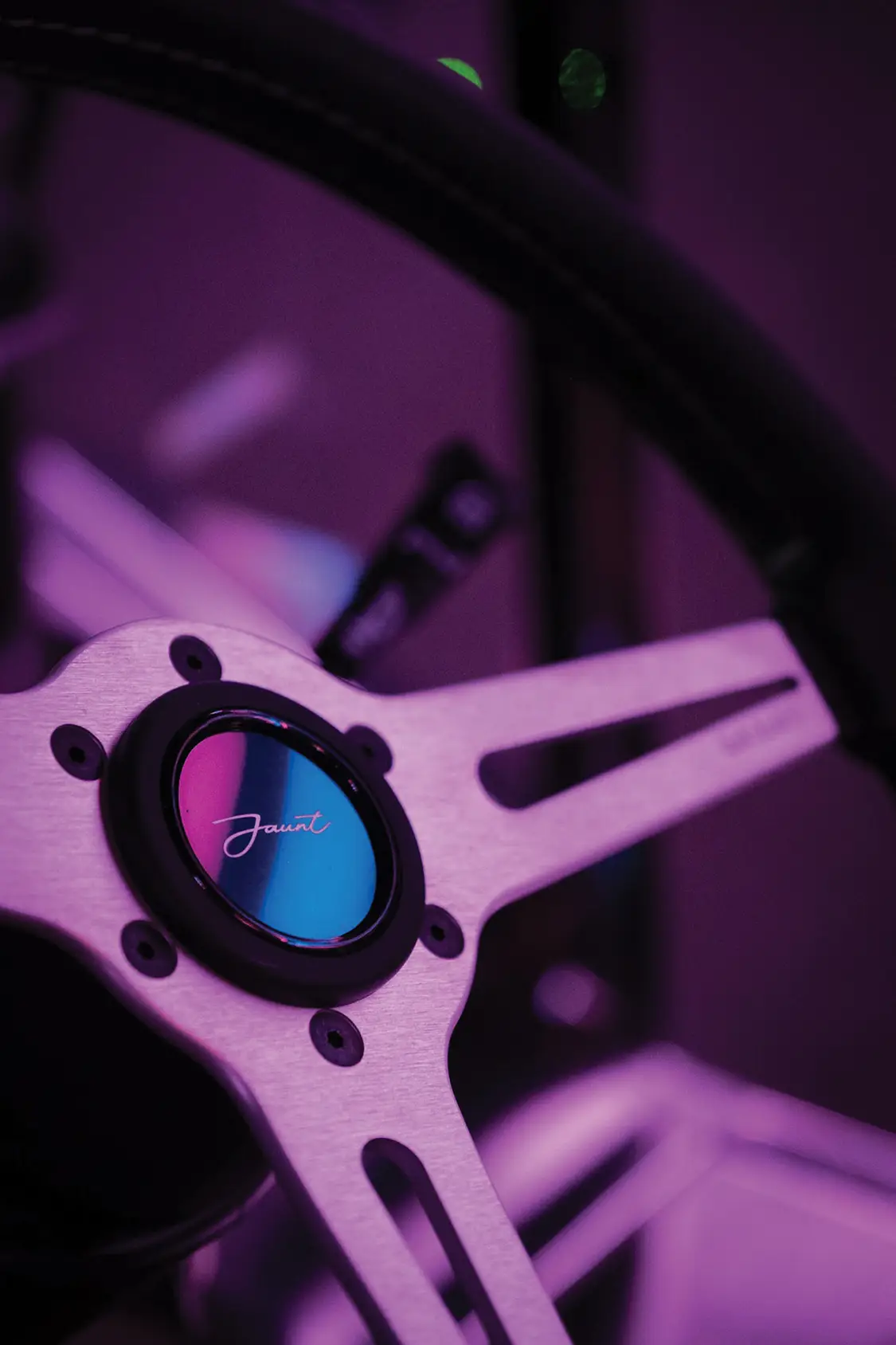
Jaunt’s philosophy reads like a promise to anyone who ever loved a Moke but dreaded owning one: preserve the personality, re-engineer the pain points. The conversion is a ground-up remaster, and it’s explicitly designed to register across every Australian state and territory. The company handles the compliance dance before the car lands back in your driveway. Under the familiar sheetmetal, everything that matters to reliability—drivetrain, wiring, brakes, steering, and suspension—has been modernized with a completely new 12V loom and a digital fuse/relay brain to tie it all together.
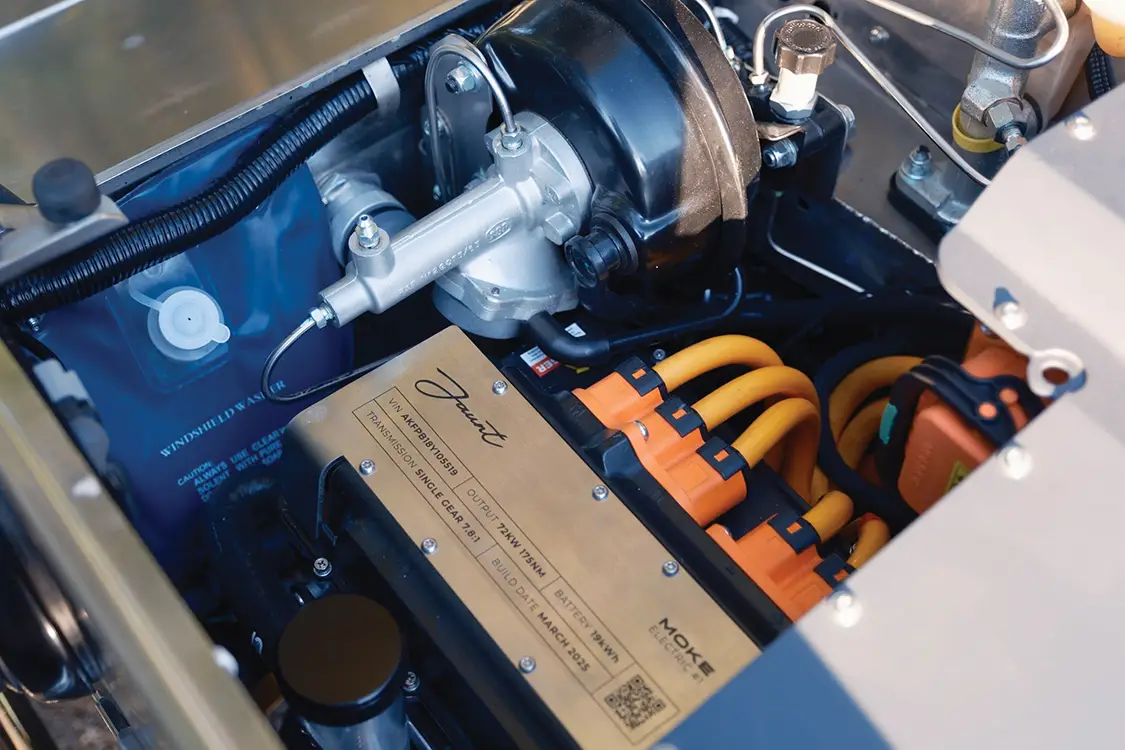
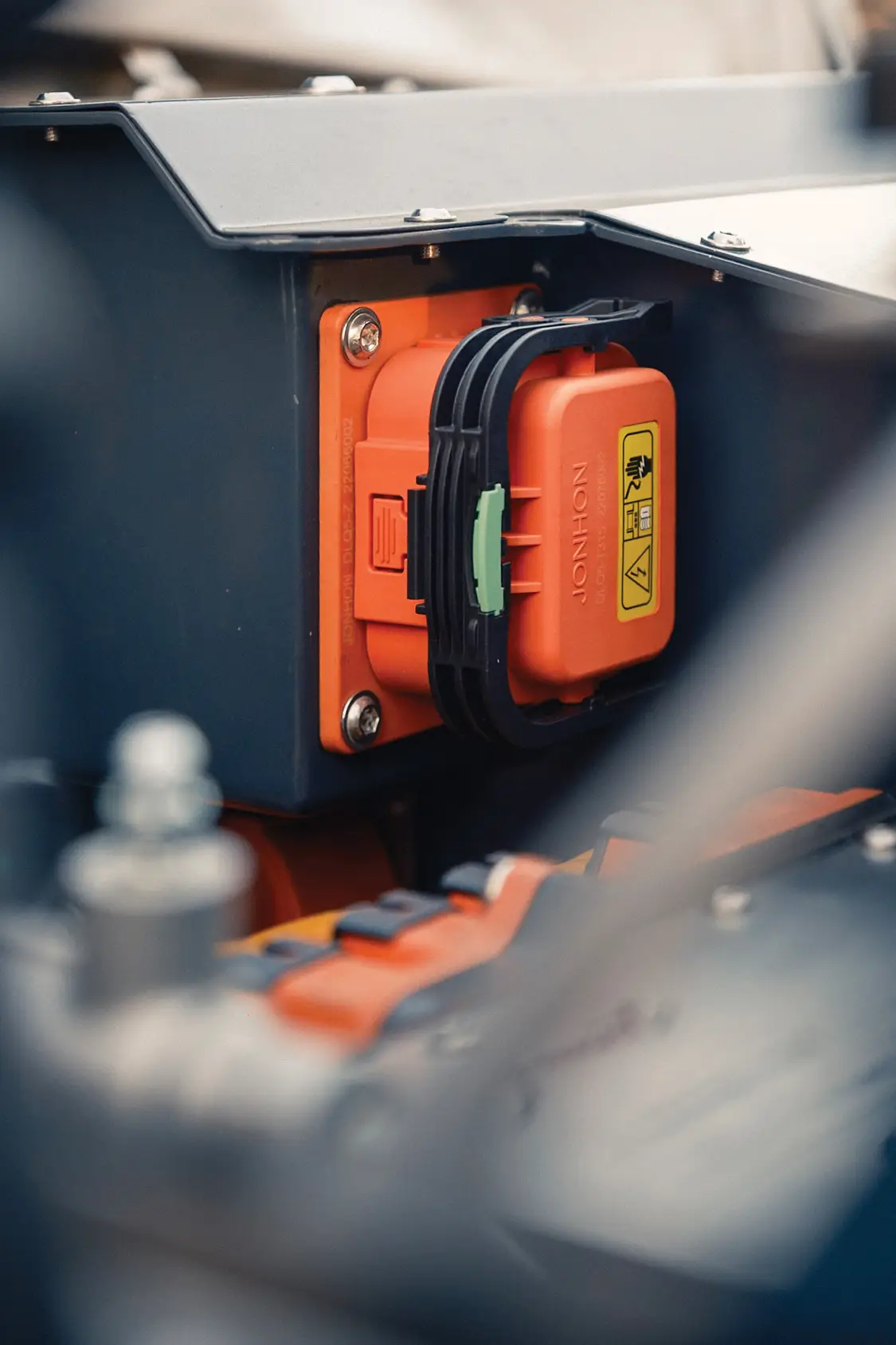
Key numbers? Jaunt quotes 72 kW peak power and 175 Nm (about 96 hp and 129 lb-ft) driving the front wheels through a single ratio, a 19 kWh battery (split into two packs), and 0–62 mph in 7.0 seconds with Sport mode engaged, complete with regenerative braking. The electrical architecture runs 400 volts, and 0-to-100% recharge is listed at 2–3 hours depending on the charger (available in Type 1 or Type 2 charge ports using the on-board charger).
A Moke is essentially a bathtub on wheels; packaging EV hardware inside that footprint without wrecking the vibe is the trick. Jaunt starts with a Fellten-supplied dual-battery complete Classic Mini system that consists of a brand-new British Motor Heritage front subframe (BMH uses the original manufacturer’s tooling) that picks up the factory mounts and then pre-mounts the motor, inverter, cooling hardware, and plumbing to that cradle.
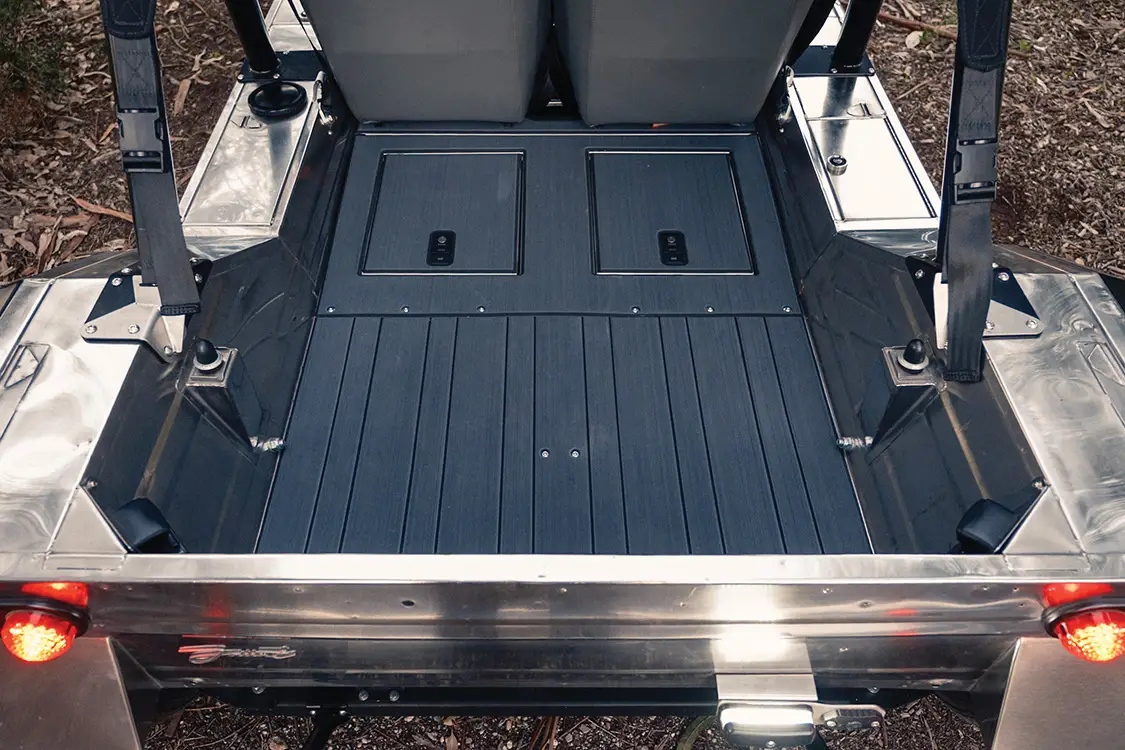
However, on the Moke, the 8 kWh rear battery that would have lived in the trunk (where the spare wheel would be) is now hidden under a perfectly flat floor within the rear subframe. The front 11 kWh battery drops as normal under the hood in a tightly sculpted enclosure. The result: nothing hacked into the chassis or bodywork—and it really does look OEM, as if Mini had done it themselves.
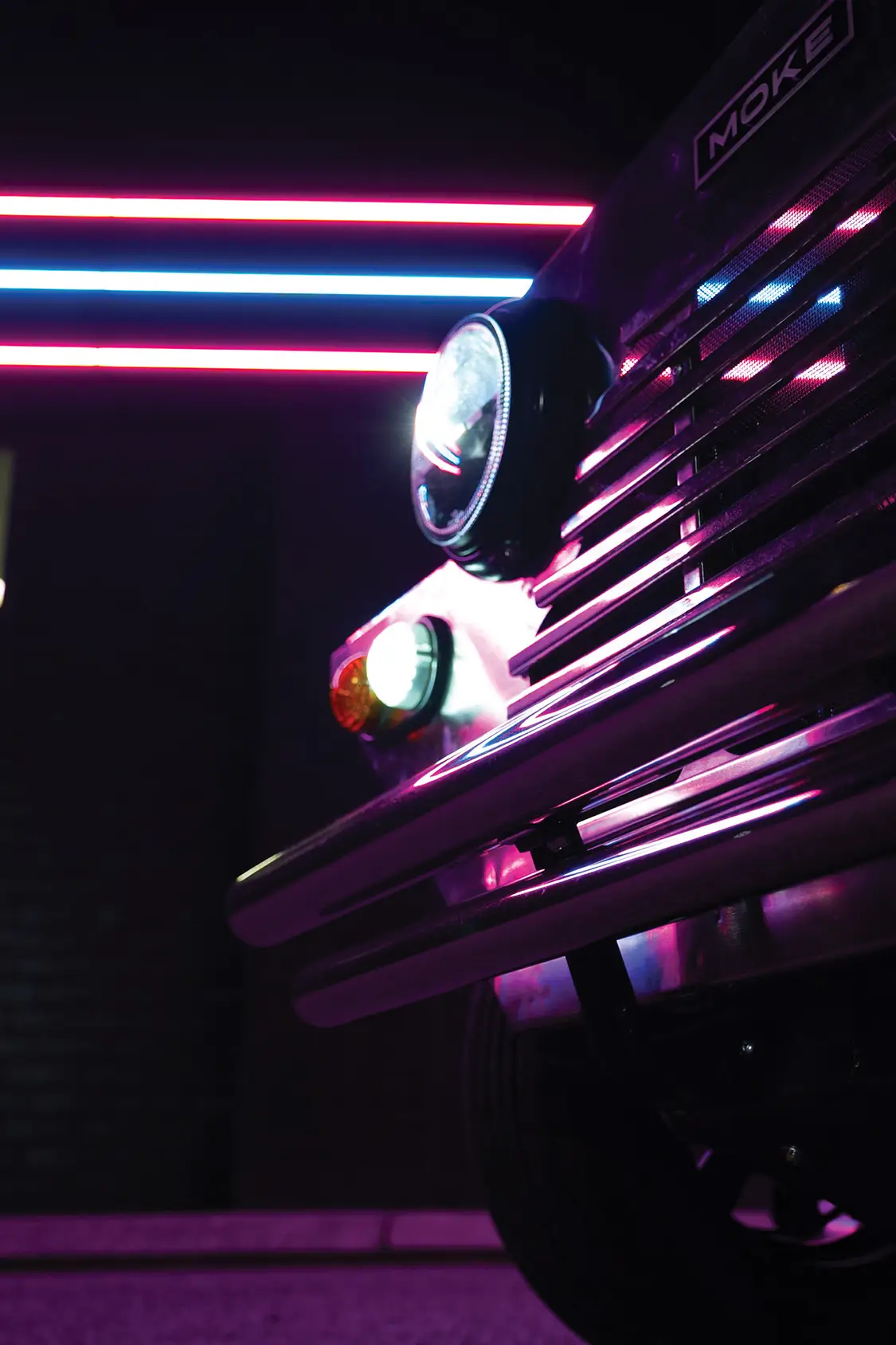
Because the Moke rides on 13-inch wheels, Jaunt also re-gears the driveline to a 7.8:1 ratio. That’s your low-mass, low-inertia recipe for shove-on-demand, enough to make 30 to 60 mph squirts feel cheeky rather than desperate. The mapping is as much manners as muscle: quick throttle, progressive regen, and a Sport mode that tightens responses without turning the Moke into a prank.
Underpinning this package is the same Classic Mini architecture refined by Fellten, the UK engineering firm behind the Mini EV system (dual battery pack and Zonic 70 motor complete bolt-on system). That complete package brings 6.6 kW AC charging and ~3.3 kW bidirectional capability. Yes, you can run electric devices from your Moke or even charge another EV if needed!
Jaunt starts from that proven foundation and re-engineers it to suit the Moke’s unique body and duty cycle. It’s worth naming the mind behind much of that Mini system DNA: Garry Scott, Fellten’s lead on the Mini platform that this Moke borrows from. He’s a longtime Mini specialist, and you can feel it in the way these cars behave—OEM-like start-up, clean regen blending, and weight distribution that still reads “Mini” even after you pull the A-series.
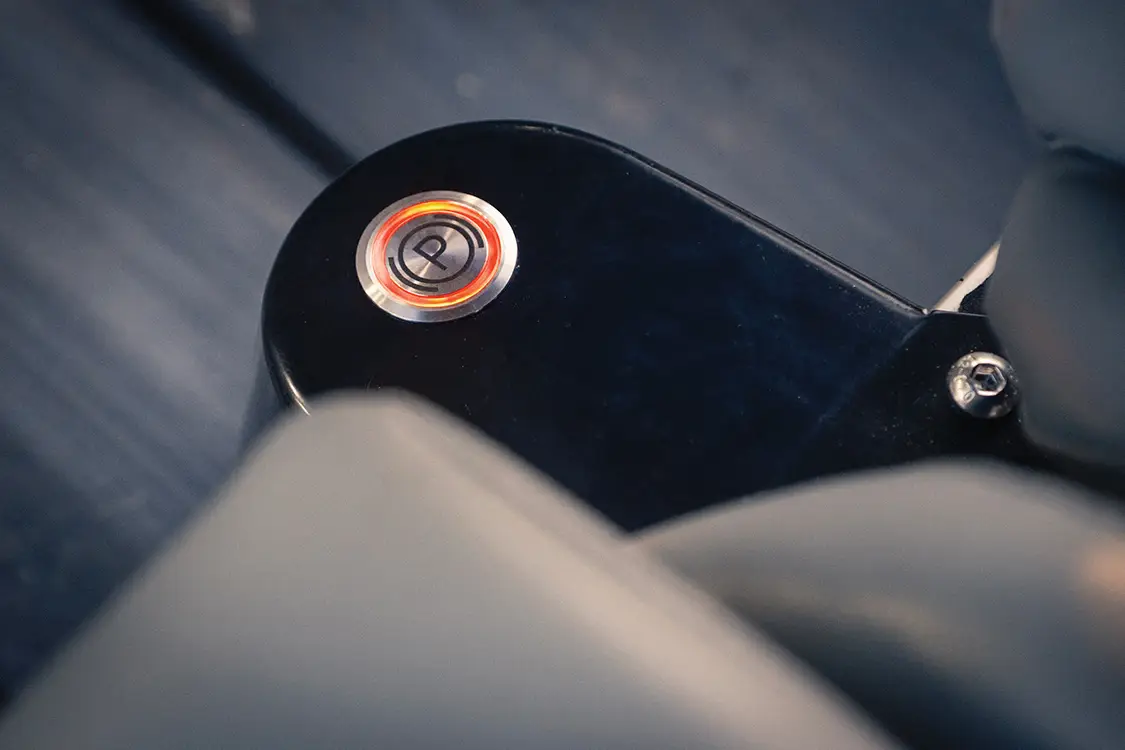
Anyone can quote power and 0–60. What separates a real engineered platform from a string of parts is the plumbing and software. A compact cooling system with a small radiator and fan keeps the motor/inverter happy without giant heat exchangers. A high-output DC-DC (~100 A) means your lights, wipers, and sound system act like a modern car (not a beach buggy with a weak alternator—if you know, you know). An electric PTC heater replaces the old water matrix; you get fast demist and actual heat on cold mornings. And, last but not least, an inertia switch and HV interlocks isolate the pack in case of an impact; the park brake is electronic; the wiring is new end-to-end, and the modules are liquid cooled. These are the unsexy bits that make an EV conversion livable, and they’re part of the platform, not upcharges.
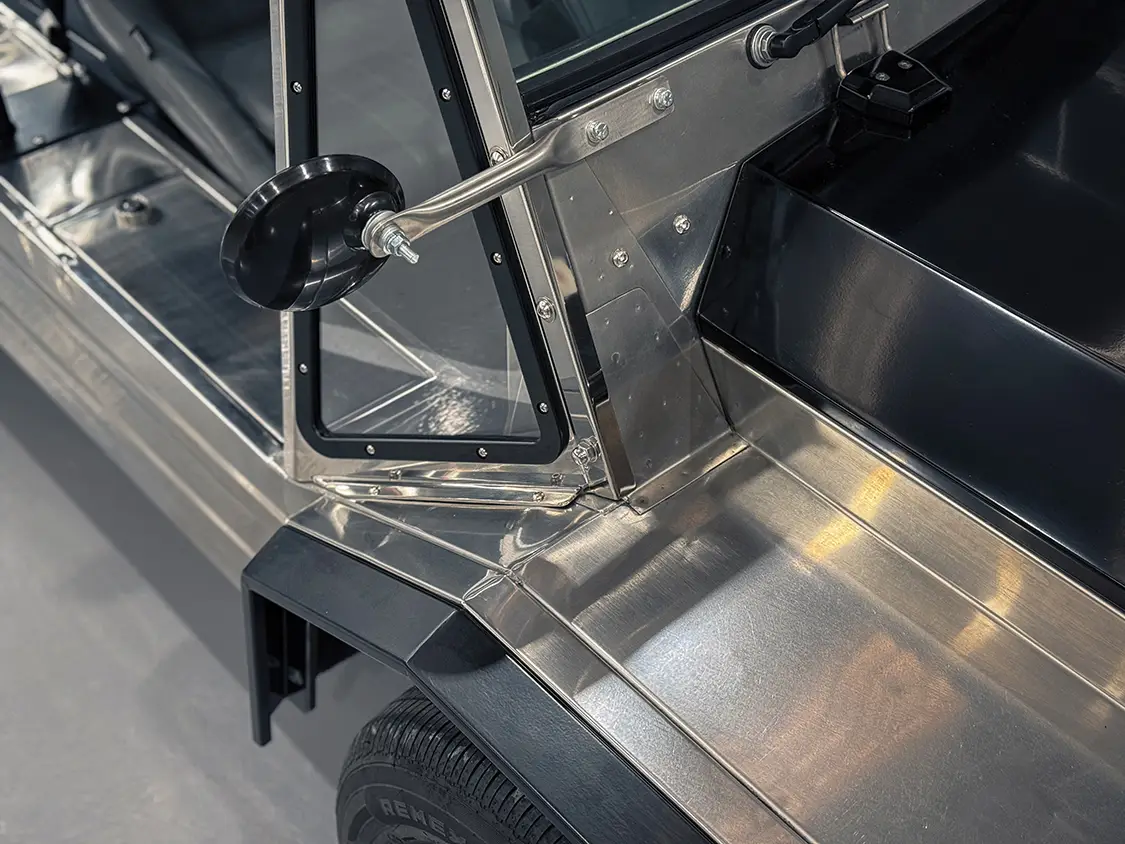
Jaunt built this to Australian Design Rules from day one. That means ADR-compliant seats and belts, a redesigned roll bar with a canvas top solution, lighting to modern standards, and all the paperwork handled so the car is registerable in every Australian state and territory.
A Moke is essentially a bathtub on wheels; packaging EV hardware inside that footprint without wrecking the vibe is the trick.
If you’re used to seeing electric Mokes positioned as neighborhood runabouts or low-volume curios, this is different. It’s engineered to be street-legal across Australia and framed as a platform a professional workshop can install with training and support.
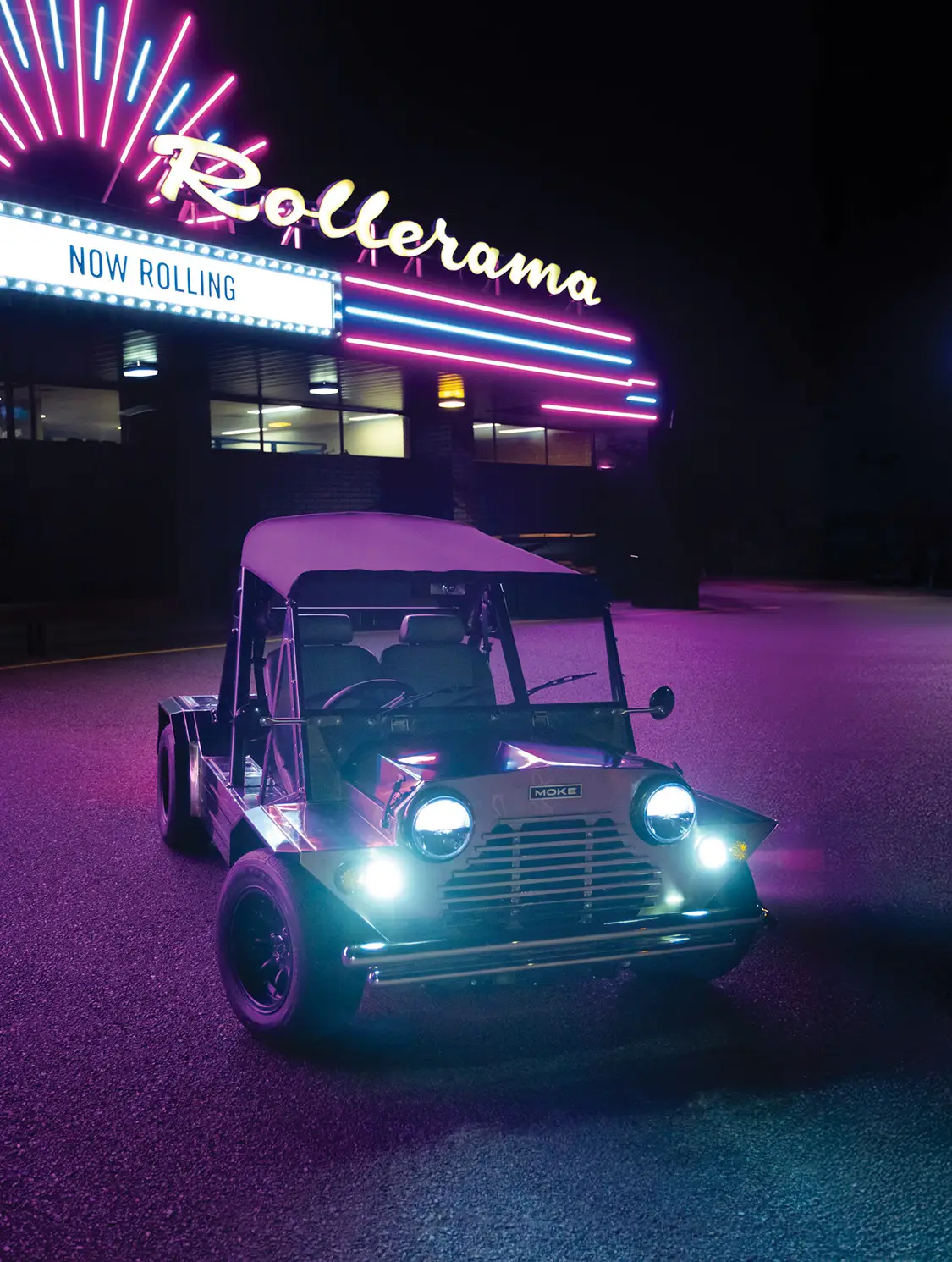
On paper, the Moke’s 7-second 0–60 mph run sounds absurd for something this upright and breezy. In practice, it’s exactly right. The car’s still light on its feet, and the electric mapping turns it into a short-hop, big-smile machine: coastal towns, island resorts, etc. That’s the use case Jaunt keeps emphasizing: short, joyful, open-air drives with modern reliability and safety.
Jaunt will build you a turnkey Moke in Melbourne. But they’ll also sell the engineered platform to qualified workshops around the globe, with installation training and documentation—trade pricing from about $59,000 USD. That sophistication matters for our trade-specialist readers: you’re not guessing at CAN messages or making your own HV harness; you’re delivering a repeatable, compliant result with factory-like tooling, a new subframe, a defined cooling system, and a documented HV and LV backbone.
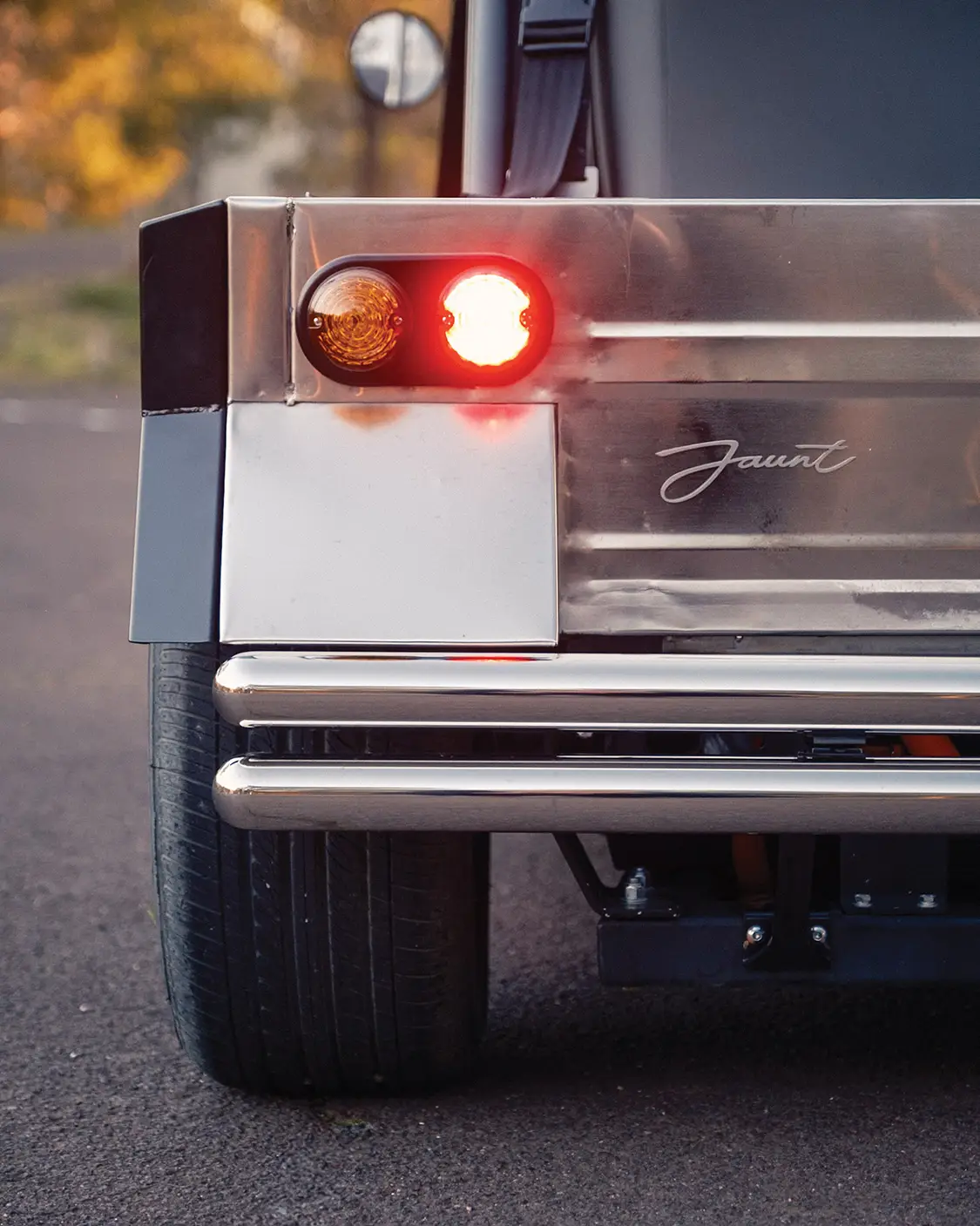
The original Moke made everyday trips feel like holidays. Jaunt’s electric version keeps that feeling and makes it easier to live with for the next 50 years. Mint body (stainless like here or painted steel), Fellten bones, and Jaunt styling—it’s proof that the lightest kind of fun can be taken seriously: engineered, legal, reliable, and gloriously simple to enjoy.
Front-mounted single-speed electric drive; 72 kW/175 Nm (≈ 96 hp/129 lb-ft).
19 kWh total, 400 V architecture; front & rear packs
0–60 mph: 7.0s (Sport mode).
2–3 hr recharge quoted; platform supports 6.6 kW AC and bi-directional (≈3.3 kW)
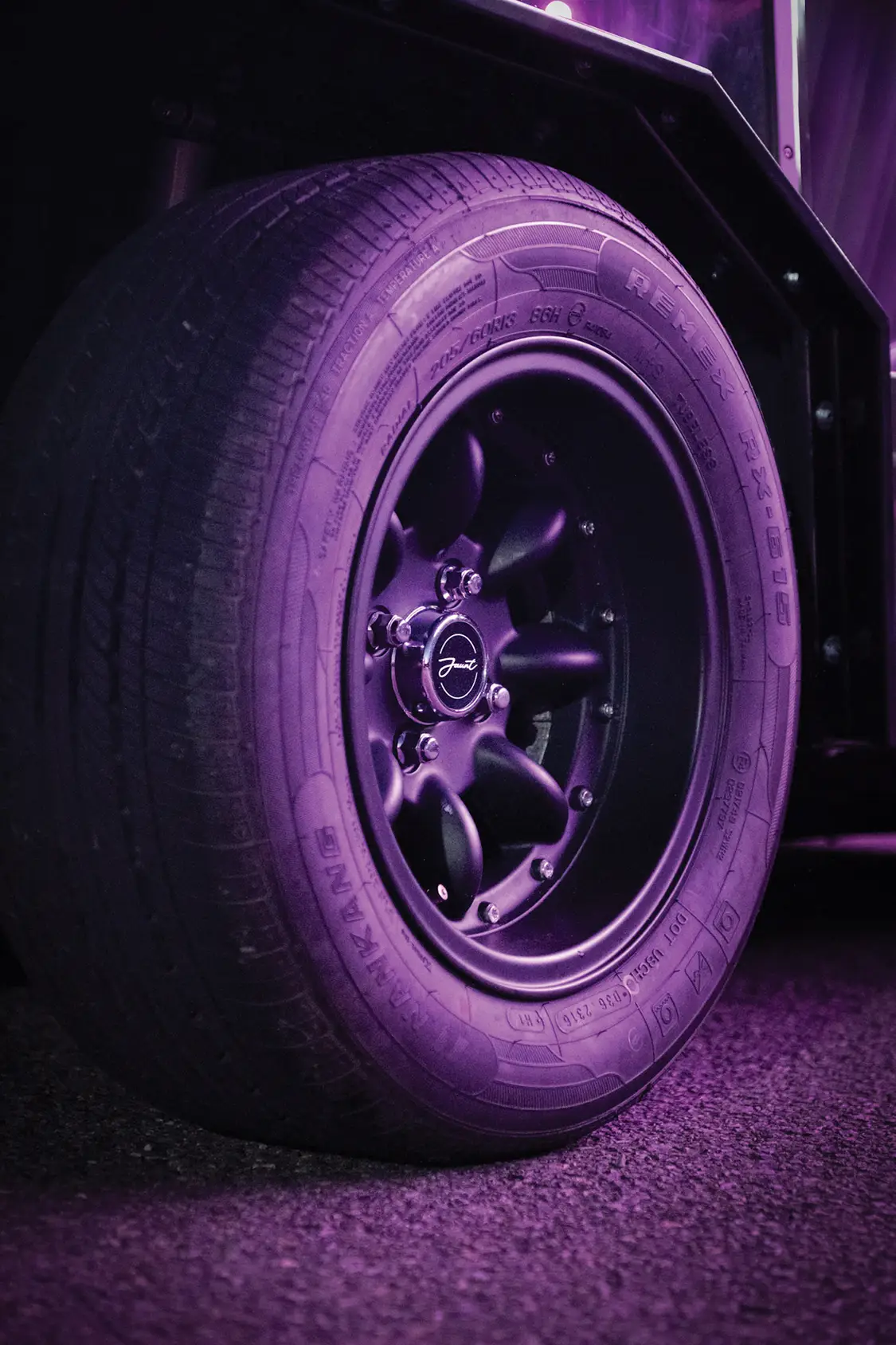
7.8:1 final drive tuned for Minilight 7×13’’ gunmetal rims with polished lip.
New BMH front subframe, factory mount points; upgraded brakes, steering, suspension; electronic park brake.
New dash with modern digital gauges and controls; pop-up charge port; complete new 12-V loom with digital fuse/relay
System from $59,000 USD. Deliveries: Targeting 2026.
JauntMotors.com and Fellten.com
Buyer’s Guides
How’s it going everybody! I’m Devan Ence, the new Editor-at-Large for the F-100 Builder’s Guide. I have been a Ford truck nut since I was… Continue reading
Devan Ence . April 30, 2024
Electric Vehicle Features
We’ve seen it, we’ve talked about it, and now we’ve decided to dive deep into the world of electric motor swapped restomods for you to… Continue reading
Chris Hamilton . August 10, 2022
C10 Builders Guide
‘No Cars and Definitely No Fords when it comes to brand-specific truck shows on the East Coast, one that comes to mind is the Southeastern Truck… Continue reading
Chris Hamilton . October 02, 2023

Electric Vehicle Features
Southfield Classic’s Chevy 3100 Deep in Georgia, Southfield Classics is on a mission to seamlessly integrate the nostalgia and elegance of classic cars with undeniable… Continue reading
TIM CACHELIN . August 21, 2024
All Feature Vehicles
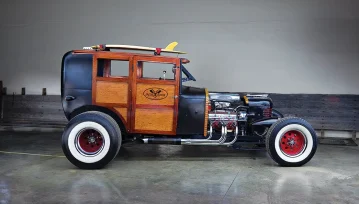
Two friends built an orphan 1928 Hudson hot rod; then the car built a business for them Longtime friends Ben McCloy and Scott Satterla didn’t… Continue reading
ALAN GALBRAITH . May 10, 2023
C10 Builders Guide
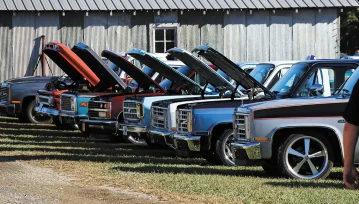
AS SEEN IN OUR C10 BUILDERS GUIDE SUMMER 2026 ISSUE – Buy Now! Showing Up in a BIG Way For as long as I can… Continue reading
Cameron Webster . April 30, 2026



Super Run 2026 Classic Car Show
Super Run 2026 Classic Car Show Casablanca Resort 950 West Mesquite Blvd Mesquite, NV 89027
Concours D'Elegance
Cobble Beach Resort 221 McLeese Dr, Kemble, ON N0H 1S0
Charity Car Show
Mesa Marketplace 10550 E. Baseline Rd, Mesa , Az 85209
CHICO CONCOURS Car Show
Silver Dollar Fairgrounds 2357 Fair Street, Chico, CA 95928
Goodguys 33rd Summit Racing Lone Star Nationals
Texas Motor Speedway 3545 Lone Star Circle
We use cookies to enhance your browsing experience, serve personalized ads or content, and analyze our traffic. By clicking "Accept All", you consent to our use of cookies. Visit our Cookie Policy for more info.



 Please wait...
Share Link