










 DUSTIN KORTH
.
July 28, 2026
.
Diesel World
DUSTIN KORTH
.
July 28, 2026
.
Diesel World
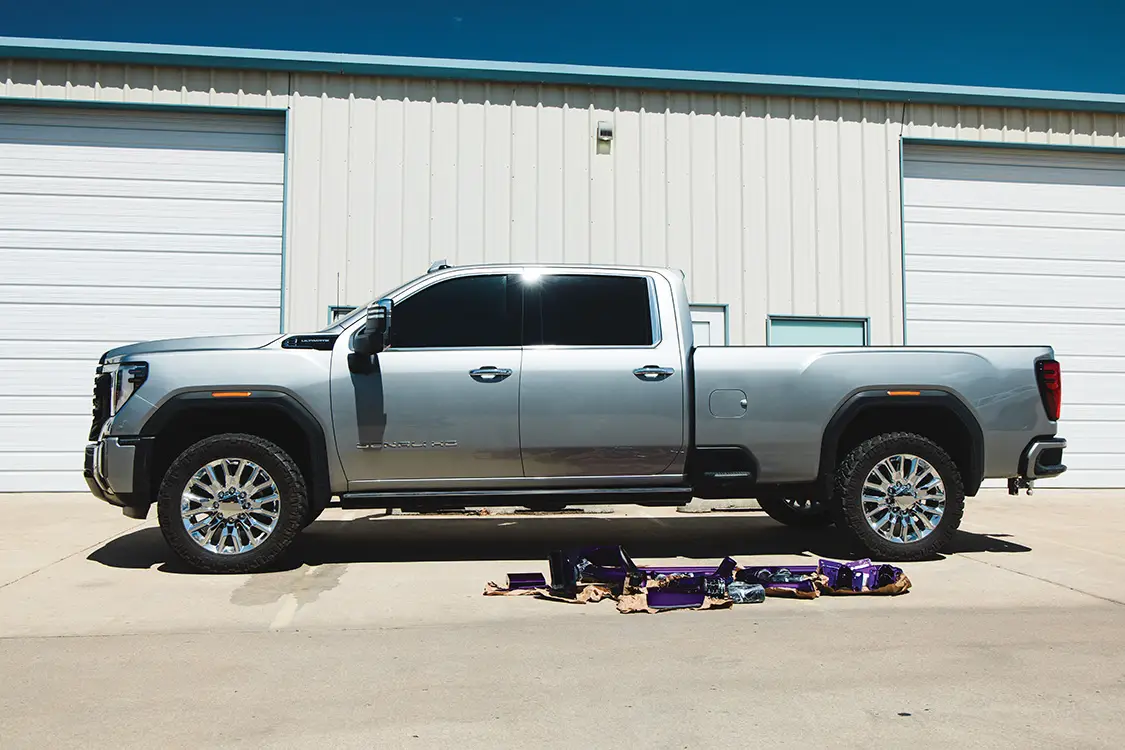
AS SEEN IN OUR DIESEL WORLD AUGUST 2026 ISSUE – Buy Now!
Everybody loves to talk about horsepower. Few people talk about how that power actually moves through the truck, and even fewer bother fixing the weak links GM left in place to keep its accountants happy.
Now take that idea and apply it to a 2025 Denali Ultimate. You already paid for one of the nicest trucks on the road. The interior is immaculate, all of the creature comforts are there, and the ride quality is solid, but then you pop the hood and realize it still plays by the same factory rules as every other L5P.
HSP Diesel’s L5P lineup changes that concept, and it does so by hitting it from three angles: airflow, structure, and underhood refinement. It’s an incredible kit that looks great and performs even better, and when everything shows up in Illusion Purple, it stops looking like upgrades on a Denali Ultimate and starts looking like it should’ve come this way.
The factory intake on the L5P isn’t terrible, but it’s built to check boxes, not chase efficiency. Noise control, packaging, cost—all the things that keep the general public happy when they look at spending that level of disposable income on a new truck.
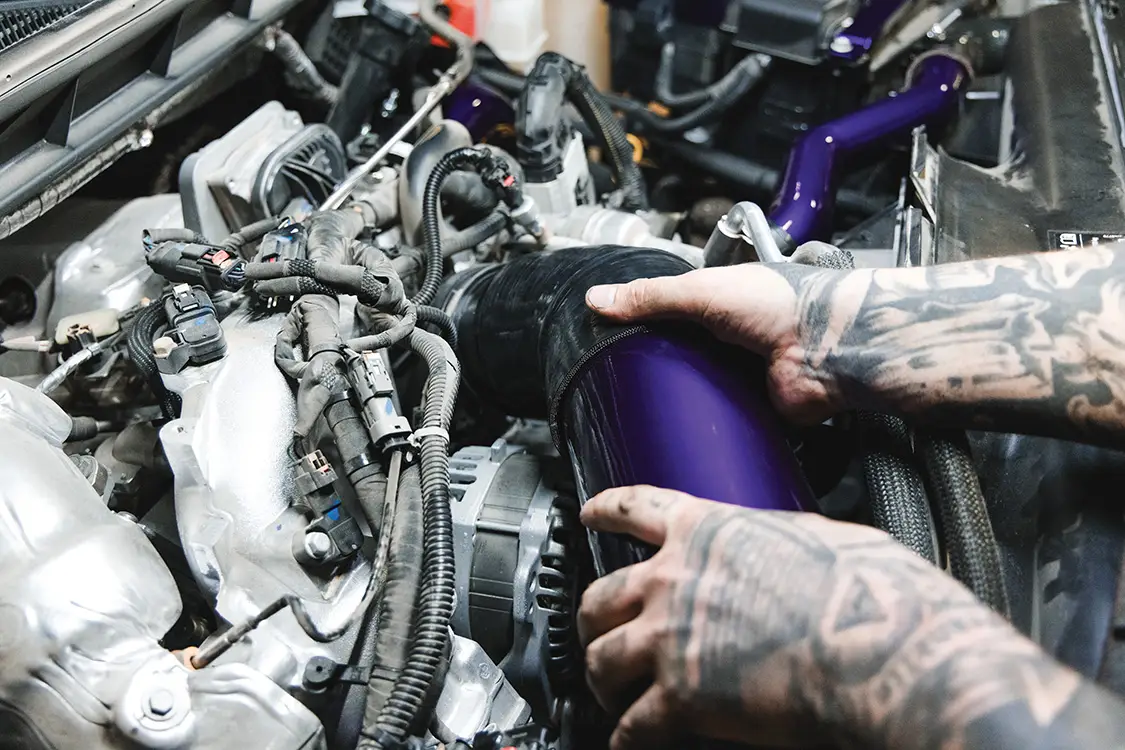
The HSP cold air intake fixes that by doing the obvious thing better—a smoother path, less restriction, and improved filtration without choking the system. You’re not chasing peak numbers here; you’re cleaning up how the truck responds across the entire throttle range. Better airflow and fewer restrictions mean the engine is going to breathe better.
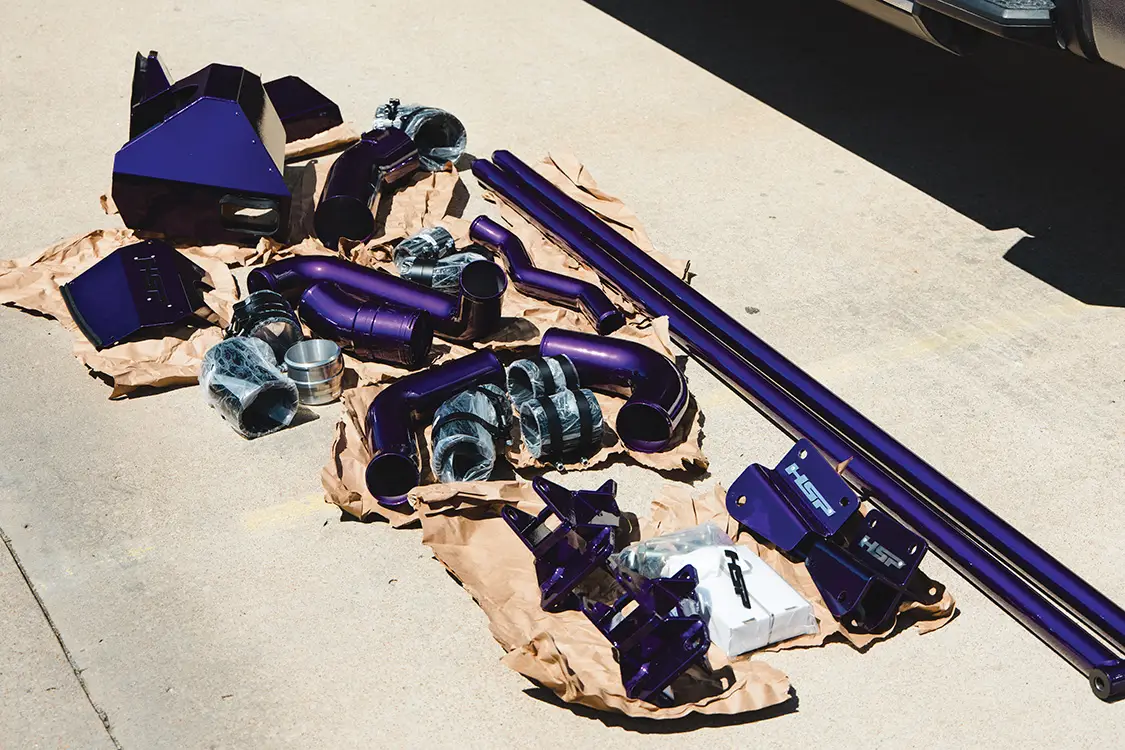
On a Denali Ultimate, that matters more than people often care to admit. This is a truck that spends a lot of time being driven, not just shown off. The improved throttle response makes it feel lighter on its feet, especially in daily driving and rolling acceleration. Pair that with the hot-side and cold-side tubes, and now you’re speaking the turbo’s language.
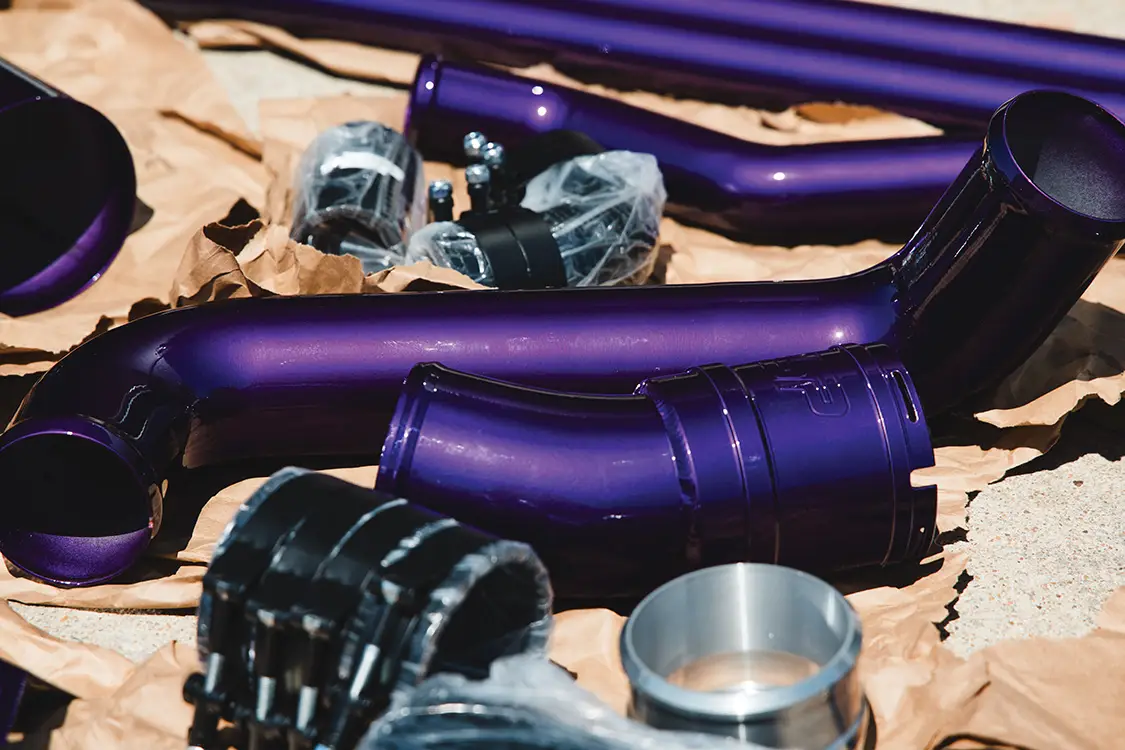
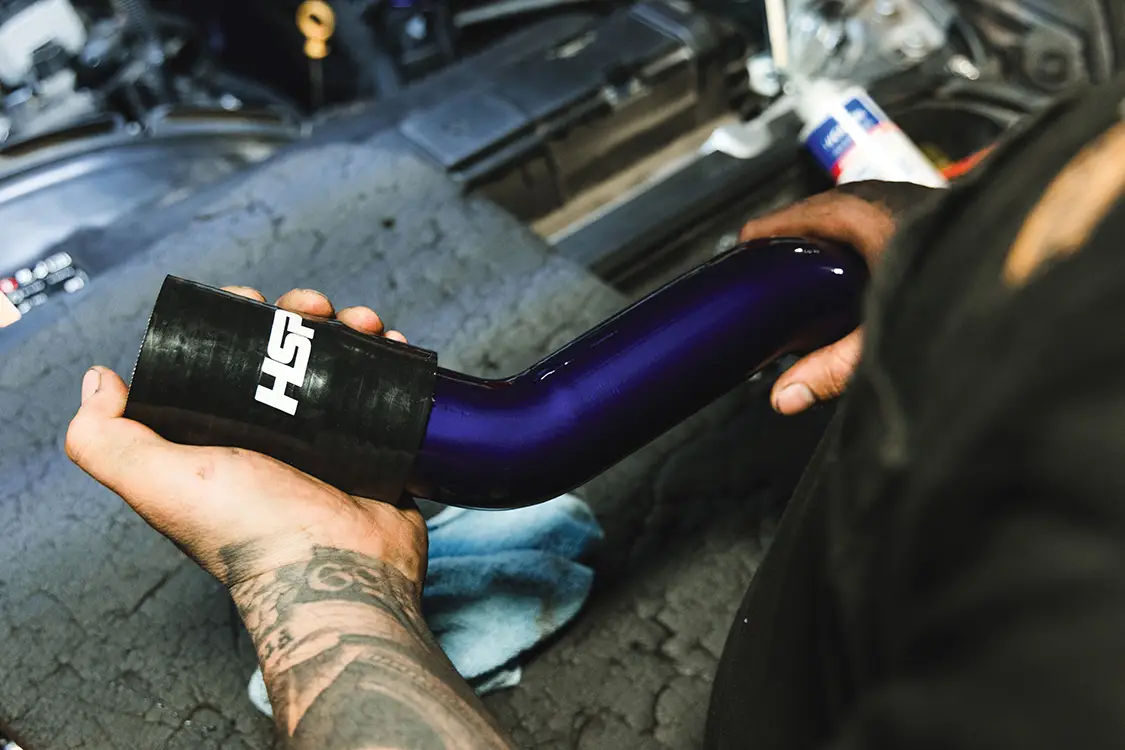
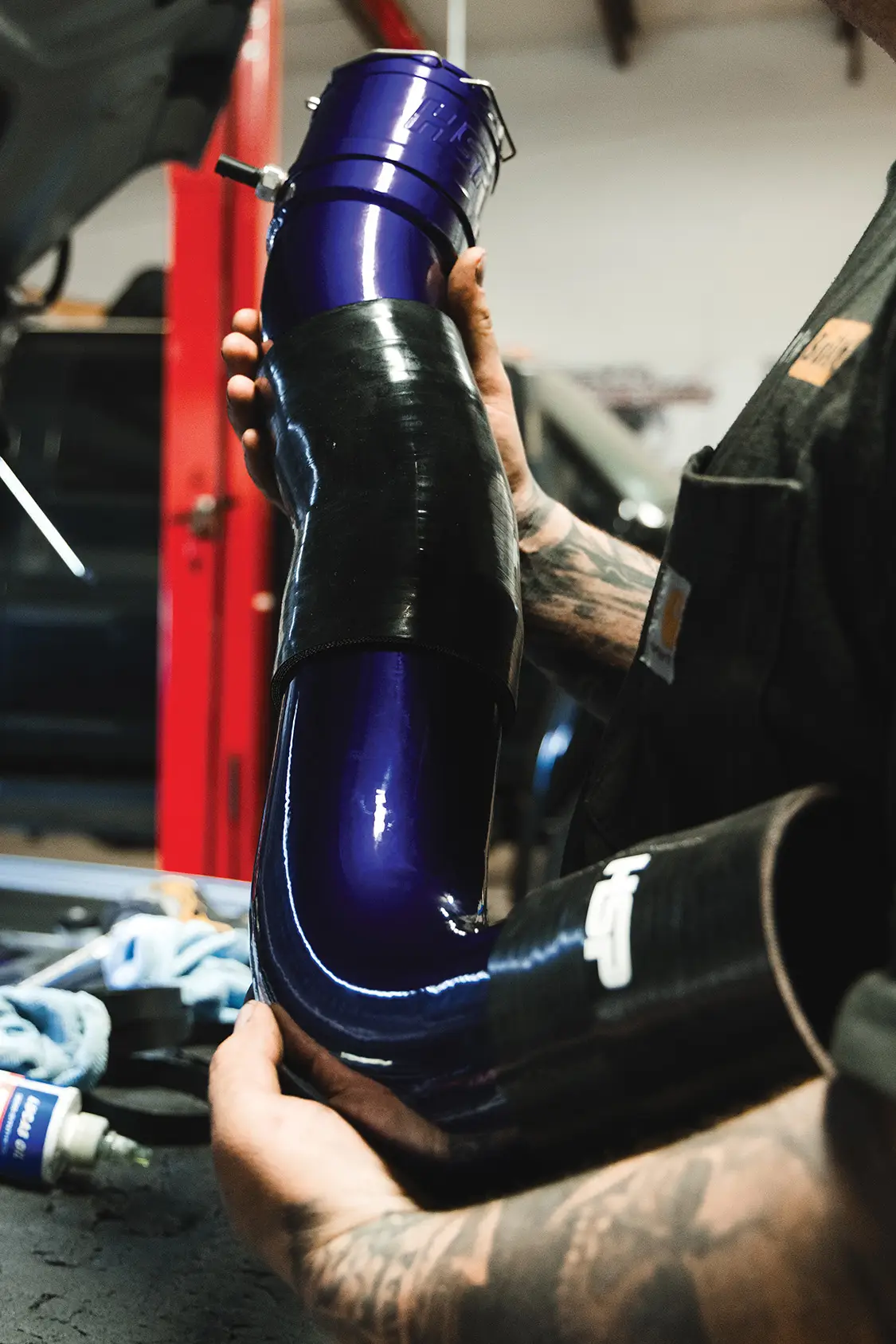
Factory charge piping tends to prioritize ease of assembly over flow efficiency. That means tighter bends, inconsistent diameters, and materials that do their job until you start leaning on them.
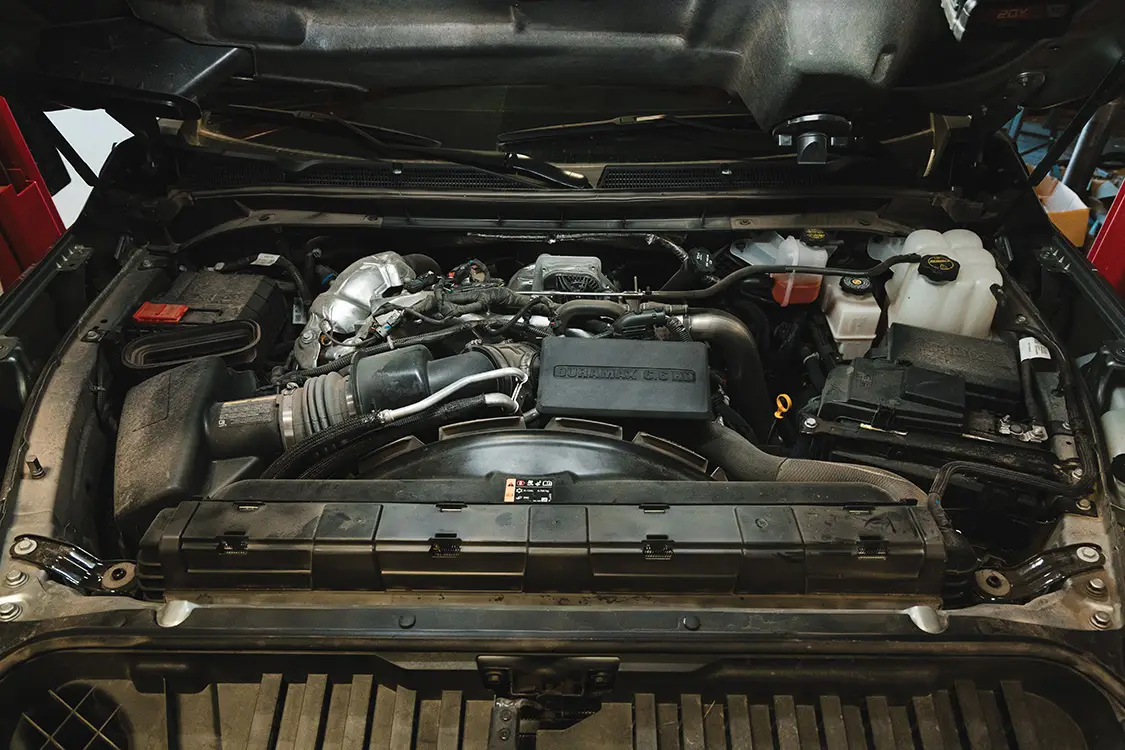
The HSP hot-side tube improves how exhaust energy gets to the turbo, helping spool feel more immediate. On the other end, the cold-side tube delivers that compressed air to the engine with fewer restrictions and more consistency.
For a heavier, fully optioned truck like the Denali Ultimate, that quicker spool and smoother boost delivery is noticeable. It helps offset weight and makes the truck feel more responsive without needing to push it harder.
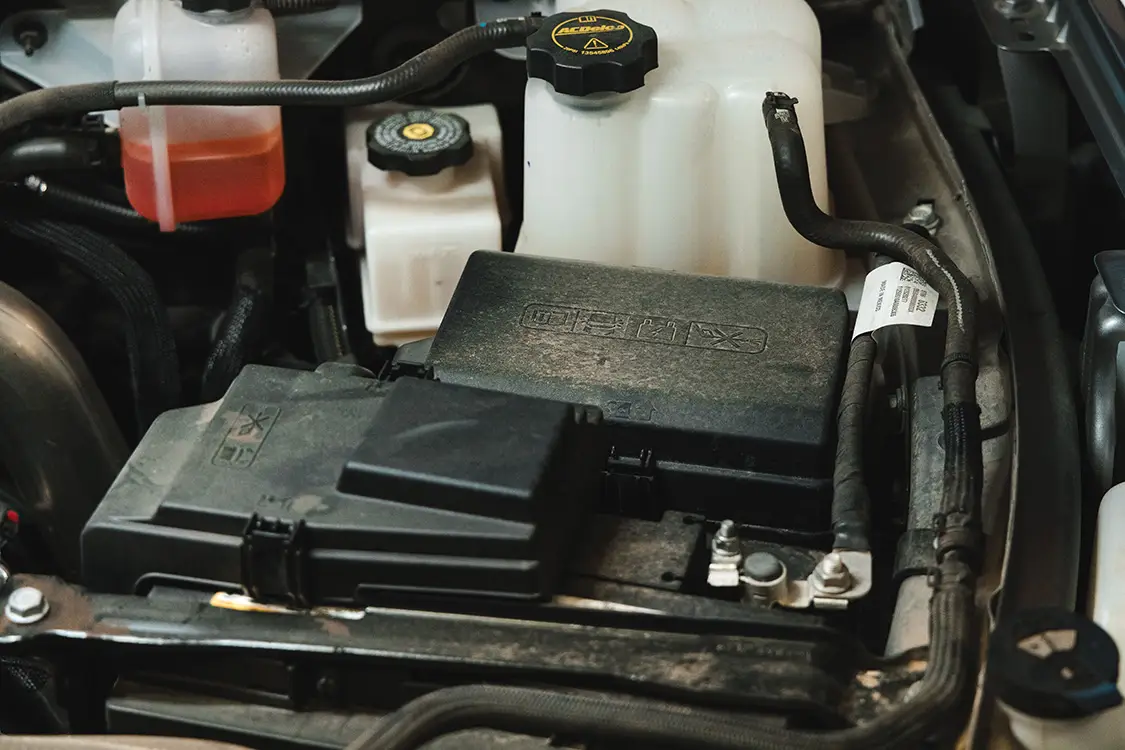
Another thing worth noting, especially for trucks that tow or see long pulls, is consistency under heat. Better materials and smoother airflow help reduce variability in boost behavior when everything’s hot and working. Less fluctuation, more predictability.
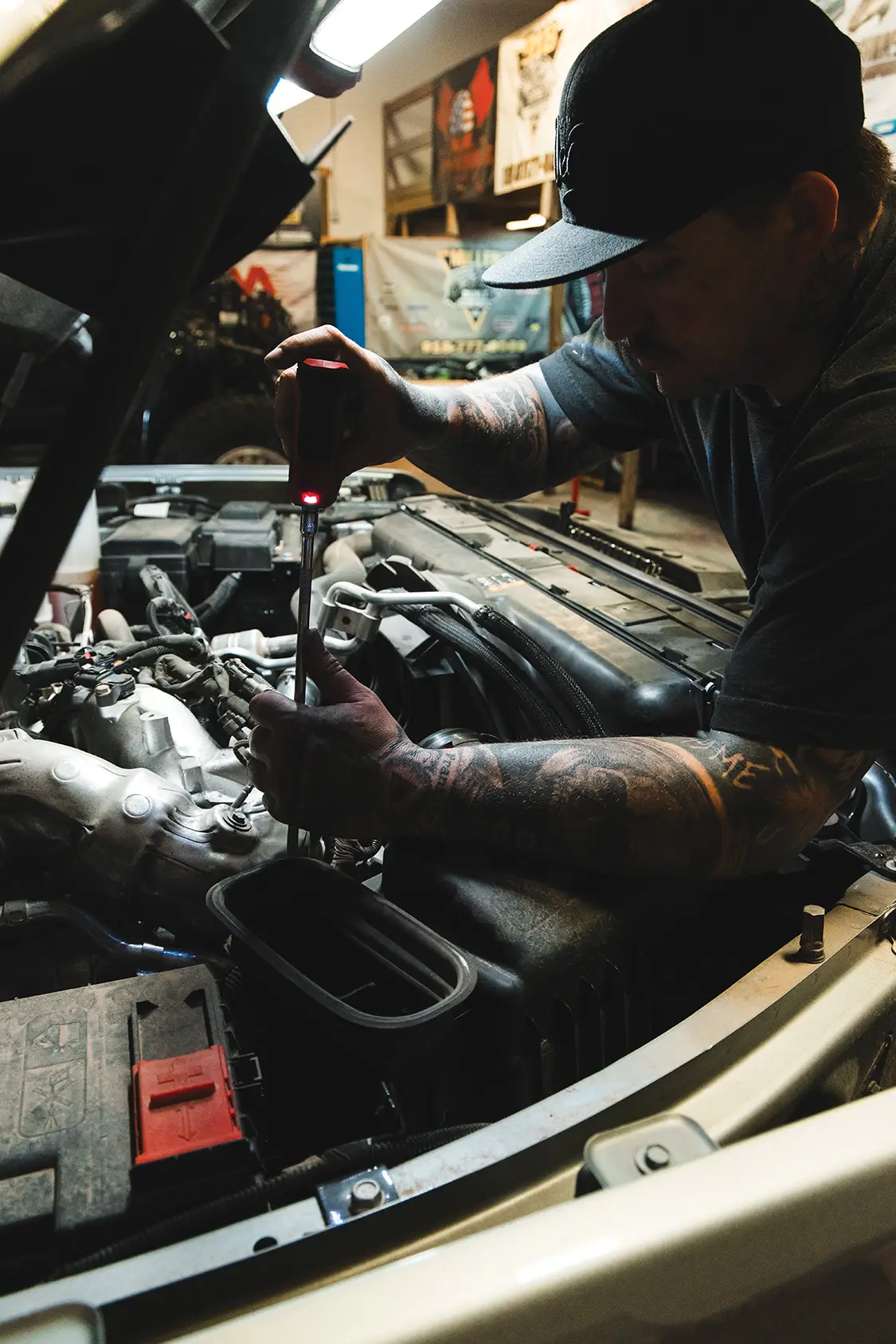
Visually, the matched Illusion Purple piping ties the whole airflow system together. It gives the engine bay a finished, intentional look instead of the usual mix of plastics and mismatched components.
What that translates to in the real world is simple—better throttle response, more stable boost, and less of that “wait for it” feeling when you roll into the pedal. It’s not dramatic. It’s just better everywhere, which is exactly what you want in a truck that actually gets used.
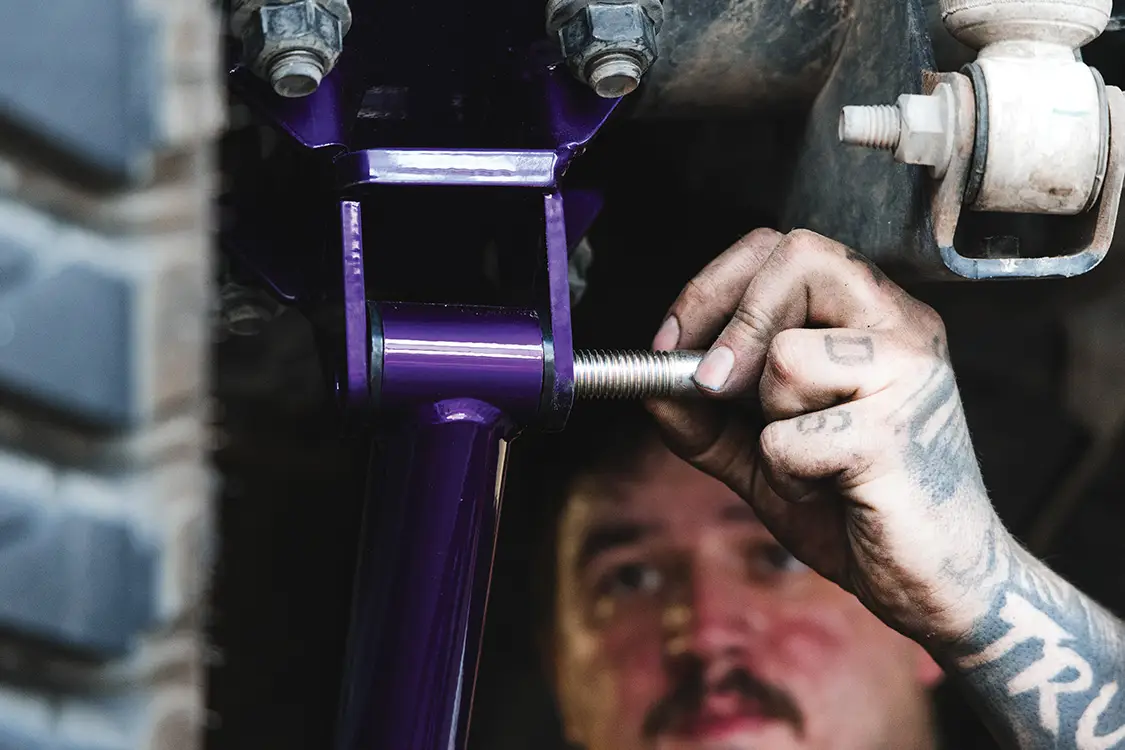
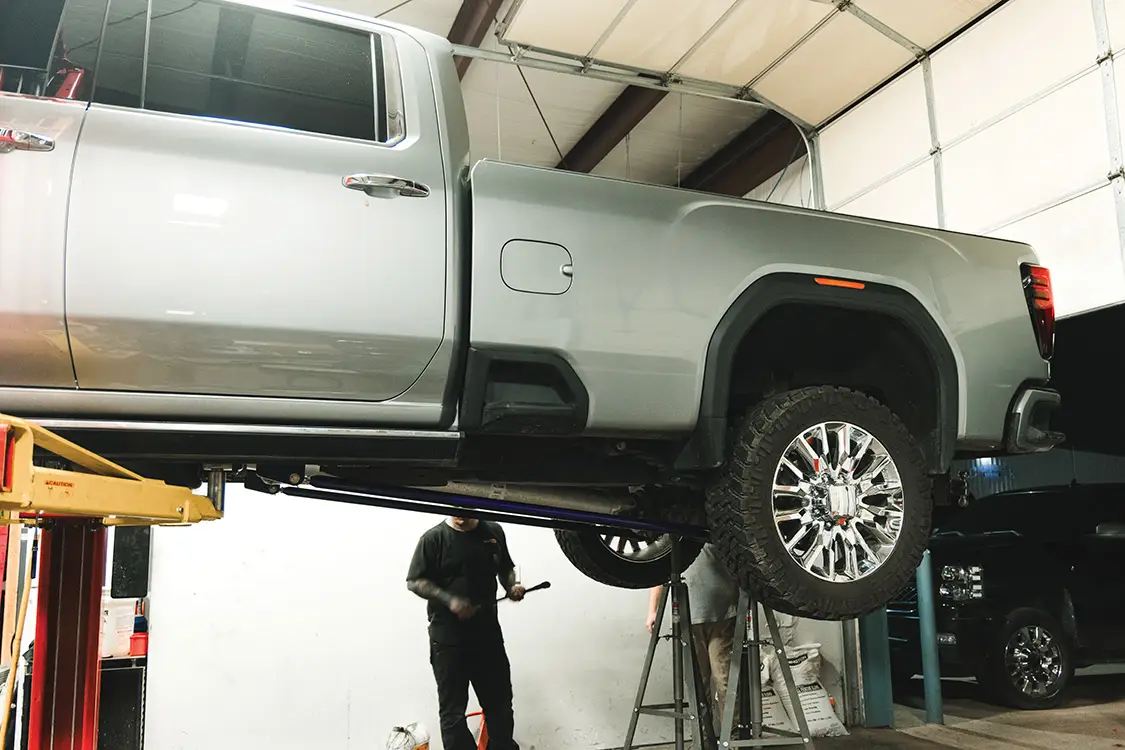
Here’s where people get honest with themselves, or they don’t. You can clean up airflow all day, add fuel or air to make more power, and tune the truck to your heart’s content. If the rear suspension’s letting the axle wrap every time you lean into it, you’re wasting effort and beating up parts. That’s why this 2025 Denali Ultimate got a set of HSP’s traction bars.
The HSP traction bars solve that problem without turning your Denali into a rigid, miserable ride. Their job is simple: control axle wrap, keep the tires planted, and stop the rear end from trying to oscillate under load.
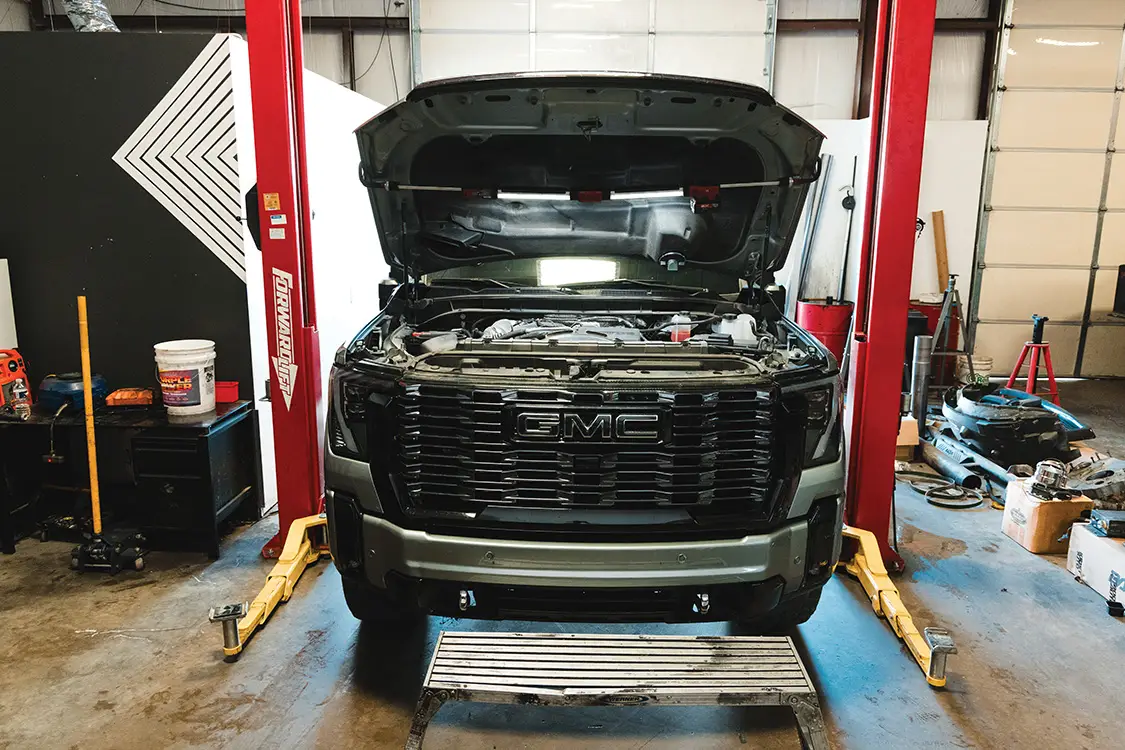
If you’ve ever felt wheel hop under throttle, especially when towing or during a hard launch, you already know what’s happening. The axle’s rotating, unloading the tires, and then grabbing again in a cycle that feels like something’s about to break. Because, spoiler alert, something will break if you do it enough.
On a truck at this level, that kind of behavior feels out of place. The traction bars bring everything back in line. The truck feels composed, predictable, and planted—the way it should’ve from the start. They take that chaos out of the equation. The result is cleaner launches, more consistent power delivery, and a rear end that actually cooperates.
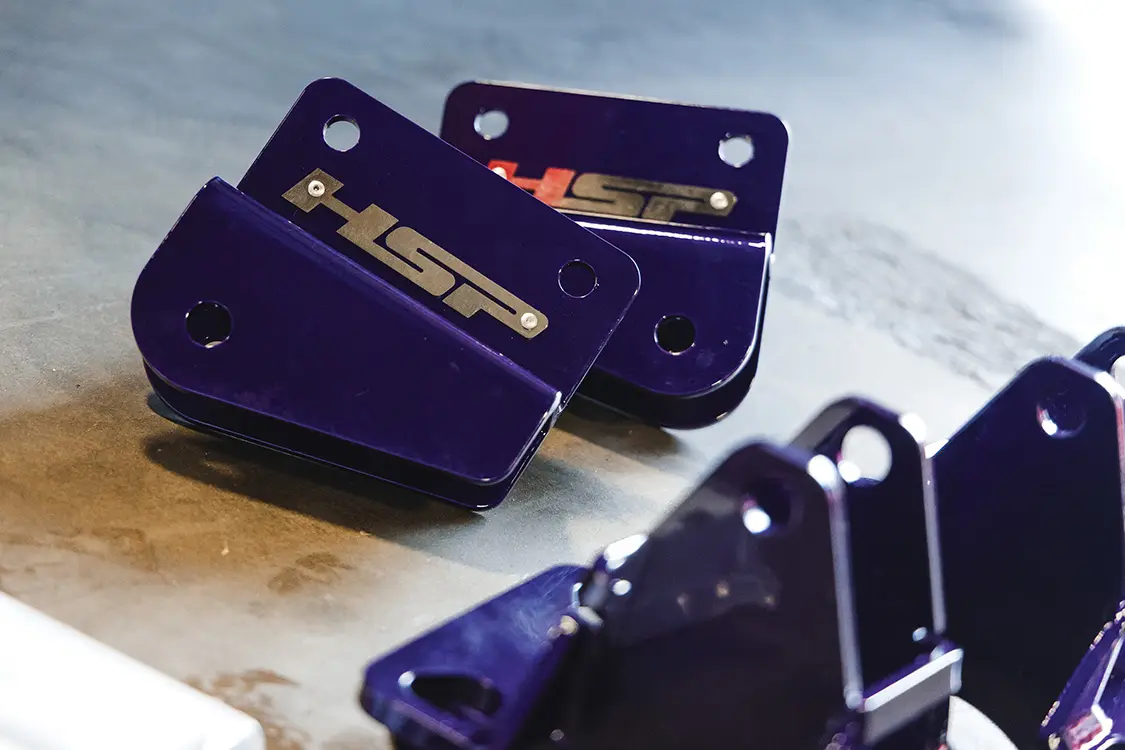
The billet battery hold-down bracket and fuse box cover aren’t adding horsepower. Let’s get that out of the way. But they do fix two things the factory setup leaves a little loose, literally and visually.
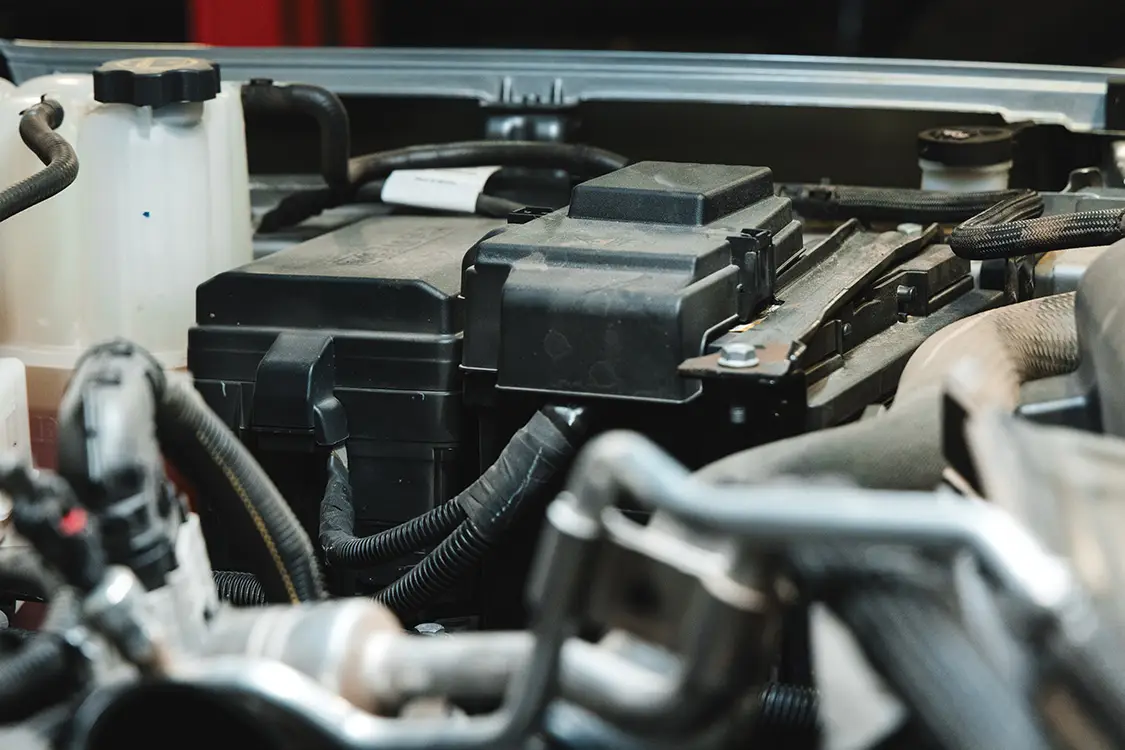
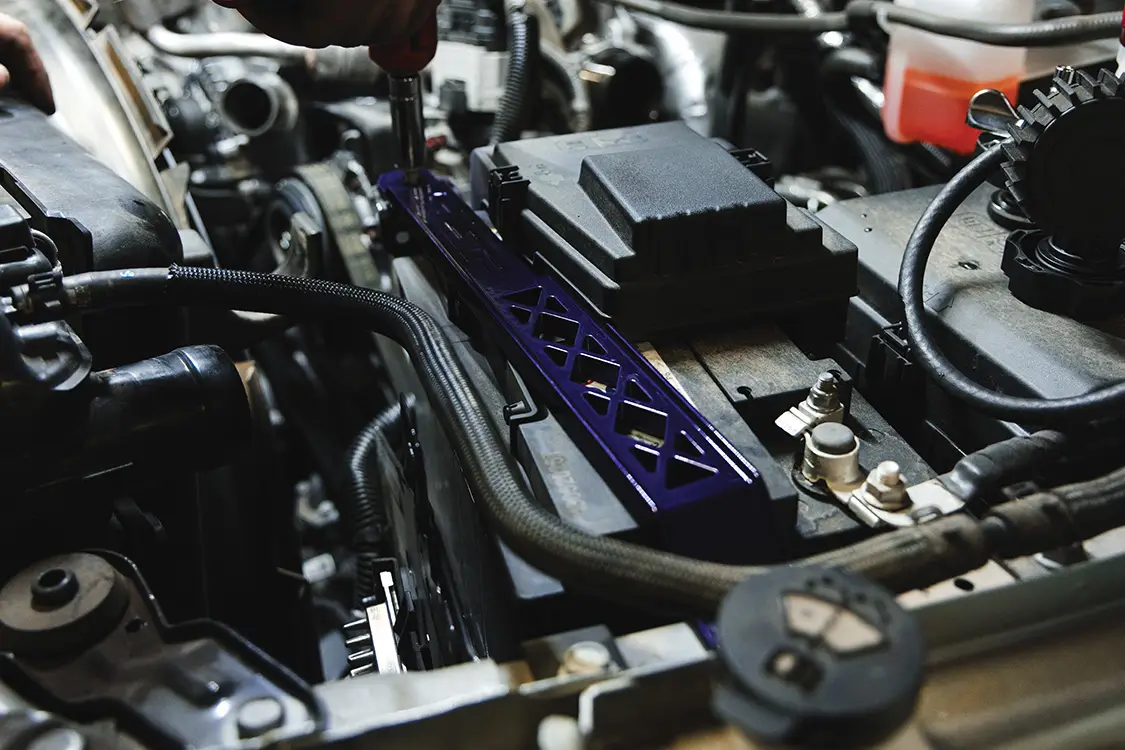
The battery hold-down is about security and durability. Hard driving, rough roads, and towing—all of it puts stress on components that shouldn’t be moving in the first place. A solid billet solution locks that down and removes one more variable from the equation.
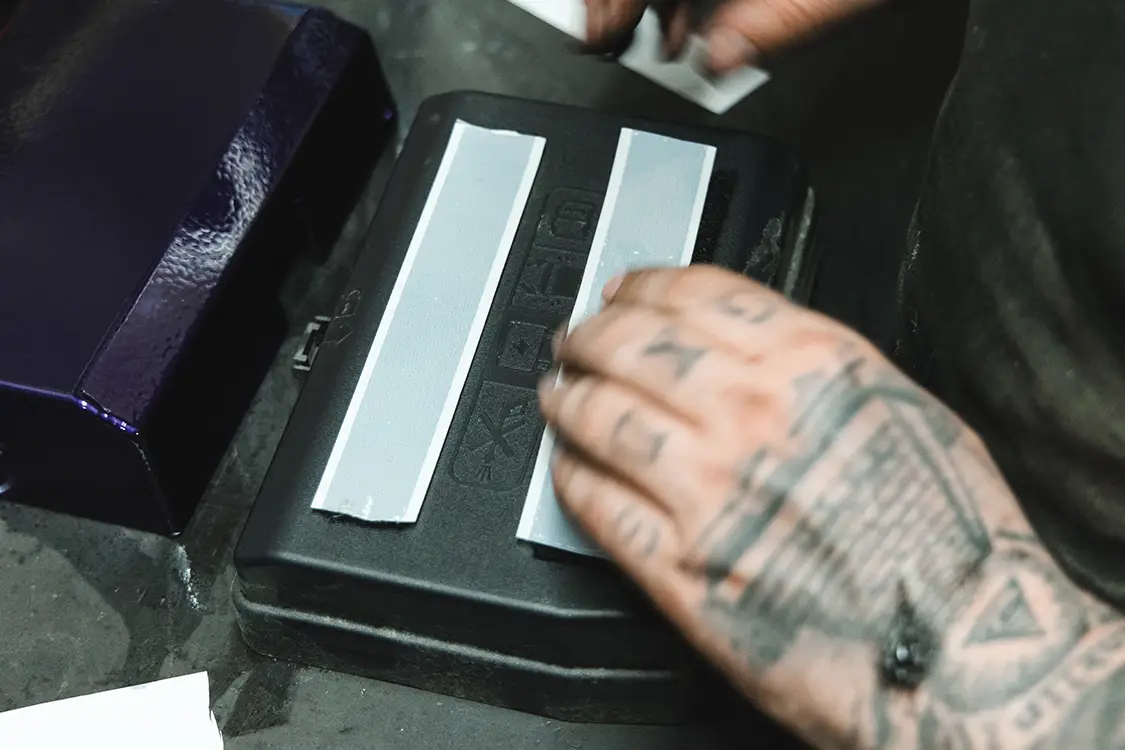
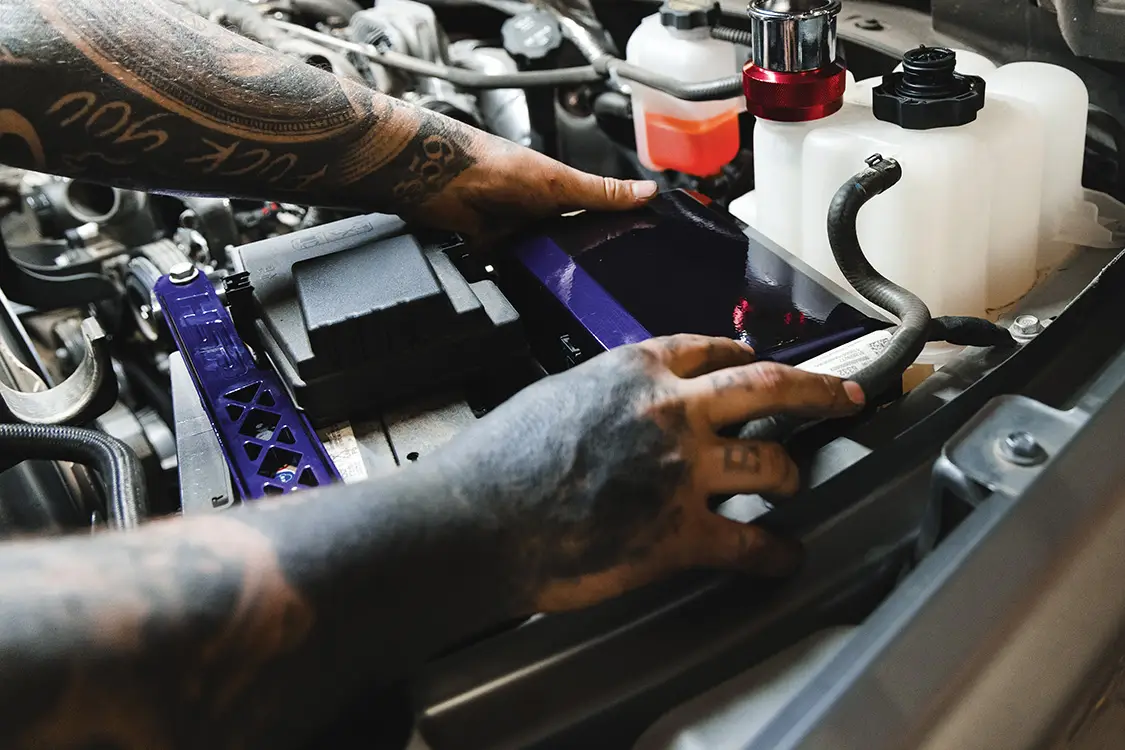
The fuse box cover is all about protection and presentation. Keeping critical electrical components properly covered isn’t just a nice touch; it’s part of long-term reliability. Heat cycles, dust, and vibration all add up over time, and this is one of those small upgrades that quietly prevents future annoyance.
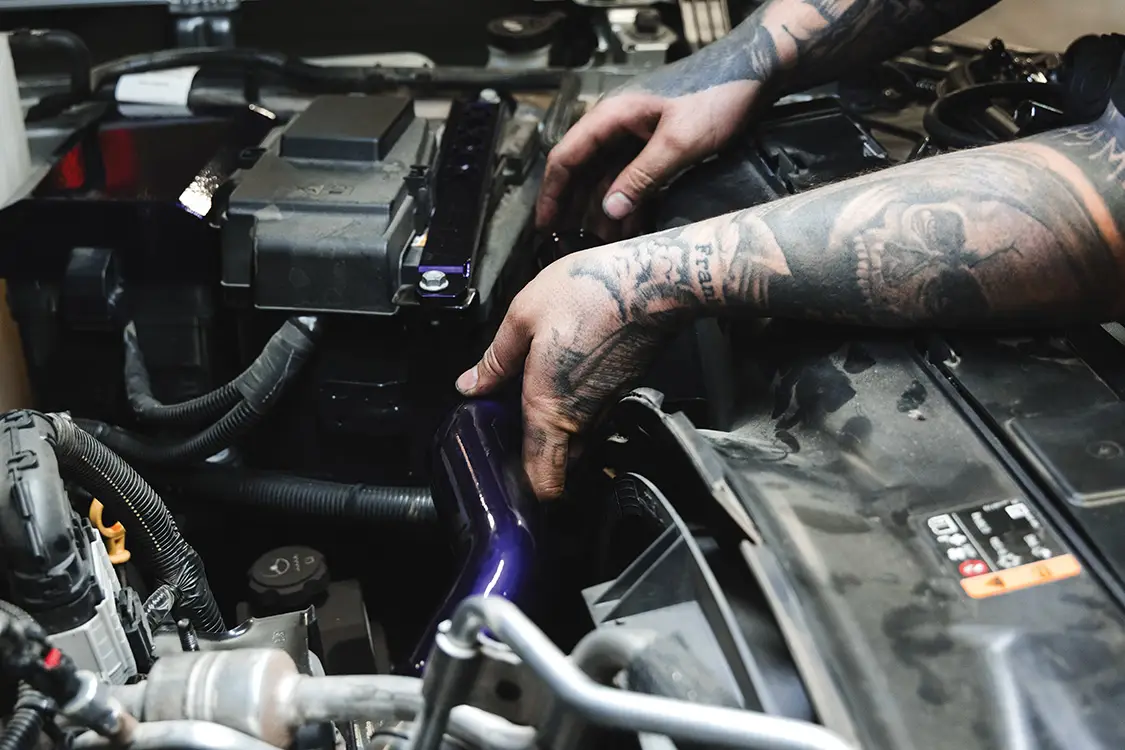
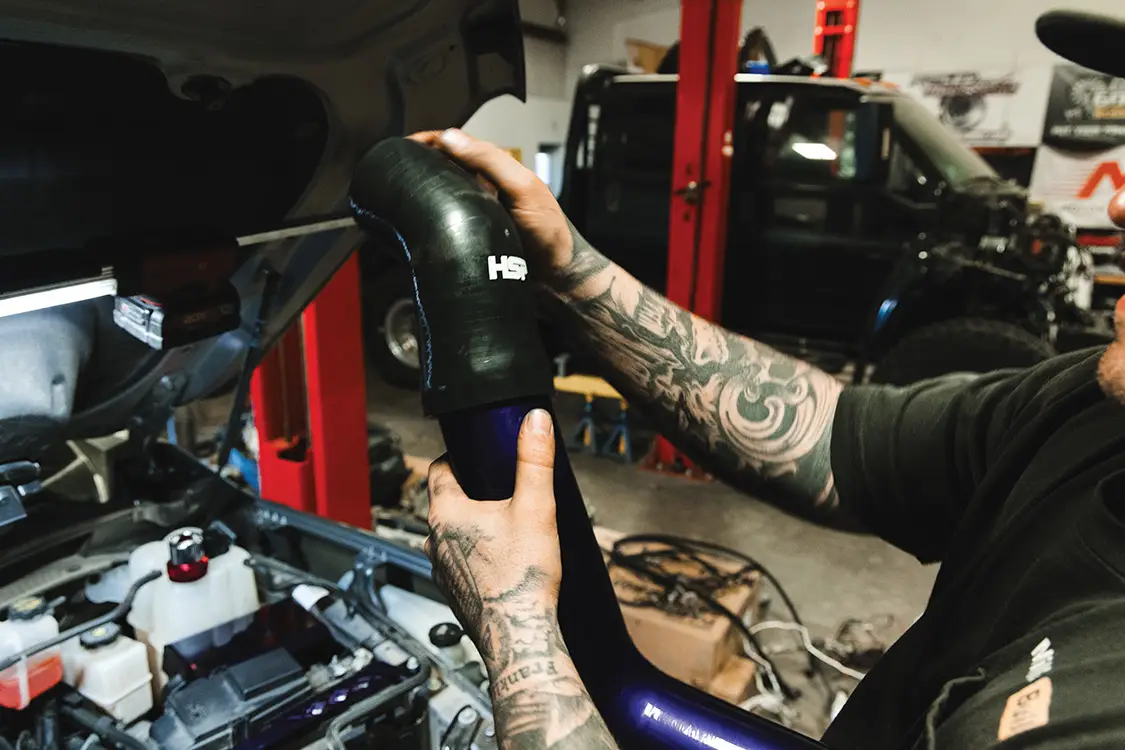
On a Denali Ultimate, these details matter even more. The truck already sets a high bar visually. Leaving the engine bay half-finished doesn’t match the rest of the vehicle. Finished in Illusion Purple, these components clean up visual clutter and tie everything together. It looks cohesive, not accidental.
None of these parts are what we’d call “weekend killers,” but they do reward a little patience.
The intake and piping are straightforward if you’re comfortable turning a wrench—just take your time on fitment and clamp alignment. Boost leaks from rushed installs are the fastest way to turn a good upgrade into a frustrating one.
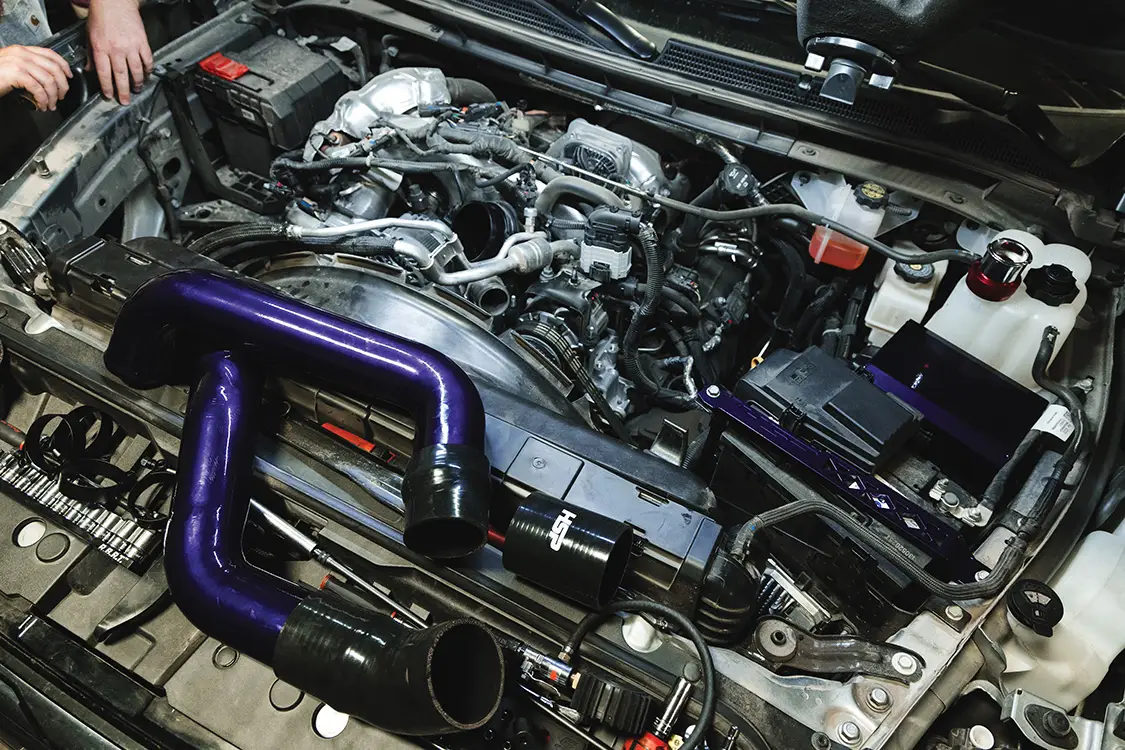
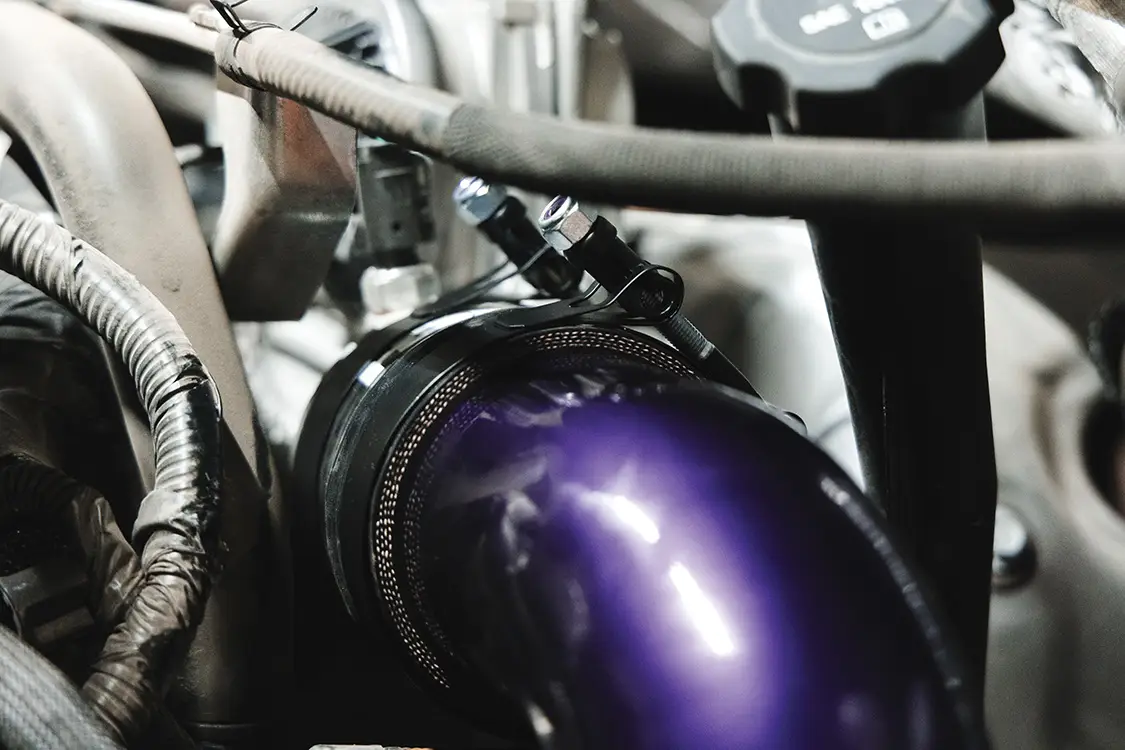
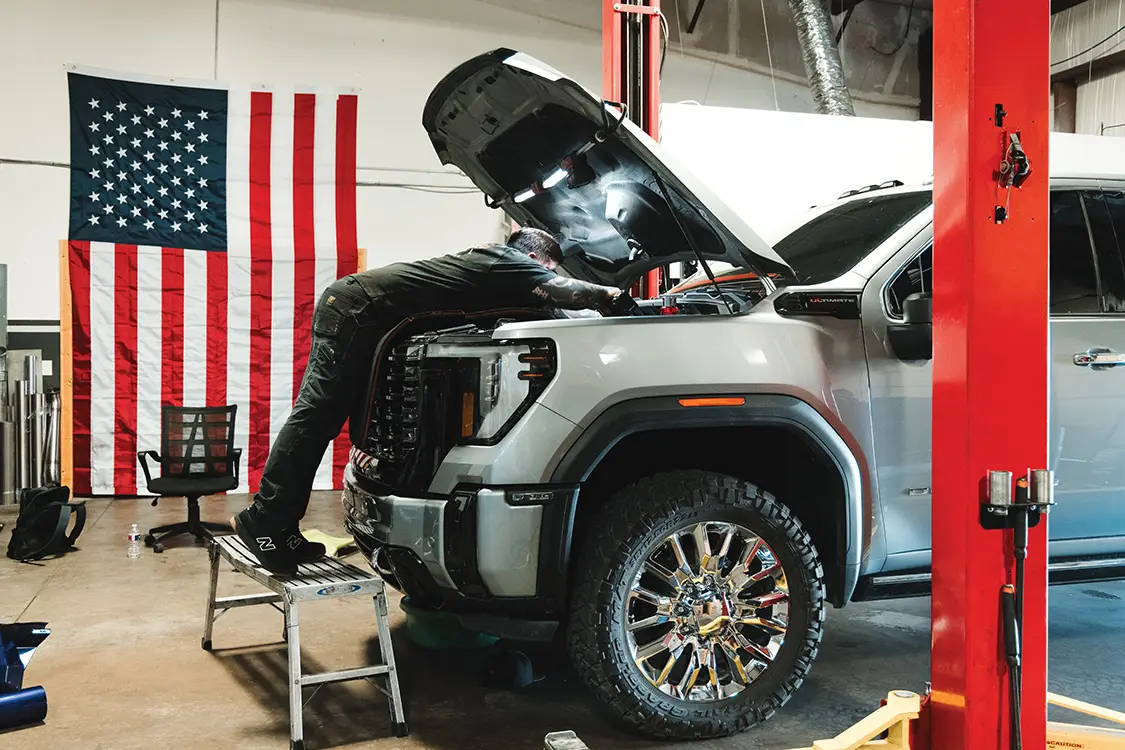
Traction bars take a bit more effort, mostly in setup and alignment. Get them adjusted correctly and you’ll feel the difference immediately. Get lazy with it and you’ll still be chasing drivability issues.
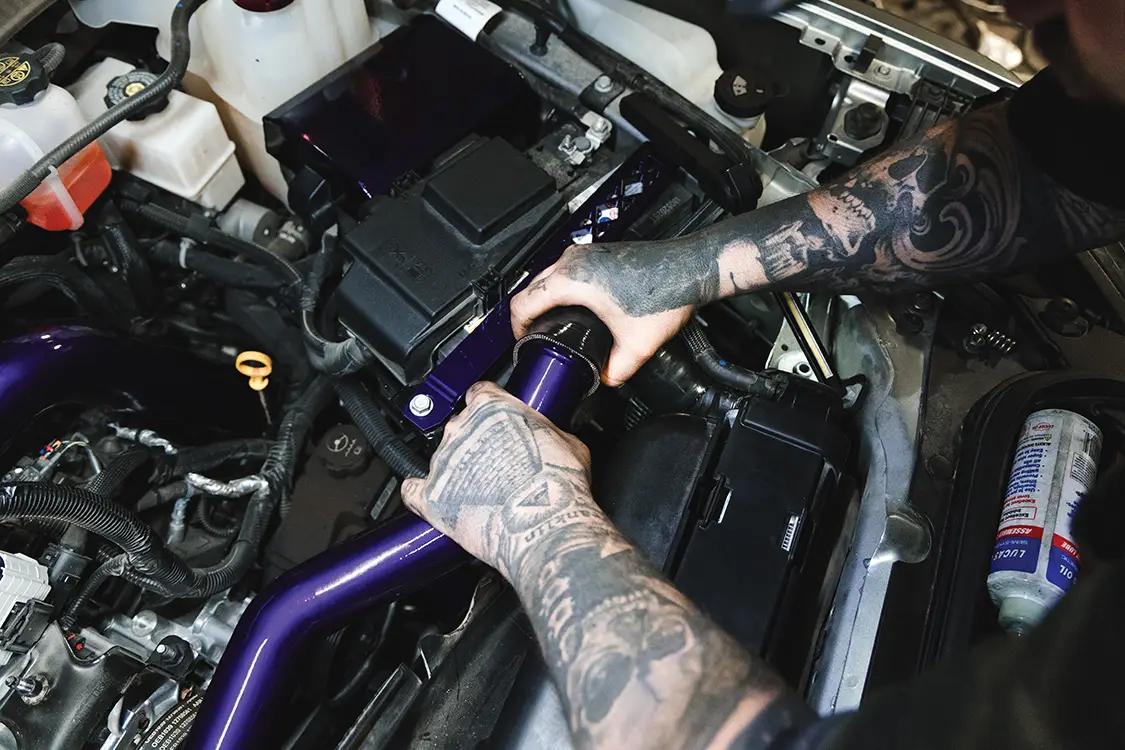
The smaller components, battery hold-down and fuse cover, are quick wins. These parts require minimal time and offer immediate improvement in how the engine bay feels as a whole, especially when everything matches.
Individually, each of these parts makes sense. Together, they tell a better story. Air comes in easier through the intake. It moves through the system with less resistance thanks to the upgraded piping. The turbo responds quicker, boost is more consistent, and the engine feels sharper without needing to chase big numbers.
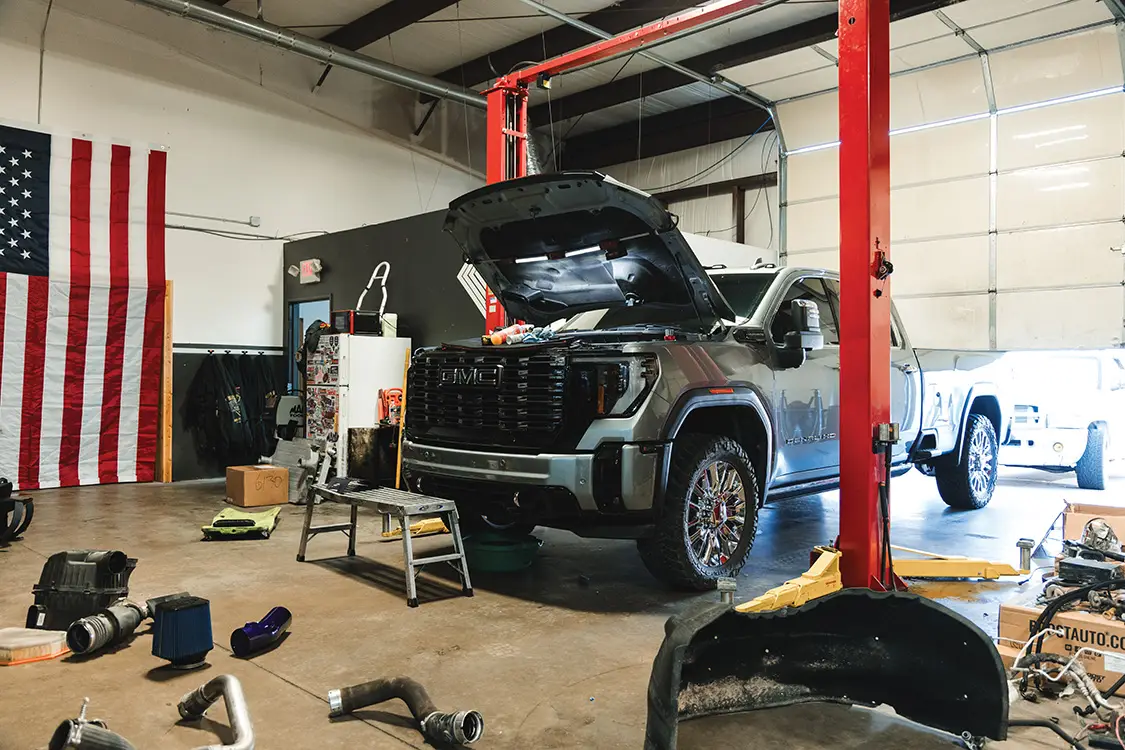
That power then actually makes it to the ground because the rear suspension isn’t trying to argue with physics anymore. And under the hood, the small details are handled, visually and functionally, so the truck finally looks as complete as it feels.
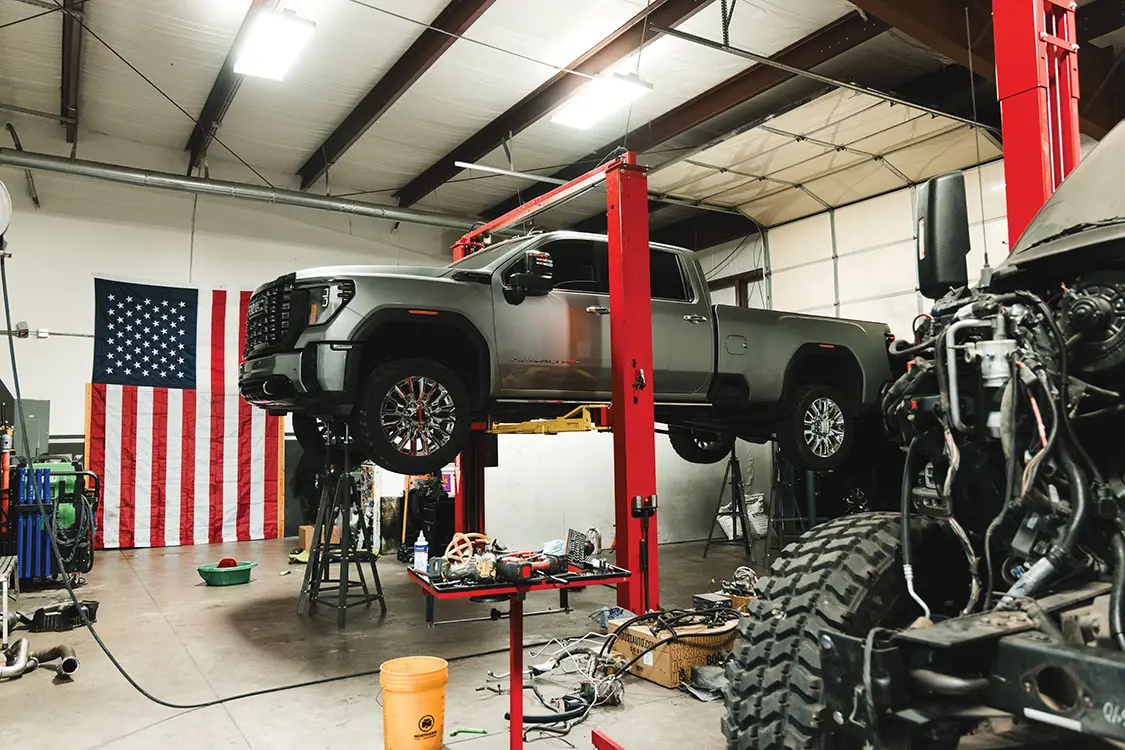
On a 2025 Denali Ultimate, that’s really the point. You’re not fixing a bad truck. You’re finishing a good one. In a world full of shortcuts and peak number-chasing, this is what it looks like to clean up the whole system and make it worthy of the badge on the grille.
Events
The 2021 SEMA Launch Pad competition is down to five finalists – from left, Tom Sawarynski, Dustin Woolf, Kevin Robinson, Brendan McGrath, and Jonathan… Continue reading
Adam Johnson . October 22, 2021
OBS Builders Guide
We take the 2021 Ford Bronco Badlands equipped with the Sasquatch package to our trails for some off-road punishment. The Ford Bronco with Sasquatch gets… Continue reading
Adam Johnson . November 10, 2021

Feature Stories
30 Years in the Scene As custom truck enthusiasts, we have all either been in a car club at some point or know people who… Continue reading
Chris Hamilton . July 06, 2023
Feature Stories
Prerunners and Toys What started as a small but mighty toy drive at King Shocks put on by Terra Crew a few years ago has… Continue reading
Evan Walsh . January 31, 2025

Events
2024 NATIONAL EVENT SCHEDULE JUN June 8-9 Atlantic City Truck Meet Atlantic City www.atlanticcitytruckmeet.org @atlanticcitytruckmeet June 13-16 Tailgate N Tallboys Maxxed Bloomington Bloomington, IL www.tntmaxxed.com… Continue reading
STREET TRUCKS STAFF . September 20, 2024
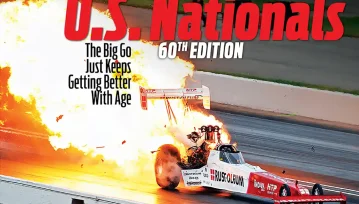
Drag Racer
The Big Go Just Keeps Getting Better With Age NHRA threw a birthday party for its premiere national event for these past 60 years and… Continue reading
Pete Ward . May 12, 2026


Super Run 2026 Classic Car Show
Super Run 2026 Classic Car Show Casablanca Resort 950 West Mesquite Blvd Mesquite, NV 89027
Concours D'Elegance
Cobble Beach Resort 221 McLeese Dr, Kemble, ON N0H 1S0
Charity Car Show
Mesa Marketplace 10550 E. Baseline Rd, Mesa , Az 85209
CHICO CONCOURS Car Show
Silver Dollar Fairgrounds 2357 Fair Street, Chico, CA 95928
Goodguys 33rd Summit Racing Lone Star Nationals
Texas Motor Speedway 3545 Lone Star Circle
We use cookies to enhance your browsing experience, serve personalized ads or content, and analyze our traffic. By clicking "Accept All", you consent to our use of cookies. Visit our Cookie Policy for more info.


 Please wait...
Share Link