








 Jerome Andre
.
November 21, 2025
.
Electric Vehicle Features
Jerome Andre
.
November 21, 2025
.
Electric Vehicle Features

It’s a scene straight from a vintage postcard: a bright, cobalt blue 1965 Austin Healey 3000 gleaming in the morning light, nose pointed down a quiet London street, wire wheels sparkling and chrome trim winking in the sun. But something’s missing. Or rather, something’s been added, and it hums. This is Revival Autos’ vision of a recharged future for British motoring. From their workshop in the heart of the city, the fledgling but fast-rising startup is taking Austin Healeys, beloved, but flawed classics, and giving them a second life by replacing their engine with recycled electric drivetrains. And if that sounds sacrilegious, well… you’ve probably never driven one.

“We love these cars,” says Darren Sullivan, founder of Revival Autos. “But they’re not perfect. The weight distribution is off, the engines run too hot, they’re unreliable in city traffic. We’re not erasing their history; we’re making them drive like they always should have.” From the outside, this Healey 3000 looks untouched. Pop the ‘bonnet’ (hood), though, and you’ll find a Nissan Leaf motor and inverter, a custom control board hand-built by Revival, and two battery packs, one under the hood and one in the trunk, where the fuel tank once sat. This dual-battery setup does more than just increase range (a claimed 150 miles, depending on your right foot). It also improves weight distribution, solving the Healey’s notorious front-heavy understeer. “People used to chuck bags of cement in the boot to balance it out,” Darren grins. “We just use batteries.”

For Sullivan, the problem wasn’t just performance—it was practicality. “I had a Healey in the Netherlands, and every time I got out of it, I was soaked with sweat,” he laughs. “The engine ran so hot, the footwells became ovens. My back was ruined. I loved the car—but I didn’t miss it.” That experience planted the seed for Revival Autos: a conversion company that respects heritage, preserves design, but solves the issues that made some classics difficult to live with. Inside, the cabin is lovingly restored, but almost entirely original. You’ll find no screens, no startup chimes, no gear-selector dials. Just a wooden dash, Smiths dials, and a discreet Revival plaque. A Tesla water heater provides reliable cabin warmth. USB ports are hidden under the carpet. A charge monitor lives in the glovebox, and a small screen is planned to discreetly replace the original voltmeter.


Yes. Revival deliberately retains the Healey’s original 4-speed manual gearbox and clutch. And it works beautifully. “You can leave it in third gear and drive it like an automatic all day,” Darren says, “but if you want to row through the gears like in the old days, you can do that too.” The combination of instant torque and manual shifting makes the experience feel refreshingly analog. You only need the clutch to change gears, come to a stop in gear, and the motor simply halts, no stalling, no fuss. On London streets, you can creep along in second or third, never touching the clutch. “Gearboxes are coming back in fashion,” Darren points out. “They make people feel involved. And with the way electric motors work, it’s optional—so why take that away?”

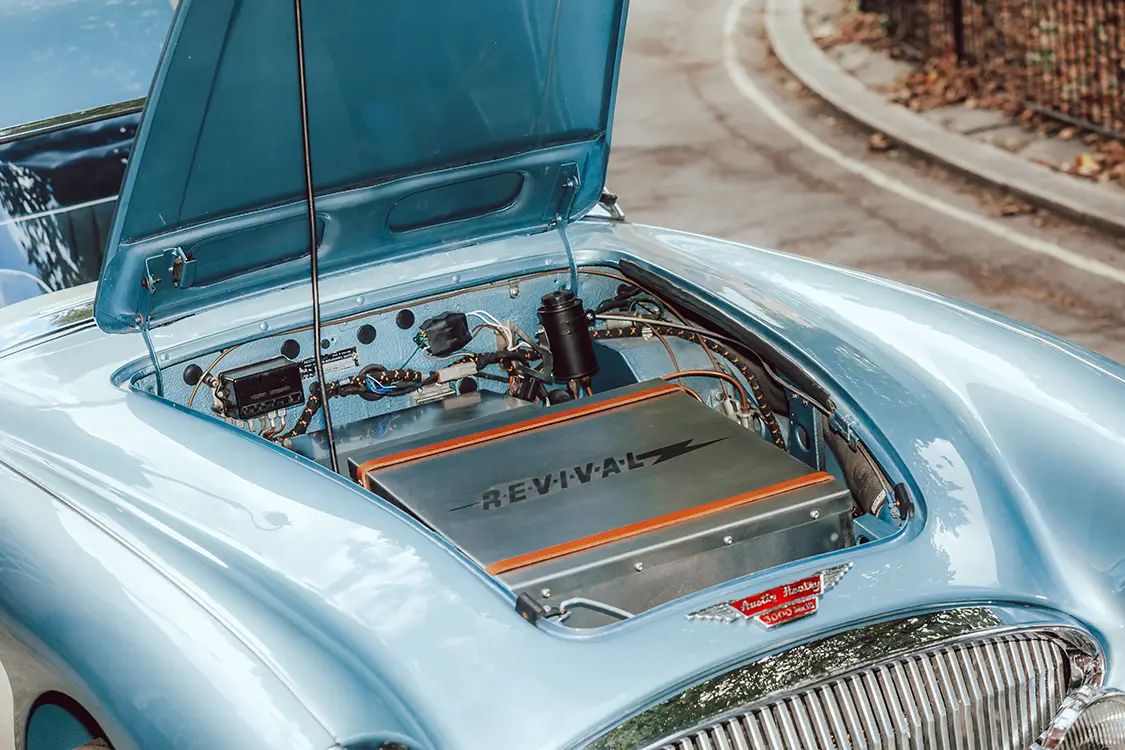
Revival’s chosen motor is a repurposed 110kW (148hp) Nissan Leaf unit, capable of delivering 320 Nm of torque (236 lb-ft). That’s almost one third more than the original straight-six engine ever made. Their first car used an 80kW motor, but this Healey 3000 is a step up. “It’s smoother, quicker, and it just feels right,” says Darren. “Honestly, it drives like silk.” That motor is paired to a 40kWh battery, split front and rear. On a DC fast charger, it’ll juice to 80% in 30 minutes. There’s no regenerative braking map just yet, but it’s functional in lower gears, and the team is refining it. The control logic is all Revival’s own. Darren, who also has a background in software development, builds his own circuit boards to integrate functions like heating, RPM simulation, and data display. “You don’t want the bulky Nissan control units,” he says. “They’re huge, heavy, and overcomplicated. We keep it lean and in-house.” The motor mounts and battery cages are custom-built but use the factory chassis mounting points, so nothing structural is cut. That means—if you really must—you can reverse the conversion and reinstall the original drivetrain, which is included in a crate with each car.
People used to chuck bags of cement in the boot to balance it out, we just use batteries.
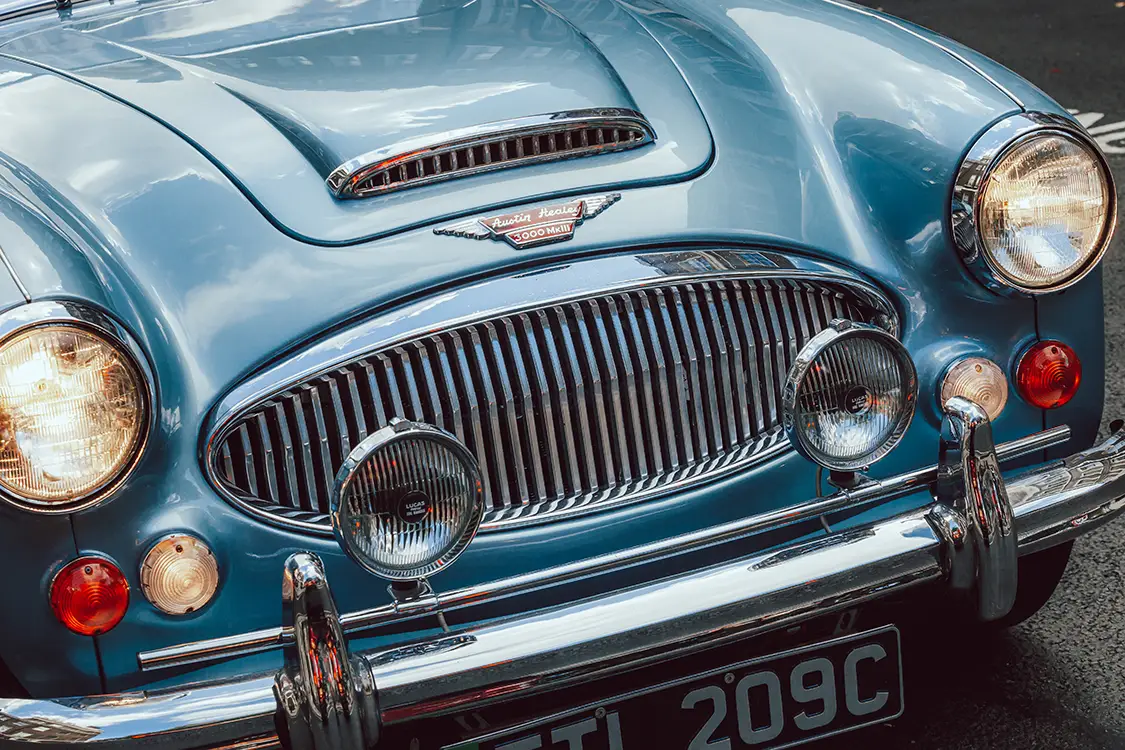


At the wheel, the Healey 3000 is everything you hope it’ll be, minus the smoke, heat, and fuss. There’s no power steering, but the large wheel and rebalanced weight make it manageable. The brakes, (the original discs up front) have been adjusted for confident bite. A drum-to-disc upgrade is in development for future cars. The performance? It’s not neck-snapping, but it is grin-inducing. Torque delivery is softened off the line to protect the drivetrain, but once moving, you get all of it, all the time. “The torque curve is progressive,” Darren says. “You don’t want to snap axles at every traffic light.” Still, in second gear, the Healey gathers speed with a sense of purpose. “It can hang with most modern cars off the line,” he smiles. “And then it cruises smoothly at motorway speeds in fourth.”
For purists, the lack of engine noise may feel like a loss. For others, it’s a blessing. But if you miss the rumble, Revival has you covered. Their optional synthetic sound system pipes engine noises through a hidden speaker, controlled via throttle input. Currently available sounds range from Lamborghini Urus to Ford Mustang V-8. More appropriate classic engine notes are in development. “It’s silly fun, but also useful,” Darren says. “It lets people hear you coming, and it gives you something audible to play with.”

Revival doesn’t do concours builds. “We don’t want people to be afraid to drive these,” Darren insists. “A little patina, some history—that’s the soul of a classic car. We restore them thoroughly, but we leave room for character.” Each car takes about two months to build, once a suitable donor is sourced and restored. The company has already shipped one car to Switzerland, this blue Healey 3000 is heading to Dubai, and future builds are slated for Florida and Chicago. The goal is to expand with satellite workshops in the U.S., starting with California, in San Francisco.
What Revival is doing isn’t revolutionary. But few do it with this level of mechanical empathy, balance of purpose, and authentic design preservation. “There’s a lot of noise in the EV space,” Darren says. “What we want to do is offer something honest, usable, and built to be enjoyed.” At $150,000 to $175,000, Revival’s electric Healeys are not cheap. But in a world where high-end EV conversions can push well beyond $300K, the price starts to make sense. This isn’t just a way to modernize a classic. It’s a way to actually drive it every day if you like. It’s emissions-free, congestion-charge-exempt, and futureproof. And crucially, it’s still an Austin Healey.

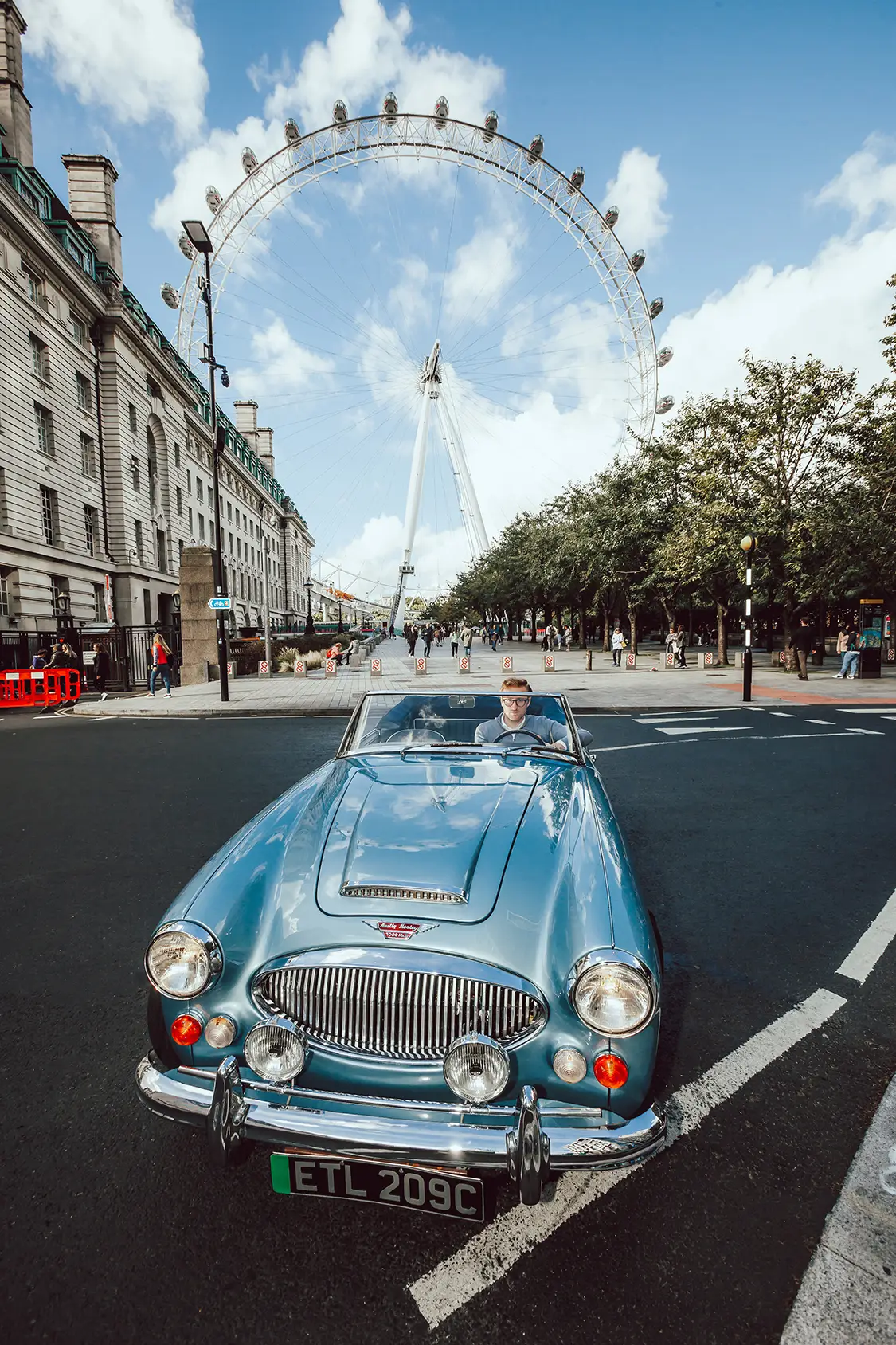
Revival’s first Healey 3000 is a triumph. Not because it redefines the car, but because it doesn’t try to. It refines it. Enhances it. Makes it more usable, more comfortable, more reliable. But it still feels like what it is: a classic British roadster, low-slung and eager, tugging you toward the next open B-road. Whether you consider it sacrilege or salvation, it’s hard to deny the appeal of a car this charming, with this much soul—only now, without the smoke and sweat. This Healey doesn’t shout. It whispers. And that’s the point.
Base Vehicle
Powertrain
Battery System
Chassis & Suspension
Brakes
Interior & Features
Performance
Build Time & Cost
Buyer’s Guides
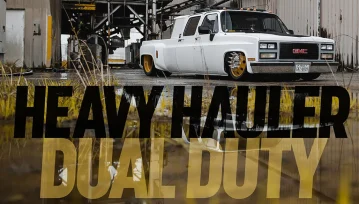
‘63-’72 Chevy/GM Truck Bolt-in Watts Link Completely bolt-in watts link system for ’63-’72 C/10 trucks; that will work with factory trailing arms and springs, or… Continue reading
Drive Staff . March 10, 2023
Buyer’s Guides
Chris Stoughton’s Non-Conformist GMC Creation You’ve most likely seen this ’75 Chevy dually around at a show or online somewhere and have had an instant… Continue reading
John Mata Jr. . June 05, 2023
All Feature Vehicles
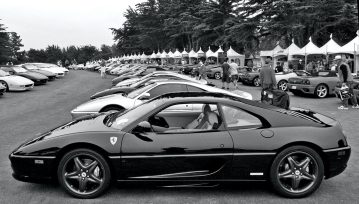
Corralling a Prancing Horse Costs Less Than You Might Think With the recent sale of a Ferrari 250 GTO for more than $50 million, Ferraris… Continue reading
HAROLD PACE . May 20, 2022

Electric Vehicle Features
An Electrifying Experience The Holley High Voltage Experience debuted at Sonoma Raceway in Northern California. The location proved especially fitting given its proximity to California’s… Continue reading
Mike Self . June 24, 2022

Diesel World
A ‘Factory’ ’06 Ram 2500 that Stands Out and Competes We know what you’re thinking—while it may be a very clean looking 2006 Dodge Ram… Continue reading
Lindsey Fisher . February 28, 2025
Diesel World
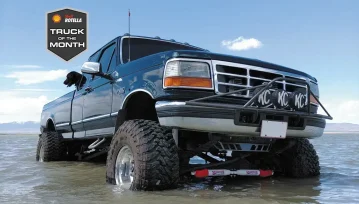
Sometimes you gotta do it yourself This month’s Shell Rotella Truck Of The Month winner is Silvan Squires. Silvan hails from Utah, a land of… Continue reading
SILVAN SQUIRES . July 12, 2023



Terminal Takeover 2026
21 airport rd Ext, Greenville, SC
Altered Metal 2026
Rayne, LA
Orange Beach Invasion 2026
The Wharf Orange Beach, Alabama
Southern Tradition Car/Truck Show 2026
Etowah River Park Canton, GA
Local Studebaker Drivers Club Chapter Private Tour Of John Muir House
John Muir House 4202 Alhambra Ave., Martinez, CA



 Please wait...
Share Link