








 Motortopia Staff
.
October 16, 2025
.
Press Release
Motortopia Staff
.
October 16, 2025
.
Press Release
When most people picture an EV conversion, they think of instant torque, silent acceleration, and a classic reborn. But under every beautifully restored Thunderbird or smartly electrified fleet van lies something far more important — safety.
“Power is exciting, but control is everything.”
Let’s look at a few key components that keep every build — from a 1957 Thunderbird to a delivery fleet of step vans — safe, serviceable, and future-proof.
Think of this as your EV’s “fire axe behind the glass.” A high-current, manual disconnect that cuts battery power from the rest of the high-voltage system instantly and physically — no electronics required.
How it works: It sits between your battery pack and distribution unit, ready to break the circuit if things go wrong. Unlike contactors, it’s a tactile, visible, human-operated switch.
Why it matters: Imagine a mechanic replacing the front suspension on a converted Model T years after its conversion, the battery pack just above his head. Before lifting the car, he pulls the clearly labeled emergency disconnect — one motion, total isolation. No software, no guesswork, just old-school mechanical certainty in a high-tech machine. For a fleet, it gives maintenance crews a simple and universal shutdown point that doesn’t depend on software or passwords.
Pro tip: Mount it in a clearly visible area and tell anyone who touches the vehicle where to find it.
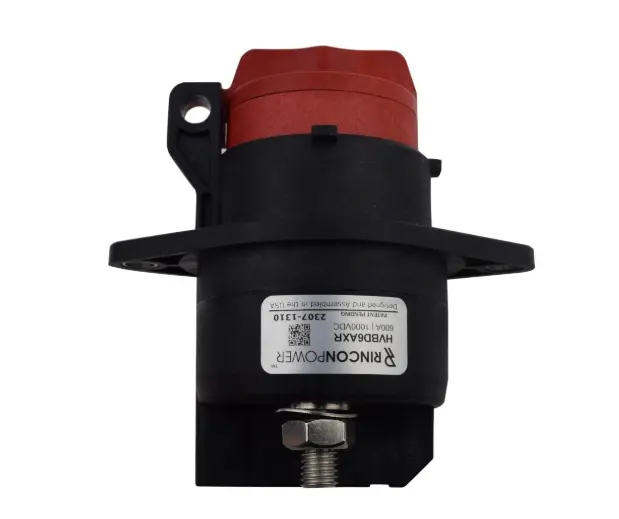
| Rincon Power HVBD6AXR 1000V 600A Disconnect Switch |
| $185.00 |
If the kill switch is your emergency axe, the HVIL is your seatbelt — always on, always watching.
How it works: The High Voltage Interlock Loop (HVIL) is a low-voltage safety circuit that keeps high-voltage systems off until everything is properly connected. It runs through all major HV components, and when a connector is unplugged or a cover opened, the loop breaks — instantly cutting power. The HVIL connector completes that loop, acting as the final handshake that makes the system safe to operate and safe to service.
Why it matters: Because no one wants 400 volts live when a connector’s half-plugged or a lid’s open. The HVIL makes sure that can’t happen. It’s the quiet guardian that shuts down high voltage before anyone can touch or service a live system. For classic car builders, it protects curious hands in the workshop; for fleet managers, it keeps every service bay and third-party garage safe without needing EV-specific training. It’s smart, simple, and always on duty — the kind of safety that works even when no one’s watching.
Pro tip: Every HV connector in a conversion should have an HVIL pin. It’s an easy win for professional-grade safety — and makes your build inspection-ready in any jurisdiction.
Inertia switches are old-school safety heroes. Found in race cars and now EVs, these mechanical devices sense impact and instantly disconnect the HV system — no electronics, no hesitation.
How it works: Inside is a spring-loaded weight. When the car experiences a sudden shock or deceleration, the weight moves, breaking the circuit that controls HV contactors. It’s wired inline with the power to your contactor coils, shutting everything down at the source.
Why it matters: A converted classic Chevy gets rear-ended in traffic. Before rescuers even approach, the inertia switch has dropped power. Tow operators arrive to a fully isolated HV system. It’s not the builder or driver who benefits here — it’s the third party who never read the build manual.
Pro tip: Mount it to the chassis near the center of mass. Use a version that requires manual reset, so the car can’t “accidentally re-arm” itself after a shock.
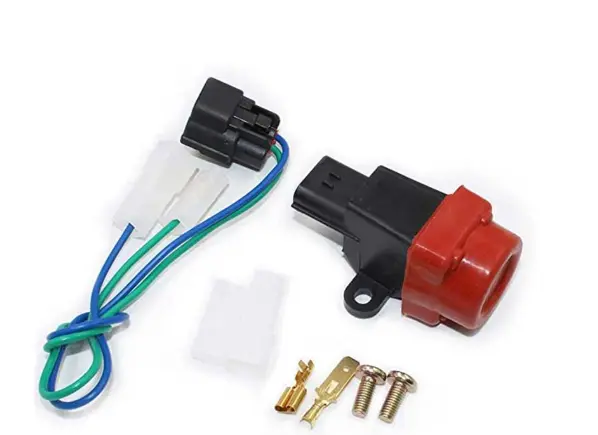
| FIRST INERTIA SWITCH |
| $38.00 |
EV battery enclosures must breathe safely. When gases or pressure build inside — due to heat, altitude, or a single-cell failure — these valves are the only things preventing catastrophic rupture.
How it works: Each valve opens when the pack’s internal pressure rises beyond safe levels, releasing gas in a controlled way instead of cracking the case or pushing debris outward.
Why it matters: A converted food-delivery van sits charging in a depot overnight. One cell vents electrolyte gases from overcharge. The pressure relief valve opens silently, releasing vapor through an exterior vent. The neighboring vans, and the warehouse team, stay safe.
Without that valve, the casing could’ve ruptured violently.
Pro tip: Always vent outward and away from the cabin. If you’re restoring a vintage body, consider discreet vents under the floor or behind structural panels — invisible from the outside, vital on the inside.
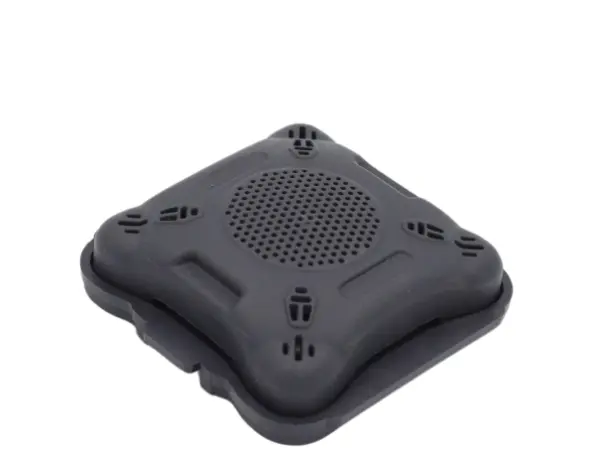
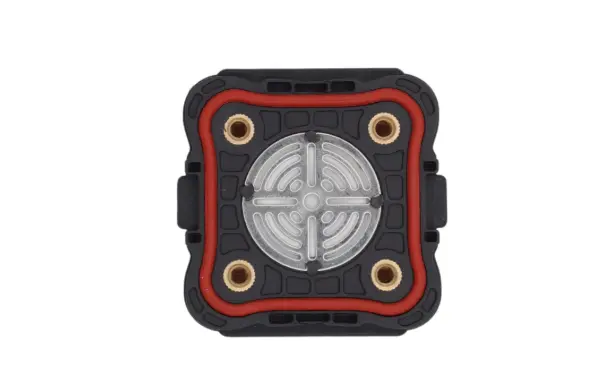
| Small Pressure Relief Valve Vent Blow Off Valve for Battery Pack |
| $20.00 |
Electricity doesn’t always fail suddenly — sometimes it leaks. Over years, heat, vibration, or moisture can degrade cable insulation. The IMD constantly checks that the high-voltage system stays electrically isolated from the chassis.
How it works: It measures resistance between HV conductors and the vehicle frame. If that resistance drops below a threshold, it warns or disables the system before current can flow where it shouldn’t.
Why it matters: Imagine your converted 1970s Land Cruiser on display at a community show. A curious spectator leans on the fender to peek inside the bay. Unknown to the owner, a wire under the pack had been rubbing against the chassis. The IMD caught it days before, throwing a pre-alarm. The issue was fixed, and that innocent hand on the fender never found 400 volts waiting.
For fleet operators, IMDs are non-negotiable — they detect faults before a driver or technician does.
Pro tip: Integrate IMD readings into your dashboard or telematics. Early alerts mean fewer roadside surprises and far longer component life.
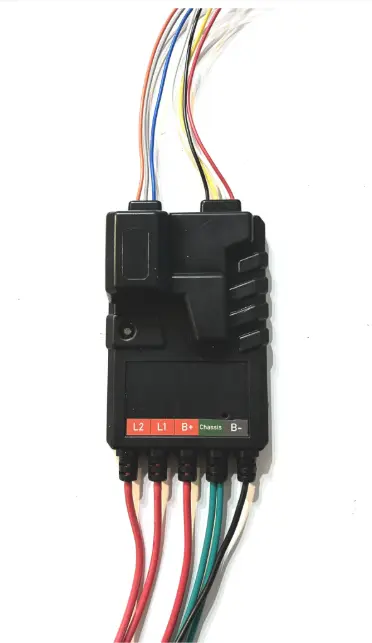
| Automotive IMD (Insulation Monitoring Device) |
| $599.00 |
A safe EV conversion doesn’t rely on a single “magic box.” It’s built on layers that complement each other:
These systems overlap by design — if one fails, the next catches it. Together, they make every build not only safer for the driver, but for mechanics, first responders, and anyone else who comes near the vehicle.
Whether you’re bringing a beloved classic back to life or managing a fleet of electric work vans, remember this: Performance is optional — safety isn’t.
At Fuel2Electric, we connect enthusiasts and professionals with the right components, knowledge, and partners to design conversions that last, perform, and protect everyone around them.
Design. Connect. Convert — safely
Press Release
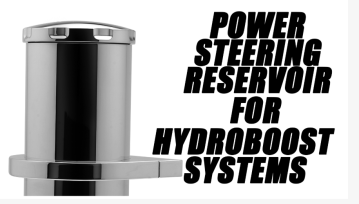
Precision machined from 6061-T6 billet aluminum and features increased capacity to fulfill the Hydroboost system requirements. The breathable baffled cap relieves positive and negative pressure… Continue reading
Motortopia Staff . August 28, 2025

Press Release
NEW TEC 5 15.5″ STEERING WHEELS 15.5″ Diameter Polished or Black Contrast Cut Finishes NEW REDLINE STEERING WHEELS 14″ & 15.5″ Diameters Polished or Contrast Cut Black… Continue reading
Motortopia Staff . October 24, 2024

Press Release
Wilwood Disc Brakes Releases Street & Track Big Brake Kits for MX-5 Miata Mazda MX-5 Miata owners now have more options for improving the performance… Continue reading
Motortopia Staff . March 05, 2025
Press Release
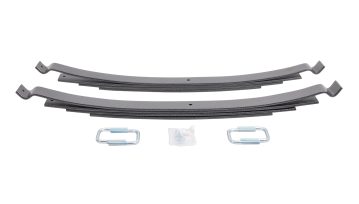
Designed with a full-time spring rate, it’s the powerhouse of the Hellwig lineup — perfect for fleet vehicles or trucks that carry heavy loads every… Continue reading
Motortopia Staff . March 18, 2025
Press Release
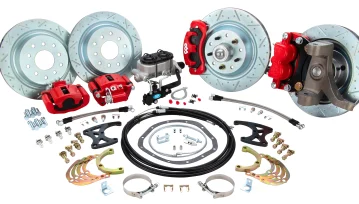
CPP’s Big Brake Kits deliver modern stopping power for classic cars and trucks using a proven spindle and hub design. Truck kits come standard with… Continue reading
Motortopia Staff . October 13, 2025

Press Release
A drop-in upgrade for your stock 1971-80 Scout II dash, this Retrotech package will have even the most diehard fanatic fooled. The RTX series is… Continue reading
Motortopia Staff . January 03, 2025



Terminal Takeover 2026
21 airport rd Ext, Greenville, SC
Altered Metal 2026
Rayne, LA
Orange Beach Invasion 2026
The Wharf Orange Beach, Alabama
Southern Tradition Car/Truck Show 2026
Etowah River Park Canton, GA
Local Studebaker Drivers Club Chapter Private Tour Of John Muir House
John Muir House 4202 Alhambra Ave., Martinez, CA



 Please wait...
Share Link