










 Motortopia Staff
.
May 20, 2026
.
News
Motortopia Staff
.
May 20, 2026
.
News
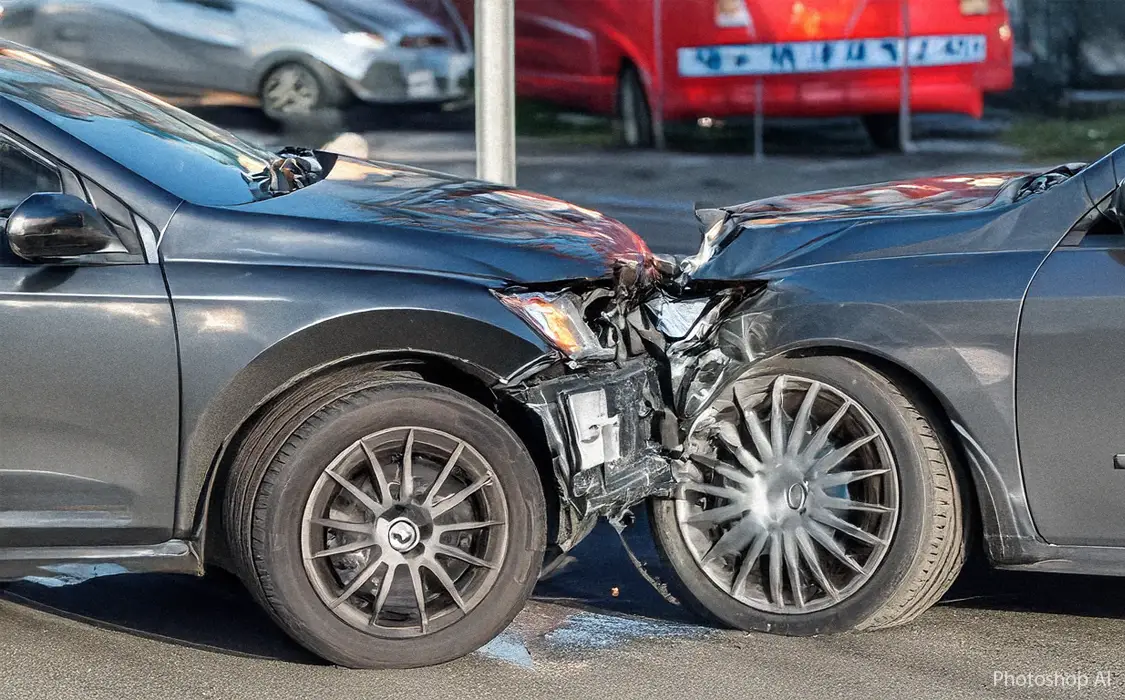
Over 29% of car accidents in the U. S. are rear-end collisions, compared to about 22% of angle collisions or 24% of sideswipe collisions. Tailgating, speeding, and distracted driving mostly cause rear-end collisions.
Soft-tissue injuries and whiplash are the most common injuries suffered following a rear-end collision incident. A rear-end collision refers to one car bumping into the rear of another car.
The most important things to do after a rear-end collision are protecting your safety, documenting the incident, and preserving your legal and insurance rights. According to a Baton Rouge rear-end collision lawyer, it is tough to claim a win in the case of rear-end collision lawsuits. You must develop a case that clearly identifies who is at fault and show all injuries caused by the accident. You can achieve this objective by collecting evidence and making a legal strategy serve these purposes.
Let’s go over the important steps one must undertake if they want to have a successful case involving a rear-end collision.
If a moving vehicle suddenly jams into a stopped one, the energy of the impact transfers through the body of the driver in mere fractions of a second, sometimes resulting in immediate injuries.
When there is a rear-end collision, the vehicle will suddenly be pushed forward and, in doing so, the seat will push the upper torso of the driver forward along with it. The head will move synchronously with the movement of the car at first but it will eventually be left further behind. The victim’s body will snap backward before moving forward as a result of deceleration. This situation leads to grave injuries such as whiplash.
What makes rear-end crashes medically significant is that the violence of the movement often exceeds what the low speed of the impact suggests. The cervical spine cannot quickly absorb an applied force coming from the rear.
Slipped disc, spinal cord injury, and internal bleeding are among the other possible conditions that could afflict injured occupants of rear-end collisions. Rapid airbag deployment may also result in burns, facial injuries, and abrasions.
Oftentimes, those in rear-end accidents do not immediately seek medical attention. They underestimate the seriousness of an injury from rear-end accidents and may be very much at risk in the future.
Another problem of not going to the hospital is that the insurance company will automatically assume that the individual sustained their injuries before the accident. Having yourself checked by a doctor gives you an official medical report that could serve as evidence of the incident.
It is normally believed that the liability for any rear-end collision rests with the driver driving behind the other vehicle. All drivers must always keep a safe following distance between their cars. They should see to it that their car stops before reaching the point that is visible from their position.
A diver alleged to have rear-ended another vehicle may present facts that will either shift or share the fault. The most frequent situations in which the presumption has been rebutted include:
It should be noted that courts are very specific on this matter. Suddenness alone cannot be used as a defense in a rear-end collision case.
For example, a sudden stop at an intersection is an expected phenomenon, since any motorist should understand that there is a risk of another vehicle stopping before the intersection.
The importance of such analysis becomes evident when a state applies comparative negligence in the case it is trying. According to this legal principle, the compensation awarded to the plaintiff will be reduced by the amount corresponding to their share of fault in the accident.
According to rear-end collision lawyer Michael A. Blanchard, when recounting events of the accident, you should avoid stating that you were at fault. There is a possibility that you can have overlooked some of the details of the accident. There may be another entity involved in the accident without your knowledge. Admitting fault could result in you waiving your right to compensation.
States employing modified comparative negligence rules prohibit a plaintiff from receiving compensation if they are responsible for more than 50 percent of the liability. Insurance adjusters know that each percentage point they use against the plaintiff reduces their company’s payout.
The actions taken at and immediately after the crash site determine what evidence is available when the claim evaluators assess it.
At the scene:
Every policyholder is obliged to report an accident regardless of whether they were at fault or not. PIP coverage, which is a type of compensation available in no-fault states, is intended to cover your medical expenses regardless of who caused the accident.
The insurance company of the at-fault driver is going to be assessed for the injury and damage.
The at-fault driver’s insurance carrier will assign an adjuster to investigate the claim. Their function is to evaluate liability and damages in a way that serves the insurer’s financial interest in minimizing payouts. Common adjuster tactics in rear-end cases include:
You are not required to give a recorded statement to the other driver’s insurance company. You are not required to accept the adjuster’s assessment of fault or their valuation of your claim. Both of those determinations can be challenged with additional evidence, attorney representation, and, if necessary, litigation.
Having a personal injury attorney improves outcomes in rear-end collision cases that involve major injuries, disputed fault issues, and significant differences between actual damages and the insurance company’s offer.
An attorney in a rear-end collision case serves several specific functions:
Most personal injury attorneys handle these cases on a contingency fee basis, meaning they charge no fees to clients until they achieve a successful outcome. The contingency structure eliminates financial obstacles for clients seeking legal representation because it connects the attorney’s financial interest to their client’s needs. The attorney receives payment through a percentage of the recovery, which creates a situation where both parties work together to achieve maximum recovery.
The rear-end collision causes chronic pain, work-related limitations, and medical expenses. These injuries continue to build during recovery and these effects will continue for multiple months or years. The insurance system that is supposed to compensate for that loss begins its evaluation with its own financial interests in mind.
The claimant who understands the importance of evidence must document their injuries and losses thoroughly. One should also decline to make premature statements or settlements and obtain legal guidance when the injury is serious.
The time available for making evidence and significant decisions is brief. Surveillance tapes are normally overwritten after a week. Witnesses may relocate or forget what they saw. Medical conditions become harder to connect to the crash as time passes.
Acting promptly, with an understanding of what the process actually involves, is what protects the recovery to which a crash victim is entitled.

News
The best motorcycle jeans are models certified to AA or AAA safety standards, equipped with adjustable Level 2 knee protectors and reinforcements made of abrasion-resistant… Continue reading
Motortopia Staff . April 27, 2026
News
K&N Engineering has expanded its Performance Diesel lineup with new NextGen Air Intake Systems and Dryflow replacement air filters for late-model Ford, GM, and Ram… Continue reading
Motortopia Staff . March 18, 2026

News
Image source: Dreamstime.com Fuel efficiency matters to almost every driver. Whether you commute daily, drive long highway routes, run errands around town, or simply want… Continue reading
Motortopia Staff . May 28, 2026

Drag Racer
It was a Sterling Silver Event WHEN THE ORGANIZERS OF THE FIRST CALIFORNIA HOT ROD REUNION (CHRR) WERE KICKING AROUND THE IDEA FOR THIS SHINDIG,… Continue reading
Pete Ward . August 14, 2026

News
If you’re the kind of person who lives for the roar of an engine, the scent of high-octane fuel, and the thrill of the open… Continue reading
Motortopia Staff . July 25, 2025
News
Image by paulbr75 from Pixabay Every gearhead knows the thrill of building a custom ride. From engine tuning to paintwork, every detail matters. However, many… Continue reading
Motortopia Staff . August 21, 2025


The Sparks Show
Sevierville, TN
Dino's Git-Down
State Farm Stadium, Glendale, AZ
Dino's Git-Down
State Farm Stadium
Goodguys 36th Autumn Get-Together
Alameda County Fairgrounds 4501 Pleasanton Avenue, Pleasanton, CA 94566
Goodguys 29th Speedway Motors Southwest Nationals
WestWorld of Scottsdale 16601 North Pima Road, Scottsdale, AZ 85260
We use cookies to enhance your browsing experience, serve personalized ads or content, and analyze our traffic. By clicking "Accept All", you consent to our use of cookies. Visit our Cookie Policy for more info.




 Please wait...
Share Link