










 Motortopia Staff
.
June 15, 2026
.
News
Motortopia Staff
.
June 15, 2026
.
News
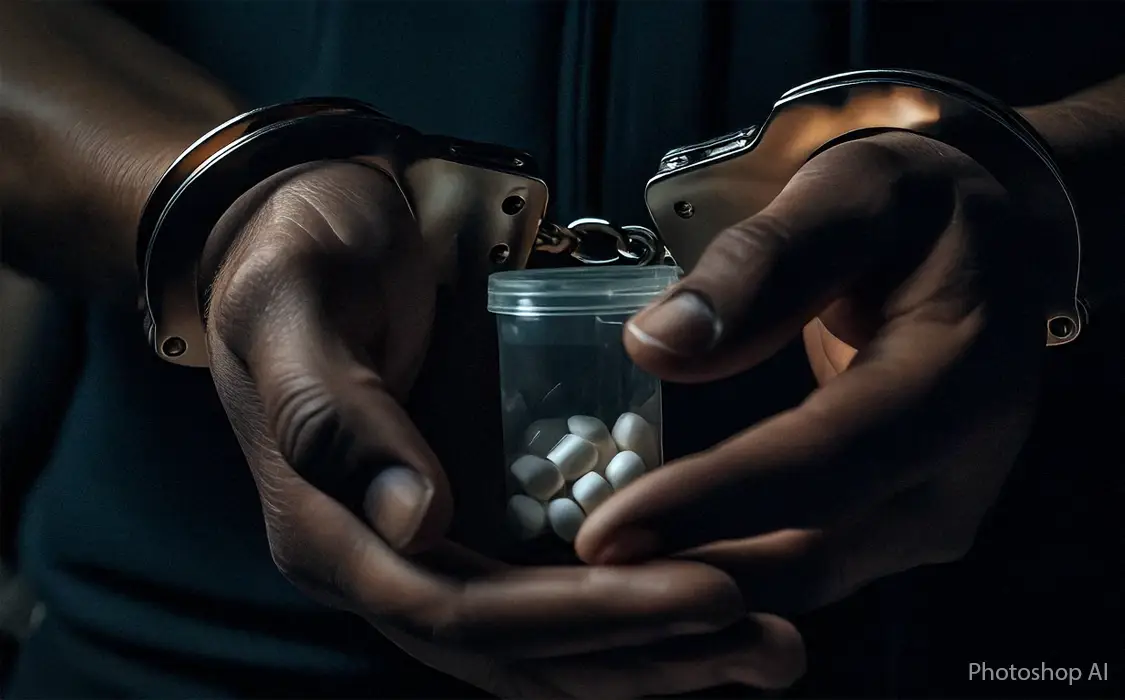
Most U.S. states and the District of Columbia permit sobriety checkpoints. Only 12 states either prohibit them or do not conduct them. The U.S. Supreme Court has upheld their constitutionality, but individual states retain the authority to restrict or ban their use.
Sobriety checkpoints aim to detect and reduce incidents of DUI. But it’s important to be familiar with DUI laws because they vary across states. For example, knowledge of how a DUI traffic stop can turn into an Arizona felony drug charge is necessary for most drivers in the state. With this particular knowledge in mind, they can avoid getting into unnecessary legal trouble.
Getting arrested because of DUI can lead to two independent criminal cases with distinct legal consequences. It is either driving under the influence of alcohol or drug possession or drug trafficking charges.
It can be interesting to know how the process goes in the event that the individual faces both charges.
Let’s see how the legal system addresses a DUI stop that eventually leads into felony drug charges.
A traffic stop does not automatically authorize a full search of the vehicle. The legal basis for any search that follows determines whether the court can use evidence found during that search. There are a few different routes law enforcement might take. Each one comes with its constitutional demands under the Fourth Amendment.
The plain view doctrine allows an officer to grab contraband that is actually visible without conducting any search first. If drugs or drug paraphernalia is sitting out in the open on the seat, in the center console, or on the floor, then an officer who is lawfully present by the vehicle may seize those items without needing a warrant.
For the plain view doctrine to apply, the officer must be in a position to see the item. This doctrine was clarified in Horton v. California, 496 U.S. 128 (1990), which basically said officers don’t have to have “found” it by mistake. An intentional look from a lawful vantage point is enough.
If the stop ends with an arrest for DUI, officers can conduct a search incident to that arrest. The range of that search gets narrowed by Arizona v. Gant, 556 U.S. 332 (2009), which said officers can look through the passenger compartment when the person arrested is not secured and is close enough to grab things.
According to the law firm website https://amarosalaw.com/, police must first establish probable cause before they can conduct a traffic stop for a suspected DUI. Any evidence suggesting drug impairment can lead to a vehicle search. Anything that is not tied to the DUI issue, like contraband in the trunk, for example, might not be included depending on what’s really going on in the specific situation.
Consent is another route too. If the driver actually agrees to a search, police do not need either probable cause or a warrant. The defense can question whether consent was given voluntarily or it came after pressure from authorities. A driver can refuse a consent search. Refusal is not something that equals guilt, and it also helps keep the ability to challenge any later search.
Automobile exception is a well-known legal doctrine that permits law enforcers to perform a warrantless search when they have enough evidence to assume that there are traces of a crime in a car.
For a while, law enforcement officers in numerous regions have been using the odor of marijuana, among other factors, to establish probable cause. In recent times, there have been many changes surrounding the subject of marijuana as a result of the shift in state laws. An officer’s assertion of probable cause isn’t automatically accepted and can be contested.
In cases of a driving under the influence stop and an arrest is made after discovering a controlled substance, it is important for the lawyer to ask for the court to suppress some or all incriminating evidence, such as the drugs. The two most common areas to challenge the investigation are whether the officers had the right to look inside the vehicle, either under the plain view doctrine or after the vehicle owner consented to the search. If the lawyer fails to demonstrate these elements, the court will dismiss the evidence.
Defense attorneys who deal with such cases often pay attention to various aspects with meticulous scrutiny. For instance, lawyers usually focus on the validity of the traffic stop. Was it lawful? Does it comply with the standards of the Constitution? Did the officer exceed his/her authority for the initial stop of the individual’s vehicle? Was the alleged coercion executed by the police during that encounter a direct and intimidating act of violence against the will of this individual? The lawyer will check whether the statements used to support probable cause are actually accurate. They will study if the officer’s affidavit or testimony misrepresented the incident.
Each of these points can turn into a suppression theory. If the court decides the evidence was gathered illegally, it can be excluded and be removed from the prosecution’s evidence. Without admissible drug proof, a drug charge usually doesn’t make it through.
The real severity of a drug charge depends on what substance it is and just how much there is. Should it happen that the confiscation involves a small quantity of marijuana, the penalties are usually not severe and are prosecuted in a more mild manner. If the same substance has been classified under Schedule I or Schedule II Controlled Substances, the penalties are quite harsh.
If the case involves distribution and not just for personal use, prosecutors typically file possession with intent to deliver. This type of case gets treated as a felony in every jurisdiction.
In federal cases, it usually means mandatory minimum sentences too. Conviction under 21 U.S.C. § 841 could result in serious mandatory penalties. For example, having 500g of cocaine is subject to a 5-year imprisonment term with a maximum incarceration of ten years.
It is a common practice for law enforcement officers to assume the intention to sell based on the presence of packaging materials, balances, and money, even without the presence of any witnesses to the transaction.
Everything you say during a DUI stop can be used in both the DUI case and the drug case. The practical implications of this action become clearer when officers ask drug-related questions after finding evidence.
In the event you admit to explaining how and where you got them or that the drugs are yours, you are taken as having already confessed to the offense. Such actions can be difficult to undo later on.
Once a person is in custody, the Fifth Amendment protects an individual’s right to remain silent. The Sixth Amendment guarantees that individuals have the right to assistance from a lawyer at certain points during a criminal prosecution. It is a right that is usually only enforced after a structured process of instituting criminal charges has already taken place, for example, through indictment, information, or arraignment.
A DUI stop that ends up producing drug evidence also creates two simultaneous legal issues. Both cases have distinct proof requirements and unique defense angles that partially overlap. The question of whether the search was lawful is the threshold question for the drug charge. Then, for the DUI charge, the admissibility of the DUI evidence is the threshold issue. Both matters involve what was said at the scene, and both are shaped by how the stop was carried out, plus whether constitutional requirements were actually met.
DUI cases may become significantly more complex in the presence of accusations related to drugs. An experienced criminal attorney can access and dissect all the procedures that took place during the implementation of laws of the land.
There are times when a routine DUI check has, inappropriately, turned into a search for illegal drugs. This circumstance may be an opportunity for the legal defense team to exploit the available evidence and render the prosecution’s theory significantly weak.

News
Drivers and truck owners know that accidents can happen anywhere—on the road, at the worksite, or even off duty. Recovery isn’t just about fixing a… Continue reading
Motortopia Staff . August 25, 2025
News
Some cars are too good to die. A BMW M3 with a dented frame, a Tesla Model S with a cracked battery case, an Audi… Continue reading
Motortopia Staff . December 23, 2025
Industry Updates
As urban areas continue to expand and mobility demands grow at a pace that often exceeds the capacity of traditional transport planning, cities are being… Continue reading
Motortopia Staff . November 28, 2025
Industry Updates
You feel it the moment a truck rolls up beside your small car or bike. The air shifts. The road feels tight. One wrong move,… Continue reading
Motortopia Staff . December 06, 2025

News
As Advanced Driver Assistance Systems (ADAS) become a common feature in modern vehicles, it’s crucial to understand what they do, how they work, and why… Continue reading
Motortopia Staff . October 30, 2025
News
Plenty of builds reach a point where they look completely finished — the stance is dialed, the paint is flawless, and every detail has been… Continue reading
Motortopia Staff . April 03, 2026



Super Run 2026 Classic Car Show
Super Run 2026 Classic Car Show Casablanca Resort 950 West Mesquite Blvd Mesquite, NV 89027
Concours D'Elegance
Cobble Beach Resort 221 McLeese Dr, Kemble, ON N0H 1S0
Charity Car Show
Mesa Marketplace 10550 E. Baseline Rd, Mesa , Az 85209
CHICO CONCOURS Car Show
Silver Dollar Fairgrounds 2357 Fair Street, Chico, CA 95928
Goodguys 33rd Summit Racing Lone Star Nationals
Texas Motor Speedway 3545 Lone Star Circle
We use cookies to enhance your browsing experience, serve personalized ads or content, and analyze our traffic. By clicking "Accept All", you consent to our use of cookies. Visit our Cookie Policy for more info.


 Please wait...
Share Link